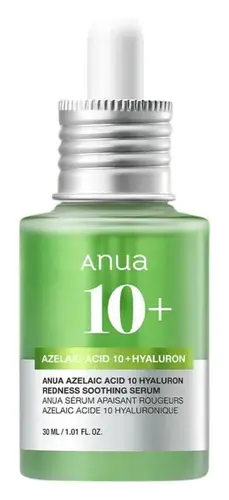
What's inside
What's inside
 Key Ingredients
Benefits
Concerns
Ingredients Side-by-side
Water
Skin ConditioningAzelaic Acid
Buffering









1,2-Hexanediol
Skin Conditioning
Sodium Hydroxide
BufferingPropylene Glycol
Humectant

Salicylic Acid
Masking



Dipotassium Glycyrrhizate
Humectant
Propanediol
Solvent
PPG-13-Decyltetradeceth-24
EmulsifyingButylene Glycol
Humectant
Disodium EDTA
Melia Azadirachta Leaf Extract
Skin ConditioningGlycerin
Humectant
Rosmarinus Officinalis Leaf Oil
Masking
Melia Azadirachta Flower Extract
Skin ConditioningCynanchum Atratum Extract
Skin ConditioningMelaleuca Alternifolia Leaf Oil
Antioxidant


Epilobium Angustifolium Flower/Leaf/Stem Extract
Skin ConditioningEthylhexylglycerin
Skin ConditioningAlthaea Rosea Flower Extract
Skin ConditioningDocosahexaenoic Acid
Skin Conditioning
Citric Acid
Buffering
Tocopherol
Antioxidant

Madecassoside
Antioxidant
Centella Asiatica Extract
Cleansing
Panthenol
Skin Conditioning
Glycine Soja Protein
EmulsifyingCentella Asiatica Leaf Extract
Skin Conditioning
Asiaticoside
Antioxidant
Allantoin
Skin Conditioning
Ectoin
Skin Conditioning
Glycyrrhizic Acid
HumectantHydroxyethylcellulose
Emulsion StabilisingSuccinic Acid
BufferingZinc PCA
Humectant
O-Cymen-5-Ol
Antimicrobial
Sodium Hyaluronate
Humectant
Glycolic Acid
Buffering
Potassium Azeloyl Diglycinate
Skin Conditioning
Coco-Caprylate/Caprate
Emollient
Sodium Hyaluronate Crosspolymer
Humectant
Centella Asiatica Root Extract
Skin Conditioning
Hydrogenated Lecithin
Emulsifying
Polyglutamic Acid
Skin Conditioning
Xylose
HumectantAsiatic Acid
Skin Conditioning
Madecassic Acid
Skin Conditioning
Totarol
Antioxidant
Squalane
Emollient
Chlorella Vulgaris Extract
Skin ConditioningCeramide NP
Skin Conditioning
Water, Azelaic Acid, 1,2-Hexanediol, Sodium Hydroxide, Propylene Glycol, Salicylic Acid, Dipotassium Glycyrrhizate, Propanediol, PPG-13-Decyltetradeceth-24, Butylene Glycol, Disodium EDTA, Melia Azadirachta Leaf Extract, Glycerin, Rosmarinus Officinalis Leaf Oil, Melia Azadirachta Flower Extract, Cynanchum Atratum Extract, Melaleuca Alternifolia Leaf Oil, Epilobium Angustifolium Flower/Leaf/Stem Extract, Ethylhexylglycerin, Althaea Rosea Flower Extract, Docosahexaenoic Acid, Citric Acid, Tocopherol, Madecassoside, Centella Asiatica Extract, Panthenol, Glycine Soja Protein, Centella Asiatica Leaf Extract, Asiaticoside, Allantoin, Ectoin, Glycyrrhizic Acid, Hydroxyethylcellulose, Succinic Acid, Zinc PCA, O-Cymen-5-Ol, Sodium Hyaluronate, Glycolic Acid, Potassium Azeloyl Diglycinate, Coco-Caprylate/Caprate, Sodium Hyaluronate Crosspolymer, Centella Asiatica Root Extract, Hydrogenated Lecithin, Polyglutamic Acid, Xylose, Asiatic Acid, Madecassic Acid, Totarol, Squalane, Chlorella Vulgaris Extract, Ceramide NP
Water
Skin ConditioningGlycerin
Humectant
1,2-Hexanediol
Skin Conditioning
Methylpropanediol
SolventHouttuynia Cordata Extract
Skin Conditioning
Centella Asiatica Leaf Water
Skin Conditioning
Artemisia Princeps Leaf Water
MaskingDipropylene Glycol
HumectantGlycereth-26
Humectant
Sodium Hyaluronate
Humectant
Polyglyceryl-10 Laurate
Skin Conditioning
Polyglyceryl-4 Laurate
Emulsifying
Caprylyl/Capryl Glucoside
CleansingCarbomer
Emulsion StabilisingArginine
Masking
Betaine
Humectant
Hydroxyethylcellulose
Emulsion StabilisingMelaleuca Alternifolia Leaf Oil
Antioxidant
Malt Extract
Skin ProtectingEthylhexylglycerin
Skin ConditioningWater, Glycerin, 1,2-Hexanediol, Methylpropanediol, Houttuynia Cordata Extract, Centella Asiatica Leaf Water, Artemisia Princeps Leaf Water, Dipropylene Glycol, Glycereth-26, Sodium Hyaluronate, Polyglyceryl-10 Laurate, Polyglyceryl-4 Laurate, Caprylyl/Capryl Glucoside, Carbomer, Arginine, Betaine, Hydroxyethylcellulose, Melaleuca Alternifolia Leaf Oil, Malt Extract, Ethylhexylglycerin
Reviews
Ingredients Explained
These ingredients are found in both products.
Ingredients higher up in an ingredient list are typically present in a larger amount.
1,2-Hexanediol is a synthetic liquid and another multi-functional powerhouse.
It is a:
- Humectant, drawing moisture into the skin
- Emollient, helping to soften skin
- Solvent, dispersing and stabilizing formulas
- Preservative booster, enhancing the antimicrobial activity of other preservatives
Ethylhexylglycerin is created from glycerin. It is a multitasker ingredient that:
The CIR Expert Panel found minimal skin absorption or sensitization of any kind in a safety assessment. Though this ingredient is considered well-tolerated, a small number of cases of allergic dermatitis have been published since 2002. Just be sure to patch test if you are unsure.
Industry-reported use ranges from 8% in rinse-off products and 2% in leave-on formulations.
Learn more about EthylhexylglycerinGlycerin (or glycerol) is a compound naturally found in your skin. It's a powerhouse humectant that pulls water into the stratum corneum.
Topically, glycerin does several things at once:
Your skin makes glycerin on its own (mostly from sebaceous oil breakdown) and shuttles it to your outermost layer of skin, or your epidermis, via aquaporin-3.
Aquaporin-3 is a transporter that is essential for normal skin hydration, elasticity, and repair. Interestingly, mice lacking in AQP3 have dry and less elastic skin that can be fully corrected with glycerin.
This ingredient is non-irritating, plays well with almost every ingredient, and works across all skin types. Typical use is anywhere between 3-10% but can go up to 79% in some leave-on products.
Just know very high concentrations (>40%) can feel tacky in low humidity.
Glycerin is the name for this ingredient in American English. British English uses Glycerol/Glycerine.
Learn more about GlycerinHydroxyethylcellulose is used to improve the texture of products. It is created from a chemical reaction involving ethylene oxide and alkali-cellulose. Cellulose is a sugar found in plant cell walls and help give plants structure.
This ingredient helps stabilize products by preventing ingredients from separating. It can also help thicken the texture of a product.
This ingredient can also be found in pill medicines to help our bodies digest other ingredients.
Learn more about HydroxyethylcelluloseThis ingredient is also known as tea tree oil. It has antioxidant, anti-inflammatory, and antimicrobial properties.
Tea tree oil is a complex lipophilic (fat-loving) oil that contains around 100 compounds with terpinen-4-ol being the most abundant (~40%).
Terpinen-4-ol is responsible for tea tree oil's broad-spectrum antimicrobial activity and makes it a well-researched option for acne.
Clinical studies support 5% tea tree oil as an effective topical treatment for mild to moderate acne. A study with 124 patients compared 5% tea tree oil gel to 5% benzoyl peroxide and both reduced acne (though tea tree oil worked more slowly).
Besides acne, it is also seen in anti-dandruff shampoos and scalp treatments for it's antimicrobial and anti-seborrheic properties.
Safety-wise, the allergic potential of low concentrations on healthy skin is considered low. However, oxidized (old or improperly stored) tea tree oil is a stronger sensitizer.
Irritation can also occur if using the undiluted oil on skin; it's best to use this ingredient as part of a carefully crafted cosmetic formula. This is because regulations require tea tree oil in cosmetics to be stabilized to prevent degradation.
This ingredient has been deemed safe up to 2% in shampoo, 1% in cleansers, and 0.1% in face cream by the EU's Scientific Committee on Consumer Safety (SCCS).
There is some lab evidence that tea tree oil is antifungal against Malassezia, but it is a supportive option at best and not a replacement for proven antifungal treatments.
Learn more about Melaleuca Alternifolia Leaf OilSodium Hyaluronate is the salt form of hyaluronic acid. It is a long sugar chain that is naturally found in your skin, joints, and connective tissue that maintains hydration and elasticity.
In skincare, it works as a humectant. It pulls water from the environment and deeper layers of skin and binds it to the surface.
Interestingly, the size of the molecule affects its behavior:
Some clinical evidence links low molecular weight versions to improved wrinkle depth, elasticity, anti-inflammatory effects, and barrier repair.
Many serums use a blend of both weights so you can get surface hydration plus longer-lasting and deeper effects.
You'll typically see concentrations between 0.1-2% for this ingredient.
Learn more about Sodium HyaluronateWater. It's the most common cosmetic ingredient of all. You'll usually see it at the top of ingredient lists, meaning that it makes up the largest part of the product.
So why is it so popular? Water most often acts as a solvent - this means that it helps dissolve other ingredients into the formulation.
You'll also recognize water as that liquid we all need to stay alive. If you see this, drink a glass of water. Remember to stay hydrated!
Learn more about Water