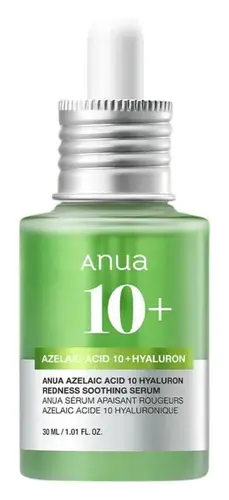
Anua Azelaic Acid 10 Hyaluron Redness Soothing Serum Versus Perricone MD High Potency Classics Face Firming Serum
This calming serum is formulated around Azelaic Acid and Panthenol to calm redness and clear breakouts.
This anti-aging serum is formulated around Thioctic Acid and Hyaluronic Acid to soften the look of wrinkles and refine skin texture.


What's inside
What's inside
 Key Ingredients
Benefits
Concerns
Ingredients Side-by-side
Water
Skin ConditioningAzelaic Acid
Buffering









Propylene Glycol
Humectant


Sodium Hydroxide
BufferingDipropylene Glycol
Humectant1,2-Hexanediol
Skin Conditioning
Panthenol
Skin Conditioning
Hydroxyethylcellulose
Emulsion StabilisingBetaine Salicylate
Antimicrobial

Glycerin
Humectant
Biosaccharide Gum-1
Humectant
Ethylhexylglycerin
Skin ConditioningAllantoin
Skin Conditioning
Dipotassium Glycyrrhizate
Humectant
Melia Azadirachta Leaf Extract
Skin ConditioningCamellia Sinensis Leaf Water
Masking
Sodium Hyaluronate
Humectant

Melia Azadirachta Flower Extract
Skin ConditioningNiacinamide
Smoothing
Aloe Barbadensis Leaf Juice
Skin Conditioning
Beta-Glucan
Skin Conditioning
Centella Asiatica Extract
Cleansing
Centella Asiatica Leaf Extract
Skin Conditioning
Centella Asiatica Root Extract
Skin Conditioning
Madecassoside
Antioxidant
Asiaticoside
Antioxidant
Asiatic Acid
Skin Conditioning
Madecassic Acid
Skin Conditioning
Squalane
Emollient
Zinc PCA
Humectant
Butylene Glycol
Humectant
Pentylene Glycol
Skin Conditioning
Caprylyl/Capryl Glucoside
CleansingHydrogenated Lecithin
Emulsifying
Ceramide NP
Skin Conditioning
Water, Azelaic Acid, Propylene Glycol, Sodium Hydroxide, Dipropylene Glycol, 1,2-Hexanediol, Panthenol, Hydroxyethylcellulose, Betaine Salicylate, Glycerin, Biosaccharide Gum-1, Ethylhexylglycerin, Allantoin, Dipotassium Glycyrrhizate, Melia Azadirachta Leaf Extract, Camellia Sinensis Leaf Water, Sodium Hyaluronate, Melia Azadirachta Flower Extract, Niacinamide, Aloe Barbadensis Leaf Juice, Beta-Glucan, Centella Asiatica Extract, Centella Asiatica Leaf Extract, Centella Asiatica Root Extract, Madecassoside, Asiaticoside, Asiatic Acid, Madecassic Acid, Squalane, Zinc PCA, Butylene Glycol, Pentylene Glycol, Caprylyl/Capryl Glucoside, Hydrogenated Lecithin, Ceramide NP
Thioctic Acid
Antioxidant
2-Dimethylamino Ethanol
Hyaluronic Acid
Humectant
Water
Skin ConditioningDimethyl Mea
BufferingIsopropyl Palmitate
Emollient


Cetearyl Alcohol
Emollient

Tyrosine
MaskingGlycolic Acid
Buffering

Dimethyl Isosorbide
SolventPropanediol
Solvent
Glyceryl Stearate
Emollient
PEG-100 Stearate
Surfactant
Urea
Buffering
Phosphatidylcholine
EmulsifyingXanthan Gum
EmulsifyingMagnesium Aspartate
Skin ConditioningZinc Gluconate
Skin Conditioning
Acetyl Tyrosine
Skin ConditioningPyridoxine Hcl
Skin ConditioningCopper Gluconate
Skin Conditioning
Sodium Hyaluronate
Humectant
BHT
Antioxidant
Disodium EDTA
Ceteareth-20
CleansingAmmonium Acryloyldimethyltaurate/Vp Copolymer
Dimethicone
Emollient
Caprylyl Glycol
Emollient
Zinc Sulfate
Antimicrobial
Phenoxyethanol
Preservative
Sorbic Acid
Preservative
Parfum
Masking
Citral
Perfuming
Citronellol
Perfuming
Geraniol
Perfuming
Limonene
Perfuming
Linalool
Perfuming
Thioctic Acid, 2-Dimethylamino Ethanol, Hyaluronic Acid, Water, Dimethyl Mea, Isopropyl Palmitate, Cetearyl Alcohol, Tyrosine, Glycolic Acid, Dimethyl Isosorbide, Propanediol, Glyceryl Stearate, PEG-100 Stearate, Urea, Phosphatidylcholine, Xanthan Gum, Magnesium Aspartate, Zinc Gluconate, Acetyl Tyrosine, Pyridoxine Hcl, Copper Gluconate, Sodium Hyaluronate, BHT, Disodium EDTA, Ceteareth-20, Ammonium Acryloyldimethyltaurate/Vp Copolymer, Dimethicone, Caprylyl Glycol, Zinc Sulfate, Phenoxyethanol, Sorbic Acid, Parfum, Citral, Citronellol, Geraniol, Limonene, Linalool
Reviews
Ingredients Explained
These ingredients are found in both products.
Ingredients higher up in an ingredient list are typically present in a larger amount.
Sodium Hyaluronate is the salt form of hyaluronic acid. It is a long sugar chain that is naturally found in your skin, joints, and connective tissue that maintains hydration and elasticity.
In skincare, it works as a humectant. It pulls water from the environment and deeper layers of skin and binds it to the surface.
Interestingly, the size of the molecule affects its behavior:
Some clinical evidence links low molecular weight versions to improved wrinkle depth, elasticity, anti-inflammatory effects, and barrier repair.
Many serums use a blend of both weights so you can get surface hydration plus longer-lasting and deeper effects.
You'll typically see concentrations between 0.1-2% for this ingredient.
Learn more about Sodium HyaluronateWater. It's the most common cosmetic ingredient of all. You'll usually see it at the top of ingredient lists, meaning that it makes up the largest part of the product.
So why is it so popular? Water most often acts as a solvent - this means that it helps dissolve other ingredients into the formulation.
You'll also recognize water as that liquid we all need to stay alive. If you see this, drink a glass of water. Remember to stay hydrated!
Learn more about Water

