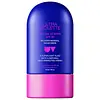
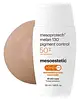
Ultra Violette Future Mineral Skinscreen SPF 50 Versus Mesoestetic Mesoprotech Melan 130 Pigment Control SPF 50+
This hybrid sunscreen covers the full UV range and blocks ~98% of UVB at SPF 50.
This hybrid sunscreen covers the full UV range and blocks ~98% of UVB at SPF 50.


What's inside
What's inside
 Key Ingredients
Benefits
Concerns
Ingredients Side-by-side
Zinc Oxide 20%
Cosmetic Colorant


Water
Skin ConditioningDiisopropyl Adipate
EmollientCoco-Caprylate/Caprate
Emollient
Ethylhexyl Methoxycrylene
Skin Conditioning
C12-15 Alkyl Benzoate
AntimicrobialGlyceryl Oleate Citrate
Emulsifying

Propanediol
Solvent

Decyl Glucoside
Cleansing
Polyglyceryl-4 Isostearate
Emulsifying
Squalane
Emollient
Aluminum Starch Octenylsuccinate
Absorbent
Saccharide Isomerate
Humectant
Tocopheryl Acetate
Antioxidant


Caprylic/Capric Triglyceride
Masking
Triethoxycaprylylsilane

Magnesium Aluminum Silicate
Absorbent
Citric Acid
Buffering
Sodium Citrate
BufferingHydroxyacetophenone
Antioxidant
Potassium Cetyl Phosphate
EmulsifyingPhenoxyethanol
Preservative
Polyhydroxystearic Acid
Emulsifying
Ammonium Polyacryloyldimethyl Taurate
Emulsion StabilisingLactic Acid
Buffering





Sodium Hydroxide
BufferingCI 77491
Cosmetic ColorantCI 77492
Cosmetic ColorantCI 77499
Cosmetic ColorantZinc Oxide 20%, Water, Diisopropyl Adipate, Coco-Caprylate/Caprate, Ethylhexyl Methoxycrylene, C12-15 Alkyl Benzoate, Glyceryl Oleate Citrate, Propanediol, Decyl Glucoside, Polyglyceryl-4 Isostearate, Squalane, Aluminum Starch Octenylsuccinate, Saccharide Isomerate, Tocopheryl Acetate, Caprylic/Capric Triglyceride, Triethoxycaprylylsilane, Magnesium Aluminum Silicate, Citric Acid, Sodium Citrate, Hydroxyacetophenone, Potassium Cetyl Phosphate, Phenoxyethanol, Polyhydroxystearic Acid, Ammonium Polyacryloyldimethyl Taurate, Lactic Acid, Sodium Hydroxide, CI 77491, CI 77492, CI 77499
Water
Skin ConditioningDibutyl Adipate
EmollientOctocrylene
UV Absorber
Cyclopentasiloxane
Emollient
Homosalate
Skin Conditioning
Bis-Ethylhexyloxyphenol Methoxyphenyl Triazine
UV Absorber
Alcohol
Antimicrobial

Butyl Methoxydibenzoylmethane
UV Absorber
Titanium Dioxide
Cosmetic Colorant
Methylene Bis-Benzotriazolyl Tetramethylbutylphenol
UV Filter
Cyclohexasiloxane
Emollient
PEG-30 Dipolyhydroxystearate
Emulsifying
Polysilicone-15
UV Filter
Styrene
Perfuming

PEG-10 Dimethicone
Skin Conditioning
Silica
Abrasive
Bis-Ethylhexyl Hydroxydimethoxy Benzylmalonate
Antioxidant
Polyamide-5
Skin ConditioningPotassium Azeloyl Diglycinate
Skin Conditioning

Jojoba Esters
Emollient
Hexyl Laurate
Emollient
Helianthus Annuus Seed Oil
Emollient
Dimethicone
Emollient
Ethylhexylglycerin
Skin ConditioningAcacia Decurrens Flower Wax
Emollient
Polyglycerin-3
Humectant
Polyamide-3
Cetyl PEG/PPG-10/1 Dimethicone
Emulsifying
Polyglyceryl-4 Isostearate
Emulsifying
Sodium Chloride
MaskingVp/Hexadecene Copolymer
Decyl Glucoside
Cleansing
Disteardimonium Hectorite
StabilisingDisodium EDTA
ChelatingPEG-12 Allyl Ether
Hydrogenated Lecithin
Emulsifying
Propylene Glycol
Humectant
Xanthan Gum
EmulsifyingPentaerythrityl Tetra-Di-T-Butyl Hydroxyhydrocinnamate
Antioxidant
Phenoxyethanol
Preservative
Parfum
Masking
CI 77492
Cosmetic ColorantCI 77491
Cosmetic ColorantCI 77499
Cosmetic ColorantWater, Dibutyl Adipate, Octocrylene, Cyclopentasiloxane, Homosalate, Bis-Ethylhexyloxyphenol Methoxyphenyl Triazine, Alcohol, Butyl Methoxydibenzoylmethane, Titanium Dioxide, Methylene Bis-Benzotriazolyl Tetramethylbutylphenol, Cyclohexasiloxane, PEG-30 Dipolyhydroxystearate, Polysilicone-15, Styrene, PEG-10 Dimethicone, Silica, Bis-Ethylhexyl Hydroxydimethoxy Benzylmalonate, Polyamide-5, Potassium Azeloyl Diglycinate, Jojoba Esters, Hexyl Laurate, Helianthus Annuus Seed Oil, Dimethicone, Ethylhexylglycerin, Acacia Decurrens Flower Wax, Polyglycerin-3, Polyamide-3, Cetyl PEG/PPG-10/1 Dimethicone, Polyglyceryl-4 Isostearate, Sodium Chloride, Vp/Hexadecene Copolymer, Decyl Glucoside, Disteardimonium Hectorite, Disodium EDTA, PEG-12 Allyl Ether, Hydrogenated Lecithin, Propylene Glycol, Xanthan Gum, Pentaerythrityl Tetra-Di-T-Butyl Hydroxyhydrocinnamate, Phenoxyethanol, Parfum, CI 77492, CI 77491, CI 77499
Reviews
Ingredients Explained
These ingredients are found in both products.
Ingredients higher up in an ingredient list are typically present in a larger amount.
Ci 77491 is also hydrated iron III oxide. It's sole purpose is to give a red/pink hue to products.
Iron III oxides are classified as inorganic chemicals for coloring.
Synthetically created Ci 77491 is considered safer than those naturally found. This is because the synthetically created version may contain less impurities. Iron oxides are generally non-toxic and non-allergenic.
Learn more about CI 77491CI 77492 is also hydrated iron III oxide. It's sole purpose is to give a yellow hue to products.
Iron III oxides are classified as inorganic chemicals for coloring.
Synthetically created CI 77492 is considered safer than those naturally found. This is because the synthetically created version may contain less impurities. Iron oxides are generally non-toxic and non-allergenic.
Learn more about CI 77492Ci 77499 is also hydrated iron III oxide. It is created from mixing red and black iron oxides. This helps give shades of darkness to a product.
Iron III oxides are classified as inorganic chemicals for coloring.
Decyl Glucoside is a plant-derived surfactant and emulsion stabilizer. It is created by reacting glucose with the fatty acids from plants.
Like all surfactants, it works by lowering the surface tension between water and oil. This makes it so that dirt, sebum, and makeup can be lifted off your skin and rinsed away. It also produces a dense and creamy foam.
Because it has a neutral charge, it is compatible with a wide range of ingredients and stays stable across a broad pH range/water hardiness conditions.
Patch testing has shown it to have the lowest irritation potential among common cleansing surfactants (like SLS).
Typical use levels range from 5-20% in rinse-off cleansers.
One thing worth knowing: The American Contact Dermatitis Society named the parent family, alkyl glucosides, "Allergen of the Year" in 2017. The prevalence of allergy is pretty low but be sure to patch test if you've reacted to "gentle" or sulfate-free cleansers before.
This ingredient is fungal acne safe because the fatty alcohol portion of this ingredient is not within the C11-24 chain length that Malassezia can metabolize.
Learn more about Decyl GlucosidePhenoxyethanol is one of the most widely used preservatives in skincare (and for good reason!).
It has a large spectrum of antimicrobial activity and especially effective bacteria, yeast, and mold while only having a weak effect on your skin's natural microbiome.
On a cellular level, it disrupts the cell membranes of microbes by poking holes that make the cell leak. This shuts down the chemical reactions the microbe needs to make energy so it can no longer survive.
Another perk of this ingredient is that it stays functional across a wide pH range (3-10).
You'll often see it paired with boosters like Ethylhexylglycerin; one study showed that a 1:9 ratio of Ethylhexylglycerin to Phenoxyethanol damages bacterial membranes as effectively as doubling the Phenoxyethanol concentration on its own.
Typical use concentrations range from 0.3-1% depending on the formula, and this ingredient is capped at 1% int the EU.
Safety-wise, the fear mongering does not hold up to the evidence. The EU's Scientific Committee on Consumer Safety and FDA consider it safe as a preservative at up to 1%, including for children of all ages.
Adverse systemic effects only showed up in animal studies at exposures roughly 200x higher than what people get from cosmetics. And despite its very widespread use, this ingredient is a rare sensitizer and allergic reactions are uncommon.
Learn more about PhenoxyethanolPolyglyceryl-4 Isostearate is a plant-derived, PEG-free emulsifier.
It's made by hooking isostearic acid onto a chain of glycerin units to give it a water-loving "head" and oil-loving "tail". This allows it to keep the oil and water mixed in a formula.
The highest reported concentration is about 24% in eye makeup but most suppliers recommend a level below 10%.
It has a clean track record for safety and found to be non-irritating.
Because it is an ester of a C18 fatty acid, Malassezia can potentially metabolize it (it sits in the C11-24 range that Malassezia likes). Therefore, this ingredient may not be fungal acne safe.
Learn more about Polyglyceryl-4 IsostearateWater. It's the most common cosmetic ingredient of all. You'll usually see it at the top of ingredient lists, meaning that it makes up the largest part of the product.
So why is it so popular? Water most often acts as a solvent - this means that it helps dissolve other ingredients into the formulation.
You'll also recognize water as that liquid we all need to stay alive. If you see this, drink a glass of water. Remember to stay hydrated!
Learn more about Water

