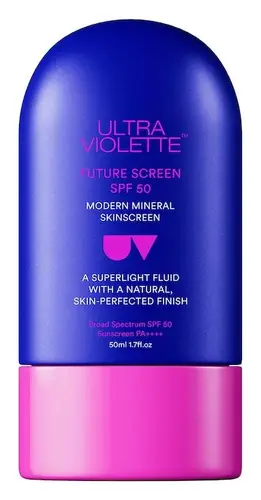
Ultra Violette Future Mineral Skinscreen SPF 50 Versus La Roche-Posay Anthelios Tinted Fluid SPF 50+
This hybrid sunscreen covers the full UV range and blocks ~98% of UVB at SPF 50.
This chemical sunscreen covers the full UV range and blocks ~98% of UVB at SPF 50.


What's inside
What's inside
 Key Ingredients
Benefits
Concerns
Ingredients Side-by-side
Zinc Oxide 20%
Cosmetic Colorant


Water
Skin ConditioningDiisopropyl Adipate
EmollientCoco-Caprylate/Caprate
Emollient
Ethylhexyl Methoxycrylene
Skin Conditioning
C12-15 Alkyl Benzoate
AntimicrobialGlyceryl Oleate Citrate
Emulsifying

Propanediol
Solvent

Decyl Glucoside
Cleansing
Polyglyceryl-4 Isostearate
Emulsifying
Squalane
Emollient
Aluminum Starch Octenylsuccinate
Absorbent
Saccharide Isomerate
Humectant
Tocopheryl Acetate
Antioxidant


Caprylic/Capric Triglyceride
Masking
Triethoxycaprylylsilane

Magnesium Aluminum Silicate
Absorbent
Citric Acid
Buffering
Sodium Citrate
BufferingHydroxyacetophenone
Antioxidant
Potassium Cetyl Phosphate
EmulsifyingPhenoxyethanol
Preservative
Polyhydroxystearic Acid
Emulsifying
Ammonium Polyacryloyldimethyl Taurate
Emulsion StabilisingLactic Acid
Buffering





Sodium Hydroxide
BufferingCI 77491
Cosmetic ColorantCI 77492
Cosmetic ColorantCI 77499
Cosmetic ColorantZinc Oxide 20%, Water, Diisopropyl Adipate, Coco-Caprylate/Caprate, Ethylhexyl Methoxycrylene, C12-15 Alkyl Benzoate, Glyceryl Oleate Citrate, Propanediol, Decyl Glucoside, Polyglyceryl-4 Isostearate, Squalane, Aluminum Starch Octenylsuccinate, Saccharide Isomerate, Tocopheryl Acetate, Caprylic/Capric Triglyceride, Triethoxycaprylylsilane, Magnesium Aluminum Silicate, Citric Acid, Sodium Citrate, Hydroxyacetophenone, Potassium Cetyl Phosphate, Phenoxyethanol, Polyhydroxystearic Acid, Ammonium Polyacryloyldimethyl Taurate, Lactic Acid, Sodium Hydroxide, CI 77491, CI 77492, CI 77499
Water
Skin ConditioningAlcohol Denat.
Antimicrobial

Diisopropyl Sebacate
EmollientSilica
Abrasive
Isopropyl Myristate
Emollient

Ethylhexyl Salicylate
UV Absorber
Ethylhexyl Triazone
UV Absorber
Bis-Ethylhexyloxyphenol Methoxyphenyl Triazine
UV Absorber
Butyl Methoxydibenzoylmethane
UV Absorber
Glycerin
Humectant
C12-22 Alkyl Acrylate/Hydroxyethylacrylate Copolymer
StabilisingPropanediol
Solvent
Drometrizole Trisiloxane
UV Absorber
CI 77891
Cosmetic ColorantPerlite
Absorbent
Tocopherol
Antioxidant
Caprylic/Capric Triglyceride
Masking
Acrylates/C10-30 Alkyl Acrylate Crosspolymer
Emulsion StabilisingCaprylyl Glycol
Emollient
CI 77491
Cosmetic ColorantCI 77492
Cosmetic ColorantCI 77499
Cosmetic ColorantHydroxyethylcellulose
Emulsion StabilisingTerephthalylidene Dicamphor Sulfonic Acid
UV Absorber
Triethanolamine
BufferingTrisodium Ethylenediamine Disuccinate
ChelatingParfum
Masking

Water, Alcohol Denat., Diisopropyl Sebacate, Silica, Isopropyl Myristate, Ethylhexyl Salicylate, Ethylhexyl Triazone, Bis-Ethylhexyloxyphenol Methoxyphenyl Triazine, Butyl Methoxydibenzoylmethane, Glycerin, C12-22 Alkyl Acrylate/Hydroxyethylacrylate Copolymer, Propanediol, Drometrizole Trisiloxane, CI 77891, Perlite, Tocopherol, Caprylic/Capric Triglyceride, Acrylates/C10-30 Alkyl Acrylate Crosspolymer, Caprylyl Glycol, CI 77491, CI 77492, CI 77499, Hydroxyethylcellulose, Terephthalylidene Dicamphor Sulfonic Acid, Triethanolamine, Trisodium Ethylenediamine Disuccinate, Parfum
Reviews
Ingredients Explained
These ingredients are found in both products.
Ingredients higher up in an ingredient list are typically present in a larger amount.
Caprylic/Capric Triglyceride (aka MCT Oil) is a lightweight emollient, solvent, and texture enhancer. It is considered a skin-softener by helping to prevent moisture loss.
Though it behaves like an oil, it is not technically one due to its chemical composition. One perk of this ingredient is that it is very stable, resistant to oxidation, and unlikely to go rancid.
In practice, that translates to a long shelf life and a consistently elegant skin feel.
While there is an assumption Caprylic Triglyceride can clog pores due to it being derived from coconut oil, there is no research supporting this. Just patch test if you have concerns.
Fractionated coconut oil and MCT Oil are both listed as Caprylic/Capric Triglyceride according to INCI. This is because INCI names are based on the ingredient’s final chemical composition and not its marketing name or source.
This ingredient is treated as the gold standard fungal acne safe oil. Even though it is coconut derived, the problematic lauric acid is stripped out.
This leaves just caprylic (C8) and capric (C10) acid. These chain lengths actually trend antifungal; a 2020 study found caprylic acid was enough to disrupt Malassezia furfur cell membrane, with a caprylic acid derivative damaging membrane structures at concentrations as low as 0.2%.
Learn more about Caprylic/Capric TriglycerideCi 77491 is also hydrated iron III oxide. It's sole purpose is to give a red/pink hue to products.
Iron III oxides are classified as inorganic chemicals for coloring.
Synthetically created Ci 77491 is considered safer than those naturally found. This is because the synthetically created version may contain less impurities. Iron oxides are generally non-toxic and non-allergenic.
Learn more about CI 77491CI 77492 is also hydrated iron III oxide. It's sole purpose is to give a yellow hue to products.
Iron III oxides are classified as inorganic chemicals for coloring.
Synthetically created CI 77492 is considered safer than those naturally found. This is because the synthetically created version may contain less impurities. Iron oxides are generally non-toxic and non-allergenic.
Learn more about CI 77492Ci 77499 is also hydrated iron III oxide. It is created from mixing red and black iron oxides. This helps give shades of darkness to a product.
Iron III oxides are classified as inorganic chemicals for coloring.
Propanediol is an all-star ingredient. It softens, hydrates, and smooths the skin.
It’s often used to:
Propanediol is not likely to cause sensitivity and considered safe to use. It is derived from corn or petroleum with a clear color and no scent.
Learn more about PropanediolWater. It's the most common cosmetic ingredient of all. You'll usually see it at the top of ingredient lists, meaning that it makes up the largest part of the product.
So why is it so popular? Water most often acts as a solvent - this means that it helps dissolve other ingredients into the formulation.
You'll also recognize water as that liquid we all need to stay alive. If you see this, drink a glass of water. Remember to stay hydrated!
Learn more about Water