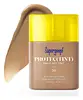
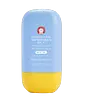
Supergoop! Protec(Tint) Daily SPF Tint SPF 50 Versus First Aid Beauty Hydrating Sunscreen Milk SPF 45

What's inside
What's inside
 Key Ingredients
Benefits
Concerns
Ingredients Side-by-side
Zinc Oxide 13.58%
Cosmetic Colorant


Homosalate 7%
Skin Conditioning
Ethylhexyl Salicylate 5%
UV Absorber
Water
Skin ConditioningIsononyl Isononanoate
EmollientButyloctyl Salicylate
Skin Conditioning
Propanediol
Solvent

Silica
Abrasive

1,2-Hexanediol
Skin Conditioning
Lecithin
Emollient
Coco-Caprylate/Caprate
Emollient

Cetearyl Alcohol
Emollient


Lauryl Glucoside
CleansingPolyglyceryl-2 Dipolyhydroxystearate
Skin Conditioning
Ammonium Acryloyldimethyltaurate/Vp Copolymer
Ectoin
Skin Conditioning




Coco-Glucoside
Cleansing
Polyhydroxystearic Acid
Emulsifying
Citric Acid
Buffering


Triethoxycaprylylsilane

Morinda Citrifolia Extract
AstringentXanthan Gum
EmulsifyingSodium Phytate
Bentonite
Absorbent
Sodium Hyaluronate
Humectant
Tocopherol
Antioxidant


Zinc Oxide 13.58%, Homosalate 7%, Ethylhexyl Salicylate 5%, Water, Isononyl Isononanoate, Butyloctyl Salicylate, Propanediol, Silica, 1,2-Hexanediol, Lecithin, Coco-Caprylate/Caprate, Cetearyl Alcohol, Lauryl Glucoside, Polyglyceryl-2 Dipolyhydroxystearate, Ammonium Acryloyldimethyltaurate/Vp Copolymer, Ectoin, Coco-Glucoside, Polyhydroxystearic Acid, Citric Acid, Triethoxycaprylylsilane, Morinda Citrifolia Extract, Xanthan Gum, Sodium Phytate, Bentonite, Sodium Hyaluronate, Tocopherol
Butyl Methoxydibenzoylmethane 3%
UV Absorber
Homosalate 7%
Skin Conditioning
Ethylhexyl Salicylate 5%
UV Absorber
Octocrylene 9%
UV Absorber

Water
Skin ConditioningGlycerin
Humectant
Butyloctyl Salicylate
Skin Conditioning
C12-15 Alkyl Benzoate
AntimicrobialPongamia Glabra Seed Oil
Skin Conditioning
Undecane
EmollientBetaine
Humectant
Silica
Abrasive
Colloidal Oatmeal
Absorbent
Glycine Soja Seed Extract
Skin Conditioning
Tridecane
Perfuming
Ethyl Ferulate
Antioxidant
Glycine Soja Oil
Emollient
Hydroxyethyl Acrylate/Sodium Acryloyldimethyl Taurate Copolymer
Emulsion StabilisingPolyglyceryl-4 Laurate
Emulsifying
Hydroxyacetophenone
Antioxidant
Arachidyl Alcohol
Emollient
Polyglyceryl-6 Laurate
Emulsifying
1,2-Hexanediol
Skin Conditioning
Caprylyl Glycol
Emollient
Pongamia Pinnata Seed Extract
Skin ConditioningBehenyl Alcohol
Emollient
Cellulose Gum
Emulsion StabilisingPolyglyceryl-3 Diisostearate
Emulsifying
Arachidyl Glucoside
EmulsifyingAloe Barbadensis Leaf Juice
Skin Conditioning
Sodium Phytate
Tocopherol
Antioxidant
Oryza Sativa Germ Extract
EmollientOryza Sativa Extract
Absorbent
Sodium Dilauramidoglutamide Lysine
HumectantDunaliella Salina Extract
Skin ConditioningHaematococcus Pluvialis Extract
Antioxidant
Citric Acid
Buffering
Inulin
Skin Conditioning
Xanthan Gum
EmulsifyingCellulose
Absorbent
Fructose
Humectant
Glucose
Humectant
Butyl Methoxydibenzoylmethane 3%, Homosalate 7%, Ethylhexyl Salicylate 5%, Octocrylene 9%, Water, Glycerin, Butyloctyl Salicylate, C12-15 Alkyl Benzoate, Pongamia Glabra Seed Oil, Undecane, Betaine, Silica, Colloidal Oatmeal, Glycine Soja Seed Extract, Tridecane, Ethyl Ferulate, Glycine Soja Oil, Hydroxyethyl Acrylate/Sodium Acryloyldimethyl Taurate Copolymer, Polyglyceryl-4 Laurate, Hydroxyacetophenone, Arachidyl Alcohol, Polyglyceryl-6 Laurate, 1,2-Hexanediol, Caprylyl Glycol, Pongamia Pinnata Seed Extract, Behenyl Alcohol, Cellulose Gum, Polyglyceryl-3 Diisostearate, Arachidyl Glucoside, Aloe Barbadensis Leaf Juice, Sodium Phytate, Tocopherol, Oryza Sativa Germ Extract, Oryza Sativa Extract, Sodium Dilauramidoglutamide Lysine, Dunaliella Salina Extract, Haematococcus Pluvialis Extract, Citric Acid, Inulin, Xanthan Gum, Cellulose, Fructose, Glucose
Reviews
Ingredients Explained
These ingredients are found in both products.
Ingredients higher up in an ingredient list are typically present in a larger amount.
1,2-Hexanediol is a synthetic liquid and another multi-functional powerhouse.
It is a:
- Humectant, drawing moisture into the skin
- Emollient, helping to soften skin
- Solvent, dispersing and stabilizing formulas
- Preservative booster, enhancing the antimicrobial activity of other preservatives
Butyloctyl Salicylate is a chemical UV filter structurally similar to octisalate. It is a photostabilizer, SPF booster, emollient and solvent. This ingredient helps evenly spread out ingredients.
According to a manufacturer, it is suitable for pairing with micro Titanium Dioxide, Zinc Oxide, and pigments.
Photostabilizers help stabilize UV-filters and prevents them from degrading quickly.
Learn more about Butyloctyl SalicylateCitric Acid is an alpha hydroxy acid (AHA) naturally found in citrus fruits like oranges, lemons, and limes.
Like other AHAs, citric acid can exfoliate skin by breaking down the bonds that hold dead skin cells together. This helps reveal smoother and brighter skin underneath.
However, this exfoliating effect only happens at high concentrations (20%) which can be hard to find in cosmetic products.
Due to this, citric acid is usually included in small amounts as a pH adjuster. This helps keep products slightly more acidic and compatible with skin's natural pH.
In skincare formulas, citric acid can:
While it can provide some skin benefits, research shows lactic acid and glycolic acid are generally more effective and less irritating exfoliants.
Most citric acid used in skincare today is made by fermenting sugars (usually from molasses). This synthetic version is identical to the natural citrus form but easier to stabilize and use in formulations.
Read more about some other popular AHA's here:
Learn more about Citric AcidEthylhexyl Salicylate is an organic compound used to block UV rays. It primarily absorbs UVB rays but offers a small amount of UVA protection as well.
Commonly found in sunscreens, Ethylhexyl Salicylate is created from salicylic acid and 2-ethylhexanol. You might know salicylic acid as the effective acne fighter ingredient and BHA.
The ethylhexanol in this ingredient is a fatty alcohol and helps hydrate your skin, similar to oils. It is an emollient, which means it traps moisture into the skin.
According to manufacturers, Ethylhexyl Salicylate absorbs UV wavelength of 295-315 nm, with a peak absorption at 307-310 nm. UVA rays are linked to long term skin damage, such as hyperpigmentation. UVB rays emit more energy and are capable of damaging our DNA. UVB rays cause sunburn.
Learn more about Ethylhexyl SalicylateHomosalate is a chemical sunscreen filter that provides protection in the UV-B range (280nm - 320 nm), with a peak protection at 306 nm. It is internationally approved for use in sunscreens.
Homosalate is not photo-stable, meaning it's strength as a UV filter degrades over time with exposure to the sun. Because of this, it's often used in combination with other chemical sunscreen filters as avobenzone (which protects from the UV-A range). Homosalate also helps act as a solvent for harder-to-dissolve UV filters.
(Part of the reason that sunscreens need to be frequently re-applied is due to the photo instability of many chemical sunscreen filters)
Currently, homosalate is approved in concentrations up to 10% in the EU and 15% in the US. The FDA is currently doing further research on the effects of homosalate, and it is possible that these approved concentrations will change in the future.
Learn more about HomosalateSilica, also known as silicon dioxide, is a naturally occurring mineral. It is used as a fine, spherical, and porous powder in cosmetics.
Though it has exfoliant properties, the function of silica varies depending on the product.
The unique structure of silica enhances the spreadability and adds smoothness, making it a great texture enhancer.
It is also used as an active carrier, emulsifier, and mattifier due to its ability to absorb excess oil.
In some products, tiny microneedles called spicules are made from silica or hydrolyzed sponge. When you rub them in, they lightly polish away dead skin layers and enhance the penetration of active ingredients.
Learn more about SilicaSodium Phytate is the synthetic salt form of phytic acid. Phytic acid is an antioxidant and can be found in plant seeds.
Sodium Phytate is a chelating agent. Chelating agents help prevent metals from binding to water. This helps stabilize the ingredients and the product.
Tocopherol is a fat-soluble antioxidant known as Vitamin E.
You'll find this ingredient in the vast majority of skincare (for good reason). It works to neutralize free radicals, or unstable molecules generated by UV exposure, pollution, and other environmental stressors, before they can cause oxidative damage to your skin cells.
Topically applied tocopherol has been shown to protect against UV damage by ramping up the skin's own natural defense enzymes.
It also acts as a skin conditioning agent; some studies show that regular topical use can improve the skin's water-binding capacity over 2-4 weeks.
This ingredient is especially loved for being a team player. When combined with Vitamin C, the photoprotective effect of both ingredients roughly doubles and the combo also helps reduce UV-induced DNA damage.
This ingredient has some brightening potential but it's more of a prevention ingredient than spot-fader. Cell studies show it can slow down melanin production but it's worth noting that it's not the most powerful brightener out there.
In formulations, it also serves as a stabilizer that helps protect other oxidation-prone ingredients from degrading.
Concentrations usually range from 0.1-1% in most leave-on products.
Learn more about TocopherolWater. It's the most common cosmetic ingredient of all. You'll usually see it at the top of ingredient lists, meaning that it makes up the largest part of the product.
So why is it so popular? Water most often acts as a solvent - this means that it helps dissolve other ingredients into the formulation.
You'll also recognize water as that liquid we all need to stay alive. If you see this, drink a glass of water. Remember to stay hydrated!
Learn more about WaterXanthan gum is used as a stabilizer and thickener within cosmetic products. It helps give products a sticky, thick feeling - preventing them from being too runny.
On the technical side of things, xanthan gum is a polysaccharide - a combination consisting of multiple sugar molecules bonded together.
Xanthan gum is a pretty common and great ingredient. It is a natural, non-toxic, non-irritating ingredient that is also commonly used in food products.
Learn more about Xanthan Gum
