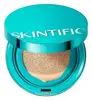
Skintific Perfect Stay Serum Matte Cushion Foundation SPF 50 Versus CLIO Kill Cover The New Founwear Cushion


What's inside
What's inside
 Key Ingredients

Benefits
Concerns
Ingredients Side-by-side
Aloe Barbadensis Leaf Water
MaskingDimethicone
Emollient

Trimethylsiloxysilicate
Emollient
Ethylhexyl Methoxycinnamate
UV Absorber


Titanium Dioxide
Cosmetic Colorant
Ethylhexyl Salicylate
UV Absorber
Glycerin
Humectant

Lauryl PEG-10 Tris(Trimethylsiloxy)Silylethyl Dimethicone
Emulsifying
Phenyl Trimethicone
Skin Conditioning
Synthetic Fluorphlogopite
Isononyl Isononanoate
EmollientSilica
Abrasive


Pentylene Glycol
Skin Conditioning
Disteardimonium Hectorite
StabilisingAscorbic Acid
Antioxidant





Astaxanthin
Skin Conditioning

Butylene Glycol
Humectant
1,2-Hexanediol
Skin Conditioning
Bixa Orellana Seed Extract
MaskingCentella Asiatica Extract
Cleansing
Albatrellus Confluens Extract
Humectant
Olea Europaea Leaf Extract
Perfuming
Polygonum Cuspidatum Root Extract
Antioxidant
Scutellaria Baicalensis Root Extract
Astringent
Camellia Sinensis Leaf Extract
Antimicrobial
Glycyrrhiza Glabra Root Extract
Bleaching
Chamomilla Recutita Flower Extract
Masking
Rosmarinus Officinalis Leaf Extract
AntimicrobialZinc PCA
Humectant

Aluminum Hydroxide
EmollientAloe Barbadensis Leaf Water, Dimethicone, Trimethylsiloxysilicate, Ethylhexyl Methoxycinnamate, Titanium Dioxide, Ethylhexyl Salicylate, Glycerin, Lauryl PEG-10 Tris(Trimethylsiloxy)Silylethyl Dimethicone, Phenyl Trimethicone, Synthetic Fluorphlogopite, Isononyl Isononanoate, Silica, Pentylene Glycol, Disteardimonium Hectorite, Ascorbic Acid, Astaxanthin, Butylene Glycol, 1,2-Hexanediol, Bixa Orellana Seed Extract, Centella Asiatica Extract, Albatrellus Confluens Extract, Olea Europaea Leaf Extract, Polygonum Cuspidatum Root Extract, Scutellaria Baicalensis Root Extract, Camellia Sinensis Leaf Extract, Glycyrrhiza Glabra Root Extract, Chamomilla Recutita Flower Extract, Rosmarinus Officinalis Leaf Extract, Zinc PCA, Aluminum Hydroxide
Water
Skin ConditioningCyclopentasiloxane
Emollient
CI 77891
Cosmetic ColorantEthylhexyl Methoxycinnamate
UV Absorber
Butylene Glycol
Humectant
Ethylhexyl Salicylate
UV Absorber
Lauryl PEG-9 Polydimethylsiloxyethyl Dimethicone
Skin Conditioning
Cetyl Ethylhexanoate
EmollientNiacinamide
Smoothing
Polymethylsilsesquioxane
1,2-Hexanediol
Skin Conditioning
Silica
Abrasive
Mica
Cosmetic ColorantMethyl Trimethicone
Skin Conditioning
Betula Platyphylla Japonica Juice
Skin Conditioning
PEG-10 Dimethicone
Skin Conditioning
Acrylates/Dimethicone Copolymer
Skin Conditioning
Isododecane
EmollientMagnesium Sulfate
Cetearyl Dimethicone/Vinyl Dimethicone Crosspolymer
Emollient
Stearic Acid
Cleansing


Triethoxycaprylylsilane
Alumina
Abrasive
Aluminum Hydroxide
EmollientDisteardimonium Hectorite
StabilisingDimethicone
Emollient
Adenosine
Skin Conditioning
Trisodium Ethylenediamine Disuccinate
Tocopherol
Antioxidant
Stearyl Acrylate
Boron Nitride
Absorbent
Pvp
Emulsion StabilisingSuccinic Acid
BufferingVinyl Dimethicone/Methicone Silsesquioxane Crosspolymer
Glyceryl Caprylate
EmollientParfum
Masking

Limonene
Perfuming
Linalool
Perfuming
Butylphenyl Methylpropional
Perfuming
CI 77492
Cosmetic ColorantCI 77491
Cosmetic ColorantCI 77499
Cosmetic ColorantWater, Cyclopentasiloxane, CI 77891, Ethylhexyl Methoxycinnamate, Butylene Glycol, Ethylhexyl Salicylate, Lauryl PEG-9 Polydimethylsiloxyethyl Dimethicone, Cetyl Ethylhexanoate, Niacinamide, Polymethylsilsesquioxane, 1,2-Hexanediol, Silica, Mica, Methyl Trimethicone, Betula Platyphylla Japonica Juice, PEG-10 Dimethicone, Acrylates/Dimethicone Copolymer, Isododecane, Magnesium Sulfate, Cetearyl Dimethicone/Vinyl Dimethicone Crosspolymer, Stearic Acid, Triethoxycaprylylsilane, Alumina, Aluminum Hydroxide, Disteardimonium Hectorite, Dimethicone, Adenosine, Trisodium Ethylenediamine Disuccinate, Tocopherol, Stearyl Acrylate, Boron Nitride, Pvp, Succinic Acid, Vinyl Dimethicone/Methicone Silsesquioxane Crosspolymer, Glyceryl Caprylate, Parfum, Limonene, Linalool, Butylphenyl Methylpropional, CI 77492, CI 77491, CI 77499
Ingredients Explained
These ingredients are found in both products.
Ingredients higher up in an ingredient list are typically present in a larger amount.
1,2-Hexanediol is a synthetic liquid and another multi-functional powerhouse.
It is a:
- Humectant, drawing moisture into the skin
- Emollient, helping to soften skin
- Solvent, dispersing and stabilizing formulas
- Preservative booster, enhancing the antimicrobial activity of other preservatives
Aluminum Hydroxide is a form of aluminum. It can be naturally found in nature as the mineral gibbsite. In cosmetics, Aluminum Hydroxide is used as a colorant, pH adjuster, and absorbent.
As a colorant, Aluminum Hydroxide may add opacity, or reduce the transparency. Aluminum hydroxide is contains both basic and acidic properties.
According to manufacturers, this ingredient is an emollient and humectant. This means it helps hydrate the skin.
In medicine, this ingredient is used to help relieve heartburn and help heal ulcers.
There is currently no credible scientific evidence linking aluminum hydroxide in cosmetics to increased cancer risk.
Major health organizations allow the use of aluminum hydroxide in personal care products and have not flagged it as a carcinogenic risk at typical usage levels.
Learn more about Aluminum HydroxideButylene Glycol (or BG) is used within cosmetic products for a few different reasons:
Overall, Butylene Glycol is a safe and well-rounded ingredient that works well with other ingredients.
Though this ingredient works well with most skin types, some people with sensitive skin may experience a reaction such as allergic rashes, closed comedones, or itchiness.
Learn more about Butylene GlycolDimethicone is a type of synthetic silicone created from natural materials such as quartz. It is also known as polydimethylsiloxane.
What it does:
Dimethicone comes in different viscosities:
Depending on the viscosity, dimethicone has different properties.
Ingredients lists don't always show which type is used, so we recommend reaching out to the brand if you have questions about the viscosity.
This ingredient is unlikely to cause irritation because it does not get absorbed into skin. However, people with silicone allergies should be careful about using this ingredient.
Note: Dimethicone may contribute to pilling. This is because it is not oil or water soluble, so pilling may occur when layered with products. When mixed with heavy oils in a formula, the outcome is also quite greasy.
Learn more about DimethiconeDisteardimonium Hectorite comes from the clay mineral named hectorite. It is used to add thickness to a product.
It can also help stabilize a product by helping to disperse other ingredients.
Hectorite is a rare, white clay mineral.
Learn more about Disteardimonium HectoriteThis ingredient is also known as Octinoxate and is one of the oldest and most widely used chemical UV filters in skincare.
It has a simple job: soap up UVB radiation (290-320 nm), the wavelengths responsible for sunburn and a big chunk of long-term sun damage.
In formulas, it's always paired with a separate UVA filter because octinoxate solely protects skin from UVB.
Because it's an oil-soluble liquid, it's easy to blend into the oil phase of lotions/creams and gives a cosmetically elegant feel.
The one quirk about formulating this ingredient is photostability; the molecule slowly changes shape into a less effective version when sunlight hits it. So the longer you're in the sun, the weaker its protection gets. The drop can be more than 30% in some formulas.
It also doesn't play nice with Avobenzone (the common UVA filter) since avobenzone destabilizes octinoxate and the two degrade each other. But don't worry: brands have solved this issue by adding photostabilizers like Tinosorb S to prevent degradation and keep SPF stable under heavy UV exposure.
The maximum allowed level is 10% in the EU and Australia, 7.5% in the US and Canada, and 20% in Japan.
The Cosmetic Ingredient Review Panel has concluded this ingredient to be safe in cosmetics up to 10%.
One last thing worth knowing for context:
Octinoxate has been the subject of ongoing review in Europe where the Scientific Committee on Consumer Safety's (SCCS) 2025 final opinion is that this ingredient is an endocrine-active substance.
Lab and animal studies suggest it can act a bit like a hormone in the body (mildly mimicking estrogen and slightly blocking male hormones). It's important to know this hasn't really been shown to happen in everyday human use.
This ingredient is also banned in Hawaii over coral reef concerns.
Learn more about Ethylhexyl MethoxycinnamateEthylhexyl Salicylate (also called Octisalate or Octyl Salicylate) is an oil-soluble organic UV filter that's been used in sunscreen since the 1950's.
It absorbs UVB light in the 280-320 nm range with a peak absorbance around 306 nm.
You'll often see it paired with other UV filters to boost overall SPF because octisalate is a fairly week filter on its own.
The reason you'll see it so often is because it can help solubilize and stabilize the trickier filters like oxybenzone and avobenzone.
Unlike these filters, octisalate has pretty good photostability and doesn't create skin-damaging free radicals when exposed to sunlight.
The fatty-alcohol part of the molecule also gives it a light, emollient feel so it doubles as a nice texture enhancer.
Usage levels vary around the world:
Safety-wise, this ingredient has a pretty reassuring track record. The EU's Scientific Committee on Consumer Products (SCCP) found very low skin penetration in human skin tests and negative results for irritation, phototoxicity, and photoallergy.
The real-world allergy risk is pretty low too; a 2012 European study of 1,031 people recorded only 2 reactions to it (a rate of 0.19%).
You might have seen scary headlines about sunscreen getting into your blood.
In 2019, the FDA found that several chemical filters can absorb through the skin and show up in the bloodstream at small but measurable levels.
Here's the important part: these tiny levels are just a cutoff the FDA uses to decide which ingredients need more testing and doesn't mean anything harmful was found.
The researchers were clear that the results are no reason to stop wearing sunscreen.
Learn more about Ethylhexyl SalicylateSilica, also known as silicon dioxide, is a naturally occurring mineral. It is used as a fine, spherical, and porous powder in cosmetics.
Though it has exfoliant properties, the function of silica varies depending on the product.
The unique structure of silica enhances the spreadability and adds smoothness, making it a great texture enhancer.
It is also used as an active carrier, emulsifier, and mattifier due to its ability to absorb excess oil.
In some products, tiny microneedles called spicules are made from silica or hydrolyzed sponge. When you rub them in, they lightly polish away dead skin layers and enhance the penetration of active ingredients.
Learn more about Silica

