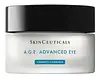
This anti-aging eye moisturizer is formulated around Caffeine and Palmitoyl Tripeptide-1 to soften the look of wrinkles and refine skin texture.
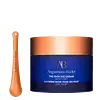
This anti-aging eye moisturizer is formulated around Palmitoyl Tripeptide-1 and Palmitoyl Tetrapeptide-7 to soften the look of wrinkles.


What's inside
What's inside
 Key Ingredients
Benefits
Concerns
Ingredients Side-by-side
Hexyl Laurate
Emollient

Cellulose
Absorbent
Polyethylene
Abrasive

Caprylic/Capric Triglyceride
Masking


Octyldodecanol
Emollient
Phenoxyethanol
Preservative
Butylene Glycol
Humectant
Caffeine
Skin Conditioning

Silica Silylate
Emollient
Tocopheryl Acetate
Antioxidant


Ammonium Polyacryloyldimethyl Taurate
Emulsion StabilisingSodium Citrate
BufferingDimethicone/Polyglycerin-3 Crosspolymer
Cleansing
Chlorphenesin
Antimicrobial
Boron Nitride
Absorbent
Alumina
Abrasive
Glycyrrhetinic Acid
Skin Conditioning
CI 77891
Cosmetic ColorantMenthoxypropanediol
Masking
Sorbitol
Humectant
Vaccinium Myrtillus Fruit Extract
Skin ConditioningSynthetic Fluorphlogopite
Sodium Phytate
ChelatingCarbomer
Emulsion StabilisingSodium Lactate
Buffering
Polysorbate 20
Emulsifying
Punica Granatum Fruit Extract
Antioxidant
Glycol
HumectantAlcohol
Antimicrobial

Palmitoyl Tripeptide-1
Skin Conditioning


Tocopherol
Antioxidant
Palmitoyl Tetrapeptide-7
Skin Conditioning
Pentaerythrityl Tetra-Di-T-Butyl Hydroxyhydrocinnamate
Antioxidant
Hexyl Laurate, Cellulose, Polyethylene, Caprylic/Capric Triglyceride, Octyldodecanol, Phenoxyethanol, Butylene Glycol, Caffeine, Silica Silylate, Tocopheryl Acetate, Ammonium Polyacryloyldimethyl Taurate, Sodium Citrate, Dimethicone/Polyglycerin-3 Crosspolymer, Chlorphenesin, Boron Nitride, Alumina, Glycyrrhetinic Acid, CI 77891, Menthoxypropanediol, Sorbitol, Vaccinium Myrtillus Fruit Extract, Synthetic Fluorphlogopite, Sodium Phytate, Carbomer, Sodium Lactate, Polysorbate 20, Punica Granatum Fruit Extract, Glycol, Alcohol, Palmitoyl Tripeptide-1, Tocopherol, Palmitoyl Tetrapeptide-7, Pentaerythrityl Tetra-Di-T-Butyl Hydroxyhydrocinnamate
Water
Skin ConditioningGlycerin
Humectant
Coco-Caprylate/Caprate
Emollient
Limnanthes Alba Seed Oil
Skin Conditioning
1,2-Hexanediol
Skin Conditioning
Simmondsia Chinensis Seed Oil
Emollient
Tapioca Starch
Polyglyceryl-4 Oleate
Emulsifying
Polyglyceryl-6 Oleate
Emulsifying
Magnesium Sulfate
Polyhydroxystearic Acid
Emulsifying
Sesamum Indicum Seed Oil
Emollient
Propanediol
Solvent
Olea Europaea Leaf Extract
Perfuming
Sodium Citrate
BufferingSodium Hyaluronate
Humectant
O-Cymen-5-Ol
Antimicrobial
Citric Acid
Buffering
Hydrolyzed Rice Protein
Skin ConditioningMaltodextrin
Absorbent
Ganoderma Lucidum Stem Extract
Skin ConditioningSodium Lactate
Buffering
Xanthan Gum
EmulsifyingGentiana Lutea Root Extract
Skin ConditioningCamellia Sinensis Leaf Extract
Antimicrobial
Hydrogenated Lecithin
Emulsifying
Tocopheryl Acetate
Antioxidant
Tocopherol
Antioxidant
Cyamopsis Tetragonoloba Gum
Emulsion StabilisingAlanyl Glutamine
HumectantArginine
Masking
Oligopeptide-177
Phenylalanine
Masking
Potassium Sorbate
Preservative
Sisymbrium Irio Seed Oil
Masking
Sodium Chloride
MaskingPalmitoyl Tripeptide-1
Skin Conditioning
Palmitoyl Tetrapeptide-7
Skin Conditioning
Water, Glycerin, Coco-Caprylate/Caprate, Limnanthes Alba Seed Oil, 1,2-Hexanediol, Simmondsia Chinensis Seed Oil, Tapioca Starch, Polyglyceryl-4 Oleate, Polyglyceryl-6 Oleate, Magnesium Sulfate, Polyhydroxystearic Acid, Sesamum Indicum Seed Oil, Propanediol, Olea Europaea Leaf Extract, Sodium Citrate, Sodium Hyaluronate, O-Cymen-5-Ol, Citric Acid, Hydrolyzed Rice Protein, Maltodextrin, Ganoderma Lucidum Stem Extract, Sodium Lactate, Xanthan Gum, Gentiana Lutea Root Extract, Camellia Sinensis Leaf Extract, Hydrogenated Lecithin, Tocopheryl Acetate, Tocopherol, Cyamopsis Tetragonoloba Gum, Alanyl Glutamine, Arginine, Oligopeptide-177, Phenylalanine, Potassium Sorbate, Sisymbrium Irio Seed Oil, Sodium Chloride, Palmitoyl Tripeptide-1, Palmitoyl Tetrapeptide-7
Ingredients Explained
These ingredients are found in both products.
Ingredients higher up in an ingredient list are typically present in a larger amount.
Palmitoyl Tetrapeptide-7 (formerly Palmitoyl Tetrapeptide-3) is a synthetic peptide. Its main job is to fight what researchers call "inflammaging".
"Inflammaging" is the slow, low-grade chronic inflammation that quietly breaks down collagen as we age.
This ingredient calms down a specific inflammation signal in your skin cells (called IL-6). When left unchecked, this signal triggers enzymes that break down collagen and elastin.
Clinical testing showed statistically significant improvements in:
Studies also found the more of this ingredient used, the more your skin produces Collagen I, fibronectin, and hyaluronic acid.
You'll likely see this ingredient paired with Palmitoyl Tripeptide-1 in the well-known Matrixyl 3000 complex for enhanced anti-aging effects.
A 3% concentration applied twice daily for two months showed meaningful skin rejuvenation results in clinical panels.
Fungal acne note:
Usually a palmitic acid component can feed Malassezia in unbound form, but here is is covalently bonded to the peptide. This means it is very difficult for Malassezia to access, and therefore very unlikely to cause fungal acne.
Palmitoyl Tripeptide-1 (aka Pal-GHK) is a synthetic signal peptide made of three amino acids attached to palmitic acid.
That fatty acid attachment is the key: it boosts the peptide's ability to penetrate the skin barrier. This puts it closer to the dermal cells where it can actually make a difference.
Once there, it acts as a matrikine, a signaling peptide that prompts fibroblasts to produce more collagen, fibronectin, and hyaluronic acid.
In vitro studies show it can boost collagen production in skin cells even when UV-damaged skin samples were treated with it at a tiny concentration (it almost fully restored dermal collagen at 5ppm). It achieved this at 100x lower concentration than retinoic acid, which needed 500 ppm to do the same thing.
Human clinical data is promising, but modest:
A study of 23 female volunteers found a small but statistically significant increase (~4%) in skin thickness after treatment at 4 ppm.
A separate small trial of 15 women showed statistically significant reductions in wrinkle length, depth, and skin roughness after applying it twice daily for four weeks.
You'll likely see Pal-GHK paired with Palmitoyl Tetrapeptide-7 as part of the Matrixyl 3000 complex.
Fungal acne note:
Usually a palmitic acid component can feed Malassezia in unbound form, but here is is covalently bonded to the peptide. This means it is very difficult for Malassezia to access, and therefore very unlikely to cause fungal acne.
Sodium Citrate is the sodium salts of citric acid. In skincare, it is used to alter pH levels and acts as a preservative.
Its main functions are to maintain the pH of a product and neutralize metal ions.
The acidity of our skin is maintained by our glands and skin biome; normal pH level of skin is slightly acidic (~4.75-5.5).
Being slightly acidic allows our skin to create an "acid mantle". This acid mantle is a thin barrier that protects our skin from bacteria and contaminants.
Learn more about Sodium CitrateSodium Lactate is the sodium salt of lactic acid, an AHA. It is a humectant and sometimes used to adjust the pH of a product.
This ingredient is part of our skin's NMF, or natural moisturizing factor. Our NMF is essential for the hydration of our top skin layers and plasticity of skin. NMF also influences our skin's natural acid mantle and pH, which protects our skin from harmful bacteria.
High percentages of Sodium Lactate can have an exfoliating effect.
Fun fact: Sodium Lactate is produced from fermented sugar.
Learn more about Sodium LactateTocopherol is a fat-soluble antioxidant known as Vitamin E.
You'll find this ingredient in the vast majority of skincare (for good reason). It works to neutralize free radicals, or unstable molecules generated by UV exposure, pollution, and other environmental stressors, before they can cause oxidative damage to your skin cells.
Topically applied tocopherol has been shown to protect against UV damage by ramping up the skin's own natural defense enzymes.
It also acts as a skin conditioning agent; some studies show that regular topical use can improve the skin's water-binding capacity over 2-4 weeks.
This ingredient is especially loved for being a team player. When combined with Vitamin C, the photoprotective effect of both ingredients roughly doubles and the combo also helps reduce UV-induced DNA damage.
This ingredient has some brightening potential but it's more of a prevention ingredient than spot-fader. Cell studies show it can slow down melanin production but it's worth noting that it's not the most powerful brightener out there.
In formulations, it also serves as a stabilizer that helps protect other oxidation-prone ingredients from degrading.
Concentrations usually range from 0.1-1% in most leave-on products.
Learn more about TocopherolTocopheryl Acetate is a stable, shelf-friendly form of vitamin E.
Formulators love it because plain vitamin E oxidizes quickly once it hits air. This acetate version stays stable and resists going off, helping to extend a product's shelf life.
It's actually inactive on its own and works like a slow-release "storage" form; the enzymes in your skin called esterases gradually convert it into active vitamin E over time.
One in vivo study showed 5% of the acetate in the living layer of the epidermis converted to vitamin E after 5 days of application. This study also found the skin gained protection against UV damage even though the conversion was slow and small.
Once converted, vitamin E acts as a skin's main fat-soluble antioxidant that fights free radicals to protect skin from damage.
Topical vitamin E generally boosts the skin's photoprotection, and it reduced UV-damage in animal models.
This ingredient has some brightening potential but it's more of a prevention ingredient than spot-fader. Cell studies show it can slow down melanin production but it's worth noting that it's not the most powerful brightener out there.
Overall, it has a pretty solid safety profile and has been found to be non-irritating and non-comedogenic. Allergic reactions may happen but stay rare due to how widely the ingredient gets used.
The concentration will vary depending on the formula; industry data shows 0.1% in baby lotions, 3% in lipsticks, and 5% in foot powders. You can also find this ingredient at 100% in a pure vitamin E oil.
Most leave-on skincare keeps it at the lower end, often between 0.5-1%.
Learn more about Tocopheryl Acetate

