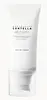
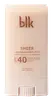
SKIN1004 Tone Brightening Tone-up Sunscreen SPF50+ PA++++ Versus Blk Cosmetics Sheer Sunscreen Primer Stick SPF 40
This hybrid sunscreen covers the full UV range and blocks ~98% of UVB at SPF 50.
This chemical sunscreen covers the full UV range and blocks ~98% of UVB at SPF 40.


What's inside
What's inside
 Key Ingredients
Benefits
Concerns
Ingredients Side-by-side
Water
Skin ConditioningDibutyl Adipate
EmollientTitanium Dioxide
Cosmetic Colorant

Propanediol
Solvent

Caprylic/Capric Triglyceride
Masking
Centella Asiatica Extract
Cleansing




C12-15 Alkyl Benzoate
AntimicrobialDiethylamino Hydroxybenzoyl Hexyl Benzoate
UV Filter
Ethylhexyl Triazone
UV Absorber
Niacinamide
Smoothing





Caprylyl Methicone
Skin Conditioning
Diethylhexyl Butamido Triazone
UV Absorber
1,2-Hexanediol
Skin Conditioning
Pentylene Glycol
Skin Conditioning
Corchorus Olitorius Leaf Extract
Skin ConditioningHordeum Vulgare Sprout Extract
Antioxidant
Nymphaea Alba Flower Extract
Skin ConditioningSodium Hyaluronate
Humectant
Coco-Caprylate/Caprate
Emollient
Glycerin
Humectant
Polyhydroxystearic Acid
Emulsifying

Dimethicone/Vinyl Dimethicone Crosspolymer
Skin Conditioning
Vp/Eicosene Copolymer
Dimethiconol
Emollient
Trisiloxane
Skin Conditioning
Stearic Acid
Cleansing
Alumina
Abrasive
Sodium Polyacryloyldimethyl Taurate
Emulsion StabilisingPolyacrylate Crosspolymer-6
Emulsion StabilisingHydroxypropyl Methylcellulose Stearoxy Ether
Dicaprylyl Carbonate
EmollientEthylhexylglycerin
Skin ConditioningXanthan Gum
EmulsifyingTriethoxycaprylylsilane
Adenosine
Skin Conditioning
Sodium Polyacrylate
Absorbent
Madecassoside
Antioxidant
Pvm/Ma Copolymer
Emulsion StabilisingPolyether-1
T-Butyl Alcohol
Perfuming




Tranexamic Acid
Astringent
Dipropylene Glycol
HumectantSodium Palmitoyl Proline
Skin ConditioningButylene Glycol
Humectant
CI 77492
Cosmetic ColorantCI 77491
Cosmetic ColorantWater, Dibutyl Adipate, Titanium Dioxide, Propanediol, Caprylic/Capric Triglyceride, Centella Asiatica Extract, C12-15 Alkyl Benzoate, Diethylamino Hydroxybenzoyl Hexyl Benzoate, Ethylhexyl Triazone, Niacinamide, Caprylyl Methicone, Diethylhexyl Butamido Triazone, 1,2-Hexanediol, Pentylene Glycol, Corchorus Olitorius Leaf Extract, Hordeum Vulgare Sprout Extract, Nymphaea Alba Flower Extract, Sodium Hyaluronate, Coco-Caprylate/Caprate, Glycerin, Polyhydroxystearic Acid, Dimethicone/Vinyl Dimethicone Crosspolymer, Vp/Eicosene Copolymer, Dimethiconol, Trisiloxane, Stearic Acid, Alumina, Sodium Polyacryloyldimethyl Taurate, Polyacrylate Crosspolymer-6, Hydroxypropyl Methylcellulose Stearoxy Ether, Dicaprylyl Carbonate, Ethylhexylglycerin, Xanthan Gum, Triethoxycaprylylsilane, Adenosine, Sodium Polyacrylate, Madecassoside, Pvm/Ma Copolymer, Polyether-1, T-Butyl Alcohol, Tranexamic Acid, Dipropylene Glycol, Sodium Palmitoyl Proline, Butylene Glycol, CI 77492, CI 77491
Cyclopentasiloxane
Emollient
Dimethicone/Vinyl Dimethicone Crosspolymer
Skin Conditioning
Silica
Abrasive
Isoceteth-10
EmulsifyingTrisiloxane
Skin Conditioning
Ethylhexyl Methoxycinnamate
UV Absorber
Octocrylene
UV Absorber
Phenoxyethanol
Preservative
Ethylhexylglycerin
Skin ConditioningButyl Methoxydibenzoylmethane
UV Absorber
Bis-Ethylhexyloxyphenol Methoxyphenyl Triazine
UV Absorber
Caprylic/Capric Triglyceride
Masking
Laminaria Ochroleuca Extract
Skin Conditioning
Bisabolol
Antioxidant
Aroma
Saccharide Isomerate
Humectant
Maltodextrin
Absorbent
Swertia Chirata Extract
HumectantCI 47000
Cosmetic ColorantParaffinum Liquidum
Emollient
C12-15 Alkyl Benzoate
AntimicrobialCyclopentasiloxane, Dimethicone/Vinyl Dimethicone Crosspolymer, Silica, Isoceteth-10, Trisiloxane, Ethylhexyl Methoxycinnamate, Octocrylene, Phenoxyethanol, Ethylhexylglycerin, Butyl Methoxydibenzoylmethane, Bis-Ethylhexyloxyphenol Methoxyphenyl Triazine, Caprylic/Capric Triglyceride, Laminaria Ochroleuca Extract, Bisabolol, Aroma, Saccharide Isomerate, Maltodextrin, Swertia Chirata Extract, CI 47000, Paraffinum Liquidum, C12-15 Alkyl Benzoate
Reviews
Ingredients Explained
These ingredients are found in both products.
Ingredients higher up in an ingredient list are typically present in a larger amount.
C12-15 Alkyl Benzoate is a lightweight emollient made by combinig benzoic acid with fatty alcohols that are 12-15 carbons long.
In cosmetics, it plays several roles:
The Cosmetic Review Expert Panel has concluded the alkyl benzoate group to be safe as used in cosmetics; it wasn't found to be a skin irritant and unlikely to be absorbed due to its low water solubility.
This report recorded almost 1000 reported uses with concentrations up to 59% in leave-on products but your cosmetics will typically use 0.5-15% depending on the product.
It's often called a "SPF booster": this is because it keeps UV filters properly dissolved and evenly distributed to support a sunscreen's performance. It doesn't actually raise SPF on its own.
Overall, this ingredient is well tolerated.
This ingredient is fungal acne safe because it is an ester of benzoic acid.
Think of this ingredient as two parts stuck together: an oily part and an acid part. Malassezia only gets a meal when it can snip off a fatty acid to eat. With C12-15 Alkyl Benzoate, the acid part is benzoic acid, which isn't a fatty acid and which the yeast can't use as food.
Benzoic acid is actually used as a preservative to stop yeast from growing.
The oily part is a blend of C12-15 fatty alcohols but fatty alcohols in this size range can support only a little Malassezia growth (mostly for one species of Malassezia as well).
In the ingredient, those alcohols stay locked inside the molecule. The yeast can only reach them by snipping the benzoate bond, and that type of bond is harder for it to cut than a normal fatty bond.
So not much gets released. And whatever does get snipped comes packaged with benzoic acid, which discourages yeast growth.
Learn more about C12-15 Alkyl BenzoateCaprylic/Capric Triglyceride (aka MCT Oil) is a lightweight emollient, solvent, and texture enhancer. It is considered a skin-softener by helping to prevent moisture loss.
Though it behaves like an oil, it is not technically one due to its chemical composition. One perk of this ingredient is that it is very stable, resistant to oxidation, and unlikely to go rancid.
In practice, that translates to a long shelf life and a consistently elegant skin feel.
While there is an assumption Caprylic Triglyceride can clog pores due to it being derived from coconut oil, there is no research supporting this. Just patch test if you have concerns.
Fractionated coconut oil and MCT Oil are both listed as Caprylic/Capric Triglyceride according to INCI. This is because INCI names are based on the ingredient’s final chemical composition and not its marketing name or source.
This ingredient is treated as the gold standard fungal acne safe oil. Even though it is coconut derived, the problematic lauric acid is stripped out.
This leaves just caprylic (C8) and capric (C10) acid. These chain lengths actually trend antifungal; a 2020 study found caprylic acid was enough to disrupt Malassezia furfur cell membrane, with a caprylic acid derivative damaging membrane structures at concentrations as low as 0.2%.
Learn more about Caprylic/Capric TriglycerideThis ingredient is a silicone elastomer that works as a texture enhancer, adds a silky slip, and also helps absorb excess oil.
Because it's a large macromolecule that's insoluble in water and chemically inert, it's not expected to penetrate or be absorbed into skin.
Human patch tests with a facial lotion containing 1% of this ingredient found no sensitization.
Learn more about Dimethicone/Vinyl Dimethicone CrosspolymerEthylhexylglycerin is created from glycerin. It is a multitasker ingredient that:
The CIR Expert Panel found minimal skin absorption or sensitization of any kind in a safety assessment. Though this ingredient is considered well-tolerated, a small number of cases of allergic dermatitis have been published since 2002. Just be sure to patch test if you are unsure.
Industry-reported use ranges from 8% in rinse-off products and 2% in leave-on formulations.
Learn more about EthylhexylglycerinTrisiloxane is a type of silicone.


