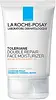
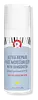
La Roche-Posay Toleriane Double Repair Face Moisturizer UV SPF 30 Versus First Aid Beauty Ultra Repair Face Moisturizer With Sunscreen SPF 30
This chemical sunscreen covers most of the UV range, lighter on the deep UVA that drives aging.
This hybrid sunscreen covers the full UV range and blocks ~97% of UVB at SPF 30.


What's inside
What's inside
 Key Ingredients
Benefits
Concerns
Ingredients Side-by-side
Butyl Methoxydibenzoylmethane 3%
UV Absorber
Homosalate 5%
Skin Conditioning
Ethylhexyl Salicylate 5%
UV Absorber
Octocrylene 7%
UV Absorber

Water
Skin ConditioningGlycerin
Humectant


Silica
Abrasive


Dimethicone
Emollient
Niacinamide
Smoothing







PEG-100 Stearate
Surfactant

Glyceryl Stearate
Emollient
Stearic Acid
Cleansing
Stearyl Alcohol
Emollient
Allantoin
Skin Conditioning
Ceramide NP
Skin Conditioning
Dimethicone/Vinyl Dimethicone Crosspolymer
Skin Conditioning
Sodium Hydroxide
BufferingMyristic Acid
Cleansing
Myristyl Alcohol
Emollient
Palmitic Acid
Emollient
Ammonium Polyacryloyldimethyl Taurate
Emulsion StabilisingDisodium EDTA
Capryloyl Glycine
CleansingCaprylyl Glycol
Emollient
Citric Acid
Buffering
Xanthan Gum
EmulsifyingT-Butyl Alcohol
Perfuming



Cetyl Alcohol
Emollient
Tocopherol
Antioxidant

Butyl Methoxydibenzoylmethane 3%, Homosalate 5%, Ethylhexyl Salicylate 5%, Octocrylene 7%, Water, Glycerin, Silica, Dimethicone, Niacinamide, PEG-100 Stearate, Glyceryl Stearate, Stearic Acid, Stearyl Alcohol, Allantoin, Ceramide NP, Dimethicone/Vinyl Dimethicone Crosspolymer, Sodium Hydroxide, Myristic Acid, Myristyl Alcohol, Palmitic Acid, Ammonium Polyacryloyldimethyl Taurate, Disodium EDTA, Capryloyl Glycine, Caprylyl Glycol, Citric Acid, Xanthan Gum, T-Butyl Alcohol, Cetyl Alcohol, Tocopherol
Octocrylene 10%
UV Absorber
Zinc Oxide 10.13%
Cosmetic Colorant
Water
Skin ConditioningIsononyl Isononanoate
EmollientGlycerin
Humectant
Dimethicone
Emollient
C13-15 Alkane
SolventPolyglyceryl-6 Stearate
Emollient
Hydroxypropyl Starch Phosphate
Ethylhexyl Methoxycrylene
Skin Conditioning
C12-15 Alkyl Benzoate
AntimicrobialPolysorbate 20
Emulsifying
Phenoxyethanol
Preservative
Glyceryl Stearate
Emollient
Cetearyl Alcohol
Emollient
Hydrogen Dimethicone
Polyglyceryl-6 Behenate
Emulsion Stabilising
Hydroxyethyl Acrylate/Sodium Acryloyldimethyl Taurate Copolymer
Emulsion StabilisingXanthan Gum
EmulsifyingIsohexadecane
EmollientChrysanthemum Parthenium Extract
Skin ConditioningCamellia Sinensis Leaf Extract
Antimicrobial
Glycyrrhiza Glabra Root Extract
Bleaching
Polyhydroxystearic Acid
Emulsifying
Polysorbate 60
Emulsifying
Sodium Benzoate
Masking
Potassium Sorbate
Preservative
Sorbitan Isostearate
Emulsifying
Tetrasodium EDTA
Octocrylene 10%, Zinc Oxide 10.13%, Water, Isononyl Isononanoate, Glycerin, Dimethicone, C13-15 Alkane, Polyglyceryl-6 Stearate, Hydroxypropyl Starch Phosphate, Ethylhexyl Methoxycrylene, C12-15 Alkyl Benzoate, Polysorbate 20, Phenoxyethanol, Glyceryl Stearate, Cetearyl Alcohol, Hydrogen Dimethicone, Polyglyceryl-6 Behenate, Hydroxyethyl Acrylate/Sodium Acryloyldimethyl Taurate Copolymer, Xanthan Gum, Isohexadecane, Chrysanthemum Parthenium Extract, Camellia Sinensis Leaf Extract, Glycyrrhiza Glabra Root Extract, Polyhydroxystearic Acid, Polysorbate 60, Sodium Benzoate, Potassium Sorbate, Sorbitan Isostearate, Tetrasodium EDTA
Reviews
Ingredients Explained
These ingredients are found in both products.
Ingredients higher up in an ingredient list are typically present in a larger amount.
Dimethicone is a type of synthetic silicone created from natural materials such as quartz. It is also known as polydimethylsiloxane.
What it does:
Dimethicone comes in different viscosities:
Depending on the viscosity, dimethicone has different properties.
Ingredients lists don't always show which type is used, so we recommend reaching out to the brand if you have questions about the viscosity.
This ingredient is unlikely to cause irritation because it does not get absorbed into skin. However, people with silicone allergies should be careful about using this ingredient.
Note: Dimethicone may contribute to pilling. This is because it is not oil or water soluble, so pilling may occur when layered with products. When mixed with heavy oils in a formula, the outcome is also quite greasy.
Learn more about DimethiconeGlycerin (or glycerol) is a compound naturally found in your skin. It's a powerhouse humectant that pulls water into the stratum corneum.
Topically, glycerin does several things at once:
Your skin makes glycerin on its own (mostly from sebaceous oil breakdown) and shuttles it to your outermost layer of skin, or your epidermis, via aquaporin-3.
Aquaporin-3 is a transporter that is essential for normal skin hydration, elasticity, and repair. Interestingly, mice lacking in AQP3 have dry and less elastic skin that can be fully corrected with glycerin.
This ingredient is non-irritating, plays well with almost every ingredient, and works across all skin types. Typical use is anywhere between 3-10% but can go up to 79% in some leave-on products.
Just know very high concentrations (>40%) can feel tacky in low humidity.
Glycerin is the name for this ingredient in American English. British English uses Glycerol/Glycerine.
Learn more about GlycerinGlyceryl Stearate is made by reacting glycerin with stearic acid (typically sourced from plant oils like palm or coconut). It's an emulsifier, emollient, and mild occlusive.
Emulsifiers help ingredients like oil and water stay mixed so your formula stays nicely blended and uniform in texture.
This ingredient is typically used in concentrations between 1-10%. Studies have found it to be non-sensitizing, non-phototoxic, and non-photoallergenic.
A close cousin of this ingredient is Glyceryl Stearate SE ("self-emulsifying"). This just has a small amount of sodium or potassium stearate added so it can emulsify without a co-emulsifier.
Since this ingredient is an ester of a C18 fatty acid, it may not be fungal acne safe. The Malassezia yeast can potentially metabolize within the C11-C24 range.
Fun fact: The human body also creates Glyceryl Stearate naturally.
Learn more about Glyceryl StearateOctocrylene is an oil-soluble organic UV filter that mainly absorbs UVB and short wave UVA II light.
Its real superpower is teamwork: octocrylene is remarkably photostable and is most famous for stabilizing avobenzone (the workhorse UVA filter).
This ingredient is commonly used to enhance both UVB and UVA protection due to its unique property in stabilizing avobenzone. It also pulls double duty by boosting water resistance and giving formulas a smooth, spreadable feel.
The EU's Scientific Committee on Consumer Safety (SCCS) has deemed octocrylene to be safe as a UV-filter at concentrations up to 10% (capped at 9% in propellant sprays). The US also permits it up to 10%.
Two things worth knowing:
You'll usually see this ingredient used in concentrations between 2-10% (higher amounts when used as a stabilizer for avobenzone).
Learn more about OctocryleneWater. It's the most common cosmetic ingredient of all. You'll usually see it at the top of ingredient lists, meaning that it makes up the largest part of the product.
So why is it so popular? Water most often acts as a solvent - this means that it helps dissolve other ingredients into the formulation.
You'll also recognize water as that liquid we all need to stay alive. If you see this, drink a glass of water. Remember to stay hydrated!
Learn more about WaterXanthan gum is used as a stabilizer and thickener within cosmetic products. It helps give products a sticky, thick feeling - preventing them from being too runny.
On the technical side of things, xanthan gum is a polysaccharide - a combination consisting of multiple sugar molecules bonded together.
Xanthan gum is a pretty common and great ingredient. It is a natural, non-toxic, non-irritating ingredient that is also commonly used in food products.
Learn more about Xanthan Gum

