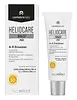
This hybrid sunscreen covers the full UV range and blocks ~98% of UVB at SPF 50.
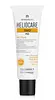
This hybrid sunscreen covers the full UV range and blocks ~99% of UVB at SPF 100.

What's inside
What's inside
 Key Ingredients
Benefits
Concerns
Ingredients Side-by-side
Water
Skin ConditioningCoconut Alkanes
Emollient


Zinc Oxide
Cosmetic Colorant


Caprylyl Methicone
Skin Conditioning
Isododecane
EmollientCyclopentasiloxane
Emollient
Titanium Dioxide
Cosmetic Colorant
Butylene Glycol
Humectant

PEG-9 Polydimethylsiloxyethyl Dimethicone
Emulsifying
Tris-Biphenyl Triazine
UV Absorber
Dimethicone
Emollient
Polyglyceryl-3 Polydimethylsiloxyethyl Dimethicone
Skin Conditioning
Coco-Caprylate/Caprate
Emollient
Polypodium Leucotomos Leaf Extract
Skin Protecting
Phenethyl Benzoate
Emollient

Pentylene Glycol
Skin Conditioning
Tambourissa Trichophylla Leaf Extract
Skin ConditioningGlutathione


Physalis Angulata Extract
Skin ProtectingTocopheryl Acetate
Antioxidant

Squalane
Emollient
Caprylic/Capric Triglyceride
Masking
Methyl Methacrylate Crosspolymer
Propylene Glycol
Humectant
Aluminum Hydroxide
EmollientStearic Acid
Cleansing

Dimethicone/PEG-10/15 Crosspolymer
Dipropylene Glycol
HumectantDisteardimonium Hectorite
StabilisingPropylene Carbonate
SolventDecyl Glucoside
Cleansing
Tocopherol
Antioxidant
Sodium Citrate
BufferingXanthan Gum
EmulsifyingDisodium Phosphate
BufferingMagnesium Sulfate
Disodium EDTA
ChelatingPhenylpropanol
Masking
Propanediol
Solvent
Caprylyl Glycol
Emollient
Triethoxycaprylylsilane
CI 77492
Cosmetic ColorantCI 77499
Cosmetic ColorantCI 77491
Cosmetic ColorantWater, Coconut Alkanes, Zinc Oxide, Caprylyl Methicone, Isododecane, Cyclopentasiloxane, Titanium Dioxide, Butylene Glycol, PEG-9 Polydimethylsiloxyethyl Dimethicone, Tris-Biphenyl Triazine, Dimethicone, Polyglyceryl-3 Polydimethylsiloxyethyl Dimethicone, Coco-Caprylate/Caprate, Polypodium Leucotomos Leaf Extract, Phenethyl Benzoate, Pentylene Glycol, Tambourissa Trichophylla Leaf Extract, Glutathione, Physalis Angulata Extract, Tocopheryl Acetate, Squalane, Caprylic/Capric Triglyceride, Methyl Methacrylate Crosspolymer, Propylene Glycol, Aluminum Hydroxide, Stearic Acid, Dimethicone/PEG-10/15 Crosspolymer, Dipropylene Glycol, Disteardimonium Hectorite, Propylene Carbonate, Decyl Glucoside, Tocopherol, Sodium Citrate, Xanthan Gum, Disodium Phosphate, Magnesium Sulfate, Disodium EDTA, Phenylpropanol, Propanediol, Caprylyl Glycol, Triethoxycaprylylsilane, CI 77492, CI 77499, CI 77491
Water
Skin ConditioningOctocrylene
UV Absorber
Arginine
Masking
Bis-Ethylhexyloxyphenol Methoxyphenyl Triazine
UV Absorber
Disodium Phenyl Dibenzimidazole Tetrasulfonate
UV Absorber
Ethylhexyl Benzoate
EmollientPhenylbenzimidazole Sulfonic Acid
UV Absorber
Butyl Methoxydibenzoylmethane
UV Absorber
Caprylyl Methicone
Skin Conditioning
Tris-Biphenyl Triazine
UV Absorber
C12-15 Alkyl Benzoate
AntimicrobialC14-22 Alcohols
Emulsion Stabilising
Pentylene Glycol
Skin Conditioning
Dicaprylyl Carbonate
EmollientNylon-12
Cyclopentasiloxane
Emollient
Lepidium Sativum Sprout Extract
Skin ConditioningCeteareth-20
Cleansing
Titanium Dioxide
Cosmetic Colorant
Butylene Glycol
Humectant
Polypodium Leucotomos Leaf Extract
Skin Protecting
Physalis Angulata Extract
Skin ProtectingMelanin
Skin ProtectingCamellia Sinensis Extract
Antioxidant

Plankton Extract
Skin ConditioningCichorium Intybus Extract
Skin Conditioning3-O-Ethyl Ascorbic Acid
Skin Conditioning

C12-20 Alkyl Glucoside
EmulsifyingDipropylene Glycol Dibenzoate
EmollientDisiloxane
Skin Conditioning
Hydrolyzed Wheat Protein/Pvp Crosspolymer
Propylene Glycol
Humectant
Phenylpropanol
Masking
Polyglyceryl-3 Polydimethylsiloxyethyl Dimethicone
Skin Conditioning
Ceteareth-25
CleansingCaprylyl Glycol
Emollient
Propanediol
Solvent
Aluminum Hydroxide
EmollientStearic Acid
Cleansing
Hydrogenated Dimer Dilinoleyl/Dimethylcarbonate Copolymer
Emulsion StabilisingPPG-15 Stearyl Ether Benzoate
EmollientDisodium Ethylene Dicocamide PEG-15 Disulfate
Cleansing
Xanthan Gum
EmulsifyingGlycerin
Humectant
Disodium EDTA
ChelatingTocopheryl Acetate
Antioxidant
Caprylic/Capric Triglyceride
Masking
Lecithin
Emollient
Ethylhexylglycerin
Skin ConditioningPalmitoyl Hydroxypropyltrimonium Amylopectin/Glycerin Crosspolymer
Skin Conditioning1,2-Hexanediol
Skin Conditioning
Hydrogenated Lecithin
Emulsifying
Tocopherol
Antioxidant
Phenoxyethanol
Preservative
BHT
Antioxidant
Parfum
Masking
Linalool
Perfuming
Limonene
Perfuming
Water, Octocrylene, Arginine, Bis-Ethylhexyloxyphenol Methoxyphenyl Triazine, Disodium Phenyl Dibenzimidazole Tetrasulfonate, Ethylhexyl Benzoate, Phenylbenzimidazole Sulfonic Acid, Butyl Methoxydibenzoylmethane, Caprylyl Methicone, Tris-Biphenyl Triazine, C12-15 Alkyl Benzoate, C14-22 Alcohols, Pentylene Glycol, Dicaprylyl Carbonate, Nylon-12, Cyclopentasiloxane, Lepidium Sativum Sprout Extract, Ceteareth-20, Titanium Dioxide, Butylene Glycol, Polypodium Leucotomos Leaf Extract, Physalis Angulata Extract, Melanin, Camellia Sinensis Extract, Plankton Extract, Cichorium Intybus Extract, 3-O-Ethyl Ascorbic Acid, C12-20 Alkyl Glucoside, Dipropylene Glycol Dibenzoate, Disiloxane, Hydrolyzed Wheat Protein/Pvp Crosspolymer, Propylene Glycol, Phenylpropanol, Polyglyceryl-3 Polydimethylsiloxyethyl Dimethicone, Ceteareth-25, Caprylyl Glycol, Propanediol, Aluminum Hydroxide, Stearic Acid, Hydrogenated Dimer Dilinoleyl/Dimethylcarbonate Copolymer, PPG-15 Stearyl Ether Benzoate, Disodium Ethylene Dicocamide PEG-15 Disulfate, Xanthan Gum, Glycerin, Disodium EDTA, Tocopheryl Acetate, Caprylic/Capric Triglyceride, Lecithin, Ethylhexylglycerin, Palmitoyl Hydroxypropyltrimonium Amylopectin/Glycerin Crosspolymer, 1,2-Hexanediol, Hydrogenated Lecithin, Tocopherol, Phenoxyethanol, BHT, Parfum, Linalool, Limonene
Reviews
Ingredients Explained
These ingredients are found in both products.
Ingredients higher up in an ingredient list are typically present in a larger amount.
Aluminum Hydroxide is a form of aluminum. It can be naturally found in nature as the mineral gibbsite. In cosmetics, Aluminum Hydroxide is used as a colorant, pH adjuster, and absorbent.
As a colorant, Aluminum Hydroxide may add opacity, or reduce the transparency. Aluminum hydroxide is contains both basic and acidic properties.
According to manufacturers, this ingredient is an emollient and humectant. This means it helps hydrate the skin.
In medicine, this ingredient is used to help relieve heartburn and help heal ulcers.
There is currently no credible scientific evidence linking aluminum hydroxide in cosmetics to increased cancer risk.
Major health organizations allow the use of aluminum hydroxide in personal care products and have not flagged it as a carcinogenic risk at typical usage levels.
Learn more about Aluminum HydroxideButylene Glycol (or BG) is used within cosmetic products for a few different reasons:
Overall, Butylene Glycol is a safe and well-rounded ingredient that works well with other ingredients.
Though this ingredient works well with most skin types, some people with sensitive skin may experience a reaction such as allergic rashes, closed comedones, or itchiness.
Learn more about Butylene GlycolCaprylic/Capric Triglyceride (aka MCT Oil) is a lightweight emollient, solvent, and texture enhancer. It is considered a skin-softener by helping to prevent moisture loss.
Though it behaves like an oil, it is not technically one due to its chemical composition. One perk of this ingredient is that it is very stable, resistant to oxidation, and unlikely to go rancid.
In practice, that translates to a long shelf life and a consistently elegant skin feel.
While there is an assumption Caprylic Triglyceride can clog pores due to it being derived from coconut oil, there is no research supporting this. Just patch test if you have concerns.
Fractionated coconut oil and MCT Oil are both listed as Caprylic/Capric Triglyceride according to INCI. This is because INCI names are based on the ingredient’s final chemical composition and not its marketing name or source.
This ingredient is treated as the gold standard fungal acne safe oil. Even though it is coconut derived, the problematic lauric acid is stripped out.
This leaves just caprylic (C8) and capric (C10) acid. These chain lengths actually trend antifungal; a 2020 study found caprylic acid was enough to disrupt Malassezia furfur cell membrane, with a caprylic acid derivative damaging membrane structures at concentrations as low as 0.2%.
Learn more about Caprylic/Capric TriglycerideCaprylyl Glycol is a humectant, skin conditioner, emollient, and preservative booster derived from either caprylic acid or synthetically created.
Typical use levels vary from 0.3-1% as a preservative booster and go up to 2% to condition skin.
Because it is not a free-fatty acid, this ingredient is fungal acne safe (there's nothing for Malassezia to feed on).
Learn more about Caprylyl GlycolCaprylyl Methicone is a synthetic and lightweight silicone fluid. It gives products a silky, dry-touch finish without the heaviness of pure oils.
Though the EU CosIng Database lists this ingredient as a skin conditioner, it is also used for sensory reasons. It spreads easily, cuts greasiness, and reduces tackiness.
This ingredient is volatile which means it will mostly evaporate (but it evaporates slower than older cyclomethicones, like Cyclotetrasiloxane).
Typical concentration ranges from 1-30% depending on if it's being used to tweak the feel of a product or acting as the main emollient.
Learn more about Caprylyl MethiconeCyclopentasiloxane (D5) is a lightweight silicone that mostly acts as an emollient and solvent in cosmetics. Its the reason your products feel silky, fast-spreading, and non-greasy.
Since D5 is volatile, it does its thing and then evaporates off the skin quickly.
The safety profile of this ingredient is reassuring; the US CIR Expert Panel concluded D5 is safe as used in cosmetics and Health Canada concluded that D5 is not harmful to human health or the environment as currently used in cosmetics
There's a study that people mention about D5 in a rat study showing tumors. This study is related to long-term inhalation of high D5 levels.
Regulatory bodies have judged this study to be not applicable in topical skincare since skin absorption of D5 is very low and we're not really inhaling huge amounts of D5.
The only restriction for this ingredient is environmental. The European Chemicals Agency (ECHA) restricted D5 in wash-off cosmetics at or above 0.1% due to their persistence in water.
Learn more about CyclopentasiloxaneDisodium EDTA is a chelating agent. It grabs onto and deactivates metal ions that sneak into your products from water, packaging, or air.
This ingredient mainly works behind the scenes and helps with:
On top of that, this ingredient can counteract the effects of hard water by binding to the minerals in it.
One thing worth knowing is that Disodium EDTA has been shown to be a mild penetration enhancer. It can help other ingredients absorb into skin more effectively which can be a double-edged sword (great for actives, but can also make the active too strong if you have sensitive skin).
Clinical patch testing showed no significant skin irritation at typical use concentrations and minimal dermal absorption.
You'll most likely see this ingredient near the end of an ingredient list. It's typically found in concentrations less than 1%.
Learn more about Disodium EDTAPentylene Glycol (1,2-pentanediol) is a multitasking little diol with three main roles in a formula:
Research on alkanediols (the family pentylene glycol belongs to) show they work by disrupting microbial cell membranes. This disruption helps the primary preservative system in a product work more effectively at lower doses.
On the safety side, the Cosmetic Ingredient Review Expert Panel has concluded this ingredient to be safe as used in current cosmetic practices + concentrations.
Typical use levels in a formula run about 1-5%.
Learn more about Pentylene GlycolPhenylpropanol is a fragrance.
We don't have a description for Physalis Angulata Extract yet.
Polyglyceryl-3 Polydimethylsiloxyethyl Dimethicone is a type of silicone.
Polypodium Leucotomos Leaf Extract can help to reduce redness.
Propanediol is an all-star ingredient. It softens, hydrates, and smooths the skin.
It’s often used to:
Propanediol is not likely to cause sensitivity and considered safe to use. It is derived from corn or petroleum with a clear color and no scent.
Learn more about PropanediolPropylene Glycol is a synthetic, colorless, odorless liquid that has been a staple in cosmetics for decades. It is a skin conditioning agent, humectant, and solvent.
As a humectant, it draw water to the skin to reduce flaking and restore suppleness. It's also a solvent that helps dissolve other actives and keeps formulas stable across temperature changes.
The CIR Expert Panel has confirmed this ingredient to be nontoxic and clinical studies show no sensitization at cosmetic use concentrations.
True allergic reactions are quite rare: a 15-year retrospective study of 6,751 patients found only 0.31% had a positive reaction (and less than half were considered clinically relevant).
It seemed that when sensitization does occur, it's most commonly linked to topical medication (like corticosteroids) and not cosmetics. Allergic contact dermatitis also appears largely limited to individuals with underlying skin conditions.
Overall, propylene glycol is a well-studied ingredient that most people can tolerate without issue.
Learn more about Propylene GlycolStearic Acid is a fatty acid that is already found in your skin. It's one of the free fatty acids that works alongside ceramides and cholesterols to maintain your barrier.
In cosmetics, it is a multitasker:
Safety-wise, the CIR Expert Panel has concluded it to be safe in cosmetics when formulated to be non-irritating and non-sensitizing.
Free stearic acid is a C18 fatty acid that the Malassezia yeast can substrate, so this ingredient may not be fungal acne safe.
This ingredient does have a comedogenic rating of 2-3, but this doesn't mean a formula with this ingredient will clog pores.
Human testing has proved that any finished product with this ingredient won't automatically make you break out; it really comes down to concentration, formula, and your skin.
Learn more about Stearic AcidTitanium Dioxide (TD) is a mineral UV filter widely used in sunscreens and cosmetics.
It's one of only two UV filters officially classified as "mineral" by regulatory agencies (the other being Zinc Oxide).
A really common myth is that mineral filters work by reflecting UV light off your skin like tiny mirrors.
They don't only do that; modern research shows TD protects mostly by absorbing UV radiation, the same way chemical filters do.
When researchers measured this, reflection accounted for only about 4-5% of the protection (and less than SPF 2 on its own). The other ~95% comes from absorption: the UV photons hit the particle and their energy gets soaked up by its semiconductor band gap rather than bouncing off.
So "reflects vs. absorbs" was never really the right way to split mineral from chemical filters.
TD gives broad-spectrum protection that's strongest in the UVB and UVA-2 range and weaker in the UVA-1 range. Its UVA protection isn't quite as strong as Zinc Oxide's which is why you'll often see the two paired together.
Together, they make a solid broad-spectrum system.
TD is a great pick for sensitive, acne-prone, or redness-prone skin because it's non-irritating and chemically inert. Regulatory reviews classify it as a non-sensitizer and mild-to-non-irritant.
It's also unlikely to cause the "eye sting" some chemical filters are known for.
The main trade-off is cosmetic; TD can leave a white cast and has a thicker texture. This is why mineral sunscreens are often less cosmetically elegant than chemical or hybrid formulas (and harder to shade-match on deeper skin tones).
Formulators often use micronized or nano-sized TD to cut down on white case and improve spreadability. Smaller particles scatter less visible light so the formula looks less chalky while still filtering UV.
TD is almost always bundled with coatings like Alumina, Silica, Stearic Acid, or Dimethicone. These coatings do two important jobs:
TD can be used at up to 25% in a finished sunscreen; this is the regulatory ceiling in both the US and the EU.
In practice, the amount in any given product varies a lot depending on the target SPF and whether it's paired with other UV filters.
TD is one of the most heavily vetted sunscreen ingredients out there. It is approved as a UV filter in all major markets worldwide, including the US, EU, UK, Japan, Korea, China, Australia, and Canada.
The safety evidence is solid. There was an old worry that nano particles might absorb through skin into the body but multiple studies (including on damaged, sunburned, and UV-irradiated skin) have shown that TD stays on the surface and the layer of dead skin cells on top of everything else.
There's also no evidence of carcinogenicity, mutagenicity, or reproductive toxicity from dermal exposure of this ingredient.
For those who have seen the headline about a 2022 EU ban on TD, that was on TD as a food additive (a complete separate use from topical sunscreen).
There are ongoing questions about how nano-TD might affect marine ecosystems. As of now, there has been no conclusive evidence that any form of TD (or any other sunscreen filter) harms coral reefs or marine life.
The science is still developing and it's a space worth watching rather than packing over.
However, several destinations have reef-safety sunscreen rules that restrict certain chemical filters and steer visitors toward mineral, non-nano options. If you're traveling somewhere with these rules, a non-nano mineral sunscreen is the safe bet.
Learn more about Titanium DioxideTocopherol is a fat-soluble antioxidant known as Vitamin E.
You'll find this ingredient in the vast majority of skincare (for good reason). It works to neutralize free radicals, or unstable molecules generated by UV exposure, pollution, and other environmental stressors, before they can cause oxidative damage to your skin cells.
Topically applied tocopherol has been shown to protect against UV damage by ramping up the skin's own natural defense enzymes.
It also acts as a skin conditioning agent; some studies show that regular topical use can improve the skin's water-binding capacity over 2-4 weeks.
This ingredient is especially loved for being a team player. When combined with Vitamin C, the photoprotective effect of both ingredients roughly doubles and the combo also helps reduce UV-induced DNA damage.
This ingredient has some brightening potential but it's more of a prevention ingredient than spot-fader. Cell studies show it can slow down melanin production but it's worth noting that it's not the most powerful brightener out there.
In formulations, it also serves as a stabilizer that helps protect other oxidation-prone ingredients from degrading.
Concentrations usually range from 0.1-1% in most leave-on products.
Learn more about TocopherolTocopheryl Acetate is a stable, shelf-friendly form of vitamin E.
Formulators love it because plain vitamin E oxidizes quickly once it hits air. This acetate version stays stable and resists going off, helping to extend a product's shelf life.
It's actually inactive on its own and works like a slow-release "storage" form; the enzymes in your skin called esterases gradually convert it into active vitamin E over time.
One in vivo study showed 5% of the acetate in the living layer of the epidermis converted to vitamin E after 5 days of application. This study also found the skin gained protection against UV damage even though the conversion was slow and small.
Once converted, vitamin E acts as a skin's main fat-soluble antioxidant that fights free radicals to protect skin from damage.
Topical vitamin E generally boosts the skin's photoprotection, and it reduced UV-damage in animal models.
This ingredient has some brightening potential but it's more of a prevention ingredient than spot-fader. Cell studies show it can slow down melanin production but it's worth noting that it's not the most powerful brightener out there.
Overall, it has a pretty solid safety profile and has been found to be non-irritating and non-comedogenic. Allergic reactions may happen but stay rare due to how widely the ingredient gets used.
The concentration will vary depending on the formula; industry data shows 0.1% in baby lotions, 3% in lipsticks, and 5% in foot powders. You can also find this ingredient at 100% in a pure vitamin E oil.
Most leave-on skincare keeps it at the lower end, often between 0.5-1%.
Learn more about Tocopheryl AcetateTris-Biphenyl Triazine (aka Tinosorb A2B) is one of the newer UV filters and is a bit of an overachiever in a very specific way.
It's the most efficient UVB + UVA-2 filter currently available on the market.
The UVA-2 gap is something that a lot of older UV filters miss; UVA-2 is a deep-penetrating, aging and pigmentation-driving, wavelength that you can't feel (it doesn't burn the way UVB does).
When paired with UVA-1 filters, Tinosorb A2B is able to give a "boosting" assist as well.
More cool things about this ingredient? It's highly photostable and has high SPF performance at low concentrations.
That photostability matters because plenty of older filters degrade as you wear them; this one stays put and even helps stabilize the other filters around it.
A 2015 study found this ingredient delivers about 2 SPF units and 1 UVA-PF unit per percentage used, with SPF and UVA protection holding steady after two hours under a solar simulator.
Safety-wise, it's been formally reviewed and cleared. Both the EU and Australia approve it as a UV filter up to 10%.
Because it has a high molecular weight, significant absorption through the skin is quite low and there has been no evidence of phototoxicity or photoallergenicity in a human study on 53 subjecfts.
You won't be able to find this ingredient in the US yet due to FDA regulatory backlog.
Learn more about Tris-Biphenyl TriazineWater. It's the most common cosmetic ingredient of all. You'll usually see it at the top of ingredient lists, meaning that it makes up the largest part of the product.
So why is it so popular? Water most often acts as a solvent - this means that it helps dissolve other ingredients into the formulation.
You'll also recognize water as that liquid we all need to stay alive. If you see this, drink a glass of water. Remember to stay hydrated!
Learn more about WaterXanthan gum is used as a stabilizer and thickener within cosmetic products. It helps give products a sticky, thick feeling - preventing them from being too runny.
On the technical side of things, xanthan gum is a polysaccharide - a combination consisting of multiple sugar molecules bonded together.
Xanthan gum is a pretty common and great ingredient. It is a natural, non-toxic, non-irritating ingredient that is also commonly used in food products.
Learn more about Xanthan Gum

