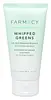
Farmacy Whipped Greens Foaming Oil-Free Cleanser Versus alpyn beauty PlantGenius® Creamy Bubbling Cleanser with Fruit Enzymes & AHAs
This mild foaming cleanser is mild enough to cleanse without leaving skin feeling tight or stripped.
This glycolic acid cream cleanser is formulated around Glycolic Acid to exfoliate and smooth skin.

What's inside
What's inside
 Key Ingredients
Benefits
Concerns
Ingredients Side-by-side
Water
Skin ConditioningGlycerin
Humectant


Sodium Lauroyl Isethionate
CleansingSodium Cocoyl Glycinate
Cleansing
Decyl Glucoside
Cleansing
Magnesium Aluminum Silicate
Absorbent
Sodium Lauroyl Methyl Isethionate
CleansingCoconut Acid
Cleansing

Sodium Lauroamphoacetate
CleansingMyristic Acid
Cleansing

Sodium Lauroyl Lactylate
EmulsifyingMoringa Oleifera Leaf Water
Skin ConditioningSodium PCA
Humectant
Kaolin
Abrasive


Lactobacillus/Papaya Fruit Ferment Extract
Abrasive
Moringa Oleifera Seed Extract
Skin Conditioning
Montmorillonite
AbsorbentMelia Azadirachta Leaf Extract
Skin ConditioningCitrus Limon Fruit Extract
Masking
Quillaja Saponaria Wood Extract
Skin ConditioningLauric Acid
Cleansing
Cocamide Mipa
Emulsifying
Sodium Isethionate
CleansingXanthan Gum
EmulsifyingSodium Polyacryloyldimethyl Taurate
Emulsion StabilisingSodium Benzoate
Masking
Palmitic Acid
Emollient
Lactic Acid
Buffering




Illite
Abrasive
3-Hexenol
Masking

Beta-Caryophyllene
Masking
Canarium Luzonicum Gum Nonvolatiles
MaskingCitronellal
Masking
Citrus Aurantifolia Fruit Extract
Skin ConditioningCitrus Aurantium Dulcis Fruit Extract
MaskingEugenol
Perfuming
Hydroxyacetophenone
Antioxidant
Hexenyl Acetate
Masking
Linalool
Perfuming
Linalyl Acetate
Masking
Triethyl Citrate
Masking
Zingiber Officinale Extract
Skin ConditioningCapric Acid
Cleansing
Melia Azadirachta Flower Extract
Skin ConditioningQuartz
Abrasive
Saponaria Officinalis Leaf/Root Extract
Skin ConditioningLeuconostoc/Radish Root Ferment Filtrate
Antimicrobial
Gluconolactone
Chelating
Maltodextrin
Absorbent
Limonene
Perfuming
Water, Glycerin, Sodium Lauroyl Isethionate, Sodium Cocoyl Glycinate, Decyl Glucoside, Magnesium Aluminum Silicate, Sodium Lauroyl Methyl Isethionate, Coconut Acid, Sodium Lauroamphoacetate, Myristic Acid, Sodium Lauroyl Lactylate, Moringa Oleifera Leaf Water, Sodium PCA, Kaolin, Lactobacillus/Papaya Fruit Ferment Extract, Moringa Oleifera Seed Extract, Montmorillonite, Melia Azadirachta Leaf Extract, Citrus Limon Fruit Extract, Quillaja Saponaria Wood Extract, Lauric Acid, Cocamide Mipa, Sodium Isethionate, Xanthan Gum, Sodium Polyacryloyldimethyl Taurate, Sodium Benzoate, Palmitic Acid, Lactic Acid, Illite, 3-Hexenol, Beta-Caryophyllene, Canarium Luzonicum Gum Nonvolatiles, Citronellal, Citrus Aurantifolia Fruit Extract, Citrus Aurantium Dulcis Fruit Extract, Eugenol, Hydroxyacetophenone, Hexenyl Acetate, Linalool, Linalyl Acetate, Triethyl Citrate, Zingiber Officinale Extract, Capric Acid, Melia Azadirachta Flower Extract, Quartz, Saponaria Officinalis Leaf/Root Extract, Leuconostoc/Radish Root Ferment Filtrate, Gluconolactone, Maltodextrin, Limonene
Water
Skin ConditioningGlycerin
Humectant
Sodium Cocoyl Isethionate
Cleansing
Sodium Hyaluronate
Humectant

Sodium Methyl Cocoyl Taurate
Cleansing
Cetearyl Alcohol
Emollient
Lactobacillus/Punica Granatum Fruit Ferment Extract
Antioxidant
Polyacrylate-33
Sodium Cocoyl Apple Amino Acids
Foam Boosting
Dehydroacetic Acid
Preservative
Benzyl Alcohol
Perfuming
Tromethamine
BufferingCarica Papaya Fruit Extract
Skin ConditioningPotassium Sorbate
Preservative
Eclipta Prostrata Extract
Skin Conditioning
Melia Azadirachta Leaf Extract
Skin ConditioningMoringa Oleifera Seed Oil
Emollient
Glycolic Acid
Buffering
Lactic Acid
Buffering
Ascorbic Acid
Antioxidant
Linoleic Acid
Cleansing
Simmondsia Chinensis Seed Oil
Emollient
Lavandula Angustifolia Oil
Masking
Citrus Aurantium Dulcis Oil
Masking
Salvia Officinalis Leaf Extract
CleansingArnica Montana Flower Extract
Masking
Borago Officinalis Extract
Emollient
Calendula Officinalis Flower Extract
Masking
Chamomilla Recutita Flower Extract
Masking
Ceramide Ng
Skin Conditioning
Alcohol
Antimicrobial
Water, Glycerin, Sodium Cocoyl Isethionate, Sodium Hyaluronate, Sodium Methyl Cocoyl Taurate, Cetearyl Alcohol, Lactobacillus/Punica Granatum Fruit Ferment Extract, Polyacrylate-33, Sodium Cocoyl Apple Amino Acids, Dehydroacetic Acid, Benzyl Alcohol, Tromethamine, Carica Papaya Fruit Extract, Potassium Sorbate, Eclipta Prostrata Extract, Melia Azadirachta Leaf Extract, Moringa Oleifera Seed Oil, Glycolic Acid, Lactic Acid, Ascorbic Acid, Linoleic Acid, Simmondsia Chinensis Seed Oil, Lavandula Angustifolia Oil, Citrus Aurantium Dulcis Oil, Salvia Officinalis Leaf Extract, Arnica Montana Flower Extract, Borago Officinalis Extract, Calendula Officinalis Flower Extract, Chamomilla Recutita Flower Extract, Ceramide Ng, Alcohol
Reviews
Alternatives
Ingredients Explained
These ingredients are found in both products.
Ingredients higher up in an ingredient list are typically present in a larger amount.
Glycerin (or glycerol) is a compound naturally found in your skin. It's a powerhouse humectant that pulls water into the stratum corneum.
Topically, glycerin does several things at once:
Your skin makes glycerin on its own (mostly from sebaceous oil breakdown) and shuttles it to your outermost layer of skin, or your epidermis, via aquaporin-3.
Aquaporin-3 is a transporter that is essential for normal skin hydration, elasticity, and repair. Interestingly, mice lacking in AQP3 have dry and less elastic skin that can be fully corrected with glycerin.
This ingredient is non-irritating, plays well with almost every ingredient, and works across all skin types. Typical use is anywhere between 3-10% but can go up to 79% in some leave-on products.
Just know very high concentrations (>40%) can feel tacky in low humidity.
Glycerin is the name for this ingredient in American English. British English uses Glycerol/Glycerine.
Learn more about GlycerinLactic Acid is another well-loved alpha hydroxy acid (AHA). It is gentler than glycolic acid but still highly effective.
Its main role is to exfoliate the surface of the skin by loosening the “glue” that holds dead skin cells together. Shedding those old cells leads to smoother, softer, and more even-toned skin.
Because lactic acid molecules are larger than glycolic acid, they don’t penetrate as deeply. This means they’re less likely to sting or irritate, making it a great choice for beginners or those with sensitive skin.
Like glycolic acid, it can:
Lactic acid also acts as a humectant (like hyaluronic acid). It can draw water into the skin to improve hydration and also plays a role in the skin's natural moisturizing factor (NMF) in the form of sodium lactate.
Studies show it can boost ceramide production to strengthen the skin barrier and even help balance the skin’s microbiome.
To get results, choose products with a pH between 3-4.
Lower strengths (5-12%) focus on surface exfoliation; higher strengths (12% and up) can reach deeper in the dermis (deeper, supportive layer) to improve skin texture and firmness over time.
Though it was originally derived from milk, most modern lactic acid used in skincare is vegan. It is made through non-dairy fermentation to create a bio-identical and stable form suitable for all formulations.
When lactic acid shows up near the end of an ingredient list, it usually means the brand added just a tiny amount to adjust the product’s pH.
Legend has it that Cleopatra used to bathe in sour milk to help reduce wrinkles.
Lactic acid is truly a gentle multitasker: it exfoliates, hydrates, strengthens, and brightens. It's a great ingredient for giving your skin a smooth, glowing, and healthy look without the harshness of stronger acids.
Read more about some other popular AHA's here:
Learn more about Lactic AcidThis ingredient is also known as neem leaf extract. It contains natural compounds like nimbidin, quercetin, and other polyphenols that give it antibacterial, antifungal, and anti-inflammatory activity.
Lab studies have shown neem leaf extract can inhibit acne-related bacteria and help calm skin. Animal studies on wound gels using 1-3% neem leaf extract found it sped up healing without causing irritation.
A wound-healing study testing gels with the extract at 1%, 2%, and 3% concentrations and found none of them irritated the skin.
Most commercial products also use it in a similar low range (typically under 5%).
Allergy-wise, there are some case reports on neem oil causing allergic contact dermatitis so people with plant/botanical sensitivities may want to patch test first.
Learn more about Melia Azadirachta Leaf ExtractWater. It's the most common cosmetic ingredient of all. You'll usually see it at the top of ingredient lists, meaning that it makes up the largest part of the product.
So why is it so popular? Water most often acts as a solvent - this means that it helps dissolve other ingredients into the formulation.
You'll also recognize water as that liquid we all need to stay alive. If you see this, drink a glass of water. Remember to stay hydrated!
Learn more about Water

