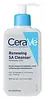
This salicylic acid gel cleanser is formulated around Salicylic Acid to clear breakouts and unclog pores.
This mild foaming cleanser is mild enough to cleanse without leaving skin feeling tight or stripped.

What's inside
What's inside
 Key Ingredients
Benefits
Concerns
Ingredients Side-by-side
Water
Skin ConditioningCocamidopropyl Hydroxysultaine
Cleansing
Glycerin
Humectant


Sodium Lauroyl Sarcosinate
CleansingNiacinamide
Smoothing









Gluconolactone
Chelating
PEG-150 Pentaerythrityl Tetrastearate
Emulsifying

Sodium Methyl Cocoyl Taurate
Cleansing
Zea Mays Oil
Emulsifying



Ceramide NP
Skin Conditioning
Ceramide AP
Skin Conditioning
Ceramide EOP
Skin Conditioning
Carbomer
Emulsion StabilisingCalcium Gluconate
HumectantSodium Chloride
MaskingSalicylic Acid
Masking



Sodium Benzoate
Masking
Sodium Lauroyl Lactylate
EmulsifyingCholecalciferol
Cholesterol
Emollient
Phenoxyethanol
Preservative
Disodium EDTA
ChelatingTetrasodium EDTA
ChelatingHydrolyzed Hyaluronic Acid
Humectant
Phytosphingosine
Skin Conditioning
Xanthan Gum
EmulsifyingEthylhexylglycerin
Skin ConditioningWater, Cocamidopropyl Hydroxysultaine, Glycerin, Sodium Lauroyl Sarcosinate, Niacinamide, Gluconolactone, PEG-150 Pentaerythrityl Tetrastearate, Sodium Methyl Cocoyl Taurate, Zea Mays Oil, Ceramide NP, Ceramide AP, Ceramide EOP, Carbomer, Calcium Gluconate, Sodium Chloride, Salicylic Acid, Sodium Benzoate, Sodium Lauroyl Lactylate, Cholecalciferol, Cholesterol, Phenoxyethanol, Disodium EDTA, Tetrasodium EDTA, Hydrolyzed Hyaluronic Acid, Phytosphingosine, Xanthan Gum, Ethylhexylglycerin
Water
Skin ConditioningGlycerin
Humectant
Sodium Lauroyl Isethionate
CleansingSodium Cocoyl Glycinate
Cleansing
Decyl Glucoside
Cleansing
Magnesium Aluminum Silicate
Absorbent
Sodium Lauroyl Methyl Isethionate
CleansingCoconut Acid
Cleansing
Sodium Lauroamphoacetate
CleansingMyristic Acid
Cleansing
Sodium Lauroyl Lactylate
EmulsifyingMoringa Oleifera Leaf Water
Skin ConditioningSodium PCA
Humectant
Kaolin
Abrasive
Lactobacillus/Papaya Fruit Ferment Extract
Abrasive
Moringa Oleifera Seed Extract
Skin Conditioning
Montmorillonite
AbsorbentMelia Azadirachta Leaf Extract
Skin ConditioningCitrus Limon Fruit Extract
Masking
Quillaja Saponaria Wood Extract
Skin ConditioningLauric Acid
Cleansing
Cocamide Mipa
Emulsifying
Sodium Isethionate
CleansingXanthan Gum
EmulsifyingSodium Polyacryloyldimethyl Taurate
Emulsion StabilisingSodium Benzoate
Masking
Palmitic Acid
Emollient
Lactic Acid
Buffering
Illite
Abrasive
3-Hexenol
Masking
Beta-Caryophyllene
Masking
Canarium Luzonicum Gum Nonvolatiles
MaskingCitronellal
Masking
Citrus Aurantifolia Fruit Extract
Skin ConditioningCitrus Aurantium Dulcis Fruit Extract
MaskingEugenol
Perfuming
Hydroxyacetophenone
Antioxidant
Hexenyl Acetate
Masking
Linalool
Perfuming
Linalyl Acetate
Masking
Triethyl Citrate
Masking
Zingiber Officinale Extract
Skin ConditioningCapric Acid
Cleansing
Melia Azadirachta Flower Extract
Skin ConditioningQuartz
Abrasive
Saponaria Officinalis Leaf/Root Extract
Skin ConditioningLeuconostoc/Radish Root Ferment Filtrate
Antimicrobial
Gluconolactone
Chelating
Maltodextrin
Absorbent
Limonene
Perfuming
Water, Glycerin, Sodium Lauroyl Isethionate, Sodium Cocoyl Glycinate, Decyl Glucoside, Magnesium Aluminum Silicate, Sodium Lauroyl Methyl Isethionate, Coconut Acid, Sodium Lauroamphoacetate, Myristic Acid, Sodium Lauroyl Lactylate, Moringa Oleifera Leaf Water, Sodium PCA, Kaolin, Lactobacillus/Papaya Fruit Ferment Extract, Moringa Oleifera Seed Extract, Montmorillonite, Melia Azadirachta Leaf Extract, Citrus Limon Fruit Extract, Quillaja Saponaria Wood Extract, Lauric Acid, Cocamide Mipa, Sodium Isethionate, Xanthan Gum, Sodium Polyacryloyldimethyl Taurate, Sodium Benzoate, Palmitic Acid, Lactic Acid, Illite, 3-Hexenol, Beta-Caryophyllene, Canarium Luzonicum Gum Nonvolatiles, Citronellal, Citrus Aurantifolia Fruit Extract, Citrus Aurantium Dulcis Fruit Extract, Eugenol, Hydroxyacetophenone, Hexenyl Acetate, Linalool, Linalyl Acetate, Triethyl Citrate, Zingiber Officinale Extract, Capric Acid, Melia Azadirachta Flower Extract, Quartz, Saponaria Officinalis Leaf/Root Extract, Leuconostoc/Radish Root Ferment Filtrate, Gluconolactone, Maltodextrin, Limonene
Reviews
Ingredients Explained
These ingredients are found in both products.
Ingredients higher up in an ingredient list are typically present in a larger amount.
Gluconolactone is a PHA. PHAs are a great gentle alternative to traditional AHAs.
When applied, Gluconolactone has the same affect on skin as AHAs such as lactic acid. It helps dissolve the dead skin cells in the top layer of your skin. This improves texture and brightens the skin.
PHAs are more gentle than AHAs due to their larger structure. They do not penetrate as deeply as AHAs and take a longer time to dissolve dead cells. Studies show PHAs do not cause as much irritation.
Gluconolactone has some interesting properties:
In a 2004 study, Gluconolactone was found to prevent UV damage in mouse skin cells and has not been found to increase sun sensitivity. However, we still recommend wearing SPF daily.
This ingredient is is an created by reacting gluconic acid with an alcohol.
Learn more about GluconolactoneGlycerin (or glycerol) is a compound naturally found in your skin. It's a powerhouse humectant that pulls water into the stratum corneum.
Topically, glycerin does several things at once:
Your skin makes glycerin on its own (mostly from sebaceous oil breakdown) and shuttles it to your outermost layer of skin, or your epidermis, via aquaporin-3.
Aquaporin-3 is a transporter that is essential for normal skin hydration, elasticity, and repair. Interestingly, mice lacking in AQP3 have dry and less elastic skin that can be fully corrected with glycerin.
This ingredient is non-irritating, plays well with almost every ingredient, and works across all skin types. Typical use is anywhere between 3-10% but can go up to 79% in some leave-on products.
Just know very high concentrations (>40%) can feel tacky in low humidity.
Glycerin is the name for this ingredient in American English. British English uses Glycerol/Glycerine.
Learn more about GlycerinSodium Benzoate is a preservative. It's used in both cosmetic and food products to inhibit the growth of mold and bacteria. It is typically produced synthetically.
Both the US FDA and EU Health Committee have approved the use of sodium benzoate. In the US, levels of 0.1% (of the total product) are allowed.
Sodium benzoate works as a preservative by inhibiting the growth of bacteria inside of cells. It prevents the cell from fermenting a type of sugar using an enzyme called phosphofructokinase.
It is the salt of benzoic acid. Foods containing sodium benzoate include soda, salad dressings, condiments, fruit juices, wines, and snack foods.
Studies for using ascorbic acid and sodium benzoate in cosmetics are lacking, especially in skincare routines with multiple steps.
We always recommend speaking with a professional, such as a dermatologist, if you have any concerns.
Learn more about Sodium BenzoateSodium Lauroyl Lactylate (SLL) is a mild, plant-derived surfactant made by combining lauric acid with lactic acid.
It has two main jobs in a formula:
A perk of this ingredient is that it leaves skin feeling soft and silky after rinsing. This is why you'll even see it in baby washes.
Another perk?
The lauric acid backbone gives it mild antimicrobial activity and lauric acid itself has been shown to suppress acne-causing bacteria in lab studies.
In 2023, scientists took a close look at how SLL behaves and found it can break apart the fatty outer layers of cells. This is basically why it cleans well and can fight off certain microbes.
The Cosmetic Ingredient Review (CIR) Expert Panel has reviewed it and concluded it's safe as used.
A 2017 survey showed concentrations up to 10% are used in rinse-off cleansers and roughly 0.5-5% being typical in skincare.
Animal and reconstructed-skin testing found it to be non-irritating at 10%, and it's well tolerated even on sensitive skin. The only caveat is to patch test if you have a lactic acid allergy.
As a lactylate salt used at low co-emulsifier concentrations, this ingredient is less likely to break down and release free lauric acid on skin. This ingredient is fungal acne safe.
Learn more about Sodium Lauroyl LactylateWater. It's the most common cosmetic ingredient of all. You'll usually see it at the top of ingredient lists, meaning that it makes up the largest part of the product.
So why is it so popular? Water most often acts as a solvent - this means that it helps dissolve other ingredients into the formulation.
You'll also recognize water as that liquid we all need to stay alive. If you see this, drink a glass of water. Remember to stay hydrated!
Learn more about WaterXanthan gum is used as a stabilizer and thickener within cosmetic products. It helps give products a sticky, thick feeling - preventing them from being too runny.
On the technical side of things, xanthan gum is a polysaccharide - a combination consisting of multiple sugar molecules bonded together.
Xanthan gum is a pretty common and great ingredient. It is a natural, non-toxic, non-irritating ingredient that is also commonly used in food products.
Learn more about Xanthan Gum

