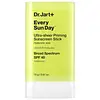
Dr. Jart+ Every Sun Day Ultra-Sheer Priming Sunscreen Stick SPF 40 Versus Haruharu Wonder Black Bamboo Daily Soothing Sun Shield SPF 50+
This chemical sunscreen covers most of the UV range, lighter on the deep UVA that drives aging.
This chemical sunscreen covers the full UV range and blocks ~98% of UVB at SPF 50.

What's inside
What's inside
 Key Ingredients
Benefits
Concerns
Ingredients Side-by-side
Butyl Methoxydibenzoylmethane 3%
UV Absorber
Homosalate 6.5%
Skin Conditioning
Ethylhexyl Salicylate 4.5%
UV Absorber
Octocrylene 6.5%
UV Absorber

Dimethicone
Emollient

Synthetic Wax
Abrasive

Isoeicosane
EmollientSilica
Abrasive

Diethylhexyl Carbonate
EmollientDiisostearyl Malate
EmollientButyloctyl Salicylate
Skin Conditioning
Phenylpropyldimethylsiloxysilicate
EmollientIsononyl Isononanoate
EmollientPhenethyl Benzoate
Emollient

Ceresin
Emulsion StabilisingSynthetic Fluorphlogopite
Dimethicone/Vinyl Dimethicone Crosspolymer
Skin Conditioning
Bis-Behenyl/Isostearyl/Phytosteryl Dimer Dilinoleyl Dimer Dilinoleate
EmollientEthylene/Propylene Copolymer
Abrasive
Camelina Sativa Seed Oil
Skin Conditioning


Ricinus Communis Seed Oil
Masking
Brassica Campestris Seed Oil
Skin Conditioning
Hyaluronic Acid
Humectant


Hydrogenated Castor Oil
Emollient
Opuntia Ficus-Indica Flower Extract
Skin ConditioningThymus Vulgaris Flower/Leaf/Stem Extract
Skin ConditioningAvena Sativa Kernel Extract
Abrasive


Silica Dimethyl Silylate
EmollientDimethicone Crosspolymer
Emulsion Stabilising
Tocopherol
Antioxidant


Butyl Methoxydibenzoylmethane 3%, Homosalate 6.5%, Ethylhexyl Salicylate 4.5%, Octocrylene 6.5%, Dimethicone, Synthetic Wax, Isoeicosane, Silica, Diethylhexyl Carbonate, Diisostearyl Malate, Butyloctyl Salicylate, Phenylpropyldimethylsiloxysilicate, Isononyl Isononanoate, Phenethyl Benzoate, Ceresin, Synthetic Fluorphlogopite, Dimethicone/Vinyl Dimethicone Crosspolymer, Bis-Behenyl/Isostearyl/Phytosteryl Dimer Dilinoleyl Dimer Dilinoleate, Ethylene/Propylene Copolymer, Camelina Sativa Seed Oil, Ricinus Communis Seed Oil, Brassica Campestris Seed Oil, Hyaluronic Acid, Hydrogenated Castor Oil, Opuntia Ficus-Indica Flower Extract, Thymus Vulgaris Flower/Leaf/Stem Extract, Avena Sativa Kernel Extract, Silica Dimethyl Silylate, Dimethicone Crosspolymer, Tocopherol
Water
Skin ConditioningDibutyl Adipate
EmollientSynthetic Wax
Abrasive
Methyl Methacrylate Crosspolymer
Butyloctyl Salicylate
Skin Conditioning
Caprylyl Trimethicone
Skin Conditioning
Butylene Glycol
Humectant
Propylheptyl Caprylate
EmollientDiethylamino Hydroxybenzoyl Hexyl Benzoate
UV Filter
Isododecane
EmollientBis-Ethylhexyloxyphenol Methoxyphenyl Triazine
UV Absorber
Caprylyl Methicone
Skin Conditioning
Ethylhexyl Triazone
UV Absorber
Polysilicone-15
UV Filter
Ceresin
Emulsion StabilisingCamellia Japonica Seed Oil
Emollient
Diphenylsiloxy Phenyl Trimethicone
Skin Conditioning
Niacinamide
Smoothing


Polyglyceryl-3 Polyricinoleate
Emulsifying
Lauryl Polyglyceryl-3 Polydimethylsiloxyethyl Dimethicone
Skin Conditioning
Dimethicone/Vinyl Dimethicone Crosspolymer
Skin Conditioning
Sodium Chloride
Masking1,2-Hexanediol
Skin Conditioning
Polyglyceryl-4 Diisostearate/Polyhydroxystearate/Sebacate
Emulsifying
Vinyl Dimethicone/Methicone Silsesquioxane Crosspolymer
Caprylyl Glycol
Emollient
Glyceryl Caprylate
EmollientPhyllostachys Nigra Leaf Extract
Skin ConditioningPhyllostachys Pubescens Shoot Bark Extract
Skin ConditioningAdenosine
Skin Conditioning
Aspergillus Ferment
Skin ConditioningTocopherol
Antioxidant
Dipropylene Glycol
HumectantPentylene Glycol
Skin Conditioning
Bambusa Vulgaris Water
Skin ConditioningBetaine
Humectant
Ectoin
Skin Conditioning
Panthenol
Skin Conditioning
Water, Dibutyl Adipate, Synthetic Wax, Methyl Methacrylate Crosspolymer, Butyloctyl Salicylate, Caprylyl Trimethicone, Butylene Glycol, Propylheptyl Caprylate, Diethylamino Hydroxybenzoyl Hexyl Benzoate, Isododecane, Bis-Ethylhexyloxyphenol Methoxyphenyl Triazine, Caprylyl Methicone, Ethylhexyl Triazone, Polysilicone-15, Ceresin, Camellia Japonica Seed Oil, Diphenylsiloxy Phenyl Trimethicone, Niacinamide, Polyglyceryl-3 Polyricinoleate, Lauryl Polyglyceryl-3 Polydimethylsiloxyethyl Dimethicone, Dimethicone/Vinyl Dimethicone Crosspolymer, Sodium Chloride, 1,2-Hexanediol, Polyglyceryl-4 Diisostearate/Polyhydroxystearate/Sebacate, Vinyl Dimethicone/Methicone Silsesquioxane Crosspolymer, Caprylyl Glycol, Glyceryl Caprylate, Phyllostachys Nigra Leaf Extract, Phyllostachys Pubescens Shoot Bark Extract, Adenosine, Aspergillus Ferment, Tocopherol, Dipropylene Glycol, Pentylene Glycol, Bambusa Vulgaris Water, Betaine, Ectoin, Panthenol
Reviews
Ingredients Explained
These ingredients are found in both products.
Ingredients higher up in an ingredient list are typically present in a larger amount.
Butyloctyl Salicylate is a chemical UV filter structurally similar to octisalate. It is a photostabilizer, SPF booster, emollient and solvent. This ingredient helps evenly spread out ingredients.
According to a manufacturer, it is suitable for pairing with micro Titanium Dioxide, Zinc Oxide, and pigments.
Photostabilizers help stabilize UV-filters and prevents them from degrading quickly.
Learn more about Butyloctyl SalicylateCeresin is a wax derived from ozokerite. It is an alternative to beeswax.
The most common process of creating ceresin is by using heat and sulfuric acid.
This ingredient is a silicone elastomer that works as a texture enhancer, adds a silky slip, and also helps absorb excess oil.
Because it's a large macromolecule that's insoluble in water and chemically inert, it's not expected to penetrate or be absorbed into skin.
Human patch tests with a facial lotion containing 1% of this ingredient found no sensitization.
Learn more about Dimethicone/Vinyl Dimethicone CrosspolymerSynthetic Wax is a manufactured hydrocarbon wax. In formulas, it works as an occlusive emollient that helps reduce water loss and improves the spreadability of products.
Research comparing synthetic wax to traditional mineral-derived products found that formulas containing it perform as well for skin hydration.
It is considered non-comedogenic and vegan-friendly.
This ingredient has a well-established safety record by the CIR Expert Panel for Cosmetic Ingredient Safety.
Synthetic Waxes are straight/branched-chain hydrocarbons with no ester bond or fatty acids. That means there is nothing for the Malassezia yeast to feed on.
Learn more about Synthetic WaxTocopherol is a fat-soluble antioxidant known as Vitamin E.
You'll find this ingredient in the vast majority of skincare (for good reason). It works to neutralize free radicals, or unstable molecules generated by UV exposure, pollution, and other environmental stressors, before they can cause oxidative damage to your skin cells.
Topically applied tocopherol has been shown to protect against UV damage by ramping up the skin's own natural defense enzymes.
It also acts as a skin conditioning agent; some studies show that regular topical use can improve the skin's water-binding capacity over 2-4 weeks.
This ingredient is especially loved for being a team player. When combined with Vitamin C, the photoprotective effect of both ingredients roughly doubles and the combo also helps reduce UV-induced DNA damage.
This ingredient has some brightening potential but it's more of a prevention ingredient than spot-fader. Cell studies show it can slow down melanin production but it's worth noting that it's not the most powerful brightener out there.
In formulations, it also serves as a stabilizer that helps protect other oxidation-prone ingredients from degrading.
Concentrations usually range from 0.1-1% in most leave-on products.
Learn more about Tocopherol

