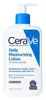
CeraVe Daily Moisturizing Lotion for Normal to Dry Skin Versus The Derma Co Skin Renew Barrier Repair Peptide Moisturizer
This barrier-repair moisturizer is formulated around Ceramide NP and Ceramide AP to strengthen the skin barrier and hydrate skin.
This barrier-repair moisturizer is formulated around Niacinamide and Ceramide NP to strengthen the skin barrier and soften the look of wrinkles.


What's inside
What's inside
 Key Ingredients
Benefits
Concerns
Ingredients Side-by-side
Water
Skin ConditioningGlycerin
Humectant


Caprylic/Capric Triglyceride
Masking
Cetearyl Alcohol
Emollient





Cetyl Alcohol
Emollient
Potassium Phosphate
BufferingCeramide NP
Skin Conditioning



Ceramide AP
Skin Conditioning
Ceramide EOP
Skin Conditioning
Carbomer
Emulsion StabilisingDimethicone
Emollient
Ceteareth-20
Cleansing
Behentrimonium Methosulfate
SurfactantMethylparaben
Preservative


Sodium Lauroyl Lactylate
EmulsifyingCholesterol
Emollient
Disodium EDTA
ChelatingDipotassium Phosphate
BufferingPropylparaben
Preservative
Hydrolyzed Hyaluronic Acid
Humectant
Phytosphingosine
Skin Conditioning
Xanthan Gum
EmulsifyingPolysorbate 20
Emulsifying
Polyglyceryl-3 Diisostearate
Emulsifying
Water, Glycerin, Caprylic/Capric Triglyceride, Cetearyl Alcohol, Cetyl Alcohol, Potassium Phosphate, Ceramide NP, Ceramide AP, Ceramide EOP, Carbomer, Dimethicone, Ceteareth-20, Behentrimonium Methosulfate, Methylparaben, Sodium Lauroyl Lactylate, Cholesterol, Disodium EDTA, Dipotassium Phosphate, Propylparaben, Hydrolyzed Hyaluronic Acid, Phytosphingosine, Xanthan Gum, Polysorbate 20, Polyglyceryl-3 Diisostearate
Water
Skin ConditioningPropanediol
Solvent
Coco-Caprylate/Caprate
Emollient
Cetearyl Alcohol
Emollient
Niacinamide
Smoothing






Betaine
Humectant
Cyclopentasiloxane
Emollient
Neopentyl Glycol Diheptanoate
EmollientIsododecane
EmollientSqualane
Emollient
3-O-Ethyl Ascorbic Acid
Skin Conditioning
Ceramide NP
Skin Conditioning
PEG-7 Glyceryl Cocoate
Emulsifying
Phenoxyethanol
Preservative
Ethylhexylglycerin
Skin ConditioningGlyceryl Stearate
Emollient
Palmitoyl Tripeptide-5
Skin Conditioning
Polyacrylate-13
Polyisobutene
Polysorbate 20
Emulsifying
Glyceryl Stearate Citrate
Emollient
Centella Asiatica Extract
Cleansing
Xylitylglucoside
Humectant
Anhydroxylitol
Humectant
Xylitol
Humectant
Sodium Hyaluronate
Humectant
Allantoin
Skin Conditioning
Acrylates/C10-30 Alkyl Acrylate Crosspolymer
Emulsion StabilisingTriethanolamine
BufferingSodium Gluconate
ChelatingWater, Propanediol, Coco-Caprylate/Caprate, Cetearyl Alcohol, Niacinamide, Betaine, Cyclopentasiloxane, Neopentyl Glycol Diheptanoate, Isododecane, Squalane, 3-O-Ethyl Ascorbic Acid, Ceramide NP, PEG-7 Glyceryl Cocoate, Phenoxyethanol, Ethylhexylglycerin, Glyceryl Stearate, Palmitoyl Tripeptide-5, Polyacrylate-13, Polyisobutene, Polysorbate 20, Glyceryl Stearate Citrate, Centella Asiatica Extract, Xylitylglucoside, Anhydroxylitol, Xylitol, Sodium Hyaluronate, Allantoin, Acrylates/C10-30 Alkyl Acrylate Crosspolymer, Triethanolamine, Sodium Gluconate
Reviews
Ingredients Explained
These ingredients are found in both products.
Ingredients higher up in an ingredient list are typically present in a larger amount.
Ceramide NP (formerly known as Ceramide 3) is one of the skin's naturally occurring lipids.
Since ceramides are the major lipid components of the skin, they are crucial for maintaining skin barrier and hydration. Ceramide NP most closely mirrors the dominant kind in human skin amongst ceramide subtypes.
This ceramide works by slotting into gaps within the stratum corneum's lipid matrix to limit trans-epidermal water loss (TEWL) and shield the skin against external irritants.
A study with 312 patients found that using a ceramide-containing routine for 4 weeks reduced the severity of atopic dermatitis by over 61%.
Another clinical study in subjects aged 60 and older found that a ceramide body wash and moisturizer improved skin dryness and itchy skin in 15 days.
Overall, ceramides are considered non-irritating and safety tests have found little to no observable adverse effects from using this ingredient.
Ceramide NP is usually sourced from plants (like soybean or rice bran), or produced synthetically.
Learn more about Ceramide NPCetearyl alcohol is a waxy mixture of two fatty alcohols: cetyl alcohol and stearyl alcohol. It is an emollient and emulsifier.
Despite having "alcohol" in its name, it has nothing to do with drying solvent alcohols; the FDA also allows "alcohol-free" products to contain fatty alcohols like this ingredient.
It plays several roles in a formula:
Typical use levels for this ingredient sit around 1-10% and the Cosmetic Ingredient Review Expert Panel has affirmed safety at concentrations up to 25% in leave-on products.
Multiple assessments have found it to be non-irritating and non-sensitizing to most people.
However, there have been some cases of allergic contact dermatitis in patients with chronically compromised skin barriers.
Cetearyl alcohol has a comedogenic rating of 2 and irritancy rating of 1. Both of these numbers come from the 1989 study that used rabbit ears; a "2" means mildly comedogenic and a "1" means low irritancy.
Here's the catch: rabbit skin is more sensitive than human skin and throws a lot of false positives. A 1996 reappraisal found that ingredients rated 1-2 in the rabbit ear tests are generally safe for humans.
Remember comedogenic ratings are unable to assess the entire formula of a product or how it will react on your skin. Just be sure to patch test if you are unsure about certain ingredients.
This ingredient is not fungal acne safe. Cetearyl alcohol is a fatty alcohol with chain lengths that fall within the range that Malassezia can metabolize.
A 2019 study has also observed Malassezia growth in the presence of this ingredient, confirming it to be not-fungal acne safe.
Learn more about Cetearyl AlcoholPolysorbate 20 is a gentle, water-soluble emulsifier and mild surfactant. It stops oil and water from separating to keep your formulas blended and stable.
It also acts as a mild penetration enhancer by helping active ingredients absorb slightly better.
The common safety discussion around this ingredient involves a manufacturing byproduct called 1,4-dioxane.
Trace amounts can form during production but the EU's Scientific Committee on Consumer Safety has concluded that levels at/below 10 ppm in finished products are safe (commercial products consistently fall within acceptable margins).
True allergic reactions are uncommon and the CIR Expert Panel has confirmed this ingredient to be safe as used in cosmetics.
Because it is derived from lauric acid, it may not be fungal acne safe.
Learn more about Polysorbate 20Water. It's the most common cosmetic ingredient of all. You'll usually see it at the top of ingredient lists, meaning that it makes up the largest part of the product.
So why is it so popular? Water most often acts as a solvent - this means that it helps dissolve other ingredients into the formulation.
You'll also recognize water as that liquid we all need to stay alive. If you see this, drink a glass of water. Remember to stay hydrated!
Learn more about Water

