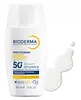
Bioderma Photoderm XDefense Ultra-Fluid SPF 50+ Invisible Versus maru.derm Moisturizing Sun Cream SPF 50+


What's inside
What's inside
 Key Ingredients
Benefits
Concerns
Ingredients Side-by-side
Water
Skin ConditioningC12-15 Alkyl Benzoate
AntimicrobialSilica
Abrasive


Glycerin
Humectant


Bis-Ethylhexyloxyphenol Methoxyphenyl Triazine
Skin Conditioning
Butyl Methoxydibenzoylmethane
UV Absorber
Ethylhexyl Methoxycrylene
Skin Conditioning
Diethylamino Hydroxybenzoyl Hexyl Benzoate
UV Filter
Diisopropyl Sebacate
EmollientLauroyl Lysine
Skin Conditioning
Propanediol
Solvent
Dicaprylyl Carbonate
Emollient1,2-Hexanediol
Skin Conditioning
Polysorbate 60
Emulsifying
Cetyl Phosphate
EmulsifyingArginine
Masking
Bentonite
Absorbent
Hydroxyacetophenone
Antioxidant

Parfum
Masking



Citric Acid
Buffering

Ectoin
Skin Conditioning

Mannitol
Humectant
Methoxyphenylimino Dimethylcyclohexene Glycine
Antioxidant
Sodium Phytate
Xanthan Gum
EmulsifyingXylitol
Humectant
Rhamnose
HumectantO-Cymen-5-Ol
Antimicrobial
Biosaccharide Gum-4
Skin Conditioning
Trimethoxybenzyl Acetylsinapate
BleachingSodium Hyaluronate
Humectant
Tocopherol
Antioxidant

Water, C12-15 Alkyl Benzoate, Silica, Glycerin, Bis-Ethylhexyloxyphenol Methoxyphenyl Triazine, Butyl Methoxydibenzoylmethane, Ethylhexyl Methoxycrylene, Diethylamino Hydroxybenzoyl Hexyl Benzoate, Diisopropyl Sebacate, Lauroyl Lysine, Propanediol, Dicaprylyl Carbonate, 1,2-Hexanediol, Polysorbate 60, Cetyl Phosphate, Arginine, Bentonite, Hydroxyacetophenone, Parfum, Citric Acid, Ectoin, Mannitol, Methoxyphenylimino Dimethylcyclohexene Glycine, Sodium Phytate, Xanthan Gum, Xylitol, Rhamnose, O-Cymen-5-Ol, Biosaccharide Gum-4, Trimethoxybenzyl Acetylsinapate, Sodium Hyaluronate, Tocopherol
Water
Skin ConditioningBis-Ethylhexyloxyphenol Methoxyphenyl Triazine
Skin Conditioning
Glycerin
Humectant
Ethylhexyl Triazone
UV Absorber
Zinc Oxide
Cosmetic Colorant
C12-15 Alkyl Benzoate
AntimicrobialCaprylic/Capric Triglyceride
Masking
Camellia Sinensis Leaf Extract
Antimicrobial
Methylene Bis-Benzotriazolyl Tetramethylbutylphenol
UV Filter
Stearic Acid
Cleansing
Ectoin
Skin Conditioning
Ceramide NP
Skin Conditioning
Panthenol
Skin Conditioning
Potassium Cetyl Phosphate
EmulsifyingInulin Lauryl Carbamate
Emulsion StabilisingMaltodextrin
Absorbent
Allantoin
Skin Conditioning
Sodium PCA
Humectant
Decyl Glucoside
Cleansing
Sodium Lactate
Buffering
Cucumis Sativus Fruit Extract
Emollient
Arginine
Masking
Propanediol
Solvent
Aspartic Acid
Masking
PCA
Humectant
Hydrolyzed Glycosaminoglycans
HumectantSodium Hyaluronate
Humectant
Glycine
Buffering
Alanine
Masking
Propylene Glycol
Humectant
Serine
Masking
Valine
MaskingProline
Skin Conditioning
Threonine
Isoleucine
Skin ConditioningHydrolyzed Hyaluronic Acid
Humectant
Hyaluronic Acid
Humectant
Sodium Hyaluronate Crosspolymer
Humectant
Histidine
Humectant
Phenylalanine
Masking
Xanthan Gum
EmulsifyingSodium Benzoate
Masking
Sodium Hydroxide
BufferingPotassium Sorbate
Preservative
Lactic Acid
Buffering
Tetrasodium EDTA
Water, Bis-Ethylhexyloxyphenol Methoxyphenyl Triazine, Glycerin, Ethylhexyl Triazone, Zinc Oxide, C12-15 Alkyl Benzoate, Caprylic/Capric Triglyceride, Camellia Sinensis Leaf Extract, Methylene Bis-Benzotriazolyl Tetramethylbutylphenol, Stearic Acid, Ectoin, Ceramide NP, Panthenol, Potassium Cetyl Phosphate, Inulin Lauryl Carbamate, Maltodextrin, Allantoin, Sodium PCA, Decyl Glucoside, Sodium Lactate, Cucumis Sativus Fruit Extract, Arginine, Propanediol, Aspartic Acid, PCA, Hydrolyzed Glycosaminoglycans, Sodium Hyaluronate, Glycine, Alanine, Propylene Glycol, Serine, Valine, Proline, Threonine, Isoleucine, Hydrolyzed Hyaluronic Acid, Hyaluronic Acid, Sodium Hyaluronate Crosspolymer, Histidine, Phenylalanine, Xanthan Gum, Sodium Benzoate, Sodium Hydroxide, Potassium Sorbate, Lactic Acid, Tetrasodium EDTA
Reviews
Ingredients Explained
These ingredients are found in both products.
Ingredients higher up in an ingredient list are typically present in a larger amount.
Arginine is a semi-essential amino acid. This just means our bodies can product a bit on its own, but sometimes needs a little boost from food sources.
It is a part of your skin's natural moisturizing factor (NMF), or the water-loving molecules in your outermost layer of skin (stratum corneum) that keeps everything hydrated and happy.
Here's an interesting thing about Arginine: your skin converts it into urea through the Krebs-Henseleit urea cycle. Urea is one of the most effective humectants your skin naturally produces.
A clinical study showed applying 2.5% arginine hydrochloride to atopic dermatitis skin showed significant urea levels in the stratum corneum and improved moisture in just four weeks.
Arginine is also a precursor to nitric oxide; nitric oxide improves microcirculation and supports wound healing and collagen synthesis.
One study found that an amino acid complex containing Arginine reduced skin irritation, improved hydration, and accelerated skin repair in clinical / in-vivo studies.
Arginine itself is an amino acid and not a fatty acid, oil, or ester. On its own, it's not a direct food source for Malassezia, or the yeast that causes fungal acne.
Learn more about ArginineYou might know this ingredient as Tinosorb S or Bemotrizinol. It is a UV filter that covers both UVA and UVB rays.
This ingredient has two peak UV absorption peaks ( 310 and 340 nm) and is able to absorb both UV-A and UV-B rays. This ingredient works by preventing UV rays from reaching and damaging your skin.
On top of that - it is highly photostable and helps prevent the photodegration of other sunscreen ingredients such as avobenzone.
Tinosorb S is allowed in the EU, Australia, Asia, Canada, and recently approved for use by the US in mid-2026.
Fun fact: Tinosorb S is the most effective UV absorber at maximum concentration (measured by SPF) permitted in the EU.
This ingredient is oil-soluble, so your oil-cleansers will take this right off at night.
Learn more about Bis-Ethylhexyloxyphenol Methoxyphenyl TriazineC12-15 Alkyl Benzoate is made up of Benzoic Acid and long chain alcohols. It has a low molecular weight.
C12-15 Alkyl Benzoate is an emollient and texture enhancer. Due to its solubility, it is often used in sunscreens to help evenly distribute active ingredients.
As an emollient, C12-15 Alkyl Benzoate helps soften and hydrate your skin. Emollients create a film on your skin that traps moisture within.
This ingredient has been reported to cause eye irritation.
Learn more about C12-15 Alkyl BenzoateEctoin is a compound found naturally in some species of bacteria. It can be synthetically created for skincare use.
This ingredient is an osmolyte; Osmolytes help organisms survive osmotic shock (it protects them from extreme conditions). It does this by influencing the properties of biological fluids within cells.
When applied to the skin, ectoin helps bind water molecules to protect our skin. The water forms a sort of armor for the parts of our skin cells, enzymes, proteins, and more.
Besides this, ectoin has many uses in skincare:
A study from 2004 found ectoin to counteract the damage from UV-A exposure at different cell levels. It has also been shown to protect skin against both UV-A, UV-B rays, infrared light, and visible light.
Studies show ectoin to have dual-action pollution protection: first, it protects our skin from further pollution damage. Second, it helps repair damage from pollution.
In fact, ectoin has been shown to help with:
Fun fact: In the EU, ectoin is used in inhalation medication as an anti-pollution ingredient.
Ectoin is a highly stable ingredient. It has a wide pH range of 1-9. Light, oxygen, and temperature do not affect this ingredient.
The chemical name for this ingredient is Tetrahydromethylpyrimidine Carboxylic Acid.
Learn more about EctoinGlycerin (or glycerol) is a compound naturally found in your skin. It's a powerhouse humectant that pulls water into the stratum corneum.
Topically, glycerin does several things at once:
Your skin makes glycerin on its own (mostly from sebaceous oil breakdown) and shuttles it to your outermost layer of skin, or your epidermis, via aquaporin-3.
Aquaporin-3 is a transporter that is essential for normal skin hydration, elasticity, and repair. Interestingly, mice lacking in AQP3 have dry and less elastic skin that can be fully corrected with glycerin.
This ingredient is non-irritating, plays well with almost every ingredient, and works across all skin types. Typical use is anywhere between 3-10% but can go up to 79% in some leave-on products.
Just know very high concentrations (>40%) can feel tacky in low humidity.
Glycerin is the name for this ingredient in American English. British English uses Glycerol/Glycerine.
Learn more about GlycerinPropanediol is an all-star ingredient. It softens, hydrates, and smooths the skin.
It’s often used to:
Propanediol is not likely to cause sensitivity and considered safe to use. It is derived from corn or petroleum with a clear color and no scent.
Learn more about PropanediolSodium Hyaluronate is the salt form of hyaluronic acid. It is a long sugar chain that is naturally found in your skin, joints, and connective tissue that maintains hydration and elasticity.
In skincare, it works as a humectant. It pulls water from the environment and deeper layers of skin and binds it to the surface.
Interestingly, the size of the molecule affects its behavior:
Some clinical evidence links low molecular weight versions to improved wrinkle depth, elasticity, anti-inflammatory effects, and barrier repair.
Many serums use a blend of both weights so you can get surface hydration plus longer-lasting and deeper effects.
You'll typically see concentrations between 0.1-2% for this ingredient.
Learn more about Sodium HyaluronateWater. It's the most common cosmetic ingredient of all. You'll usually see it at the top of ingredient lists, meaning that it makes up the largest part of the product.
So why is it so popular? Water most often acts as a solvent - this means that it helps dissolve other ingredients into the formulation.
You'll also recognize water as that liquid we all need to stay alive. If you see this, drink a glass of water. Remember to stay hydrated!
Learn more about WaterXanthan gum is used as a stabilizer and thickener within cosmetic products. It helps give products a sticky, thick feeling - preventing them from being too runny.
On the technical side of things, xanthan gum is a polysaccharide - a combination consisting of multiple sugar molecules bonded together.
Xanthan gum is a pretty common and great ingredient. It is a natural, non-toxic, non-irritating ingredient that is also commonly used in food products.
Learn more about Xanthan Gum
