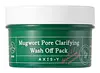
This wash off mask is made with Artemisia Princeps Extract and Kaolin for a rinse-off pore-care boost.
This wash off mask is made with Kaolin for a rinse-off oil-control boost.


What's inside
What's inside
 Key Ingredients
Benefits
Concerns
Ingredients Side-by-side
Artemisia Princeps Extract
Skin Conditioning



Kaolin
Abrasive



Dipropylene Glycol
HumectantBentonite
Absorbent
Betaine
Humectant
Phaseolus Angularis Seed Powder
Laminaria Japonica Extract
Skin Protecting
Eclipta Prostrata Leaf Extract
Skin ConditioningAvena Sativa Kernel Extract
Abrasive
Pteris Multifida Extract
Antioxidant
Cynara Scolymus Leaf Extract
Skin ConditioningGlycyrrhiza Uralensis Root Extract
Skin Conditioning
Vigna Radiata Seed Extract
Skin ConditioningHouttuynia Cordata Extract
Skin Conditioning
Cryptomeria Japonica Leaf Extract
HumectantNelumbo Nucifera Leaf Extract
Skin ConditioningHydrogenated Lecithin
Emulsifying
Sodium Hyaluronate
Humectant

1,2-Hexanediol
Skin Conditioning
Methylpropanediol
SolventXanthan Gum
EmulsifyingGlycerin
Humectant
Chromium Oxide Greens
Charcoal Powder
Abrasive
Water
Skin ConditioningBeta-Glucan
Skin Conditioning
Polyquaternium-51
Skin Conditioning
Fructooligosaccharides
Humectant
Allantoin
Skin Conditioning
Hydrolyzed Hyaluronic Acid
Humectant
Butylene Glycol
Humectant
Camellia Sinensis Leaf Powder
Saccharomyces Ferment Filtrate
Humectant

Hydroxyacetophenone
Antioxidant
Ethylhexylglycerin
Skin ConditioningRosmarinus Officinalis Leaf Oil
Masking
Artemisia Princeps Extract, Kaolin, Dipropylene Glycol, Bentonite, Betaine, Phaseolus Angularis Seed Powder, Laminaria Japonica Extract, Eclipta Prostrata Leaf Extract, Avena Sativa Kernel Extract, Pteris Multifida Extract, Cynara Scolymus Leaf Extract, Glycyrrhiza Uralensis Root Extract, Vigna Radiata Seed Extract, Houttuynia Cordata Extract, Cryptomeria Japonica Leaf Extract, Nelumbo Nucifera Leaf Extract, Hydrogenated Lecithin, Sodium Hyaluronate, 1,2-Hexanediol, Methylpropanediol, Xanthan Gum, Glycerin, Chromium Oxide Greens, Charcoal Powder, Water, Beta-Glucan, Polyquaternium-51, Fructooligosaccharides, Allantoin, Hydrolyzed Hyaluronic Acid, Butylene Glycol, Camellia Sinensis Leaf Powder, Saccharomyces Ferment Filtrate, Hydroxyacetophenone, Ethylhexylglycerin, Rosmarinus Officinalis Leaf Oil
Water
Skin ConditioningKaolin
Abrasive
Alcohol Denat.
Antimicrobial



Cetearyl Alcohol
Emollient



Solum Diatomeae
Abrasive
Ceteareth-20
Cleansing
Oryza Sativa Starch
AbsorbentGlycerin
Humectant
Propylene Glycol
Humectant
Simmondsia Chinensis Seed Oil
Emollient
Persea Gratissima Oil
Skin Conditioning
Phenoxyethanol
Preservative
Algin
MaskingIllite
Abrasive
Cocamidopropyl Betaine
Cleansing
Calcium Sulfate
Abrasive
Tocopheryl Acetate
Antioxidant

Tetrasodium Pyrophosphate
BufferingParfum
Masking

Microcrystalline Cellulose
AbsorbentPEG-40 Hydrogenated Castor Oil
Emulsifying
Sodium Chloride
MaskingAcrylates/C10-30 Alkyl Acrylate Crosspolymer
Emulsion StabilisingAllantoin
Skin Conditioning
Tetrasodium EDTA
ChelatingCellulose Gum
Emulsion StabilisingEthylhexylglycerin
Skin ConditioningMica
Cosmetic ColorantEthoxydiglycol
HumectantTitanium Dioxide
Cosmetic Colorant

Sodium Benzoate
Masking
Hydrogenated Lecithin
Emulsifying
Potassium Sorbate
Preservative
Isopropyl Titanium Triisostearate
Emollient
Propanediol
Solvent
Tin Oxide
Abrasive
Ascorbyl Palmitate
Antioxidant
Sodium Sulfate
CI 77891
Cosmetic ColorantCI 42090
Cosmetic ColorantWater, Kaolin, Alcohol Denat., Cetearyl Alcohol, Solum Diatomeae, Ceteareth-20, Oryza Sativa Starch, Glycerin, Propylene Glycol, Simmondsia Chinensis Seed Oil, Persea Gratissima Oil, Phenoxyethanol, Algin, Illite, Cocamidopropyl Betaine, Calcium Sulfate, Tocopheryl Acetate, Tetrasodium Pyrophosphate, Parfum, Microcrystalline Cellulose, PEG-40 Hydrogenated Castor Oil, Sodium Chloride, Acrylates/C10-30 Alkyl Acrylate Crosspolymer, Allantoin, Tetrasodium EDTA, Cellulose Gum, Ethylhexylglycerin, Mica, Ethoxydiglycol, Titanium Dioxide, Sodium Benzoate, Hydrogenated Lecithin, Potassium Sorbate, Isopropyl Titanium Triisostearate, Propanediol, Tin Oxide, Ascorbyl Palmitate, Sodium Sulfate, CI 77891, CI 42090
Reviews
Ingredients Explained
These ingredients are found in both products.
Ingredients higher up in an ingredient list are typically present in a larger amount.
Allantoin is a soothing ingredient known for its protective and moisturizing properties; it's basically a quiet workhorse ingredient you can find in a huge range of cosmetics.
Though it can be derived from the comfrey plant, allantoin is produced synthetically for cosmetic products to ensure purity.
Research shows it can encourage your skin cells to turn over and renew by stimulating keratinocyte and fibroblast proliferation.
It also has mild keratolytic properties to help loosen and shed dead skin cells without being harsh.
Studies also suggest allantoin can help calm inflammation by dialing down some of the chemical signals your skin sends out when it is irritated.
This ingredient is typically used in the 0.1-0.5% range, and the FDA recognizes it as a skin protectant in OTC products up to 2%.
Overall, allantoin is a wonderful addition to most routines; it is stable across a wide pH range (~4-8), works well with other ingredients, and is considered non-sensitizing/non-irritating.
Fun fact: Allantoin is naturally occurring in comfrey root, beets, chamomile, and wheat sprouts. Our bodies even produce it as a byproduct of uric acid metabolism.
Learn more about AllantoinEthylhexylglycerin is created from glycerin. It is a multitasker ingredient that:
The CIR Expert Panel found minimal skin absorption or sensitization of any kind in a safety assessment. Though this ingredient is considered well-tolerated, a small number of cases of allergic dermatitis have been published since 2002. Just be sure to patch test if you are unsure.
Industry-reported use ranges from 8% in rinse-off products and 2% in leave-on formulations.
Learn more about EthylhexylglycerinGlycerin (or glycerol) is a compound naturally found in your skin. It's a powerhouse humectant that pulls water into the stratum corneum.
Topically, glycerin does several things at once:
Your skin makes glycerin on its own (mostly from sebaceous oil breakdown) and shuttles it to your outermost layer of skin, or your epidermis, via aquaporin-3.
Aquaporin-3 is a transporter that is essential for normal skin hydration, elasticity, and repair. Interestingly, mice lacking in AQP3 have dry and less elastic skin that can be fully corrected with glycerin.
This ingredient is non-irritating, plays well with almost every ingredient, and works across all skin types. Typical use is anywhere between 3-10% but can go up to 79% in some leave-on products.
Just know very high concentrations (>40%) can feel tacky in low humidity.
Glycerin is the name for this ingredient in American English. British English uses Glycerol/Glycerine.
Learn more about GlycerinHydrogenated Lecithin is a more stable version of lecithin.
It's made by taking lecithin (a phospholipid commonly found in soybeans and egg yolks) and hydrogenating it. This just means the unsaturated fatty acids are turned into saturated ones so they don't go bad as easily.
This ingredient is an emollient, emulsifier, and penetration enhancer. As an emollient, it helps soften and hydrate skin by trapping moisture within. As an emulsifier, it prevents oil and water ingredients from separating.
Hydrogenated Lecithin can form tiny spherical structures made of phospholipid bilayers called liposomes. These liposomes are able to capture compounds inside their structure and deliver them through the skin barrier.
Because phospholipids are a natural component of our cell membranes, this ingredient is inherently compatible with skin.
A 2021 study found lecithin-based surfactants were less harsh and more tolerable comared to Sodium Lauryl Sulfate (SLS).
Learn more about Hydrogenated LecithinKaolin is a clay. It is used for oil control and to help minimize pores. Like other clays, kaolin has the ability to absorb excess sebum or oil. This can help clean out pores and mattify the skin.
Some types of kaolin may have exfoliating properties. When water is added to kaolin, it becomes a paste with small abrasive particles.
Most kaolin is a white color, but may be pink/orange/red depending on where it comes from.
The name 'kaolin' comes from a Chinese village named 'Gaoling'. Kaolin clay comes from rocks rich in kaolinite. Kaolinite, the mineral, has a silicate layered structure. Kaolinite is formed from chemical weathering of aluminum siilicate minerals.
Besides skincare, kaolin is commonly used to make glossy paper, in ceramics, toothpaste, and as medicine to soothe stomach issues.
Learn more about KaolinWater. It's the most common cosmetic ingredient of all. You'll usually see it at the top of ingredient lists, meaning that it makes up the largest part of the product.
So why is it so popular? Water most often acts as a solvent - this means that it helps dissolve other ingredients into the formulation.
You'll also recognize water as that liquid we all need to stay alive. If you see this, drink a glass of water. Remember to stay hydrated!
Learn more about Water

