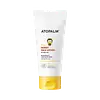
This barrier-repair moisturizer is formulated around Honey Extract and Saccharide Isomerate to strengthen the skin barrier and hydrate skin.
This barrier-repair moisturizer is formulated around Squalane and Butyrospermum Parkii Butter to strengthen the skin barrier and hydrate skin.


What's inside
What's inside
 Key Ingredients
Benefits
Concerns
Ingredients Side-by-side
Water
Skin ConditioningCetyl Ethylhexanoate
EmollientGlycerin
Humectant


Propanediol
Solvent
Myristoyl/Palmitoyl Oxostearamide/Arachamide Mea
Skin Conditioning1,2-Hexanediol
Skin Conditioning
Sorbitan Stearate
Emulsifying

Cetearyl Alcohol
Emollient




Glyceryl Stearate
Emollient
Honey Extract
Humectant
Saccharide Isomerate
Humectant
Chamomilla Recutita Flower Extract
Masking
Brassica Oleracea Italica Extract
AstringentMedicago Sativa Extract
TonicBrassica Oleracea Capitata Leaf Extract
Skin ConditioningTriticum Vulgare Germ Extract
Skin ConditioningSorghum Bicolor Leaf/Stem Extract
Skin ConditioningAspergillus Ferment
Skin ConditioningBrassica Napus Extract
Skin ConditioningRaphanus Sativus Seed Extract
Skin ConditioningPolyglyceryl-10 Distearate
Emulsifying
Helianthus Annuus Seed Oil
Emollient
Panthenol
Skin Conditioning
Tocopherol
Antioxidant




Phytosterols
Skin Conditioning
Caprylyl Glycol
Emollient
Olea Europaea Fruit Oil
Masking
Hydrogenated Vegetable Oil
Emollient
Arginine
Masking
Carbomer
Emulsion StabilisingStearic Acid
Cleansing
Xanthan Gum
EmulsifyingSodium Phytate
ChelatingBeta-Glucan
Skin Conditioning
Butylene Glycol
Humectant
Parfum
Masking

Water, Cetyl Ethylhexanoate, Glycerin, Propanediol, Myristoyl/Palmitoyl Oxostearamide/Arachamide Mea, 1,2-Hexanediol, Sorbitan Stearate, Cetearyl Alcohol, Glyceryl Stearate, Honey Extract, Saccharide Isomerate, Chamomilla Recutita Flower Extract, Brassica Oleracea Italica Extract, Medicago Sativa Extract, Brassica Oleracea Capitata Leaf Extract, Triticum Vulgare Germ Extract, Sorghum Bicolor Leaf/Stem Extract, Aspergillus Ferment, Brassica Napus Extract, Raphanus Sativus Seed Extract, Polyglyceryl-10 Distearate, Helianthus Annuus Seed Oil, Panthenol, Tocopherol, Phytosterols, Caprylyl Glycol, Olea Europaea Fruit Oil, Hydrogenated Vegetable Oil, Arginine, Carbomer, Stearic Acid, Xanthan Gum, Sodium Phytate, Beta-Glucan, Butylene Glycol, Parfum
Water
Skin ConditioningSqualane
Emollient
Isononyl Isononanoate
EmollientGlycerin
Humectant
Butyrospermum Parkii Butter
Skin Conditioning
Behenyl Behenate
EmollientPolyglyceryl-2 Dipolyhydroxystearate
Skin Conditioning
Sorbitan Stearate
Emulsifying
Polyhydroxystearic Acid
Emulsifying
Sorbitan Olivate
Emulsifying
Xylitylglucoside
Humectant
Tocopheryl Acetate
Antioxidant
Polyglyceryl-3 Diisostearate
Emulsifying
Niacinamide
Smoothing




Anhydroxylitol
Humectant
Magnesium Sulfate
Euphorbia Cerifera Cera
Astringent
Xylitol
Humectant
Sodium Lauroyl Lactylate
EmulsifyingTocopherol
Antioxidant
Ethylhexylglycerin
Skin ConditioningXanthan Gum
EmulsifyingCeramide NP
Skin Conditioning
Ceramide AP
Skin Conditioning
Phytosphingosine
Skin Conditioning
Cholesterol
Emollient
Carbomer
Emulsion StabilisingCeramide EOP
Skin Conditioning
Phenoxyethanol
Preservative
Water, Squalane, Isononyl Isononanoate, Glycerin, Butyrospermum Parkii Butter, Behenyl Behenate, Polyglyceryl-2 Dipolyhydroxystearate, Sorbitan Stearate, Polyhydroxystearic Acid, Sorbitan Olivate, Xylitylglucoside, Tocopheryl Acetate, Polyglyceryl-3 Diisostearate, Niacinamide, Anhydroxylitol, Magnesium Sulfate, Euphorbia Cerifera Cera, Xylitol, Sodium Lauroyl Lactylate, Tocopherol, Ethylhexylglycerin, Xanthan Gum, Ceramide NP, Ceramide AP, Phytosphingosine, Cholesterol, Carbomer, Ceramide EOP, Phenoxyethanol
Reviews
Ingredients Explained
These ingredients are found in both products.
Ingredients higher up in an ingredient list are typically present in a larger amount.
Carbomer is a synthetic thickening and gelling agent. It's basically the ingredient that gives a lot of serums, gels, creams, and sunscreens their smooth, non-sticky texture.
Although legally permitted at very high levels, carbomers are normally used at concentrations below 1%.
It also needs to be neutralized to actually thicken, and because it is a large molecule, it doesn't really penetrate the skin barrier.
Allergy-wise, the risk is very low. Clinical studies show carbomers have low potential for skin irritation/sensitization even at concentrations up to 100%.
A 2024 UK study patch-tested 1,302 patients and found true allergy to the parent group of carbomer to be rare with no confirmed relevant reactions.
Learn more about CarbomerGlycerin (or glycerol) is a compound naturally found in your skin. It's a powerhouse humectant that pulls water into the stratum corneum.
Topically, glycerin does several things at once:
Your skin makes glycerin on its own (mostly from sebaceous oil breakdown) and shuttles it to your outermost layer of skin, or your epidermis, via aquaporin-3.
Aquaporin-3 is a transporter that is essential for normal skin hydration, elasticity, and repair. Interestingly, mice lacking in AQP3 have dry and less elastic skin that can be fully corrected with glycerin.
This ingredient is non-irritating, plays well with almost every ingredient, and works across all skin types. Typical use is anywhere between 3-10% but can go up to 79% in some leave-on products.
Just know very high concentrations (>40%) can feel tacky in low humidity.
Glycerin is the name for this ingredient in American English. British English uses Glycerol/Glycerine.
Learn more about GlycerinSorbitan Stearate is an emulsifier made by reacting sorbitol with stearic acid.
It's mostly used to keep oil and water mixed so your formulas stay smooth and stable.
The Cosmetic Ingredient Review has found 4% of this ingredient in repeat-insult patch tests on humans to be non-sensitizing. There is a caveat that some reactions have shown up in patients with damaged or diseased skin.
Because it is an ester of a C18 fatty acid, it falls into the C11-24 range that the Malassezia yeast can metabolize. This means this ingredient may not be fungal acne safe.
Learn more about Sorbitan StearateTocopherol is a fat-soluble antioxidant known as Vitamin E.
You'll find this ingredient in the vast majority of skincare (for good reason). It works to neutralize free radicals, or unstable molecules generated by UV exposure, pollution, and other environmental stressors, before they can cause oxidative damage to your skin cells.
Topically applied tocopherol has been shown to protect against UV damage by ramping up the skin's own natural defense enzymes.
It also acts as a skin conditioning agent; some studies show that regular topical use can improve the skin's water-binding capacity over 2-4 weeks.
This ingredient is especially loved for being a team player. When combined with Vitamin C, the photoprotective effect of both ingredients roughly doubles and the combo also helps reduce UV-induced DNA damage.
This ingredient has some brightening potential but it's more of a prevention ingredient than spot-fader. Cell studies show it can slow down melanin production but it's worth noting that it's not the most powerful brightener out there.
In formulations, it also serves as a stabilizer that helps protect other oxidation-prone ingredients from degrading.
Concentrations usually range from 0.1-1% in most leave-on products.
Learn more about TocopherolWater. It's the most common cosmetic ingredient of all. You'll usually see it at the top of ingredient lists, meaning that it makes up the largest part of the product.
So why is it so popular? Water most often acts as a solvent - this means that it helps dissolve other ingredients into the formulation.
You'll also recognize water as that liquid we all need to stay alive. If you see this, drink a glass of water. Remember to stay hydrated!
Learn more about WaterXanthan gum is used as a stabilizer and thickener within cosmetic products. It helps give products a sticky, thick feeling - preventing them from being too runny.
On the technical side of things, xanthan gum is a polysaccharide - a combination consisting of multiple sugar molecules bonded together.
Xanthan gum is a pretty common and great ingredient. It is a natural, non-toxic, non-irritating ingredient that is also commonly used in food products.
Learn more about Xanthan Gum

