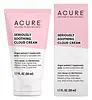
This calming moisturizer is formulated around Persea Gratissima Oil and Oenothera Biennis Oil to calm redness and hydrate skin.
This barrier-repair moisturizer is formulated around Olea Europaea Fruit Oil and Oenothera Biennis Oil to strengthen the skin barrier and hydrate skin.


What's inside
What's inside
 Key Ingredients
No key ingredients
Benefits
Concerns
Ingredients Side-by-side
Water
Skin ConditioningPersea Gratissima Oil
Skin Conditioning





Prunus Armeniaca Kernel Oil
Masking
Glyceryl Stearate Citrate
Emollient
Glycerin
Humectant

Glyceryl Stearate
Emollient
Prunus Amygdalus Dulcis Oil
Skin Conditioning
Cetyl Alcohol
Emollient

Glyceryl Laurate
Emollient
Simmondsia Chinensis Seed Oil
Emollient
Glyceryl Undecylenate
Emollient
Oenothera Biennis Oil
Emollient

Carthamus Tinctorius Seed Oil
Masking
Potassium Sorbate
Preservative
Xanthan Gum
EmulsifyingOlea Europaea Fruit Oil
Masking
Sodium Levulinate
Skin ConditioningCitric Acid
Buffering

Helianthus Annuus Seed Oil
Emollient
Sodium Phytate
Tocopherol
Antioxidant



Hypericum Perforatum Oil
Emollient
Anthemis Nobilis Flower Water
Masking
Aspalathus Linearis Leaf Extract
Skin ConditioningCalendula Officinalis Flower Extract
Masking
Chamomilla Recutita Flower Extract
Masking
Euterpe Oleracea Fruit Extract
Punica Granatum Extract
AstringentRosa Canina Fruit Extract
Astringent
Rubus Fruticosus Fruit Extract
AstringentArgania Spinosa Kernel Oil
Emollient
Isomalt
HumectantAlcohol
Antimicrobial


Gardenia Jasminoides Meristem Cell Culture
Antioxidant
Echinacea Angustifolia Extract
MoisturisingMarrubium Vulgare Meristem Cell Culture
Skin ProtectingChlorella Vulgaris Extract
Skin ConditioningPhospholipids
Skin Conditioning
Leuconostoc/Radish Root Ferment Filtrate
Antimicrobial
Hyaluronic Acid
Humectant
Argania Spinosa Callus Culture Extract
Skin ConditioningLecithin
Emollient
Ubiquinone
Antioxidant
Sodium Benzoate
Masking
Water, Persea Gratissima Oil, Prunus Armeniaca Kernel Oil, Glyceryl Stearate Citrate, Glycerin, Glyceryl Stearate, Prunus Amygdalus Dulcis Oil, Cetyl Alcohol, Glyceryl Laurate, Simmondsia Chinensis Seed Oil, Glyceryl Undecylenate, Oenothera Biennis Oil, Carthamus Tinctorius Seed Oil, Potassium Sorbate, Xanthan Gum, Olea Europaea Fruit Oil, Sodium Levulinate, Citric Acid, Helianthus Annuus Seed Oil, Sodium Phytate, Tocopherol, Hypericum Perforatum Oil, Anthemis Nobilis Flower Water, Aspalathus Linearis Leaf Extract, Calendula Officinalis Flower Extract, Chamomilla Recutita Flower Extract, Euterpe Oleracea Fruit Extract, Punica Granatum Extract, Rosa Canina Fruit Extract, Rubus Fruticosus Fruit Extract, Argania Spinosa Kernel Oil, Isomalt, Alcohol, Gardenia Jasminoides Meristem Cell Culture, Echinacea Angustifolia Extract, Marrubium Vulgare Meristem Cell Culture, Chlorella Vulgaris Extract, Phospholipids, Leuconostoc/Radish Root Ferment Filtrate, Hyaluronic Acid, Argania Spinosa Callus Culture Extract, Lecithin, Ubiquinone, Sodium Benzoate
Citrus Aurantium Dulcis Fruit Water
MaskingOlea Europaea Fruit Oil
Masking
Stearic Acid
Cleansing
Oenothera Biennis Oil
Emollient
Persea Gratissima Oil
Skin Conditioning
Glycerin
Humectant
Cocos Nucifera Oil
Masking
Citrus Limon Juice
Skin Conditioning
Triticum Vulgare Germ Oil
Emollient
Citrus Aurantium Dulcis Juice
Skin ConditioningSimmondsia Chinensis Seed Oil
Emollient
Cucumis Sativus Juice
EmollientCitrus Aurantium Amara Flower Extract
RefreshingCitrus Aurantium Dulcis Oil
Masking
Commiphora Myrrha Resin
MaskingTriethanolamine
BufferingCetearyl Alcohol
Emollient
Geraniol
Perfuming
Farnesol
Perfuming
Limonene
Perfuming
Linalool
Perfuming
Hydroxycitronellal
Perfuming
Parfum
Masking
Methylparaben
Preservative

Propylparaben
Preservative
Citrus Aurantium Dulcis Fruit Water, Olea Europaea Fruit Oil, Stearic Acid, Oenothera Biennis Oil, Persea Gratissima Oil, Glycerin, Cocos Nucifera Oil, Citrus Limon Juice, Triticum Vulgare Germ Oil, Citrus Aurantium Dulcis Juice, Simmondsia Chinensis Seed Oil, Cucumis Sativus Juice, Citrus Aurantium Amara Flower Extract, Citrus Aurantium Dulcis Oil, Commiphora Myrrha Resin, Triethanolamine, Cetearyl Alcohol, Geraniol, Farnesol, Limonene, Linalool, Hydroxycitronellal, Parfum, Methylparaben, Propylparaben
Reviews
Ingredients Explained
These ingredients are found in both products.
Ingredients higher up in an ingredient list are typically present in a larger amount.
Glycerin (or glycerol) is a compound naturally found in your skin. It's a powerhouse humectant that pulls water into the stratum corneum.
Topically, glycerin does several things at once:
Your skin makes glycerin on its own (mostly from sebaceous oil breakdown) and shuttles it to your outermost layer of skin, or your epidermis, via aquaporin-3.
Aquaporin-3 is a transporter that is essential for normal skin hydration, elasticity, and repair. Interestingly, mice lacking in AQP3 have dry and less elastic skin that can be fully corrected with glycerin.
This ingredient is non-irritating, plays well with almost every ingredient, and works across all skin types. Typical use is anywhere between 3-10% but can go up to 79% in some leave-on products.
Just know very high concentrations (>40%) can feel tacky in low humidity.
Glycerin is the name for this ingredient in American English. British English uses Glycerol/Glycerine.
Learn more about GlycerinOenothera Biennis Oil (aka Evening Primrose Oil) is a non-fragrant oil from the evening primrose. Like other botanical oils, it is an emollient that helps hydrate and nourish skin.
It has an interesting fatty acid profile: linoleic (70-74%) and γ-linolenic (8-10%), with some amounts ofoleic palmitic, and stearic acids.
The gamma-linoleic acid (GLA) is the headliner here; it's relatively rare in plant oils and acts as a precursor for anti-inflammatory signaling molecules in the skin.
There's a mixed body of clinical research with this ingredient as well, mostly on eczema/atopic dermatitis skin.
Some controlled trials showed improvement in inflammation, dryness, scaling, and overall severity. Other studies and large meta-analysis failed to show a significant effect; the honest takeaway here is "promising but inconsistent" rather than "miracle oil".
On the safety front, this ingredient is found to be safe as used in cosmetics and even has a history of safe food use.
Since this oil is contains oleic acid and palmitic acid, it may not be fungal acne safe. The Malassezia yeast feeds on fatty acids with carbon chain lengths between C11-C24. Oleic Acid sits at C18 and Palmitic acid sits at C16.
In vitro studies have shown that oleic acid and palmitic acid are some of the fatty acids that induce rapid Malassezia growth in lab settings.
Learn more about Oenothera Biennis OilThis ingredient is also known as olive oil. It has been used in skincare for centuries and science largely backs up its reputation as a nourishing emollient.
The main components of olive oil are oleic acid (55-83%), linoleic acid (3.5-20%), and palmitic acid (7-20%). Oleic acid promotes skin regeneration and helps regulate inflammatory responses.
Squalene is also naturally present in olive oil and exhibits moisturizing and antioxidant properties.
The polyphenols in olive oil also show anti-aging promise; one clinical study found a measurable improvement in skin appearance after 30 days of topical serum use.
Just be aware that applying olive oil directly to skin can weaken the barrier and cause redness. One study with volunteers found even people without sensitive skin experienced a significant reduction in stratum corneum integrity and induced mild erythema.
It's best to use this ingredient as part of a carefully crafted formula (instead of putting it on skin directly from the bottle).
Because it has a 0-2 on the comedogenic scale, it is low risk for acne-prone skin. Just remember the overall formulation of a product matters more than a few ingredients with comedogenic ratings.
This ingredient may not be fungal acne safe because of the oleic and palmitic acid content. These fall within the C11-24 fatty acid range that the Malassezia yeast can metabolize to grow.
Overall, olive oil is a well-studied and nourishing skincare ingredient.
Learn more about Olea Europaea Fruit OilThis ingredient is also known as Avocado oil. It's the cold-pressed oil from the flesh of the avocado fruit packed with fatty acids (mostly oleic acid).
The rich fatty acid profile allows it to function as a skin conditioning agent and emollient; it helps soften and smooth skin while reducing water loss.
Preclinical research has found that topical avocado oil increased collagen synthesis and reduced inflammation during wound healing, giving it some skin-repairing credibility.
The unsaponifiable fraction of the oil is also interesting: studies on avocado unsaponifiables showed that it helped skin produce more collagen and other structural compounds that support healing.
The CIR Expert Panel has found this ingredient to be non-irritating in formulations.
It's a great ingredient for dry or compromised skin. Just know it may not be fungal acne safe. This is because the oleic acid content falls within the range that Malassezia can use as a food source.
Learn more about Persea Gratissima OilJojoba oil is one of the most well-studied plant-derived ingredients in cosmetics. It is an emollient with a special structure.
Because it is made up of 97-98% wax esters, it closely mirrors the linear monoesters found in human sebum. This makes it skin compatible, non-greasy, and lightweight.
Unlike other plant oils, jojoba wax doesn't easily penetrate skin. It mostly works in the uppermost layers as an emollient. This just means it forms a light barrier on the skin to help retain moisture.
Formulations with jojoba esters up to 90% reduced transepidermal water loss (TEWL) and increased barrier recovery by 81% (outperforming bisabolol at 47%).
Besides barrier support, the science also suggests jojoba to have anti-inflammatory effects and potential applications for skin infections, aging, and wound healing.
Fun fact: Indigenous cultures have used jojoba as a moisturizer and to help treat burns for centuries.
Fungal acne: The Malassezia yeast is known to metabolize fatty acids in the C11-24 range and jojoba's dominant fatty acid components fall into this range. This ingredient may not be fungal acne safe.
Learn more about Simmondsia Chinensis Seed Oil

