The Act Overnight Face Cream
A night moisturizer with 32 ingredients, including vitamin C and vitamin E.
This barrier-repair night moisturizer is formulated around Butyrospermum Parkii Butter and Centella Asiatica Extract to strengthen the skin barrier and hydrate skin.
Worth noting
Contains Benzyl Alcohol, an EU-listed fragrance allergen.
We independently verify ingredients, backed by peer-reviewed research. Suggest an update.
What's inside
Ingredients List
Water
Skin ConditioningCaprylic/Capric Triglyceride
Masking


Coco-Caprylate/Caprate
Emollient
Ethylhexyl Stearate
Emollient




Butyrospermum Parkii Butter
Skin Conditioning
Glyceryl Glucoside
Humectant
Potassium Cetyl Phosphate
EmulsifyingVitis Vinifera Seed Oil
Emollient

Behenyl Alcohol
Emollient
Alpha-Glucan Oligosaccharide
Cleansing
Polymnia Sonchifolia Root Juice
Skin ConditioningDaucus Carota Sativa Seed Oil
Emollient
Chamomilla Recutita Flower Extract
Masking
Aloe Barbadensis Leaf Juice
Skin Conditioning
Prunus Cerasus Fruit Extract
Antioxidant
Monarda Didyma Extract
Skin ConditioningCamellia Sinensis Extract
Antioxidant
Centella Asiatica Extract
Cleansing


Sodium Acrylates Copolymer
Lecithin
Emollient
Maltodextrin
Absorbent
Lactobacillus
Skin ConditioningChamomilla Recutita Oil
Masking
Tocopherol
Antioxidant


Ascorbyl Palmitate
Antioxidant
Xanthan Gum
EmulsifyingBenzyl Alcohol
Perfuming





Ethylhexylglycerin
Skin ConditioningParfum
Masking
Chlorphenesin
Antimicrobial
Citric Acid
Buffering
Tetrasodium Glutamate Diacetate
ChelatingWater, Caprylic/Capric Triglyceride, Coco-Caprylate/Caprate, Ethylhexyl Stearate, Butyrospermum Parkii Butter, Glyceryl Glucoside, Potassium Cetyl Phosphate, Vitis Vinifera Seed Oil, Behenyl Alcohol, Alpha-Glucan Oligosaccharide, Polymnia Sonchifolia Root Juice, Daucus Carota Sativa Seed Oil, Chamomilla Recutita Flower Extract, Aloe Barbadensis Leaf Juice, Prunus Cerasus Fruit Extract, Monarda Didyma Extract, Camellia Sinensis Extract, Centella Asiatica Extract, Sodium Acrylates Copolymer, Lecithin, Maltodextrin, Lactobacillus, Chamomilla Recutita Oil, Tocopherol, Ascorbyl Palmitate, Xanthan Gum, Benzyl Alcohol, Ethylhexylglycerin, Parfum, Chlorphenesin, Citric Acid, Tetrasodium Glutamate Diacetate
Key Ingredients
Benefits
Concerns
Ingredients Explained
Water. It's the most common cosmetic ingredient of all. You'll usually see it at the top of ingredient lists, meaning that it makes up the largest part of the product.
So why is it so popular? Water most often acts as a solvent - this means that it helps dissolve other ingredients into the formulation.
You'll also recognize water as that liquid we all need to stay alive. If you see this, drink a glass of water. Remember to stay hydrated!
Learn more about WaterCaprylic/Capric Triglyceride (aka MCT Oil) is a lightweight emollient, solvent, and texture enhancer. It is considered a skin-softener by helping to prevent moisture loss.
Though it behaves like an oil, it is not technically one due to its chemical composition. One perk of this ingredient is that it is very stable, resistant to oxidation, and unlikely to go rancid.
In practice, that translates to a long shelf life and a consistently elegant skin feel.
While there is an assumption Caprylic Triglyceride can clog pores due to it being derived from coconut oil, there is no research supporting this. Just patch test if you have concerns.
Fractionated coconut oil and MCT Oil are both listed as Caprylic/Capric Triglyceride according to INCI. This is because INCI names are based on the ingredient’s final chemical composition and not its marketing name or source.
This ingredient is treated as the gold standard fungal acne safe oil. Even though it is coconut derived, the problematic lauric acid is stripped out.
This leaves just caprylic (C8) and capric (C10) acid. These chain lengths actually trend antifungal; a 2020 study found caprylic acid was enough to disrupt Malassezia furfur cell membrane, with a caprylic acid derivative damaging membrane structures at concentrations as low as 0.2%.
Learn more about Caprylic/Capric TriglycerideCoco-Caprylate/Caprate is a lightweight ester created from coconut oil fatty acids, caprylic acid, and capric acid.
It is an emollient that helps soften skin and reduce transepidermal water loss (TEWL). What sets it apart from heavier emollients is its ultralight, non-greasy feel.
Once applied, this ingredient dries down quickly and leaves a dry, silky finish behind. This also helps improve spreadability and texture.
This ingredient has an excellent safety-record and is non-irritating.
Typical concentrations for cosmetics range from 0.5-62%.
Research on Malassezia growth found no growth on fatty acid esters with chain lengths shorter than 12 carbons (it prefers C11-24).
Since Coco-Caprylate/Caprate is built on C8 and C10 fatty acids, it is out of the range that Malassezia metabolizes, and therefore safe for fungal acne.
Learn more about Coco-Caprylate/CaprateEthylhexyl Stearate is a simplease ester made fby reacting stearic acid (a fatty acid from plant or animal fats) with 2-ethylhexanol (a branched alcohol).
The result is a clear, low-viscosity, almost odorless oily liquid. Think of it as a lightweight synthetic oil that sits on the skin's surface, softens it, and slows water loss. It also works as a solvent that helps dissolve pigments and UV filters so they spread evenly.
Older ingredient lists label it as "Octyl Stearate" and it turns up the most often in makeup products.
Industry data shows usage concentration goes up to ~40% in makeup and up to 10% in moisturizer or sunscreen.
Human repeat insult patch tests with a 25.9% lip gloss and 38.8% eyebrow pencil found no sensitization. A formula with 7.6% was also not an irritant, sensitizer, and was found to be non-phototoxic across 56, 19, and 27 subjects respectively.
True contact allergy to it is rare.
This ingredient shows up on a lot of "pore-clogging" lists but there's no real evidence behind that. It doesn't even have a comedogenic rating from an actual study; the numbers you'll find online come from blogs citing other blogs.
Ratings for other ingredients mostly come from a 1980s rabbit ear test. This test doesn't translate well to human skin or to real products because the ingredient sits at a much lower percentage.
Some people still find it breaks them out. So if that's you, definitely trust your skin.
The Malassezia yeast has been found to grow in the presence of fatty acids, fatty acid esters, and fatty alcohols with chains longer than 12 carbons. Ethylhexyl Stearate releases stearic acid, an 18-carbon chain, which is right inside that range; this ingredient may not be fungal acne safe.
Learn more about Ethylhexyl StearateThis ingredient is also known as shea butter. It is a plant-derived extract from the nuts of the Africa shea tree and one of the most well-studied emollients.
Because it has a high concentration of fatty acids (primarily oleic, stearic, and linoleic) it is able to form a protective barrier on the skin's surface. This helps seal in moisture and prevents transepidermal water loss (TEWL).
In vitro research found an increase in skin hydration by 58% and a decrease in TEWL by 37.8% after 24 hours of applying this ingredient (pretty impressive for a single ingredient!).
Besides hydration, shea butter also contains triterpenes that have anti-inflammatory potential. In particule, lupeol cinnamate has shown the highest anti-inflammatory activity in vivo.
Shea butter also contains vitamins A and E which may contribute to antioxidant activity.
While Shea Butter has an SPF rating of about 3-4, it is not a sunscreen replacement.
This ingredient may not be fungal acne safe because its fatty acids fall within the C11-C24 range that the Malassezia yeast can metabolize.
This ingredient shows up on a lot of "pore-clogging" lists but there's no real evidence behind that. It doesn't even have a comedogenic rating from an actual study; the numbers you'll find online come from blogs citing other blogs.
Ratings for other ingredients mostly come from a 1980s rabbit ear test. This test doesn't translate well to human skin or to real products because the ingredient sits at a much lower percentage.
Some people still find it breaks them out. So if that's you, definitely trust your skin. Just know this one's based on experience and not evidence.
Learn more about Butyrospermum Parkii ButterGlyceryl Glucoside is made from glycerol and glucose.
It is a humectant. Humectants help hydrate your skin by drawing moisture to it from the air.
Some foods that contain glyceryl glucoside include sake, miso, and wines.
Learn more about Glyceryl GlucosidePotassium Cetyl Phosphate is the potassium salt of a mixture. This mixture consists of the esters from phosphoricacid and cetyl alcohol.
Potassium Cetyl Phosphate is an emulsifier and cleansing agent. Emulsifiers help stabilize a product. It does this by preventing certain ingredients from separating.
As a cleansing agent, Potassium Cetyl Phosphate helps gather oils, dirts, and pollutants from your skin. This makes it easier to rinse them away with water.
Learn more about Potassium Cetyl PhosphateVitis Vinifera Seed Oil comes from the grape vine. Grape seeds are a byproduct of creating grape juice or wine.
The components of grape seeds have many skin benefits. Research has found it to be antimicrobial and anti-inflammatory. It also contains many potent antioxidants such as Vitamin E , Vitamin C, proanthocyanidins, polyphenols, flavonoids, and anthocyanins. Proanthocyanidin has been shown to help even out skin tone.
Antioxidants help fight free-radical molecules. Free-radical molecules are capable of damaging our cells and other genetic material. Antioxidants help stabilize free-radicals by donating extra electrons. Grape seed extract may help reduce the signs of aging.
The antimicrobial properties of grape seed may help treat acne. However, more research is needed to support this claim.
Grape seed has also been found to help absorb UV rays. Grape seed extract should not replace your sunscreen.
The fatty acids of grape seed oil give it emollient properties. Emollients help soothe and soften your skin by creating a film. This film traps moisture within, keeping your skin hydrated.
Learn more about Vitis Vinifera Seed OilBehenyl Alcohol is a type of fatty alcohol (these are different from the drying, solvent alcohols).
Fatty Alcohols have hydrating properties and are most often used as an emollient or to thicken a product. They are usually derived from natural fats and oils; behenyl alcohol is derived from the fats of vegetable oils.
Emollients help keep your skin soft and hydrated by creating a film that traps moisture in.
In 2000, Behenyl Alcohol was approved by the US as medicine to reduce the duration of cold sores.
Learn more about Behenyl AlcoholAlpha-Glucan Oligosaccharide is a prebiotic. It prevents harmful bacteria from growing on skin by keeping the skin's microbiome in balance.
Another benefit of this ingredient is its antioxidant properties. Antioxidants protect our skin from oxidative damage.
Polymnia Sonchifolia Root Juice comes from the roots of the Yacon plant native to South America. It is a skin conditioning ingredient that helps keep skin feeling soft and hydrated.
Yacon roots are naturally loaded with fructooligosaccharides (FOS), a type of prebiotic sugar. Prebiotics like FOS help feed the "good" bacteria on your skin to support a healthy and balanced environment.
This root juice also contains antioxidant compounds (like chlorogenic acid and caffeic acid).
Just so you know, Yacon belongs to the daisy family so be sure to patch test if you have a known allergy to plants in that family.
Learn more about Polymnia Sonchifolia Root JuiceDaucus Carota Sativa Seed Oil is also known as carrot seed oil. In skincare, it behaves as an emollient as a fixed oil and as a fragrance ingredient as an essential oil.
It's a fatty emollient oil whose main fatty acids are petroselinic (about 59%), linoleic (about 12%), palmitic (about 10%) and stearic (about 2%).
All studies done on this ingredient are in vitro or animal; carrot seed essential oil has been shown to speed up wound closure in rats. Cell culture has also shown it to have anti-inflammatory and anti-microbial activity against gram-positive bacteria.
There is a myth going around that this ingredient has an SPF of 38-40. It traces back to a 2009 paper that tested multi-ingredient herbal sunscreen and not just this oil. When tested properly, carrot seed oil measured SPF 0.1 in vitro and 2.5 in vivo. Please do not treat this ingredient as sun protection!
Allergies are documented but uncommon and most of the documented cases come from canning factory workers. It's safe to patch test if you have botanical sensitivities or allergies.
The essential oil version of this ingredient is a terpene-rich fragrance material so those with fragrance sensitivities should also patch test.
There is a published case of phytophotodermatitis after use of a carrot extract-containing sunscreen that presented as a hyperpigmented patch. This is because Apiaceae plants can carry furanocoumarins.
Carrot is in the same plant family as celery and parsley, which contain furanocoumarins. These are compounds that can make skin more reactive to sunlight.
Carrots themselves have very little of them (usually only trace amounts) and the steam-distilled version shouldn't carry them at all since they're too heavy to come through distillation.
If you're using a leave-on product with it during the day, wearing sunscreen covers it.
This ingredient shows up on a lot of "pore-clogging" lists but there's no real evidence behind that. It doesn't even have a comedogenic rating from an actual study; the numbers you'll find online come from blogs citing other blogs.
Ratings for other ingredients mostly come from a 1980s rabbit ear test. This test doesn't translate well to human skin or to real products because the ingredient sits at a much lower percentage.
Some people still find it breaks them out due to the fatty acid profile. So if that's you, definitely trust your skin.
The Malassezia yeast feeds on long-chain fatty acids (C11-24). The fatty acids in this ingredient fall right into that range, making it not fungal acne safe.
Learn more about Daucus Carota Sativa Seed OilChamomilla Recutita Flower Extract comes from the Chamomile flower.
Chamomile is rich in antioxidants and has anti-inflammatory properties. Several compounds found in chamomile help with soothing, such as bisbolol.
Antioxidant components in chamomile make it an effective ingredient to help slow the signs of aging. Antioxidants help fight free-radical molecules, or molecules that may damage your skin.
Essential oils from chamomile have been found to improve wound healing due to its antimicrobial properties.
Ancient Greeks and Egyptians used Chamomile to treat skin redness and dryness. Chamomile has also been used to help treat stomach issues.
Learn more about Chamomilla Recutita Flower ExtractAloe Barbadensis Leaf Juice is the filtered, stabilized liquid pressed from the inner gel of the aloe vera leaf.
In cosmetics, it shows up as either soothing active or a water-replacement base. It is roughly 98-99% water and the last 1-2% is an interesting mix of polysaccharides, amino acids, vitamins, minerals, and enzymes.
The polysaccharides do most of the work: they bind water at the skin surface for a light, non-greasy hydration boost. And one of the polysaccharides, glycomannan, is linked to fibroblast stimulation + collagen synthesis. This is also why aloe has such a long track record in wound and burn healing.
This ingredient is also calming with anti-inflammatory and mild antimicrobial activity, making it a great pick for sensitive, irritated, or post-sun skin.
Realistic expectations matter though; the solid evidence is mostly limited to hydration, soothing, and wound support. Deeper claims about anti-aging or sun protection are not well backed, and science reviews note it does not prevent radiation-induced skin injury.
Because it plays well with almost everything, it's commonly used as a base alongside other actives like niacinamide or vitamin C.
Typical usage concentrations range from 0.5% (where hydration benefits already show up) all the way to 90%+ (where it replaces water as the main base).
The safety for this ingredient is well-establish as well. Overall, this is a great supporting ingredient for those who want a boost in hydration.
Learn more about Aloe Barbadensis Leaf JuicePrunus Cerasus Fruit Extract is an antioxidant.
We don't have a description for Monarda Didyma Extract yet.
Camellia Sinensis Extract is from the oil in tea plant leaves. The leaves give us various types of tea: green, black, oolong, and white.
Camellia Sinensis leaves have many benefits. It contains polyphenols, a strong antioxidant. Antioxidants help fight off free-radical molecules that damage skin cells. The antioxidants in green tea neutralize free-radicals from the sun. This gives the skin some extra UV protection, but should not replace sunscreen.
Many components of tea have anti-inflammatory and antimicrobial properties. Polyphenols and L-theanine help soothe the skin and reduce irritation. L-theanine is an amino acid that makes up most of the amino acids found in tea leaves. The caffeine in Camellia Sinensis Leaf Extract helps calm inflamed blood vessels.
Tea leaves also contain Vitamin Bs, linoleic acid, magnesium, calcium, iron, and zinc.
Research has shown both drinking Camellia Sinensis Leaf Tea and applying it to the skin can help boost skin elasticity and hydration. Studies also show using tea extract may reduce sebum, or oil, production.
Learn more about Camellia Sinensis ExtractCentella Asiatica Extract (Centella) is one of the most researched botanical extracts in skincare with decades of studies backing its effects on inflammation, collagen, and the skin barrier.
That research keeps pointing back to the same four triterpenoid saponins: Asiaticoside, Madecassoside, Asiatic Acid, and Madecassic Acid.
These compounds allow centella to dial back inflammation, encourage the skin to build and hold onto collagen, support the barrier and hydration, and bring solid antioxidant activity to protect against signs of aging.
Centella also carries a nice supporting cast of Vitamin A, vitamin C, several B vitamins, and amino acids. Put it all together and you get an ingredient that soothes, hydrates, and protects, all at once.
Most of centella's magic comes from the four big compounds (Asiaticoside, Madecassoside, Asiatic Acid, and Madecassic Acid). These are the actives doing the heavy lifting in almost every centella study.
Here is the short version of what they do in the skin:
So it is not just soothing for the sake of soothing. Centella calms the skin AND helps it rebuild.
Just FYI, not all centella on an ingredient list is the same. What you are getting actually depends on the extract:
Fun fact on the ratios: the leaves tend to be richest in Madecassoside and Asiaticoside, and lower in the two acids. The exact amounts shift with where the plant is grown and how it is processed. This means purity really does vary brand to brand.
Centella is one of the most easygoing actives out there.
It layers well with basically everything: niacinamide, hyaluronic acid, peptides, and vitamin C, and also pairs nicely with stronger actives like retinoids and exfoliating acids where it can help take the edge off irritation.
On the safety side, centella and its triterpenes are classified as weak sensitizers, meaning allergic reactions are possible but uncommon.
Patch tests at 1% and 5% came back negative in test panels, and creams at typical use levels did not cause allergic reactions across large groups of people.
But as with any new active, a patch test is still a smart move for very reactive skin.
Centella is widely used because it is effective at low percentages. For context, human safety testing found no meaningful irritation from creams containing centella extract at everyday use levels (the tested amounts were well under 1%).
The irritancy threshold in animal testing was also above 30% (so real-world formulas sit far below anything concerning).
In collagen lab studies, higher concentrations drove more collagen synthesis, so serums built around centella tend to feature it more prominently.
Bottom line: you will find centella working nicely anywhere from a fraction of a percent up to hero-ingredient levels depending on whether it is a supporting soother or the main event.
Fun fact: Centella has been used as a medicine and in food for many centuries. As a medicine, it is used to treat burns, scratches, and wounds.
Learn more about Centella Asiatica ExtractThis ingredient is a synthetic, salt form polymer built from acrylic acid, ethacrylic acid, or their simple esters. It works as a binder, film former, and viscosity increasing agent.
Typical concentrations start at around 0.5% but can go up to 25% for film-forming or binding.
The CIR Expert Panel assessed the safety of 126 acrylates copolymers and concluded they are safe in cosmetics at current use levels when formulated to be non-irritating. They also noted the levels present in finished cosmetic products are not considered a safety risk and Genotoxicity testing (Ames tests, chromosomal aberration assays) has come back negative across the board.
Though the raw building blocks (like acrylic acid) can be irritating on their own, cosmetic-grade versions go through purification to keep levels extremely low.
Sodium Acrylates Copolymer is a large molecule that doesn't penetrate skin barrier in any meaningful way.
Learn more about Sodium Acrylates CopolymerLecithin is a term for a group of substances found in the cell membranes of plants, animals, and humans. They are made up of phospholipids.
Thanks to its amphiphilic structure (water-loving head and oil-loving tail), it is a true multitasker:
It plays well with most ingredients and is typically used at 0.1-1%. However, concentrations up to 50% have been reported in moisturizers.
Learn more about LecithinMaltodextrin is a plant-derived carbohydrate made by breaking down starch (usually from corn, potato, or rice). In cosmetic formulas, it's a multitasking absorbent, emulsion stabilizer, and skin conditioner.
This ingredient is mostly used to stabilize emulsions and improve the powdery, non-greasy feel of products (like dry shampoos).
Safety-wise, this ingredient is pretty solid; it's even recognized as a food additive. Both animal and clinical studies found no adverse effects at the levels used in cosmetics.
Industry data shows this ingredient is used up to 45.7% in spray products and up to 33% in powder products.
Learn more about MaltodextrinLactobacillus is the INCI name for the live, whole lactic bacteria culture itself and is classified as a skin conditioning agent.
It is the same genus of probiotic that you can find in yogurt or fermented foods and it shows up at low levels naturally on human skin.
This ingredient is more of a microbiome agent rather than an active; it helps rebalance the skin's microbial community.
The bacteria and their metabolites produce lactic acid and other antimicrobial compounds that crowd out the "bad bacteria". Research on Lactobacillus strains shows activity against pathogens and acne-causing bacteria.
One strain, Lactobacillus plantarum, has also been shown to boost collagen synthesis and lower melanin synthesis in lab and clinical observation.
The most eye-catching data comes from acne research, a topical cream with live lactobacilli was well-tolerated and improved skin hydration by 37.3% after 14 days of use and 45.6% after 28 days.
Sources for this ingredient are usually fermented substrates like dairy, soy, or rice.
In general, this is a low-irritation and well-tolerated ingredient that plays nice with most of your routine.
One thing to keep in mind is that live bacteria are hard to keep alive inside of a skincare product. They struggle to survive on the shelf and don't get along with the preservatives that stop products from spoiling.
That's why you'll see ferment and postbiotic forms instead, like Lactobacillus Ferment or Lactobacillus Ferment Lysate.
There isn't a fixed percentage for this ingredient since it is dosed by strain and viable count.
On the fungal acne front: Lactobacillus is a bacterium (not a fungus). The whole culture contains no fatty acids, esters, or oils that Malassezia can feed on so it is considered fungal acne safe.
Learn more about LactobacillusChamomilla Recutita Oil comes from the Chamomile flower.
Essential oils from chamomile have been found to improve wound healing due to its antimicrobial properties.
Chamomile is rich in antioxidants and has anti-inflammatory properties. Several compounds found in chamomile help with soothing, such as bisbolol.
Learn more about Chamomilla Recutita OilTocopherol is a fat-soluble antioxidant known as Vitamin E.
You'll find this ingredient in the vast majority of skincare (for good reason). It works to neutralize free radicals, or unstable molecules generated by UV exposure, pollution, and other environmental stressors, before they can cause oxidative damage to your skin cells.
Topically applied tocopherol has been shown to protect against UV damage by ramping up the skin's own natural defense enzymes.
It also acts as a skin conditioning agent; some studies show that regular topical use can improve the skin's water-binding capacity over 2-4 weeks.
This ingredient is especially loved for being a team player. When combined with Vitamin C, the photoprotective effect of both ingredients roughly doubles and the combo also helps reduce UV-induced DNA damage.
This ingredient has some brightening potential but it's more of a prevention ingredient than spot-fader. Cell studies show it can slow down melanin production but it's worth noting that it's not the most powerful brightener out there.
In formulations, it also serves as a stabilizer that helps protect other oxidation-prone ingredients from degrading.
Concentrations usually range from 0.1-1% in most leave-on products.
Learn more about TocopherolAscorbyl Palmitate is a fat-soluble form of vitamin C (Ascorbic Acid) made by combining it with palmitic acid.
It is able to blend easily into creams and oil-based formulas because it dissolves in oils rather than water.
As you may know, regular vitamin C is notorious for breaking down when exposed to sunlight and air. Ascorbyl Palmitate is more stable and degrades at a slower rate.
Research on whether it converts efficiently into active vitamin C once it's applied on your skin is still limited.
Some in-vitro studies suggest it may support collagen production, but it is not considered one of the stronger vitamin C derivatives, like:
Due to the palmitic acid base, this ingredient may not be fungal acne safe. Comedogenic studies have also shown this ingredient to have a rating of 2.
It's also worth keeping in mind that comedogenic and irritancy ratings are tested on individual ingredients, not finished formulas. The final product's formulation, concentration, and other ingredients all play a role in how something actually behaves on your skin.
Learn more about Ascorbyl PalmitateXanthan gum is used as a stabilizer and thickener within cosmetic products. It helps give products a sticky, thick feeling - preventing them from being too runny.
On the technical side of things, xanthan gum is a polysaccharide - a combination consisting of multiple sugar molecules bonded together.
Xanthan gum is a pretty common and great ingredient. It is a natural, non-toxic, non-irritating ingredient that is also commonly used in food products.
Learn more about Xanthan GumBenzyl Alcohol is an aromatic alcohol with several roles: it's a preservative, solvent, and mild fragrance component with a floral scent.
This ingredient has been deemed safe for use in cosmetic formulations at concentrations up to 5%, and up to 10% in hair dyes. You'll typically see 0.5-2% in most rinse-off or leave-on products.
As a preservative, it works by disrupting the membrane of microbial proteins. This helps keep bacteria and fungi from growing in your products.
The sensitization picture is actually quite assuring as well:of nearly 71,000 patients patch tested with benzyl alcohol, only 0.21% showed a positive reaction with most of them being weakly positive.
This led researchers to conclude that benzyl alcohol cannot be regarded as a significant contact allergen.
It is worth noting this ingredient is classified as one of the EU's regulated fragrance allergens and restricted to 1% in finished products.
Labels must also declare it in concentrations above 0.001% in leave-on products and 0.01% in rinse-off products.
At concentrations around 5%, localized redness and itching can appear as a direct irritant response and not as a true allergic reaction.
Learn more about Benzyl AlcoholEthylhexylglycerin is created from glycerin. It is a multitasker ingredient that:
The CIR Expert Panel found minimal skin absorption or sensitization of any kind in a safety assessment. Though this ingredient is considered well-tolerated, a small number of cases of allergic dermatitis have been published since 2002. Just be sure to patch test if you are unsure.
Industry-reported use ranges from 8% in rinse-off products and 2% in leave-on formulations.
Learn more about EthylhexylglycerinParfum is a catch-all term for an ingredient or more that is used to give a scent to products.
Also called "fragrance", this ingredient can be a blend of hundreds of chemicals or plant oils. This means every product with "fragrance" or "parfum" in the ingredients list is a different mixture.
For instance, Habanolide is a proprietary trade name for a specific aroma chemical. When used as a fragrance ingredient in cosmetics, most aroma chemicals fall under the broad labeling category of “FRAGRANCE” or “PARFUM” according to EU and US regulations.
The term 'parfum' or 'fragrance' is not regulated in many countries. In many cases, it is up to the brand to define this term.
For instance, many brands choose to label themselves as "fragrance-free" because they are not using synthetic fragrances. However, their products may still contain ingredients such as essential oils that are considered a fragrance by INCI standards.
One example is Calendula flower extract. Calendula is an essential oil that still imparts a scent or 'fragrance'.
Depending on the blend, the ingredients in the mixture can cause allergies and sensitivities on the skin. Some ingredients that are known EU allergens include linalool and citronellol.
Parfum can also be used to mask or cover an unpleasant scent.
The bottom line is: not all fragrances/parfum/ingredients are created equally. If you are worried about fragrances, we recommend taking a closer look at an ingredient. And of course, we always recommend speaking with a professional.
Learn more about ParfumChlorphenesin is a synthetic preservative. It helps protect a product against bacteria in order to extend shelf life. In most cases, Chlorphenesin is paired with other preservatives such as phenoxyethanol and caprylyl glycol.
Chlorphenesin is a biocide. This means it is able to help fight the microorganisms on our skin. It is also able to fight odor-releasing bacteria.
Chlorphenesin is soluble in both water and glycerin.
Studies show Chlorphenesin is easily absorbed by our skin. You should speak with a skincare professional if you have concerns about using Chlorphenesin.
Learn more about ChlorphenesinCitric Acid is an alpha hydroxy acid (AHA) naturally found in citrus fruits like oranges, lemons, and limes.
Like other AHAs, citric acid can exfoliate skin by breaking down the bonds that hold dead skin cells together. This helps reveal smoother and brighter skin underneath.
However, this exfoliating effect only happens at high concentrations (20%) which can be hard to find in cosmetic products.
Due to this, citric acid is usually included in small amounts as a pH adjuster. This helps keep products slightly more acidic and compatible with skin's natural pH.
In skincare formulas, citric acid can:
While it can provide some skin benefits, research shows lactic acid and glycolic acid are generally more effective and less irritating exfoliants.
Most citric acid used in skincare today is made by fermenting sugars (usually from molasses). This synthetic version is identical to the natural citrus form but easier to stabilize and use in formulations.
Rosacea skin has a lower threshold for acids generally, with 62.5% of rosacea subjects in one study reacting to lactic acid in a sting test. This is why we mark citric acid as a potential rosacea trigger.
However, this ingredient shows up as a pH adjuster or chelator at roughly 0.1-1% in many products. These low levels are unlikely to be an issue for rosacea skin and becomes a potential trigger at exfoliating concentrations (20%). Because everybody's skin is unique, we recommend a patch test if you are unsure.
Learn more about Citric AcidTetrasodium Glutamate Diacetate is a chelating agent. Chelating agents help prevent metal ions from binding to other ingredients. This helps prevent unwanted effects and reactions from a product. These metal ions may come from water and are found in miniscule amounts.
Tetrasodium Glutamate Diacetate can also help other preservatives be more effective.
Reviews
No written reviews yet. Be the first to review this product.
Recent searches
Search reviews by skin type, ingredient, or keyword.
Where it's from
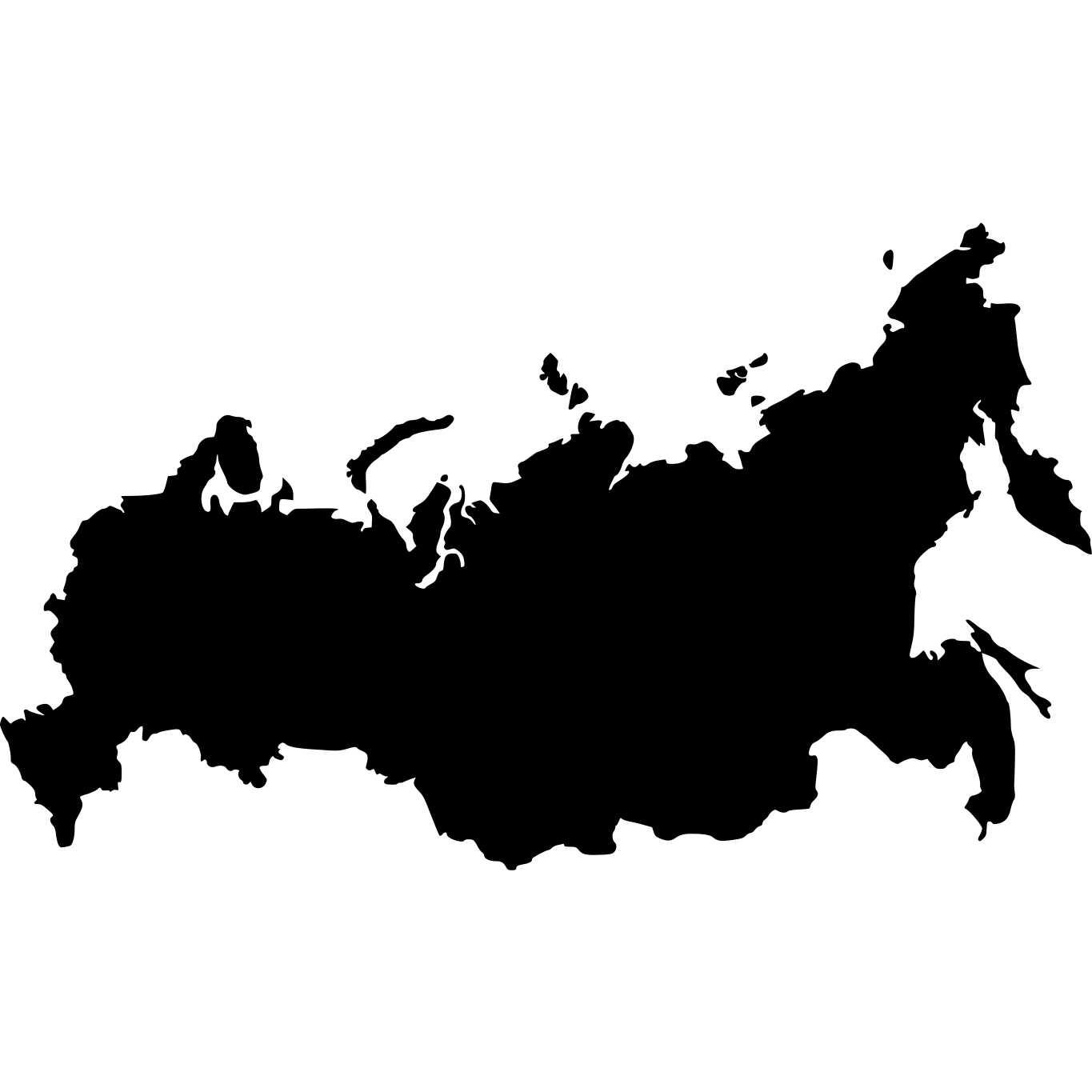
The Act is a Russian brand

We're dedicated to providing you with the most up-to-date and science-backed ingredient info out there.
The data we've presented on this page has been verified by a member of the SkinSort Team.
Read more about us· Updated April 30, 2026 • Added by xmmx


