My Scheming Ampoule Facial Foam
A face cleanser with 45 ingredients, including niacinamide and tranexamic acid.
Face cleanser with 45 ingredients that contains niacinamide and tranexamic acid
Worth noting
Contains EU-listed fragrance allergens, including Pelargonium Graveolens Oil and Eugenia Caryophyllus Bud Oil.
We independently verify ingredients, backed by peer-reviewed research. Suggest an update.
What's inside
Ingredients List
Water
Skin ConditioningGlycerin
Humectant


Potassium Laureth Phosphate
EmulsifyingLauramidopropyl Betaine
CleansingPotassium Lauryl Phosphate
SurfactantPropylene Glycol
Humectant

Sodium Cocoyl Alaninate
Surfactant
Sodium Chloride
MaskingAcrylates Copolymer
Dipropylene Glycol
HumectantCocamide DEA
Emulsifying
Glycol Distearate
Emollient
PEG-120 Methyl Glucose Triisostearate
Sodium C10-16 Pareth-2 Sulfate
Cleansing
Ethylhexylglycerin
Skin ConditioningStyrene/Acrylates Copolymer
Methylparaben
Preservative


Phenoxyethanol
Preservative
Sorbitan Caprylate
EmulsifyingCocamide Mea
Emulsifying
Laureth-4
Emulsifying
Niacinamide
Smoothing









Tetrasodium Glutamate Diacetate
ChelatingRicinus Communis Seed Oil
Masking

Citrus Aurantium Dulcis Oil
Masking
Decyl Glucoside
Cleansing
Pelargonium Graveolens Oil
Masking


Sodium Benzoate
Masking
Citrus Grandis Peel Oil
Masking
Cymbopogon Martini Oil
Masking
Eugenia Caryophyllus Bud Oil
Masking
Mentha Piperita Oil
Masking
Ocimum Basilicum Oil
Masking
Pogostemon Cablin Leaf Oil
Masking
Tranexamic Acid
Astringent
Sodium Hydroxide
BufferingSclerocarya Birrea Seed Oil
Humectant
Achillea Millefolium Extract
CleansingAlchemilla Vulgaris Extract
AstringentAlcohol
Antimicrobial
Malva Sylvestris Extract
AstringentMelissa Officinalis Leaf Extract
Skin ConditioningMentha Piperita Leaf Extract
Skin ConditioningPrimula Veris Extract
Skin ConditioningVeronica Officinalis Extract
Skin ConditioningWater, Glycerin, Potassium Laureth Phosphate, Lauramidopropyl Betaine, Potassium Lauryl Phosphate, Propylene Glycol, Sodium Cocoyl Alaninate, Sodium Chloride, Acrylates Copolymer, Dipropylene Glycol, Cocamide DEA, Glycol Distearate, PEG-120 Methyl Glucose Triisostearate, Sodium C10-16 Pareth-2 Sulfate, Ethylhexylglycerin, Styrene/Acrylates Copolymer, Methylparaben, Phenoxyethanol, Sorbitan Caprylate, Cocamide Mea, Laureth-4, Niacinamide, Tetrasodium Glutamate Diacetate, Ricinus Communis Seed Oil, Citrus Aurantium Dulcis Oil, Decyl Glucoside, Pelargonium Graveolens Oil, Sodium Benzoate, Citrus Grandis Peel Oil, Cymbopogon Martini Oil, Eugenia Caryophyllus Bud Oil, Mentha Piperita Oil, Ocimum Basilicum Oil, Pogostemon Cablin Leaf Oil, Tranexamic Acid, Sodium Hydroxide, Sclerocarya Birrea Seed Oil, Achillea Millefolium Extract, Alchemilla Vulgaris Extract, Alcohol, Malva Sylvestris Extract, Melissa Officinalis Leaf Extract, Mentha Piperita Leaf Extract, Primula Veris Extract, Veronica Officinalis Extract
Key Ingredients
Benefits
Concerns
Ingredients Explained
Water. It's the most common cosmetic ingredient of all. You'll usually see it at the top of ingredient lists, meaning that it makes up the largest part of the product.
So why is it so popular? Water most often acts as a solvent - this means that it helps dissolve other ingredients into the formulation.
You'll also recognize water as that liquid we all need to stay alive. If you see this, drink a glass of water. Remember to stay hydrated!
Learn more about WaterGlycerin (or glycerol) is a compound naturally found in your skin. It's a powerhouse humectant that pulls water into the stratum corneum.
Topically, glycerin does several things at once:
Your skin makes glycerin on its own (mostly from sebaceous oil breakdown) and shuttles it to your outermost layer of skin, or your epidermis, via aquaporin-3.
Aquaporin-3 is a transporter that is essential for normal skin hydration, elasticity, and repair. Interestingly, mice lacking in AQP3 have dry and less elastic skin that can be fully corrected with glycerin.
This ingredient is non-irritating, plays well with almost every ingredient, and works across all skin types. Typical use is anywhere between 3-10% but can go up to 79% in some leave-on products.
Just know very high concentrations (>40%) can feel tacky in low humidity.
Glycerin is the name for this ingredient in American English. British English uses Glycerol/Glycerine.
Learn more about GlycerinWe don't have a description for Potassium Laureth Phosphate yet.
We don't have a description for Lauramidopropyl Betaine yet.
We don't have a description for Potassium Lauryl Phosphate yet.
Propylene Glycol is a synthetic, colorless, odorless liquid that has been a staple in cosmetics for decades. It is a skin conditioning agent, humectant, and solvent.
As a humectant, it draw water to the skin to reduce flaking and restore suppleness. It's also a solvent that helps dissolve other actives and keeps formulas stable across temperature changes.
The CIR Expert Panel has confirmed this ingredient to be nontoxic and clinical studies show no sensitization at cosmetic use concentrations.
True allergic reactions are quite rare: a 15-year retrospective study of 6,751 patients found only 0.31% had a positive reaction (and less than half were considered clinically relevant).
It seemed that when sensitization does occur, it's most commonly linked to topical medication (like corticosteroids) and not cosmetics. Allergic contact dermatitis also appears largely limited to individuals with underlying skin conditions.
Overall, propylene glycol is a well-studied ingredient that most people can tolerate without issue.
Learn more about Propylene GlycolThis ingredient is a surfactant and foam producer.
Chances are, you eat sodium chloride every day. Sodium Chloride is also known as table salt. This ingredient has many purposes in skincare: thickener, emulsifier, and exfoliator.
You'll most likely find this ingredient in cleansers where it is used to create a gel-like texture. As an emulsifier, it also prevents ingredients from separating.
You might see people debate whether Sodium Chloride is comedogenic, but there actually haven't been any comedogenic tests done on it. Either way, the overall formulation of a product matters a lot more than any single ingredient.
You might see this ingredient used in scrubs as a primary exfoliating ingredient.
Learn more about Sodium ChlorideAcrylates Copolymer is used as a film-forming agent and texture enhancer.
After applied, Acrylates Copolymer forms a thin film cover that helps skin feel more soft. It can help sunscreens become more water-resistant.
It is also used to make a product more thick.
Learn more about Acrylates CopolymerDipropylene Glycol is a synthetically created humectant, stabilizer, and solvent.
This ingredient helps:
Dipropylene glycol is technically an alcohol, but it belongs to the glycol family (often considered part of the ‘good’ alcohols). This means it is hydrating and gentle on skin unlike drying solvent alcohols like denatured alcohol.
As a masking agent, Dipropylene Glycol can be used to cover the smell of other ingredients. However, it does not have a scent.
Studies show Dipropylene Glycol is considered safe to use in skincare.
Learn more about Dipropylene GlycolCocamide DEA is a coconut-derived cleansing agent that creates rich foam and helps to thicken the consistency of cleansing products.
This ingredient effectively removes dirt and oil while helping to stabilize formulations, making it a common addition to shampoos, body washes, and facial cleansers.
It has become less popular in recent formulations due to potential irritation in sensitive skin types and concerns about trace amounts of diethanolamine (DEA), which can potentially form nitrosamines.
While still considered safe at regulated concentrations, many manufacturers now opt for gentler alternatives like cocamidopropyl betaine or other surfactants that offer similar benefits with fewer potential drawbacks.
Learn more about Cocamide DEAGlycol Distearate is an emulsifier and emollient that adds a "pearly" appearance to formulations.
That lustrous look you see in many shampoos is due to this ingredient: when cooled, it crystallizes into small platelets that reflect light to give products that rich, shimmering look.
This ingredient is considered safe at present practices of use and concentration and repeated insult patch test with 50% Glycol Distearate on 125 subjects found no evidence of skin irritation, hypersensitivity, or acute toxicity.
Typical use concentrations range from 0.1-10%.
Because it's an ester of stearic acid, it falls into the range that Malassezia likes to metabolize. This ingredient may not be fungal acne safe.
Learn more about Glycol DistearateWe don't have a description for PEG-120 Methyl Glucose Triisostearate yet.
Sodium C10-16 Pareth-2 Sulfate is a type of sulfate.
Ethylhexylglycerin is created from glycerin. It is a multitasker ingredient that:
The CIR Expert Panel found minimal skin absorption or sensitization of any kind in a safety assessment. Though this ingredient is considered well-tolerated, a small number of cases of allergic dermatitis have been published since 2002. Just be sure to patch test if you are unsure.
Industry-reported use ranges from 8% in rinse-off products and 2% in leave-on formulations.
Learn more about EthylhexylglycerinThis ingredient is a synthetic polymer that mainly works as a film former. It creates a thin, flexible film on the surface of your skin. Once applied, it helps improves wear, durability, and resistance to water/smudging.
Due to its large molecule size, it sits on top of your skin rather than absorbing into it.
Methylparaben is a synthetic preservative and one of the most widely used in the world. It has a simple, but important job: prevent your products from going bad by stopping bacteria, yeast, and mold from growing.
Typical use levels are low, often 0.1-0.3%.
This is also one of the most heavily studied preservatives out there and major regulatory bodies have repeatedly given it the green light.
In 2023, the EU's Scientific Committee on Consumer Safety (SCCS) confirmed that this ingredient is safe up to 0.4% on its own, of up to 0.8% when mixed with other paraben esters.
Here's the science behind the noise behind parabens/hormones as well:
Methylparaben shows very weak estrogen-like activity in vitro tests (more than 1,000x weaker than your body's own estradiol). In vivo (live-organism) studies don't support a meaningful endocrine-disrupting effect either.
You get a stronger estrogenic effect from eating tofu, actually.
It's also a low sensitizer and allergic reactions are uncommon; they usually happen on damage or broken skin.
There is a caveat: France has proposed to formally re-examine its endocrine classification in 2025 so the regulatory conversation isn't fully closed as of yet.
But as it stands today, this ingredient is considered safe at permitted levels.
Learn more about MethylparabenPhenoxyethanol is one of the most widely used preservatives in skincare (and for good reason!).
It has a large spectrum of antimicrobial activity and especially effective bacteria, yeast, and mold while only having a weak effect on your skin's natural microbiome.
On a cellular level, it disrupts the cell membranes of microbes by poking holes that make the cell leak. This shuts down the chemical reactions the microbe needs to make energy so it can no longer survive.
Another perk of this ingredient is that it stays functional across a wide pH range (3-10).
You'll often see it paired with boosters like Ethylhexylglycerin; one study showed that a 1:9 ratio of Ethylhexylglycerin to Phenoxyethanol damages bacterial membranes as effectively as doubling the Phenoxyethanol concentration on its own.
Typical use concentrations range from 0.3-1% depending on the formula, and this ingredient is capped at 1% int the EU.
Safety-wise, the fear mongering does not hold up to the evidence. The EU's Scientific Committee on Consumer Safety and FDA consider it safe as a preservative at up to 1%, including for children of all ages.
Adverse systemic effects only showed up in animal studies at exposures roughly 200x higher than what people get from cosmetics. And despite its very widespread use, this ingredient is a rare sensitizer and allergic reactions are uncommon.
Learn more about PhenoxyethanolWe don't have a description for Sorbitan Caprylate yet.
This ingredient is made by combining the fatty acids from coconut oil with monoethanolamine. It is an emulsifier that helps boost foam, thicken texture, and help keep ingredients together in a formula.
Laureth-4 is a nonionic surfactant made by attaching an average of four ethylene oxide units to Lauryl Alcohol, a fatty alcohol from coconut or palm kernel oil.
In a formula, it does two jobs:
A 2012 assessment found this ingredient is used in leave-on products at up to 21%, which is at the very high end for the category; most cosmetic use is far lower and typically in the single digits.
A true allergy to Laureth-4 is rare; similar alcohol ethoxylates tested negative for skin sensitization in undiluted guinea pig studies, and related compounds were non-sensitizing in Magnusson-Kligman maximization tests.
There is one caveat for this whole ingredient family: ethoxylated surfactants slowly oxidize when exposed to air, and it's the oxidation products, not the fresh material, that act as sensitizers. This is mostly a formulation and shelf life issue.
Dr. James Fulton's rabbit ear test from the 1980's scored this ingredient as a 5 on the comedogenic scale. Fulton himself described the rabbit ear as not an ideal model and the tests used undiluted ingredients on rabbit ears, which are more reactive than human facial skin.
Dr. Draelos later used a human assay on finished cosmetic products and found that products built with so-called comedogenic ingredients are not necessarily comedogenic themselves.
This ingredient can be potentially pore clogging if it appears high in the ingredient list of a leave-on product.
The fungal acne picture is actually reassuring: Malassezia uses fatty acids from its surroundings (C11-24). This ingredient has nothing for the Malassezia yeast to use since it is an alcohol and not an acid.
Supporting this, closely related ethoxylated alcohol detergents like Ceteth-20 get used in Malassezia lab work as neutral carriers to disperse a separately added fatty acid (not as the food source itself).
Learn more about Laureth-4Niacinamide is a multitasking form of vitamin B3 that strengthens the skin barrier, reduces pores and dark spots, regulates oil, and improves signs of aging.
And the best part? It's gentle and well-tolerated by most skin types, including sensitive and reactive skin.
You might have heard of "niacin flush", or the reddening of skin that causes itchiness. Niacinamide has not been found to cause this.
In very rare cases, some individuals may not be able to tolerate niacinamide at all or experience an allergic reaction to it.
If you are experiencing flaking, irritation, and dryness with this ingredient, be sure to double check all your products as this ingredient can be found in all categories of skincare.
When incorporating niacinamide into your routine, look out for concentration amounts. Typically, 5% niacinamide provides benefits such as fading dark spots. However, if you have sensitive skin, it is better to begin with a smaller concentration.
When you apply niacinamide to your skin, your body converts it into nicotinamide adenine dinucleotide (NAD). NAD is an essential coenzyme that is already found in your cells as "fuel" and powers countless biological processes.
In your skin, NAD helps repair cell damage, produce new healthy cells, support collagen production, strengthen the skin barrier, and fight environmental stressors (like UV and pollution).
Our natural NAD levels start to decline with age, leading to slower skin repair, visible aging, and a weaker skin barrier. By providing your skin niacinamide, you're recharging your skin's NAD levels. This leads to stronger, healthier, and younger looking skin.
Another name for vitamin B3 is nicotinamide. This vitamin is water-soluble and our bodies don't store it. We obtain Vitamin B3 from either food or skincare. Meat, fish, wheat, yeast, and leafy greens contain vitamin B3.
The type of niacinamide used in skincare is synthetically created.
Learn more about NiacinamideTetrasodium Glutamate Diacetate is a chelating agent. Chelating agents help prevent metal ions from binding to other ingredients. This helps prevent unwanted effects and reactions from a product. These metal ions may come from water and are found in miniscule amounts.
Tetrasodium Glutamate Diacetate can also help other preservatives be more effective.
This ingredient is also known as castor oil. It is a skin conditioning ingredient.
The star component of castor oil is ricinoleic acid, an unusual fatty acid that makes up ~80-92% of its composition.
In skincare, it is an emollient that dries down to a solid film with water-binding properties. This helps keep skin hydrated and helps reduce transepidermal water loss (TEWL).
A 2026 dermatology review pulls together its broader uses:
Human clinical testing found this ingredient to be non-irritating and non-sensitizing.
Because castor oil contains fatty acids in the C11-24 range, this ingredient may not be fungal acne safe.
At this time, the literature does not support castor oil in regrowing hair. A 2022 systematic review found no strong evidence that it supports hair growth and only weak evidence that it improves hair shine.
Castor oil itself carries "perfuming" and "masking" function tags according to the official CosIng database. This is because of its mild odor and odor-dampening properties.
Learn more about Ricinus Communis Seed OilCitrus Aurantium Dulcis Oil comes from the bitter orange, an orange native to Southeast Asia.
This orange is commonly used in cosmetics and food. It is a common ingredient for marmalade.
Citrus peels are often made up of mainly limonene, a fragrance with a citrus scent. They also contain flavonoids, which have anti-inflammatory properties.
Learn more about Citrus Aurantium Dulcis OilDecyl Glucoside is a plant-derived surfactant and emulsion stabilizer. It is created by reacting glucose with the fatty acids from plants.
Like all surfactants, it works by lowering the surface tension between water and oil. This makes it so that dirt, sebum, and makeup can be lifted off your skin and rinsed away. It also produces a dense and creamy foam.
Because it has a neutral charge, it is compatible with a wide range of ingredients and stays stable across a broad pH range/water hardiness conditions.
Patch testing has shown it to have the lowest irritation potential among common cleansing surfactants (like SLS).
Typical use levels range from 5-20% in rinse-off cleansers.
One thing worth knowing: The American Contact Dermatitis Society named the parent family, alkyl glucosides, "Allergen of the Year" in 2017. The prevalence of allergy is pretty low but be sure to patch test if you've reacted to "gentle" or sulfate-free cleansers before.
This ingredient is fungal acne safe because the fatty alcohol portion of this ingredient is not within the C11-24 chain length that Malassezia can metabolize.
Learn more about Decyl GlucosidePelargonium Graveolens Oil is the pressed oil of the Rose Geranium plant. It has perfuming and masking properties.
This ingredient contains citronellol and geraniol. These compounds may cause allergies and skin-sensitivity.
The scent of Rose Geranium closely resembles. you guessed it: roses.
Learn more about Pelargonium Graveolens OilSodium Benzoate is a preservative. It's used in both cosmetic and food products to inhibit the growth of mold and bacteria. It is typically produced synthetically.
Both the US FDA and EU Health Committee have approved the use of sodium benzoate. In the US, levels of 0.1% (of the total product) are allowed.
Sodium benzoate works as a preservative by inhibiting the growth of bacteria inside of cells. It prevents the cell from fermenting a type of sugar using an enzyme called phosphofructokinase.
It is the salt of benzoic acid. Foods containing sodium benzoate include soda, salad dressings, condiments, fruit juices, wines, and snack foods.
Studies for using ascorbic acid and sodium benzoate in cosmetics are lacking, especially in skincare routines with multiple steps.
We always recommend speaking with a professional, such as a dermatologist, if you have any concerns.
Learn more about Sodium BenzoateCitrus Grandis Peel Oil is an essential oil that is derived from the peel of a Grapefruit. It is composed largely of limonene, which is a fragrance that can cause irritation for sensitive skin.
Cymbopogon Martini Oil is the volatile oil expressed from the herb palmarosa, Cymbopogon martini, Gramineae
Eugenia Caryophyllus Bud Oil is a fragrance and is an oil. It can cause irritation.
This essential oil is steam-distilled from peppermint leaves, also known as peppermint oil. It's mainly used for scent in skincare but also provides that signature "cooling" sensation.
Peppermint oil is a "feels amazing" ingredient until it doesn't.
At higher doses or for those with sensitive skin, methol-type cooling can quickly turn into burning/irritation. It can also trigger irritant dermatitis or even allergic contact dermatitis. In a large patch-test dataset, peppermint oil had a low but positive rate for this.
In cosmetics, Cosmetic Safety Reviews (CIR) concludes that peppermint oil is safe to use when formulated to be non-sensitizing with some restrictions; for instance, pulegone, a naturally occurring component of peppermint oil, should not exceed 1%.
Since peppermint oil contains fragrance allergens such as limonene, linalool, and menthol, it can be sensitizing for those with rosacea, eczema, a broken skin barrier, or just sensitive skin in general.
In Japan, this ingredient is known as Hakka Yu.
Learn more about Mentha Piperita OilThis ingredient is also known as basil oil or basil essential oil. It is primarily used to add a fragrance or mask the odor of other ingredients.
The main bioactive compounds in it are linalool and eugenol. These are EU-regulated fragrance allergens; this just means a small percentage of people with existing fragrance sensitivities should patch test.
In-vitro studies have demonstrated activity against acne-causing bacteria.
Learn more about Ocimum Basilicum OilThis ingredient is also known as Patchouli oil. Its main role is to add a warm, earthy, and musky scent to products.
Patchouli exhibits slight antioxidant, antibacterial and antifungal activity from its patchoulol, beta-caryophyllene, pogostone content.
Like all essential oils, this ingredient is a known sensitizer at higher concentrations. This is because this oil also contains known skin-irritating fragrances, limonene and camphor. Limonene and camphor are both known EU allergens.
While patchouli oil holds FDA GRAS ("generally recognized as safe") status, it is typically used at low levels and subject to usage guidelines.
Those with sensitive skin should patch test before using.
Learn more about Pogostemon Cablin Leaf OilTranexamic Acid (TXA) is a synthetic lysine derivative that is becoming one of the most exciting brightening ingredients in skincare.
Originally used in medicine as an anti-hemorrhagic agent, its skin brightening potential was discovered by accident; patients taking it orally started noticing their melasma was fading.
Unlike most brighteners that target tyrosinase (the enzyme that synthesizes melanin), TXA works further upstream. It basically blocks your cells from receiving the signal to produce pigment.
This makes it one of the rare actives that works on three pathways at once:
This makes it effective for treating melasma, post-inflammatory hyperpigmentation (PIH), and sun-induced dark spots.
The most effective cosmetic concentration sits between 2-5% and going higher doesn't boost results.
Side effects are generally mild; occasional irritation, flaking, or dryness have been reported at the start of use. Overall, this ingredient is pretty well tolerated, even by sensitive skin types.
Another perk of this ingredient is that it does not cause photosensitivity, so it's safe to use in the AM and PM.
"Does it actually penetrate?" is the part that gets argued about online and the honest answer from research + clinical trials at this time is "yes, but not easily."
TXA is a small molecule that loves water and carries both a positive and negative charge at the same time. Skin's outer layer is oily so a water-loving molecule like this has a hard time getting through it. Liu et al. 2021 showed that it doesn't really stick around well in the deeper layer where pigment-making cells actually live.
A 2025 paper puts it simply: penetration is poor and it depends heavily on how the product is formulated (Winn et al., J Cosmet Dermatol).
But "poor" isn't "none" and the research is fairly clear that topical TXA does something. A 2026 review that pooled results from multiple studies found it helped with moderate melasma but it didn't outperform hydroquinone. Some individual studies at 3% and 5% went head to head with hydroquinone and help up well.
So the fair takeaway is that it works, it's just slower and fussier about formulation than other actives (how the serum is built matters a lot).
There's real evidence here and it's not just clinic marketing. Reviews of microneedling plus TXA report less pigmentation, less melanin, and less redness (Zhang et al., Chinese Journal of Plastic and Reconstructive Surgery, 2024).
The most useful study compared 42 patients getting microneedling plus TXA against microneedling on its own; the group that got the acid saw much bigger improvement. This suggests the acid is pulling its weight and the needling isn't doing all the work.
Just two things worth flagging here:
Oral TXA also works well for melasma and gets used in clinics. However, it is a systemic drug with clotting-related risks and needs a prescription. Injections into the skin have also been studied with good results.
Neither is something a cosmetic product can do, but they help explain why so much attention goes into getting the topical version right.
Learn more about Tranexamic AcidSodium Hydroxide is also known as lye or caustic soda. It is used to adjust the pH of products; many ingredients require a specific pH to be effective.
In small amounts, sodium hydroxide is considered safe to use. However, large amounts may cause chemical burns due to its high alkaline.
Your skin has a natural pH and acid mantle. This acid mantle helps prevent harmful bacteria from breaking through. The acid mantle also helps keep your skin hydrated.
"Alkaline" refers to a high pH level. A low pH level would be considered acidic.
Learn more about Sodium HydroxideSclerocarya Birrea Seed Oil (aka marula oil) is a skin hydrating ingredient.
Its fatty acid profile is dominated by oleic acid (~69%), palmitic acid (~15%), linoleic acid (~9%), and palmitoleic acid (~4%).
These fatty acids are very similar to those naturally found in the epidermis, making this oil biomimetic; basically, your skin recognizes it.
Clinical testing found this ingredient to be moisturizing and non-irritating, with noteworthy effects on reducing transepidermal water loss (TEWL).
Besides fatty acids, marula oil is also rich in oxidative stabilizers like vitamin E, vitamin C precursors, and polyphenols. This gives it excellent shelf stability compared to most facial oils.
This is a great ingredient for dry, dull, or barrier-compromised skin.
Just know it may not be fungal acne safe due to the oleic and palmitic acid content. These fatty acids can as as a food source for the Malassezia yeast.
This ingredient shows up on a lot of "pore-clogging" lists but there's no real evidence behind that. It doesn't even have a comedogenic rating from an actual study; the numbers you'll find online come from blogs citing other blogs.
Some people still find it breaks them out. So if that's you, definitely trust your skin.
Learn more about Sclerocarya Birrea Seed OilAchillea Millefolium Extract comes from the yarrow plant. Yarrow is rich in antioxidants and fatty acids.
This ingredient is also known as lady's mantle.
This ingredient is also called ethanol or ethyl alcohol. It is denatured, meaning made undrinkable for cosmetic use.
In formulas, it:
Is it bad for your skin?
The answer comes down to concentration. Patch and wash studies have found highly concentrated alcohol-based hand rubs (60-100%) cause less barrier disruption than washing with a basic detergent like SLS. The only measurable effect in these studies was a temporary dip in skin hydration.
Concentrations below 12-15% in leave-on cosmetics is generally well-tolerated. Concentrations above start to see increased transepidermal water loss (TEWL) and reduced hydration.
In concentrations about 58%, it creates temporary channels in your skin's lipid layers to become more permeable and allow other ingredients to slip through easily.
This ingredient can be up to 80% of the formula in alcohol-based perfumes.
Overall, this ingredient is probably harmless if found lower down an ingredients list but worth side-eyeing if it's high up (especially if your barrier is already struggling).
Alcohol can worsen dry skin, eczema, and oily skin, especially at higher concentrations. This is because it can increase transepidermal water loss and decrease hydration to disrupt the skin barrier.
According to the National Rosacea Society based in the US, you should be mindful of products with these alcohols in the top half of ingredients.
True allergic contact dermatitis to ethanol is uncommon, but be sure to patch test if you have dry or sensitive skin.
Learn more about AlcoholWe don't have a description for Malva Sylvestris Extract yet.
Lemon balm is a mint-family herb with skin conditioning properties. It contains components such as rosmarinic acid, caffeic acid, geraniol, citronellal, and ursolic acid.
Mentha Piperita Leaf Extract is extract from peppermint leaves. It has a "cooling" sensory feel depending on what compounds are found in the extract.
Peppermint leaves contain polyphenols that antioxidant activity. In-vitro studies show anti-inflammatory and antimicrobial activity against some bacteria and fungi.
Evidence for mint as a "treatment" ingredient is limited and depends heavily on the specific extract type and concentration.
In large percentages, peppermint extract may sensitize the skin.
Learn more about Mentha Piperita Leaf ExtractWe don't have a description for Primula Veris Extract yet.
We don't have a description for Veronica Officinalis Extract yet.
Reviews
No written reviews yet. Be the first to review this product.
Recent searches
Search reviews by skin type, ingredient, or keyword.
Where it's from
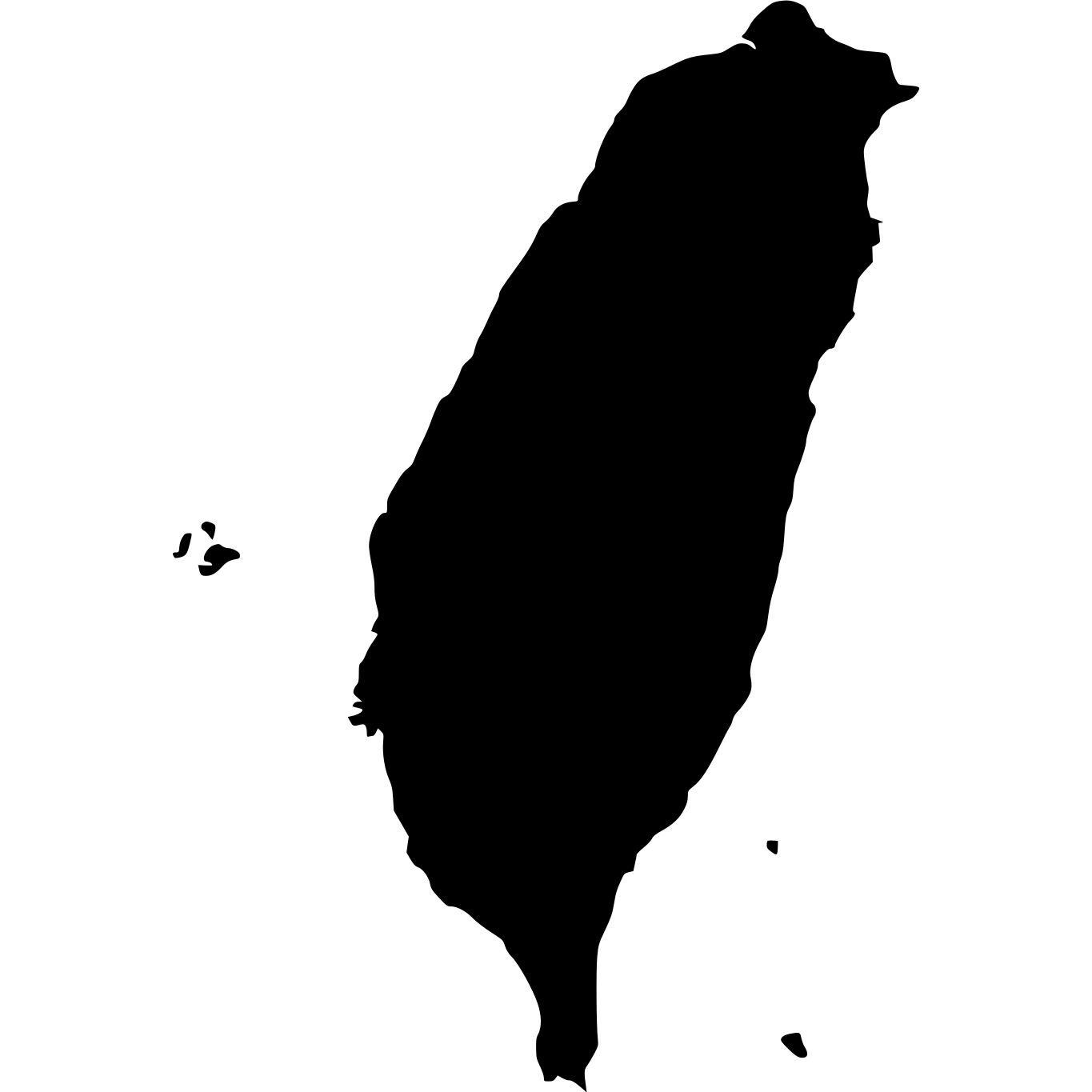
My Scheming is a Taiwanese brand

We're dedicated to providing you with the most up-to-date and science-backed ingredient info out there.
The data we've presented on this page has been verified by a member of the SkinSort Team.
Read more about us· Updated November 11, 2024 • Added by anemone


