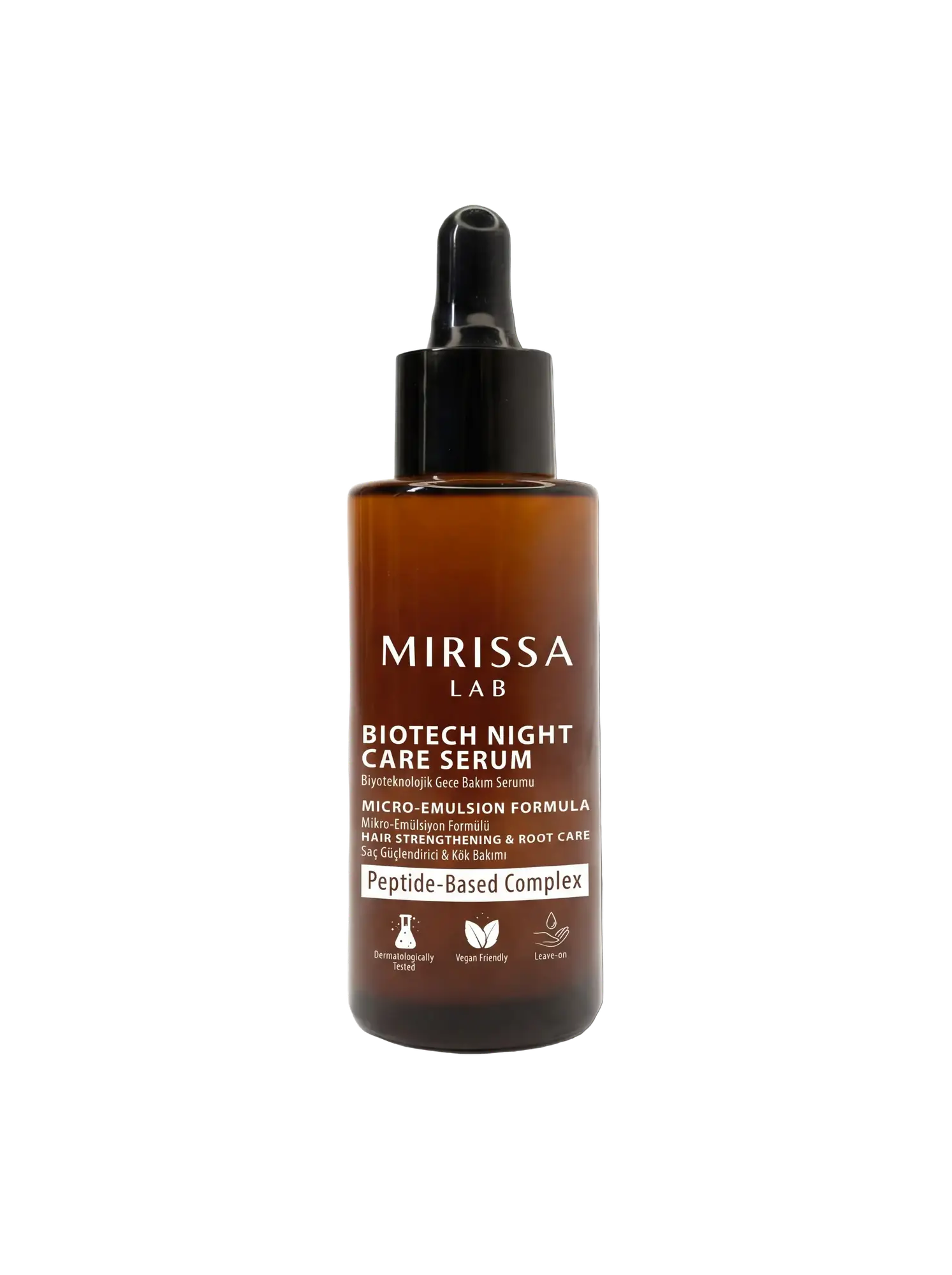
Mirissa Lab Saç Dökülmesi Karşıtı Çoklu Peptit Biotin Kompleksi Saç Derisi Serumu
A scalp treatment with 44 ingredients, including niacinamide, peptides, and zinc.
Scalp treatment with 44 ingredients that contains niacinamide, peptides and zinc
We independently verify ingredients, backed by peer-reviewed research. Suggest an update.
What's inside
Ingredients List
Water
Skin ConditioningCaprylic/Capric Triglyceride
Masking


Glycerin
Humectant
Butylene Glycol
Humectant
Niacinamide
Smoothing









Squalane
Emollient
Phenoxyethanol
Preservative
Zinc PCA
Humectant
Polyacrylamide
Panthenol
Skin Conditioning
Laureth-7
EmulsifyingXanthan Gum
EmulsifyingAloe Barbadensis Leaf Juice
Skin Conditioning
C13-14 Isoparaffin
Emollient
Allantoin
Skin Conditioning
Ethylhexylglycerin
Skin ConditioningCamellia Sinensis Leaf Extract
Antimicrobial
Parfum
Masking




PPG-26-Buteth-26
Skin ConditioningPEG-40 Hydrogenated Castor Oil
Emulsifying

Chamomilla Recutita Flower Extract
Masking
Citrus Grandis Fruit Extract
Astringent
Cocos Nucifera Fruit Extract
Emollient
Gossypium Herbaceum Seed Extract
Skin ConditioningHedera Helix Leaf Extract
Skin ConditioningOlea Europaea Leaf Extract
Perfuming
Rosmarinus Officinalis Extract
AntimicrobialSalvia Officinalis Leaf Extract
CleansingTriticum Vulgare Germ Extract
Skin ConditioningBiotin
AntiseborrhoeicSodium Benzoate
Masking
Citric Acid
Buffering
Dextran
Apigenin
Antioxidant
Oleanolic Acid
Skin ConditioningBenzoic Acid
Masking
Dehydroacetic Acid
Preservative
Biotinoyl Tripeptide-1

Acetyl Tetrapeptide-3
Skin Protecting
Potassium Sorbate
Preservative
Trifolium Pratense Flower Extract
AstringentHexamethylindanopyran
Masking
Tetramethyl Acetyloctahydronaphthalenes
Masking
Limonene
Perfuming
Water, Caprylic/Capric Triglyceride, Glycerin, Butylene Glycol, Niacinamide, Squalane, Phenoxyethanol, Zinc PCA, Polyacrylamide, Panthenol, Laureth-7, Xanthan Gum, Aloe Barbadensis Leaf Juice, C13-14 Isoparaffin, Allantoin, Ethylhexylglycerin, Camellia Sinensis Leaf Extract, Parfum, PPG-26-Buteth-26, PEG-40 Hydrogenated Castor Oil, Chamomilla Recutita Flower Extract, Citrus Grandis Fruit Extract, Cocos Nucifera Fruit Extract, Gossypium Herbaceum Seed Extract, Hedera Helix Leaf Extract, Olea Europaea Leaf Extract, Rosmarinus Officinalis Extract, Salvia Officinalis Leaf Extract, Triticum Vulgare Germ Extract, Biotin, Sodium Benzoate, Citric Acid, Dextran, Apigenin, Oleanolic Acid, Benzoic Acid, Dehydroacetic Acid, Biotinoyl Tripeptide-1, Acetyl Tetrapeptide-3, Potassium Sorbate, Trifolium Pratense Flower Extract, Hexamethylindanopyran, Tetramethyl Acetyloctahydronaphthalenes, Limonene
Key Ingredients
Benefits
Concerns
Ingredients Explained
Water. It's the most common cosmetic ingredient of all. You'll usually see it at the top of ingredient lists, meaning that it makes up the largest part of the product.
So why is it so popular? Water most often acts as a solvent - this means that it helps dissolve other ingredients into the formulation.
You'll also recognize water as that liquid we all need to stay alive. If you see this, drink a glass of water. Remember to stay hydrated!
Learn more about WaterCaprylic/Capric Triglyceride (aka MCT Oil) is a lightweight emollient, solvent, and texture enhancer. It is considered a skin-softener by helping to prevent moisture loss.
Though it behaves like an oil, it is not technically one due to its chemical composition. One perk of this ingredient is that it is very stable, resistant to oxidation, and unlikely to go rancid.
In practice, that translates to a long shelf life and a consistently elegant skin feel.
While there is an assumption Caprylic Triglyceride can clog pores due to it being derived from coconut oil, there is no research supporting this. Just patch test if you have concerns.
Fractionated coconut oil and MCT Oil are both listed as Caprylic/Capric Triglyceride according to INCI. This is because INCI names are based on the ingredient’s final chemical composition and not its marketing name or source.
This ingredient is treated as the gold standard fungal acne safe oil. Even though it is coconut derived, the problematic lauric acid is stripped out.
This leaves just caprylic (C8) and capric (C10) acid. These chain lengths actually trend antifungal; a 2020 study found caprylic acid was enough to disrupt Malassezia furfur cell membrane, with a caprylic acid derivative damaging membrane structures at concentrations as low as 0.2%.
Learn more about Caprylic/Capric TriglycerideGlycerin (or glycerol) is a compound naturally found in your skin. It's a powerhouse humectant that pulls water into the stratum corneum.
Topically, glycerin does several things at once:
Your skin makes glycerin on its own (mostly from sebaceous oil breakdown) and shuttles it to your outermost layer of skin, or your epidermis, via aquaporin-3.
Aquaporin-3 is a transporter that is essential for normal skin hydration, elasticity, and repair. Interestingly, mice lacking in AQP3 have dry and less elastic skin that can be fully corrected with glycerin.
This ingredient is non-irritating, plays well with almost every ingredient, and works across all skin types. Typical use is anywhere between 3-10% but can go up to 79% in some leave-on products.
Just know very high concentrations (>40%) can feel tacky in low humidity.
Glycerin is the name for this ingredient in American English. British English uses Glycerol/Glycerine.
Learn more about GlycerinButylene Glycol (or BG) is used within cosmetic products for a few different reasons:
Overall, Butylene Glycol is a safe and well-rounded ingredient that works well with other ingredients.
Though this ingredient works well with most skin types, some people with sensitive skin may experience a reaction such as allergic rashes, closed comedones, or itchiness.
Learn more about Butylene GlycolNiacinamide is a multitasking form of vitamin B3 that strengthens the skin barrier, reduces pores and dark spots, regulates oil, and improves signs of aging.
And the best part? It's gentle and well-tolerated by most skin types, including sensitive and reactive skin.
You might have heard of "niacin flush", or the reddening of skin that causes itchiness. Niacinamide has not been found to cause this.
In very rare cases, some individuals may not be able to tolerate niacinamide at all or experience an allergic reaction to it.
If you are experiencing flaking, irritation, and dryness with this ingredient, be sure to double check all your products as this ingredient can be found in all categories of skincare.
When incorporating niacinamide into your routine, look out for concentration amounts. Typically, 5% niacinamide provides benefits such as fading dark spots. However, if you have sensitive skin, it is better to begin with a smaller concentration.
When you apply niacinamide to your skin, your body converts it into nicotinamide adenine dinucleotide (NAD). NAD is an essential coenzyme that is already found in your cells as "fuel" and powers countless biological processes.
In your skin, NAD helps repair cell damage, produce new healthy cells, support collagen production, strengthen the skin barrier, and fight environmental stressors (like UV and pollution).
Our natural NAD levels start to decline with age, leading to slower skin repair, visible aging, and a weaker skin barrier. By providing your skin niacinamide, you're recharging your skin's NAD levels. This leads to stronger, healthier, and younger looking skin.
Another name for vitamin B3 is nicotinamide. This vitamin is water-soluble and our bodies don't store it. We obtain Vitamin B3 from either food or skincare. Meat, fish, wheat, yeast, and leafy greens contain vitamin B3.
The type of niacinamide used in skincare is synthetically created.
Learn more about NiacinamideSqualane is the hydrogenated and shelf-stable form of squalene (a lipid that naturally occurs in human sebum).
It is an emollient and skin conditioning agent that is able to integrate seamlessly into the skin's lipid barrier without clogging pores.
This is due to how structurally similar it is to what your skin already produces.
Though it is mostly an emollient that helps soften and hydrate skin, it also has some humectant and occlusive action. Humectants help the skin retain moisture while occlusives seal it in, making squalane a triple-threat moisturizer.
Research shows it has antioxidant capabilities that help protect against stressors like UV exposure, specifically UVA induced oxidative stress. This study also found that it supports collagen biosynthesis in human dermal fibroblasts.
No clinical study has reported significant adverse effects and irritation reactions are very rare from this ingredient (even at 100% concentration).
Overall, it's a fantastic ingredient for hydration and is suitable for all skin types.
This depends on the source. Squalane can be derived from both plants and animals. Most squalane used in skincare comes from plants.
Please note: the source of squalane is only known if disclosed by the brand. We recommend reaching out to the brand if you have any questions about their squalane.
Read more about squalene with an "e".
Though squalane is often called an oil, it’s technically not one. It is a hydrocarbon, meaning it is only made of carbon and hydrogen. True oils are triglycerides and made of fatty acids and glycerol.
The term “oil-free” isn’t regulated so companies can define it however they want. Some exclude all oils, while others just avoid mineral oil or comedogenic oils.
Squalane has a comedogenic rating of 1 from the original 1972 study that tested raw ingredients under occlusion on rabbit ears. This system is not standardized or peer-reviewed, and using the raw ingredients is very different from how diluted cosmetic formulations are used on human skin.
A comedogenic rating of 1 means it is "unlikely to clog pores" according to the original rating system.
The overall formula of a product matters more than the individual ingredients on whether or not it will cause clogged pores.
Learn more about SqualanePhenoxyethanol is one of the most widely used preservatives in skincare (and for good reason!).
It has a large spectrum of antimicrobial activity and especially effective bacteria, yeast, and mold while only having a weak effect on your skin's natural microbiome.
On a cellular level, it disrupts the cell membranes of microbes by poking holes that make the cell leak. This shuts down the chemical reactions the microbe needs to make energy so it can no longer survive.
Another perk of this ingredient is that it stays functional across a wide pH range (3-10).
You'll often see it paired with boosters like Ethylhexylglycerin; one study showed that a 1:9 ratio of Ethylhexylglycerin to Phenoxyethanol damages bacterial membranes as effectively as doubling the Phenoxyethanol concentration on its own.
Typical use concentrations range from 0.3-1% depending on the formula, and this ingredient is capped at 1% int the EU.
Safety-wise, the fear mongering does not hold up to the evidence. The EU's Scientific Committee on Consumer Safety and FDA consider it safe as a preservative at up to 1%, including for children of all ages.
Adverse systemic effects only showed up in animal studies at exposures roughly 200x higher than what people get from cosmetics. And despite its very widespread use, this ingredient is a rare sensitizer and allergic reactions are uncommon.
Learn more about PhenoxyethanolZinc PCA is a clever two-in-one molecule: the zinc salt of pyrrolidone carboxylic acid (PCA).
Think of it as two useful things bonded together; the PCA half is one of your skin's own natural moisturizing factors (NMF) so it helps hold water in the upper layers. On the other hand, the zinc half does the heavy lifting on oil and bacteria.
The zinc part slows down an enzyme that turns testosterone into DHT, the hormone that tells your oil glands to pump out more sebum. Less of that signal means less oil. It also gently fights acne-causing bacteria and soothes redness/irritation.
This is why Zinc PCA often shows up in products for oily, breakout-prone skin and greasy scalps.
One lab study also hinted it might have a small anti-aging perk because it seemed to protect collagen from UVA damage and even helped the skin make a bit more of it. That last bit is still early research done in a dish and not real skin, so take it as a nice bonus rather than a promise for now.
As for scar healing, the picture is more "maybe" than a firm yes. Zinc itself plays a real role in wound repair because it is a cofactor for the enzymes involved in collagen building, calming inflammation, and helping new skin cells cover a wound. Lower zinc levels are also linked to slower healing.
Most of the scar healing research is on zinc oxide or oral zinc rather than zinc PCA specifically, with a focus on healing fresh wounds instead of scars that are already there.
Direct evidence that zinc PCA improves the look of established scars is still limited at this time. Though it would be fair to say zinc PCA supports the general skin-repair environment thanks to its zinc content .
This ingredient is water-soluble and plays nicely with other actives like niacinamide and salicylic acid. It works best at mildly acidic formulas (~4-6 pH) and is effective at low levels. Around 0.1% is enough to be active and finished products commonly use it anywhere up to 4%.
Overall, this is a well-tolerated, low-drama multitasker that suits oily and acne-prone skin.
Learn more about Zinc PCAPolyacrylamide is a synthetic polymer. It is used to stabilize products and bind ingredients. When hydrated, Polyacrylamide forms a soft gel.
Polyacrylamide is low-toxicity. If source properly, it is deemed safe to use in cosmetics.
It should be noted the precursor to Polyacrylamide is acrylamide. Acrylamide is a carcinogen. Most reputable sources of Polyacrylamide will screen for residual acrylamide to make sure the count is in a safe range. Acrylamide is not able to be absorbed through the skin.
We recommend speaking with a professional if you have concerns.
Learn more about PolyacrylamidePanthenol is a common ingredient that helps hydrate and soothe the skin. It is found naturally in our skin and hair.
There are two forms of panthenol: D and L.
D-panthenol is also known as dexpanthenol. Most cosmetics use dexpanthenol or a mixture of D and L-panthenol.
Panthenol is famous due to its ability to go deeper into the skin's layers. Using this ingredient has numerous pros (and no cons):
Like hyaluronic acid, panthenol is a humectant. Humectants are able to bind and hold large amounts of water to keep skin hydrated.
This ingredient works well for wound healing. It works by increasing tissue in the wound and helps close open wounds.
Once oxidized, panthenol converts to pantothenic acid. Panthothenic acid is found in all living cells.
This ingredient is also referred to as pro-vitamin B5.
Learn more about PanthenolLaureth-7 is created by the ethoxylation of lauryl alcohol using ethylene oxide. Lauryl alcohol is a fatty alcohol with hydrating properties.
This ingredient is an emulsifier and cleansing ingredient. As an emulsifier, it is used to prevent ingredients from separating. It also helps cleanse the skin by gathering dirt, oil, and pollutants to be rinsed away.
Xanthan gum is used as a stabilizer and thickener within cosmetic products. It helps give products a sticky, thick feeling - preventing them from being too runny.
On the technical side of things, xanthan gum is a polysaccharide - a combination consisting of multiple sugar molecules bonded together.
Xanthan gum is a pretty common and great ingredient. It is a natural, non-toxic, non-irritating ingredient that is also commonly used in food products.
Learn more about Xanthan GumAloe Barbadensis Leaf Juice is the filtered, stabilized liquid pressed from the inner gel of the aloe vera leaf.
In cosmetics, it shows up as either soothing active or a water-replacement base. It is roughly 98-99% water and the last 1-2% is an interesting mix of polysaccharides, amino acids, vitamins, minerals, and enzymes.
The polysaccharides do most of the work: they bind water at the skin surface for a light, non-greasy hydration boost. And one of the polysaccharides, glycomannan, is linked to fibroblast stimulation + collagen synthesis. This is also why aloe has such a long track record in wound and burn healing.
This ingredient is also calming with anti-inflammatory and mild antimicrobial activity, making it a great pick for sensitive, irritated, or post-sun skin.
Realistic expectations matter though; the solid evidence is mostly limited to hydration, soothing, and wound support. Deeper claims about anti-aging or sun protection are not well backed, and science reviews note it does not prevent radiation-induced skin injury.
Because it plays well with almost everything, it's commonly used as a base alongside other actives like niacinamide or vitamin C.
Typical usage concentrations range from 0.5% (where hydration benefits already show up) all the way to 90%+ (where it replaces water as the main base).
The safety for this ingredient is well-establish as well. Overall, this is a great supporting ingredient for those who want a boost in hydration.
Learn more about Aloe Barbadensis Leaf JuiceC13-14 Isoparaffin is a synthetic emollient, solvent, and thickening agent. It helps soften skin and improves spreadability without leaving a greasy residue.
This ingredient has been found to be non-sensitizing and safe for use in cosmetics.
Two things floating around online that cause fear-mongering:
There's one scary-sounding study related to kidney tumors in male rats; this depends on a protein called alpha-2u-globulin that binds the ingredient and clogs up kidney cells. Female rats barely make this protein, and humans don't make it at all so this effect cannot happen to us. Regulatory bodies have states this rat-only pathway shouldn't be used to judge human risk.
The other thing you'll see is 1,4-dioxane being a trace byproduct that can form during manufacturing of petroleum-derived ingredients. This is a real, but heavily managed/monitored issue. This byproduct is removed through purification steps before the ingredients goes into the formula. Regulatory bodies also actively monitor residual levels for safety.
One last thing to note: this ingredient is a pure hydrocarbon with no fatty-acid or ester chains for Malassezia to feed on, so it's considered fungal acne safe.
Learn more about C13-14 IsoparaffinAllantoin is a soothing ingredient known for its protective and moisturizing properties; it's basically a quiet workhorse ingredient you can find in a huge range of cosmetics.
Though it can be derived from the comfrey plant, allantoin is produced synthetically for cosmetic products to ensure purity.
Research shows it can encourage your skin cells to turn over and renew by stimulating keratinocyte and fibroblast proliferation.
It also has mild keratolytic properties to help loosen and shed dead skin cells without being harsh.
Studies also suggest allantoin can help calm inflammation by dialing down some of the chemical signals your skin sends out when it is irritated.
This ingredient is typically used in the 0.1-0.5% range, and the FDA recognizes it as a skin protectant in OTC products up to 2%.
Overall, allantoin is a wonderful addition to most routines; it is stable across a wide pH range (~4-8), works well with other ingredients, and is considered non-sensitizing/non-irritating.
Fun fact: Allantoin is naturally occurring in comfrey root, beets, chamomile, and wheat sprouts. Our bodies even produce it as a byproduct of uric acid metabolism.
Learn more about AllantoinEthylhexylglycerin is created from glycerin. It is a multitasker ingredient that:
The CIR Expert Panel found minimal skin absorption or sensitization of any kind in a safety assessment. Though this ingredient is considered well-tolerated, a small number of cases of allergic dermatitis have been published since 2002. Just be sure to patch test if you are unsure.
Industry-reported use ranges from 8% in rinse-off products and 2% in leave-on formulations.
Learn more about EthylhexylglycerinCamellia Sinensis Leaf Extract (tea extract) is one of the most well-researched plant extracts in skincare with an impressive resume.
Black tea, green tea, and oolong tea are all harvested from the Camellia Sinensis plant.
Studies show green tea extract and its catechins (like epigallocatechin gallate (EGCG)) help your skin cells product energy more efficiently and reducing the number of free-radicals that can damage your skin from the inside.
In lab-grown skin models, this translated to younger, healthier, and stronger skin.
There's also good sun protection data; researchers saw less DNA damage and redness on human skin when green tea was applied before UVB exposure. And the more they applied, the better the protection.
Needless to say, this ingredient shouldn't replace your sunscreen. But it is a great supportive ingredient that you can already find in many sunscreens and antioxidant serums.
A 2009 study found a 2% green tea lotion was effective for mild-to-moderate acne thanks to its anti-inflammatory and mild antimicrobial activity.
The quality of the extract matters a lot here:
Good extracts contain 50-90% catechins while lower quality ones are mostly there for marketing. We recommend reaching out to the brand if you have questions about the quality or source of their ingredients.
Human Repeated Insult Patch Testing showed no irritation or sensitization at use concentrations (0.86% in leave-on products and up to 30% as leaf water).
Learn more about Camellia Sinensis Leaf ExtractParfum is a catch-all term for an ingredient or more that is used to give a scent to products.
Also called "fragrance", this ingredient can be a blend of hundreds of chemicals or plant oils. This means every product with "fragrance" or "parfum" in the ingredients list is a different mixture.
For instance, Habanolide is a proprietary trade name for a specific aroma chemical. When used as a fragrance ingredient in cosmetics, most aroma chemicals fall under the broad labeling category of “FRAGRANCE” or “PARFUM” according to EU and US regulations.
The term 'parfum' or 'fragrance' is not regulated in many countries. In many cases, it is up to the brand to define this term.
For instance, many brands choose to label themselves as "fragrance-free" because they are not using synthetic fragrances. However, their products may still contain ingredients such as essential oils that are considered a fragrance by INCI standards.
One example is Calendula flower extract. Calendula is an essential oil that still imparts a scent or 'fragrance'.
Depending on the blend, the ingredients in the mixture can cause allergies and sensitivities on the skin. Some ingredients that are known EU allergens include linalool and citronellol.
Parfum can also be used to mask or cover an unpleasant scent.
The bottom line is: not all fragrances/parfum/ingredients are created equally. If you are worried about fragrances, we recommend taking a closer look at an ingredient. And of course, we always recommend speaking with a professional.
Learn more about ParfumWe don't have a description for PPG-26-Buteth-26 yet.
PEG-40 Hydrogenated Castor Oil is an emulsifier derived from castor oil.
As an emulsifying agent, it helps other ingredients like fragrances and fat-soluble vitamins dissolve cohesively.
Due to its large molecule size, it doesn't penetrate beyond the skin's surface.
This ingredient has a solid regulatory track record; the CIR Expert Panel first concluded it was safe for use in cosmetics at concentrations up to 100% in 1997. A 2012 reassessment reaffirmed that finding. Safety studies have also found no irritation or evidence of toxicity.
A 2019 study did find this ingredient to grow Malassezia, so this ingredient may not be fungal acne safe.
Learn more about PEG-40 Hydrogenated Castor OilChamomilla Recutita Flower Extract comes from the Chamomile flower.
Chamomile is rich in antioxidants and has anti-inflammatory properties. Several compounds found in chamomile help with soothing, such as bisbolol.
Antioxidant components in chamomile make it an effective ingredient to help slow the signs of aging. Antioxidants help fight free-radical molecules, or molecules that may damage your skin.
Essential oils from chamomile have been found to improve wound healing due to its antimicrobial properties.
Ancient Greeks and Egyptians used Chamomile to treat skin redness and dryness. Chamomile has also been used to help treat stomach issues.
Learn more about Chamomilla Recutita Flower ExtractThis ingredient is also known as grapefruit or citricidal extract. It has perfuming and astringent properties.
Astringents shrinks tissue by drawing water out of your skin. This leads to a temporary tightening effect in the skin.
Cocos Nucifera Fruit Extract (coconut extract) is a water-soluble extract from coconut fruit.
It's a skin conditioning agent that helps keep the skin soft and hydrated. This ingredient is different from coconut oil with a totally different composition.
Direct research on this extract is limited and mostly comes from supplier safety dossiers:
Human testing found it to be non-irritating or sensitizing in a 50-subject occlusive patch test.
Real-world concentrations are very low: industry survey data puts it at 0.0007% to 0.02% in face and neck products, 0.0005% in moisturizers and cleansers, and up to 0.04% in hair conditioners.
Most human clinical skin research on coconut is on virgin coconut oil and not this extract. For example, a randomized double-blind trial found virgin coconut oil as effective and safe as mineral oil for mild to moderate xerosis with significant improvement in hydration and skin surface lipids. However, you can't transfer that to a water-based fruit extract at 0.01%.
There's no comedogenicity data for this specific ingredient; the "coconut clogs pores" reputation comes from coconut oil which scored high on the old rabbit ear assay.
That method tested pure ingredients on rabbit ears and later work showed the results translate inconsistently to human skin.
Some people still find it breaks them out. So if that's you, definitely trust your skin.
Learn more about Cocos Nucifera Fruit ExtractWe don't have a description for Gossypium Herbaceum Seed Extract yet.
We don't have a description for Hedera Helix Leaf Extract yet.
Olive tree leaves contain more antioxidants than olive fruit.
This is due to its rich flavonoid and polyphenol content. However, the antioxidant content varies depending on plant variety, harvesting method, leaf maturity, and extraction method.
This ingredient also has a natural fragrance. Read more about fragrance in cosmetics here.
Learn more about Olea Europaea Leaf ExtractRosemary extract has antioxidant, anti-inflammatory, anti-bacterial, and astringent properties.
This ingredient has a natural fragrance due its small component of rosemary oil. The antioxidant properties from its rosmarinic acid, flavone, and phenolic acids.
Sage leaf extract is a culinary and medicinal herb with antibacterial, antioxidant, and soothing properties.
This ingredient is made up of 75-90% ursolic acid, a potent antioxidant and anti-inflammatory compound.
This ingredient is extracted from the germ part of the wheat plant. The germ of a plant refers to the seed embryo, or part that sprouts into a new plant.
Some studies have found wheat germ to help with wound healing.
Biotin is a B vitamin that is naturally produced by our bodies. It is also called Vitamin H.
Our bodies use biotin in the metabolism process. It also helps our bodies use enzymes and move nutrients around. A biotin deficiency can lead to brittle hair and nails.
More research is needed on applying biotin topically. However, taking biotin orally has been shown to help nourish the skin, hair, and nails. They play a role in forming skin-hydrating fatty acids.
Biotin is water-soluble. It can be found in foods such as fish, eggs, dairy, nuts, and meat. Vitamin H stands for "haar" and "haut". These are the German words for hair and skin.
Learn more about BiotinSodium Benzoate is a preservative. It's used in both cosmetic and food products to inhibit the growth of mold and bacteria. It is typically produced synthetically.
Both the US FDA and EU Health Committee have approved the use of sodium benzoate. In the US, levels of 0.1% (of the total product) are allowed.
Sodium benzoate works as a preservative by inhibiting the growth of bacteria inside of cells. It prevents the cell from fermenting a type of sugar using an enzyme called phosphofructokinase.
It is the salt of benzoic acid. Foods containing sodium benzoate include soda, salad dressings, condiments, fruit juices, wines, and snack foods.
Studies for using ascorbic acid and sodium benzoate in cosmetics are lacking, especially in skincare routines with multiple steps.
We always recommend speaking with a professional, such as a dermatologist, if you have any concerns.
Learn more about Sodium BenzoateCitric Acid is an alpha hydroxy acid (AHA) naturally found in citrus fruits like oranges, lemons, and limes.
Like other AHAs, citric acid can exfoliate skin by breaking down the bonds that hold dead skin cells together. This helps reveal smoother and brighter skin underneath.
However, this exfoliating effect only happens at high concentrations (20%) which can be hard to find in cosmetic products.
Due to this, citric acid is usually included in small amounts as a pH adjuster. This helps keep products slightly more acidic and compatible with skin's natural pH.
In skincare formulas, citric acid can:
While it can provide some skin benefits, research shows lactic acid and glycolic acid are generally more effective and less irritating exfoliants.
Most citric acid used in skincare today is made by fermenting sugars (usually from molasses). This synthetic version is identical to the natural citrus form but easier to stabilize and use in formulations.
Rosacea skin has a lower threshold for acids generally, with 62.5% of rosacea subjects in one study reacting to lactic acid in a sting test. This is why we mark citric acid as a potential rosacea trigger.
However, this ingredient shows up as a pH adjuster or chelator at roughly 0.1-1% in many products. These low levels are unlikely to be an issue for rosacea skin and becomes a potential trigger at exfoliating concentrations (20%). Because everybody's skin is unique, we recommend a patch test if you are unsure.
Learn more about Citric AcidDextran is a sugar (polysaccharide) with skin hydrating properties.
Fun fact: Louis Pasteur first discovered this ingredient as a microbial product in wine.
Apigenin is an antioxidant.
Oleanolic acid is a type of triterpene.
Triterpenes are chemical compounds found in various plants such as pomegranates, apples, basil, and rosemary. They have been shown to have anti-inflammatory and antioxidant properties.
Benzoic Acid is an organic acid that shows up in cosmetics as a preservative. It helps keep a product from spoiling by holding back the growth of yeast, mold, and some bacteria.
This ingredient also functions as a fragrance ingredient that helps mask the unpleasant scent of other ingredients.
The way it works is worth understanding; benzoic acid works when the formula is acidic. It is able to sneak into a microbe's cell and mess up how it functions to stop it from growing in an acidic product.
However, the acid switches to an inactive form and stops working if a product isn't acidic enough (above ~5 pH). This is why you'll often see it in low pH products or teamed up with other preservatives to cover the gap.
Safety wise, it's one of the better studied preservatives out there.
The Cosmetic Ingredient Review Expert Panel has concluded this ingredient to be safe for use in cosmetic formulations at concentrations up to 5%.
A large international review found this ingredient had no effects on the human body and had low irritation potential.
Just so you know, real world use is usually much lower than the 5% ceiling (usually 1% of less).
The EU caps it at 2.5% in rinse-off products, 1.7% in oral care, and 0.5% in leave-on products.
One thing worth mentioning (it's nothing to worry about): some people get a little stinging or flushing where they apply it. This isn't a true allergy; it's a temporary and harmless reaction. This is the same kind of mild tingle you might notice from sorbic acid.
Learn more about Benzoic AcidDehydroacetic Acid is a synthetic preservative that keeps your products safe from microbes.
As an organic acid, it penetrates microbial cell walls and disrupts cellular metabolism. This makes it effective against bacteria, yeast, and mold.
It is effective at low concentrations (<0.6%). Clinical studies have found it to be non-irritating, non-sensitizing, and non-photosensitizing.
Learn more about Dehydroacetic AcidBiotinoyl Tripeptide-1 is a lab-made molecule that combines two parts: biotin (vitamin B7) and Tripeptide-1. Together, they form a peptide that’s often used in hair and eyelash products.
In-vitro studies show this ingredient helps hair bulb cells grow faster and product more structual proteins. This helps keep hair securely anchored in the follicle.
A small human study using a mascara with 2% Biotinoyl Tripeptide-1 reported lashes that were about 17% longer and 19% thicker after one month.
One study from 2025 compared topical spray vs. a combined tropical/oral treatment. The combination group saw greater increases in total hair count.
While these early results are encouraging, most of the data comes from in-vitro experiments (in test tubes) or small, short-term trials.
Biotinoyl Tripeptide-1 looks promising for supporting hair strength and growth but there’s not yet strong clinical evidence to confirm how well it works.
Learn more about Biotinoyl Tripeptide-1This biometic peptide is designed to support hair growth.
According to a manufacturer, it stimulates hair growth by:
The manufacturer has found combining this ingredient with red clover extract (Capixyl) boosted benefits. Not only does it enforce the scalp's extracellular matrix, it also inhibits the enzyme that creates DHT, a hormone that leads to hair loss.
While this ingredient is promising, more research is still needed to confirm its full effectiveness.
Learn more about Acetyl Tetrapeptide-3Potassium Sorbate is a preservative used to prevent yeast and mold in products. It is commonly found in both cosmetic and food products.
This ingredient comes from potassium salt derived from sorbic acid. Sorbic acid is a natural antibiotic and effective against fungus.
Both potassium sorbate and sorbic acid can be found in baked goods, cheeses, dried meats, dried fruit, ice cream, pickles, wine, yogurt, and more.
You'll often find this ingredient used with other preservatives.
Learn more about Potassium SorbateThis extract comes from the flower more commonly known as red clover.
This ingredient is also known as Galaxolide. It is a synthetic fragrance used to add a "sweet musky floral" odor.
The EU Scientific Committee for Consumer Safety deems this ingredient to be an allergen and irritant.
This ingredient is also known as ISO E Super. It is a synthetic perfuming and masking ingredient.
The manufacturer describes this scnet as amber and woody.
According to the EU, this ingredient is a known allergen and some people may develop skin sensitivity from repeated exposure.
Learn more about Tetramethyl AcetyloctahydronaphthalenesLimonene is the compound that gives citrus peel its smell.
In skincare, it shows up as a standalone fragrance ingredient or as a natural compound of citrus and other essential oils.
You'll typically see this ingredient used in very small amounts; anything above 0.001% in a leave-on product or 0.01% in a rinse-off has to be named on the label in the EU. The citrus oils that carry it sit around 0.5-1% in a finished formula.
Fresh limonene is a weak allergen; the real issue is that it slowly reacts with air and then breaks down from oxidation to create hydroperoxides (which are strong sensitizers). This is why suppliers are required to keep the peroxide value below 20 mmol.
Positive reactions in people being investigated for eczema vary:
It's worth skipping if you have a known fragrance allergy or a compromised barrier, but the risk is low for most people.
Older or long-opened products are also more likely to bother you than fresh ones due to oxidation.
Learn more about LimoneneReviews
No written reviews yet. Be the first to review this product.
Recent searches
Search reviews by skin type, ingredient, or keyword.
Where it's from
Mirissa Lab is a Turkish brand


We're dedicated to providing you with the most up-to-date and science-backed ingredient info out there.
The data we've presented on this page has been verified by a member of the SkinSort Team.
Read more about us· Updated September 13, 2026 • Added by mirissalab


