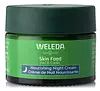
This barrier-repair night moisturizer is formulated around Helianthus Annuus Seed Oil and Butyrospermum Parkii Butter to strengthen the skin barrier and hydrate skin.
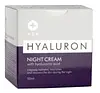
This barrier-repair night moisturizer is formulated around Panthenol and Sodium Hyaluronate to strengthen the skin barrier and hydrate skin.


What's inside
What's inside
 Key Ingredients
Benefits
Concerns
Ingredients Side-by-side
Water
Skin ConditioningHelianthus Annuus Seed Oil
Emollient



Butyrospermum Parkii Butter
Skin Conditioning



Glycerin
Humectant
Behenyl Alcohol
Emollient
Isoamyl Laurate
Emollient
Squalane
Emollient
Pentylene Glycol
Skin Conditioning
Betaine
Humectant
Sucrose Polystearate
EmollientStearic Acid
Cleansing
Plukenetia Volubilis Seed Oil
Emollient
Viola Tricolor Extract
EmollientRosmarinus Officinalis Leaf Extract
AntimicrobialChamomilla Recutita Flower Extract
Masking
Centella Asiatica Flower/Leaf/Stem Extract
Skin Conditioning
Calendula Officinalis Flower Extract
Masking
Alcohol
Antimicrobial


Hectorite
AbsorbentAcacia Senegal Gum
MaskingLactic Acid
Buffering





Xanthan Gum
EmulsifyingTocopherol
Antioxidant

Palmitic Acid
Emollient
Glyceryl Caprylate
EmollientCetyl Palmitate
Emollient
Sodium Stearoyl Glutamate
CleansingLimonene
Perfuming
Linalool
Perfuming
Benzyl Benzoate
Antimicrobial
Geraniol
Perfuming
Citral
Perfuming
Water, Helianthus Annuus Seed Oil, Butyrospermum Parkii Butter, Glycerin, Behenyl Alcohol, Isoamyl Laurate, Squalane, Pentylene Glycol, Betaine, Sucrose Polystearate, Stearic Acid, Plukenetia Volubilis Seed Oil, Viola Tricolor Extract, Rosmarinus Officinalis Leaf Extract, Chamomilla Recutita Flower Extract, Centella Asiatica Flower/Leaf/Stem Extract, Calendula Officinalis Flower Extract, Alcohol, Hectorite, Acacia Senegal Gum, Lactic Acid, Xanthan Gum, Tocopherol, Palmitic Acid, Glyceryl Caprylate, Cetyl Palmitate, Sodium Stearoyl Glutamate, Limonene, Linalool, Benzyl Benzoate, Geraniol, Citral
Water
Skin ConditioningGlyceryl Stearate
Emollient
PEG-100 Stearate
Surfactant
Caprylic/Capric Triglyceride
Masking
Isopropyl Myristate
Emollient
Cetearyl Alcohol
Emollient
Cetearyl Ethylhexanoate
Emollient
Propylene Glycol
Humectant
Simmondsia Chinensis Seed Oil
Emollient
Triticum Vulgare Germ Oil
Emollient
Vitis Vinifera Seed Oil
Emollient
Cyclopentasiloxane
Emollient
Panthenol
Skin Conditioning
Sodium Hyaluronate
Humectant
Allantoin
Skin Conditioning
Retinyl Palmitate
Skin Conditioning
Tocopheryl Acetate
Antioxidant
Tocopherol
Antioxidant
Sodium Benzoate
Masking
Xanthan Gum
EmulsifyingBHT
Antioxidant
Lactic Acid
Buffering
Parfum
Masking
Water, Glyceryl Stearate, PEG-100 Stearate, Caprylic/Capric Triglyceride, Isopropyl Myristate, Cetearyl Alcohol, Cetearyl Ethylhexanoate, Propylene Glycol, Simmondsia Chinensis Seed Oil, Triticum Vulgare Germ Oil, Vitis Vinifera Seed Oil, Cyclopentasiloxane, Panthenol, Sodium Hyaluronate, Allantoin, Retinyl Palmitate, Tocopheryl Acetate, Tocopherol, Sodium Benzoate, Xanthan Gum, BHT, Lactic Acid, Parfum
Reviews
Ingredients Explained
These ingredients are found in both products.
Ingredients higher up in an ingredient list are typically present in a larger amount.
Lactic Acid is another well-loved alpha hydroxy acid (AHA). It is gentler than glycolic acid but still highly effective.
Its main role is to exfoliate the surface of the skin by loosening the “glue” that holds dead skin cells together. Shedding those old cells leads to smoother, softer, and more even-toned skin.
Because lactic acid molecules are larger than glycolic acid, they don’t penetrate as deeply. This means they’re less likely to sting or irritate, making it a great choice for beginners or those with sensitive skin.
Like glycolic acid, it can:
Lactic acid also acts as a humectant (like hyaluronic acid). It can draw water into the skin to improve hydration and also plays a role in the skin's natural moisturizing factor (NMF) in the form of sodium lactate.
Studies show it can boost ceramide production to strengthen the skin barrier and even help balance the skin’s microbiome.
To get results, choose products with a pH between 3-4.
Lower strengths (5-12%) focus on surface exfoliation; higher strengths (12% and up) can reach deeper in the dermis (deeper, supportive layer) to improve skin texture and firmness over time.
Though it was originally derived from milk, most modern lactic acid used in skincare is vegan. It is made through non-dairy fermentation to create a bio-identical and stable form suitable for all formulations.
When lactic acid shows up near the end of an ingredient list, it usually means the brand added just a tiny amount to adjust the product’s pH.
Legend has it that Cleopatra used to bathe in sour milk to help reduce wrinkles.
Lactic acid is truly a gentle multitasker: it exfoliates, hydrates, strengthens, and brightens. It's a great ingredient for giving your skin a smooth, glowing, and healthy look without the harshness of stronger acids.
Read more about some other popular AHA's here:
Learn more about Lactic AcidTocopherol is a fat-soluble antioxidant known as Vitamin E.
You'll find this ingredient in the vast majority of skincare (for good reason). It works to neutralize free radicals, or unstable molecules generated by UV exposure, pollution, and other environmental stressors, before they can cause oxidative damage to your skin cells.
Topically applied tocopherol has been shown to protect against UV damage by ramping up the skin's own natural defense enzymes.
It also acts as a skin conditioning agent; some studies show that regular topical use can improve the skin's water-binding capacity over 2-4 weeks.
This ingredient is especially loved for being a team player. When combined with Vitamin C, the photoprotective effect of both ingredients roughly doubles and the combo also helps reduce UV-induced DNA damage.
This ingredient has some brightening potential but it's more of a prevention ingredient than spot-fader. Cell studies show it can slow down melanin production but it's worth noting that it's not the most powerful brightener out there.
In formulations, it also serves as a stabilizer that helps protect other oxidation-prone ingredients from degrading.
Concentrations usually range from 0.1-1% in most leave-on products.
Learn more about TocopherolWater. It's the most common cosmetic ingredient of all. You'll usually see it at the top of ingredient lists, meaning that it makes up the largest part of the product.
So why is it so popular? Water most often acts as a solvent - this means that it helps dissolve other ingredients into the formulation.
You'll also recognize water as that liquid we all need to stay alive. If you see this, drink a glass of water. Remember to stay hydrated!
Learn more about WaterXanthan gum is used as a stabilizer and thickener within cosmetic products. It helps give products a sticky, thick feeling - preventing them from being too runny.
On the technical side of things, xanthan gum is a polysaccharide - a combination consisting of multiple sugar molecules bonded together.
Xanthan gum is a pretty common and great ingredient. It is a natural, non-toxic, non-irritating ingredient that is also commonly used in food products.
Learn more about Xanthan Gum

