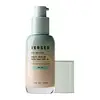
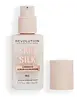
Versed Skin Solution Multi-Serum Skin Tint Foundation SPF 40 Versus Revolution Beauty Skin Silk Serum Foundation


What's inside
What's inside
 Key Ingredients
Benefits
Concerns
Ingredients Side-by-side
Zinc Oxide 13.1%
Cosmetic Colorant


Water
Skin ConditioningCoco-Caprylate/Caprate
Emollient
C9-12 Alkane
SolventPropanediol
Solvent

Butyloctyl Salicylate
Skin Conditioning
Glycerin
Humectant
Polyglyceryl-2 Dipolyhydroxystearate
Skin Conditioning

C15-19 Alkane
SolventPolyglyceryl-4 Isostearate
Emulsifying
Polyhydroxystearic Acid
Emulsifying
Magnesium Sulfate
Tocopheryl Acetate
Antioxidant


Terminalia Ferdinandiana Fruit Extract
Antioxidant
Jojoba Esters
Emollient
Hydrolyzed Sodium Hyaluronate
Skin Conditioning
Hydroxyacetophenone
Antioxidant
Triheptanoin
Skin ConditioningTriethyl Citrate
Masking

Polyglyceryl-3 Polyricinoleate
Emulsifying
Dilinoleic Acid/Butanediol Copolymer
Castor Oil/Ipdi Copolymer

Sorbitan Isostearate
Emulsifying
Mica
Cosmetic ColorantDisteardimonium Hectorite
StabilisingQuaternium-90 Bentonite
Phenoxyethanol
Preservative
Ethylhexylglycerin
Skin ConditioningTitanium Dioxide
Cosmetic Colorant
Iron Oxides
Zinc Oxide 13.1%, Water, Coco-Caprylate/Caprate, C9-12 Alkane, Propanediol, Butyloctyl Salicylate, Glycerin, Polyglyceryl-2 Dipolyhydroxystearate, C15-19 Alkane, Polyglyceryl-4 Isostearate, Polyhydroxystearic Acid, Magnesium Sulfate, Tocopheryl Acetate, Terminalia Ferdinandiana Fruit Extract, Jojoba Esters, Hydrolyzed Sodium Hyaluronate, Hydroxyacetophenone, Triheptanoin, Triethyl Citrate, Polyglyceryl-3 Polyricinoleate, Dilinoleic Acid/Butanediol Copolymer, Castor Oil/Ipdi Copolymer, Sorbitan Isostearate, Mica, Disteardimonium Hectorite, Quaternium-90 Bentonite, Phenoxyethanol, Ethylhexylglycerin, Titanium Dioxide, Iron Oxides
Water
Skin ConditioningDimethicone
Emollient
Isododecane
EmollientC13-15 Alkane
SolventEthylhexyl Stearate
Emollient


Glycerin
Humectant
Pentaerythrityl Tetraisostearate
Emollient
Caprylyl Methicone
Skin Conditioning
Cetyl PEG/PPG-10/1 Dimethicone
Emulsifying
Silica
Abrasive

Quaternium-90 Bentonite
Isobutylmethacrylate/Bis-Hydroxypropyl Dimethicone Acrylate Copolymer
Sodium Chloride
MaskingTri (Polyglyceryl-3/Lauryl) Hydrogenated Trilinoleate
EmulsifyingPhenoxyethanol
Preservative
Divinyldimethicone/Dimethicone Crosspolymer
Skin Conditioning
Dextrin Palmitate
Emulsifying
Triethyl Citrate
Masking
Lecithin
Emollient
Polyhydroxystearic Acid
Emulsifying
Caprylyl Glycol
Emollient
Parfum
Masking
Tocopheryl Acetate
Antioxidant
Ethylhexyl Palmitate
Emollient
Isopropyl Myristate
Emollient
Isostearic Acid
Cleansing
Polyglyceryl-3 PCA
EmollientPolyglyceryl-3 Polyricinoleate
Emulsifying
Pentaerythrityl Tetra-Di-T-Butyl Hydroxyhydrocinnamate
Antioxidant
Butylene Glycol
Humectant
Sodium Hyaluronate
Humectant


Polysorbate 20
Emulsifying
Carbomer
Emulsion StabilisingEthylhexylglycerin
Skin ConditioningPalmitoyl Tripeptide-1
Skin Conditioning

Palmitoyl Tetrapeptide-7
Skin Conditioning
Hexyl Cinnamal
Perfuming
Benzyl Salicylate
Perfuming
CI 77491
Cosmetic ColorantCI 77492
Cosmetic ColorantCI 77499
Cosmetic ColorantCI 77891
Cosmetic ColorantWater, Dimethicone, Isododecane, C13-15 Alkane, Ethylhexyl Stearate, Glycerin, Pentaerythrityl Tetraisostearate, Caprylyl Methicone, Cetyl PEG/PPG-10/1 Dimethicone, Silica, Quaternium-90 Bentonite, Isobutylmethacrylate/Bis-Hydroxypropyl Dimethicone Acrylate Copolymer, Sodium Chloride, Tri (Polyglyceryl-3/Lauryl) Hydrogenated Trilinoleate, Phenoxyethanol, Divinyldimethicone/Dimethicone Crosspolymer, Dextrin Palmitate, Triethyl Citrate, Lecithin, Polyhydroxystearic Acid, Caprylyl Glycol, Parfum, Tocopheryl Acetate, Ethylhexyl Palmitate, Isopropyl Myristate, Isostearic Acid, Polyglyceryl-3 PCA, Polyglyceryl-3 Polyricinoleate, Pentaerythrityl Tetra-Di-T-Butyl Hydroxyhydrocinnamate, Butylene Glycol, Sodium Hyaluronate, Polysorbate 20, Carbomer, Ethylhexylglycerin, Palmitoyl Tripeptide-1, Palmitoyl Tetrapeptide-7, Hexyl Cinnamal, Benzyl Salicylate, CI 77491, CI 77492, CI 77499, CI 77891
Reviews
Ingredients Explained
These ingredients are found in both products.
Ingredients higher up in an ingredient list are typically present in a larger amount.
Ethylhexylglycerin is created from glycerin. It is a multitasker ingredient that:
The CIR Expert Panel found minimal skin absorption or sensitization of any kind in a safety assessment. Though this ingredient is considered well-tolerated, a small number of cases of allergic dermatitis have been published since 2002. Just be sure to patch test if you are unsure.
Industry-reported use ranges from 8% in rinse-off products and 2% in leave-on formulations.
Learn more about EthylhexylglycerinGlycerin (or glycerol) is a compound naturally found in your skin. It's a powerhouse humectant that pulls water into the stratum corneum.
Topically, glycerin does several things at once:
Your skin makes glycerin on its own (mostly from sebaceous oil breakdown) and shuttles it to your outermost layer of skin, or your epidermis, via aquaporin-3.
Aquaporin-3 is a transporter that is essential for normal skin hydration, elasticity, and repair. Interestingly, mice lacking in AQP3 have dry and less elastic skin that can be fully corrected with glycerin.
This ingredient is non-irritating, plays well with almost every ingredient, and works across all skin types. Typical use is anywhere between 3-10% but can go up to 79% in some leave-on products.
Just know very high concentrations (>40%) can feel tacky in low humidity.
Glycerin is the name for this ingredient in American English. British English uses Glycerol/Glycerine.
Learn more about GlycerinPhenoxyethanol is one of the most widely used preservatives in skincare (and for good reason!).
It has a large spectrum of antimicrobial activity and especially effective bacteria, yeast, and mold while only having a weak effect on your skin's natural microbiome.
On a cellular level, it disrupts the cell membranes of microbes by poking holes that make the cell leak. This shuts down the chemical reactions the microbe needs to make energy so it can no longer survive.
Another perk of this ingredient is that it stays functional across a wide pH range (3-10).
You'll often see it paired with boosters like Ethylhexylglycerin; one study showed that a 1:9 ratio of Ethylhexylglycerin to Phenoxyethanol damages bacterial membranes as effectively as doubling the Phenoxyethanol concentration on its own.
Typical use concentrations range from 0.3-1% depending on the formula, and this ingredient is capped at 1% int the EU.
Safety-wise, the fear mongering does not hold up to the evidence. The EU's Scientific Committee on Consumer Safety and FDA consider it safe as a preservative at up to 1%, including for children of all ages.
Adverse systemic effects only showed up in animal studies at exposures roughly 200x higher than what people get from cosmetics. And despite its very widespread use, this ingredient is a rare sensitizer and allergic reactions are uncommon.
Learn more about PhenoxyethanolPolyglyceryl-3 Polyricinoleate is a plant-derived emulsifier made by combining glycerin and ricinoleic acid.
It works well for giving buttery lip balms and low-viscosity water-in-oil emulsions a non-greasy and pleasant skin feel.
Typical concentrations range from 0.1-3%.
This ingredient is mild and non-irritating in nature.
Because it is derived from ricinoleic acid, this ingredient may not be fungal acne safe. Ricinoleic acid is an unsaturated fatty acid that the Malassezia yeast can metabolize.
Learn more about Polyglyceryl-3 PolyricinoleatePolyhydroxystearic Acid is a vegetable-derived soft wax made from castor oil. It's an emulsion stabilizer, thickener, and film former.
You'll likely see it in sunscreens because it helps disperse pigments and UV-reflecting minerals like titanium dioxide and zinc oxide evenly.
Depending on the concentration, it can drastically change the texture of a product from pasty solid (like lipstick) to sprayable liquid.
The CIR Expert Panel for Cosmetic Ingredient Safety has concluded this ingredient to be safe in cosmetics. The highest reported use concentration is 14.2% in lipsticks.
Learn more about Polyhydroxystearic AcidWe don't have a description for Quaternium-90 Bentonite yet.
Tocopheryl Acetate is a stable, shelf-friendly form of vitamin E.
Formulators love it because plain vitamin E oxidizes quickly once it hits air. This acetate version stays stable and resists going off, helping to extend a product's shelf life.
It's actually inactive on its own and works like a slow-release "storage" form; the enzymes in your skin called esterases gradually convert it into active vitamin E over time.
One in vivo study showed 5% of the acetate in the living layer of the epidermis converted to vitamin E after 5 days of application. This study also found the skin gained protection against UV damage even though the conversion was slow and small.
Once converted, vitamin E acts as a skin's main fat-soluble antioxidant that fights free radicals to protect skin from damage.
Topical vitamin E generally boosts the skin's photoprotection, and it reduced UV-damage in animal models.
This ingredient has some brightening potential but it's more of a prevention ingredient than spot-fader. Cell studies show it can slow down melanin production but it's worth noting that it's not the most powerful brightener out there.
Overall, it has a pretty solid safety profile and has been found to be non-irritating and non-comedogenic. Allergic reactions may happen but stay rare due to how widely the ingredient gets used.
The concentration will vary depending on the formula; industry data shows 0.1% in baby lotions, 3% in lipsticks, and 5% in foot powders. You can also find this ingredient at 100% in a pure vitamin E oil.
Most leave-on skincare keeps it at the lower end, often between 0.5-1%.
Learn more about Tocopheryl AcetateTriethyl Citrate comes from citric acid. It has masking, perfuming, and solvent properties. As a solvent, this ingredient helps disperse ingredients evenly in skincare.
One manufacturer claims this ingredient can:
According to perfume manufacturers, this ingredient is almost odorless but has a mild fruity, wine and plum scent. It can be used to mask the scent of other ingredients.
This ingredient can be plant-sourced or synthetic; it can naturally be found in cabbage and white wine.
Learn more about Triethyl CitrateWater. It's the most common cosmetic ingredient of all. You'll usually see it at the top of ingredient lists, meaning that it makes up the largest part of the product.
So why is it so popular? Water most often acts as a solvent - this means that it helps dissolve other ingredients into the formulation.
You'll also recognize water as that liquid we all need to stay alive. If you see this, drink a glass of water. Remember to stay hydrated!
Learn more about Water

