This chemical sunscreen covers most of the UV range, lighter on the deep UVA that drives aging.
This hybrid sunscreen covers the full UV range and blocks ~98% of UVB at SPF 50.

What's inside
What's inside
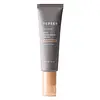 Key Ingredients
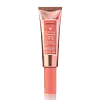
Benefits
Concerns
Ingredients Side-by-side
Butyl Methoxydibenzoylmethane 3%
UV Absorber
Homosalate 7.3%
Skin Conditioning
Ethylhexyl Salicylate 5%
UV Absorber
Water
Skin ConditioningCaprylic/Capric Triglyceride
Masking


Butyloctyl Salicylate
Skin Conditioning
Ethylhexyl Methoxycrylene
Skin Conditioning
Dipropylene Glycol
HumectantBetaine
Humectant
Shorea Stenoptera Seed Butter
Emollient

Vp/Hexadecene Copolymer
Ceramide NP
Skin Conditioning


Arginine
Masking
Serine
Masking
Alanine
Masking
Glycine
Buffering
Threonine
Proline
Skin Conditioning
Valine
MaskingHistidine
Humectant
Isoleucine
Skin ConditioningPhenylalanine
Masking
Aspartic Acid
Masking
Spirodela Polyrhiza Extract
Skin ConditioningPCA
Humectant
Sodium PCA
Humectant
Bisabolol
Antioxidant
Hydroxyacetophenone
Antioxidant
Dibutyl Lauroyl Glutamide
Skin ConditioningDibutyl Ethylhexanoyl Glutamide
Skin ConditioningGlycolipids
Skin ConditioningDipotassium Glycyrrhizate
Humectant
Sodium Lactate
Buffering
Ammonium Acryloyldimethyltaurate/Vp Copolymer
Carbomer
Emulsion StabilisingPentylene Glycol
Skin Conditioning
Tromethamine
BufferingPhenoxyethanol
Preservative
Butyl Methoxydibenzoylmethane 3%, Homosalate 7.3%, Ethylhexyl Salicylate 5%, Water, Caprylic/Capric Triglyceride, Butyloctyl Salicylate, Ethylhexyl Methoxycrylene, Dipropylene Glycol, Betaine, Shorea Stenoptera Seed Butter, Vp/Hexadecene Copolymer, Ceramide NP, Arginine, Serine, Alanine, Glycine, Threonine, Proline, Valine, Histidine, Isoleucine, Phenylalanine, Aspartic Acid, Spirodela Polyrhiza Extract, PCA, Sodium PCA, Bisabolol, Hydroxyacetophenone, Dibutyl Lauroyl Glutamide, Dibutyl Ethylhexanoyl Glutamide, Glycolipids, Dipotassium Glycyrrhizate, Sodium Lactate, Ammonium Acryloyldimethyltaurate/Vp Copolymer, Carbomer, Pentylene Glycol, Tromethamine, Phenoxyethanol
Zinc Oxide 10%
Cosmetic Colorant
Water
Skin ConditioningGlycerin
Humectant
C13-15 Alkane
SolventButyloctyl Salicylate
Skin Conditioning
Tridecyl Salicylate
Skin Conditioning
Diethylhexyl 2,6-Naphthalate
EmollientCalcium Sodium Borosilicate
Ethylhexyl Methoxycrylene
Skin Conditioning
Mica
Cosmetic ColorantPropanediol
Solvent
Galactoarabinan
Hydroxyethyl Acrylate/Sodium Acryloyldimethyl Taurate Copolymer
Emulsion StabilisingPolyricinoleic Acid
Niacinamide
Smoothing





Dimethicone
Emollient
Sodium Cocoyl Glutamate
Cleansing
Phenoxyethanol
Preservative
C15-23 Alkane
SolventPolyglyceryl-3 Polyricinoleate
Emulsifying
Sorbitan Isostearate
Emulsifying
Hydrogenated Castor Oil/Sebacic Acid Copolymer
Emollient
Hydroxyacetophenone
Antioxidant
Lauryl Laurate
Skin Conditioning
Oryzanol
Skin ConditioningCoconut Oil Ethyl Ferulate Esters
Absorbent
C13-14 Alkane
SolventDecyl Glucoside
Cleansing
Bisabolol
Antioxidant
Squalane
Emollient
Sodium Phytate
Chelating3-O-Ethyl Ascorbic Acid
Skin Conditioning
Hippophae Rhamnoides Fruit Oil
Skin Protecting
Tocopheryl Acetate
Antioxidant
Sodium Hyaluronate
Humectant
Zinc Oxide 10%, Water, Glycerin, C13-15 Alkane, Butyloctyl Salicylate, Tridecyl Salicylate, Diethylhexyl 2,6-Naphthalate, Calcium Sodium Borosilicate, Ethylhexyl Methoxycrylene, Mica, Propanediol, Galactoarabinan, Hydroxyethyl Acrylate/Sodium Acryloyldimethyl Taurate Copolymer, Polyricinoleic Acid, Niacinamide, Dimethicone, Sodium Cocoyl Glutamate, Phenoxyethanol, C15-23 Alkane, Polyglyceryl-3 Polyricinoleate, Sorbitan Isostearate, Hydrogenated Castor Oil/Sebacic Acid Copolymer, Hydroxyacetophenone, Lauryl Laurate, Oryzanol, Coconut Oil Ethyl Ferulate Esters, C13-14 Alkane, Decyl Glucoside, Bisabolol, Squalane, Sodium Phytate, 3-O-Ethyl Ascorbic Acid, Hippophae Rhamnoides Fruit Oil, Tocopheryl Acetate, Sodium Hyaluronate
Reviews
Ingredients Explained
These ingredients are found in both products.
Ingredients higher up in an ingredient list are typically present in a larger amount.
Bisabolol is a gentle skin conditioner, antioxidant, and soothing ingredient.
It's primary claim to fame is soothing and research shows topically applied bisabolol can quiet the chemical messengers that cause your skin to become inflamed, helping to sooth any irritation.
A clinical study found that applying 0.5% bisabolol daily for 8 weeks produced an average 9% decrease in skin pigmentation. Researchers found it can also suppress the process that leads to excess melanin production in skin.
In vitro studies found that bisabolol combined with propylene glycol significantly increased skin permeability by increasing lipid fluidity in the stratum corneum.
You'll likely see use concentrations quite low, usually 0.1-0.2%.
Overall, this is a well-tolerated ingredient that works well in formulas designed for sensitive, reactive, or post-procedure skin.
Learn more about BisabololButyloctyl Salicylate is a chemical UV filter structurally similar to octisalate. It is a photostabilizer, SPF booster, emollient and solvent. This ingredient helps evenly spread out ingredients.
According to a manufacturer, it is suitable for pairing with micro Titanium Dioxide, Zinc Oxide, and pigments.
Photostabilizers help stabilize UV-filters and prevents them from degrading quickly.
Learn more about Butyloctyl SalicylateThis ingredient is a photostabilizer and a chemical UV booster. It is marketed as an alternative to octocrylene.
You'll most likely find it in sunscreens to enhance stability and effectiveness of UV filters, antioxidants, and vitamin A derivatives. According to the manufacturer, this ingredient is better than octocrylene at stabilizing avobenzone.
Due to regulation loopholes, you'll likely see this ingredient in "100% mineral" sunscreens.
Learn more about Ethylhexyl MethoxycryleneHydroxyacetophenone is a small phenolic molecule that earns its place in a formulas as an antioxidant and preservative booster.
As a phenol, it is able to neutralize free radicals to protect both the product and the skin from oxidative stress.
Though it can't kill microbes on its own, it works as a good supporting agent when combined with other preservatives like Phenoxyethanol or 1,2-Hexanediol.
This ingredient naturally occurs as piceol in Norwegian spruce needles (~0.4-1.1% dry weight and in cloudberries). Though the cosmetic-grade material is synthesized for purity and consistency.
You'll usually see it used at low levels and suppliers recommend up to 1% added to a water phase.
Safety testing was done at concentrations like 0.05% in SPF products and 0.5% in a Human Repeated Insult Patch Test. The safety evidence is assuring; this ingredient is safe for cosmetics in current use and also holds safety status as a food flavoring as well.
An honest caveat: the "soothing" and "anti-inflammatory" claims come mostly from supplier marketing rather than published clinical trials. The Cosmetic Ingredient Review's own literature search found no useful efficacy studies on this ingredient.
So the antioxidant and preservative-boosting roles are the well supported ones while the calming benefit is plausible but thinly evidenced.
Overall, this is a well-tolerated, low-irritation multitasker that quietly helps a formula stay fresh and stable.
Learn more about HydroxyacetophenonePhenoxyethanol is one of the most widely used preservatives in skincare (and for good reason!).
It has a large spectrum of antimicrobial activity and especially effective bacteria, yeast, and mold while only having a weak effect on your skin's natural microbiome.
On a cellular level, it disrupts the cell membranes of microbes by poking holes that make the cell leak. This shuts down the chemical reactions the microbe needs to make energy so it can no longer survive.
Another perk of this ingredient is that it stays functional across a wide pH range (3-10).
You'll often see it paired with boosters like Ethylhexylglycerin; one study showed that a 1:9 ratio of Ethylhexylglycerin to Phenoxyethanol damages bacterial membranes as effectively as doubling the Phenoxyethanol concentration on its own.
Typical use concentrations range from 0.3-1% depending on the formula, and this ingredient is capped at 1% int the EU.
Safety-wise, the fear mongering does not hold up to the evidence. The EU's Scientific Committee on Consumer Safety and FDA consider it safe as a preservative at up to 1%, including for children of all ages.
Adverse systemic effects only showed up in animal studies at exposures roughly 200x higher than what people get from cosmetics. And despite its very widespread use, this ingredient is a rare sensitizer and allergic reactions are uncommon.
Learn more about PhenoxyethanolWater. It's the most common cosmetic ingredient of all. You'll usually see it at the top of ingredient lists, meaning that it makes up the largest part of the product.
So why is it so popular? Water most often acts as a solvent - this means that it helps dissolve other ingredients into the formulation.
You'll also recognize water as that liquid we all need to stay alive. If you see this, drink a glass of water. Remember to stay hydrated!
Learn more about Water

