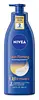
Trilogy CoQ10 Eye Recovery Concentrate Versus Nivea Q10 Nourishing Skin Firming Body Lotion With Vitamin C
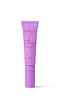
This anti-aging eye moisturizer is formulated around Ubiquinone and Glycyrrhiza Glabra Root Extract to soften the look of wrinkles and calm redness.

What's inside
What's inside
 Key Ingredients
Benefits
Concerns
Ingredients Side-by-side
Water
Skin ConditioningAloe Barbadensis Leaf Juice
Skin Conditioning


Glycerin
Humectant

Salvia Hispanica Seed Oil
Emollient


Jojoba Oil/Macadamia Seed Oil Esters
Skin Conditioning
Coco-Caprylate
Emollient
Cetearyl Olivate
Sorbitan Olivate
Emulsifying
Sodium Hyaluronate
Humectant

Coffea Arabica Seed Extract
Masking
Chamomilla Recutita Flower Extract
Masking
Glycyrrhiza Glabra Root Extract
Bleaching

Aesculus Hippocastanum Extract
Antioxidant
Cucumis Sativus Fruit Extract
Emollient
Hydrolyzed Jojoba Esters
Skin Conditioning
Ubiquinone
Antioxidant
Phytosteryl Macadamiate
Skin Conditioning
Phytosterols
Skin Conditioning
Squalene
Emollient
Tocopherol
Antioxidant
Vaccinium Myrtillus Seed Oil
Skin Conditioning
Fragaria Ananassa Seed Oil
Antioxidant
Oenothera Biennis Oil
Emollient

Punica Granatum Seed Oil
Emollient
Olea Europaea Fruit Oil
Masking
Helianthus Annuus Seed Oil
Emollient
Camellia Sinensis Leaf Extract
Antimicrobial

Rosmarinus Officinalis Leaf Extract
AntimicrobialCalendula Officinalis Flower Extract
Masking
Xanthan Gum
EmulsifyingGlycine Soja Oil
Emollient
Potassium Sorbate
Preservative
Sodium Benzoate
Masking
Citric Acid
Buffering
Benzyl Alcohol
Perfuming



Water, Aloe Barbadensis Leaf Juice, Glycerin, Salvia Hispanica Seed Oil, Jojoba Oil/Macadamia Seed Oil Esters, Coco-Caprylate, Cetearyl Olivate, Sorbitan Olivate, Sodium Hyaluronate, Coffea Arabica Seed Extract, Chamomilla Recutita Flower Extract, Glycyrrhiza Glabra Root Extract, Aesculus Hippocastanum Extract, Cucumis Sativus Fruit Extract, Hydrolyzed Jojoba Esters, Ubiquinone, Phytosteryl Macadamiate, Phytosterols, Squalene, Tocopherol, Vaccinium Myrtillus Seed Oil, Fragaria Ananassa Seed Oil, Oenothera Biennis Oil, Punica Granatum Seed Oil, Olea Europaea Fruit Oil, Helianthus Annuus Seed Oil, Camellia Sinensis Leaf Extract, Rosmarinus Officinalis Leaf Extract, Calendula Officinalis Flower Extract, Xanthan Gum, Glycine Soja Oil, Potassium Sorbate, Sodium Benzoate, Citric Acid, Benzyl Alcohol
Water
Skin ConditioningGlycerin
Humectant
Paraffinum Liquidum
Emollient
C15-19 Alkane
SolventC12-15 Alkyl Benzoate
AntimicrobialPolyglyceryl-3 Distearate
Emulsifying
Cetearyl Alcohol
Emollient
Myristyl Alcohol
Emollient
Ubiquinone
Antioxidant
Sodium Ascorbyl Phosphate
Antioxidant

Sorbitan Stearate
Emulsifying
Cera Microcristallina
Emulsion StabilisingHydrogenated Coco-Glycerides
Emollient
Dimethicone
Emollient
Carbomer
Emulsion StabilisingSodium Hydroxide
BufferingBenzoic Acid
Masking
Trisodium EDTA
Phenoxyethanol
Preservative
Ethylhexylglycerin
Skin ConditioningLinalool
Perfuming
Citronellol
Perfuming
Benzyl Alcohol
Perfuming
Alpha-Isomethyl Ionone
Perfuming
Limonene
Perfuming
Parfum
Masking
Water, Glycerin, Paraffinum Liquidum, C15-19 Alkane, C12-15 Alkyl Benzoate, Polyglyceryl-3 Distearate, Cetearyl Alcohol, Myristyl Alcohol, Ubiquinone, Sodium Ascorbyl Phosphate, Sorbitan Stearate, Cera Microcristallina, Hydrogenated Coco-Glycerides, Dimethicone, Carbomer, Sodium Hydroxide, Benzoic Acid, Trisodium EDTA, Phenoxyethanol, Ethylhexylglycerin, Linalool, Citronellol, Benzyl Alcohol, Alpha-Isomethyl Ionone, Limonene, Parfum
Reviews
Ingredients Explained
These ingredients are found in both products.
Ingredients higher up in an ingredient list are typically present in a larger amount.
Benzyl Alcohol is an aromatic alcohol with several roles: it's a preservative, solvent, and mild fragrance component with a floral scent.
This ingredient has been deemed safe for use in cosmetic formulations at concentrations up to 5%, and up to 10% in hair dyes. You'll typically see 0.5-2% in most rinse-off or leave-on products.
As a preservative, it works by disrupting the membrane of microbial proteins. This helps keep bacteria and fungi from growing in your products.
The sensitization picture is actually quite assuring as well:of nearly 71,000 patients patch tested with benzyl alcohol, only 0.21% showed a positive reaction with most of them being weakly positive.
This led researchers to conclude that benzyl alcohol cannot be regarded as a significant contact allergen.
It is worth noting this ingredient is classified as one of the EU's regulated fragrance allergens and restricted to 1% in finished products.
Labels must also declare it in concentrations above 0.001% in leave-on products and 0.01% in rinse-off products.
At concentrations around 5%, localized redness and itching can appear as a direct irritant response and not as a true allergic reaction.
Learn more about Benzyl AlcoholGlycerin (or glycerol) is a compound naturally found in your skin. It's a powerhouse humectant that pulls water into the stratum corneum.
Topically, glycerin does several things at once:
Your skin makes glycerin on its own (mostly from sebaceous oil breakdown) and shuttles it to your outermost layer of skin, or your epidermis, via aquaporin-3.
Aquaporin-3 is a transporter that is essential for normal skin hydration, elasticity, and repair. Interestingly, mice lacking in AQP3 have dry and less elastic skin that can be fully corrected with glycerin.
This ingredient is non-irritating, plays well with almost every ingredient, and works across all skin types. Typical use is anywhere between 3-10% but can go up to 79% in some leave-on products.
Just know very high concentrations (>40%) can feel tacky in low humidity.
Glycerin is the name for this ingredient in American English. British English uses Glycerol/Glycerine.
Learn more about GlycerinUbiquinone (Coenzyme Q10) is a molecule already found in our bodies. It is a potent antioxidant and skin-soothing ingredient.
Aging and environmental exposure diminishes our skin's natural ubiquinone levels. This is much like our natural collagen and elastin.
The good news is: studies show applying this ingredient topically replenishes ubiquinone levels in our skin. This also comes with a ton of skin benefits. These benefits include:
Ubiquinone is considered a large molecule and cannot be absorbed into the lower layers of skin. This is why it is believed to be such an effective antioxidant: it protects our skin in the upper layers and prevents damage in the deeper layers.
When used in sunscreen, ubiquinone is shown to increase ingredient stability, increase SPF factor, and add to infrared protection.
Fun fact: ubiquinone is fat-soluble.
Learn more about UbiquinoneWater. It's the most common cosmetic ingredient of all. You'll usually see it at the top of ingredient lists, meaning that it makes up the largest part of the product.
So why is it so popular? Water most often acts as a solvent - this means that it helps dissolve other ingredients into the formulation.
You'll also recognize water as that liquid we all need to stay alive. If you see this, drink a glass of water. Remember to stay hydrated!
Learn more about Water

