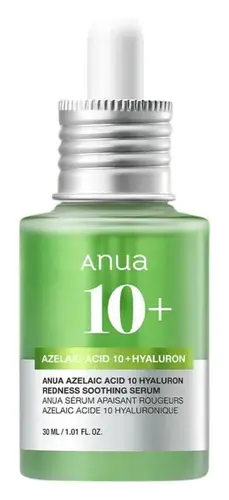
This calming serum is formulated around Azelaic Acid and Carnosine to calm redness and clear breakouts.
This barrier-repair serum is formulated around Niacinamide and Ceramide NP to strengthen the skin barrier and hydrate skin.


What's inside
What's inside
 Key Ingredients
Benefits
Concerns
Ingredients Side-by-side
Water
Skin ConditioningAzelaic Acid
Buffering









Glycerin
Humectant

Propanediol
Solvent
Glycereth-26
Humectant
Avena Sativa Kernel Flour
Abrasive
Carnosine
Skin Conditioning
Acetyl Tetrapeptide-2
Skin Conditioning
Ceramide NP
Skin Conditioning
Ceramide EOP
Skin Conditioning
Ceramide Ns
Skin Conditioning
Ceramide As
Skin Conditioning
Ceramide AP
Skin Conditioning
Gallyl Glucoside
Antioxidant
Propyl Gallate
Antioxidant


Epigallocatechin Gallatyl Glucoside
Antioxidant
Daucus Carota Sativa Root Cell Culture Lysate
Skin ConditioningGossypium Herbaceum Callus Culture
Skin ConditioningSphingomonas Ferment Extract
Skin Conditioning

Ethylhexylglycerin
Skin ConditioningHydrogenated Lecithin
Emulsifying
Sucrose Distearate
Emollient
Glyceryl Stearate
Emollient
Dipropylene Glycol
HumectantDehydroacetic Acid
Preservative
Caprylyl Glycol
Emollient
Phenoxyethanol
Preservative
Triethanolamine
BufferingBenzyl Alcohol
Perfuming


Citric Acid
Buffering
Water, Azelaic Acid, Glycerin, Propanediol, Glycereth-26, Avena Sativa Kernel Flour, Carnosine, Acetyl Tetrapeptide-2, Ceramide NP, Ceramide EOP, Ceramide Ns, Ceramide As, Ceramide AP, Gallyl Glucoside, Propyl Gallate, Epigallocatechin Gallatyl Glucoside, Daucus Carota Sativa Root Cell Culture Lysate, Gossypium Herbaceum Callus Culture, Sphingomonas Ferment Extract, Ethylhexylglycerin, Hydrogenated Lecithin, Sucrose Distearate, Glyceryl Stearate, Dipropylene Glycol, Dehydroacetic Acid, Caprylyl Glycol, Phenoxyethanol, Triethanolamine, Benzyl Alcohol, Citric Acid
Water
Skin ConditioningDipropylene Glycol
HumectantGlycerin
Humectant
Methylpropanediol
SolventGlycereth-26
Humectant
1,2-Hexanediol
Skin Conditioning
Niacinamide
Smoothing
Dimethicone/Vinyl Dimethicone Crosspolymer
Skin Conditioning
Betaine
Humectant
Cynara Scolymus Leaf Extract
Skin ConditioningAvena Sativa Kernel Extract
Abrasive
Ceramide NP
Skin Conditioning
Ceramide EOP
Skin Conditioning
Ceramide Ns
Skin Conditioning
Ceramide AP
Skin Conditioning
Ceramide As
Skin Conditioning
Acetyl Hexapeptide-8
Humectant
Nonapeptide-1
Skin Conditioning
Palmitoyl Tetrapeptide-7
Skin Conditioning
Palmitoyl Pentapeptide-4
Skin Conditioning
Palmitoyl Tripeptide-1
Skin Conditioning
Hexapeptide-9
Skin Conditioning
Tripeptide-1
Skin Conditioning
Copper Tripeptide-1
Skin Conditioning
Beta Vulgaris Root Extract
Skin ConditioningEclipta Prostrata Leaf Extract
Skin ConditioningAlgae Extract
Emollient
Persea Gratissima Oil
Skin Conditioning
Camellia Sinensis Leaf Water
Masking
Hydrogenated Lecithin
Emulsifying
Cholesterol
Emollient
Squalane
Emollient
Tocopherol
Antioxidant
Hydrolyzed Hyaluronic Acid
Humectant
Polyquaternium-51
Skin Conditioning
Glyceryl Stearate
Emollient
Beta-Glucan
Skin Conditioning
Adenosine
Skin Conditioning
Fructooligosaccharides
Humectant
Xanthan Gum
EmulsifyingTromethamine
BufferingGlyceryl Polymethacrylate
Sucrose Distearate
Emollient
Acrylates/C10-30 Alkyl Acrylate Crosspolymer
Emulsion StabilisingButylene Glycol
Humectant
Silica
Abrasive
Hydrolyzed Corn Starch
HumectantCaprylyl Glycol
Emollient
Ethylhexylglycerin
Skin ConditioningWater, Dipropylene Glycol, Glycerin, Methylpropanediol, Glycereth-26, 1,2-Hexanediol, Niacinamide, Dimethicone/Vinyl Dimethicone Crosspolymer, Betaine, Cynara Scolymus Leaf Extract, Avena Sativa Kernel Extract, Ceramide NP, Ceramide EOP, Ceramide Ns, Ceramide AP, Ceramide As, Acetyl Hexapeptide-8, Nonapeptide-1, Palmitoyl Tetrapeptide-7, Palmitoyl Pentapeptide-4, Palmitoyl Tripeptide-1, Hexapeptide-9, Tripeptide-1, Copper Tripeptide-1, Beta Vulgaris Root Extract, Eclipta Prostrata Leaf Extract, Algae Extract, Persea Gratissima Oil, Camellia Sinensis Leaf Water, Hydrogenated Lecithin, Cholesterol, Squalane, Tocopherol, Hydrolyzed Hyaluronic Acid, Polyquaternium-51, Glyceryl Stearate, Beta-Glucan, Adenosine, Fructooligosaccharides, Xanthan Gum, Tromethamine, Glyceryl Polymethacrylate, Sucrose Distearate, Acrylates/C10-30 Alkyl Acrylate Crosspolymer, Butylene Glycol, Silica, Hydrolyzed Corn Starch, Caprylyl Glycol, Ethylhexylglycerin
Reviews
Ingredients Explained
These ingredients are found in both products.
Ingredients higher up in an ingredient list are typically present in a larger amount.
Caprylyl Glycol is a humectant, skin conditioner, emollient, and preservative booster derived from either caprylic acid or synthetically created.
Typical use levels vary from 0.3-1% as a preservative booster and go up to 2% to condition skin.
Because it is not a free-fatty acid, this ingredient is fungal acne safe (there's nothing for Malassezia to feed on).
Learn more about Caprylyl GlycolCeramide AP is is a skin-identical lipid that mimics what your skin already makes naturally. Ceramides help maintain epidermal integrity and barrier function.
You'll often see this ingredient paired with other ceramides (like ceramide NP), cholesterol, or fatty acids because this combination best mimics the natural lipid mix your skin already has.
The skin's ability to produce ceramides gets disrupted in skin conditions like eczema. This in turn weakens the skin barrier and applying ceramides topically has been shown to replenish what's been lost to restore barrier function.
Most of the studies with Ceramide AP test it as part of a multi-ceramide complex; studies reinforce ceramide AP's role in rebalancing ceramides in skin and improving skin hydration.
Learn more about Ceramide APCeramide AS is formally known as Ceramides 4 and 5.
Ceramides are intercellular lipids naturally found in our skin that bonds dead skin cells together to create a barrier. They are known for their ability to hold water and thus are a great ingredient for dry skin.
Ceramide EOP is formally known as Ceramide 1.
It is naturally found in skin and part of the intercellular "mortar" holding everything together in your outermost layer.
EOP stands for a linked Ester fatty acid, a linked Omega hydroxy fatty acid, and the Phytosphingosine base.
What makes Ceramide EOP special is its ultra-long fatty acid chain; this unique structure allows it to bridge the lipid layers in your skin barrier to prevent water loss (something no other ceramide can do).
Low levels of Ceramide EOP have been found in people with eczema and psoriasis.
Using it together with other ceramides, cholesterol, and linoleic acid have been shown to meaningfully improve hydration and reduce water loss.
In one clinical study, a regimen using Ceramide EOP, NP, and AP led to significant symptom improvements in patients with eczema, psoriasis, and dry skin in just 4 weeks.
You'll usually see concentrations between 0.1-0.5% in formulations. Overall, this is a well-tolerated and safe ingredient for cosmetic use.
Learn more about Ceramide EOPCeramide NP (formerly known as Ceramide 3) is one of the skin's naturally occurring lipids.
Since ceramides are the major lipid components of the skin, they are crucial for maintaining skin barrier and hydration. Ceramide NP most closely mirrors the dominant kind in human skin amongst ceramide subtypes.
This ceramide works by slotting into gaps within the stratum corneum's lipid matrix to limit trans-epidermal water loss (TEWL) and shield the skin against external irritants.
A study with 312 patients found that using a ceramide-containing routine for 4 weeks reduced the severity of atopic dermatitis by over 61%.
Another clinical study in subjects aged 60 and older found that a ceramide body wash and moisturizer improved skin dryness and itchy skin in 15 days.
Overall, ceramides are considered non-irritating and safety tests have found little to no observable adverse effects from using this ingredient.
Ceramide NP is usually sourced from plants (like soybean or rice bran), or produced synthetically.
Learn more about Ceramide NPCeramide NS is formally known as Ceramide 2. It is one of the major ceramides in the stratum corneum (outermost layer of skin) plays a role in forming a protective barrier.
Due to its structure, skin lipids can be packed tightly and in turn, this strengthens the barrier and reduces water loss.
Studies show conditions like atopic dermatitis can worsen when ceramide NS levels are low.
Learn more about Ceramide NsDipropylene Glycol is a synthetically created humectant, stabilizer, and solvent.
This ingredient helps:
Dipropylene glycol is technically an alcohol, but it belongs to the glycol family (often considered part of the ‘good’ alcohols). This means it is hydrating and gentle on skin unlike drying solvent alcohols like denatured alcohol.
As a masking agent, Dipropylene Glycol can be used to cover the smell of other ingredients. However, it does not have a scent.
Studies show Dipropylene Glycol is considered safe to use in skincare.
Learn more about Dipropylene GlycolEthylhexylglycerin is created from glycerin. It is a multitasker ingredient that:
The CIR Expert Panel found minimal skin absorption or sensitization of any kind in a safety assessment. Though this ingredient is considered well-tolerated, a small number of cases of allergic dermatitis have been published since 2002. Just be sure to patch test if you are unsure.
Industry-reported use ranges from 8% in rinse-off products and 2% in leave-on formulations.
Learn more about EthylhexylglycerinGlycereth-26 is a synthetic ingredient and polyethylene glycol ether of Glycerin. Glycerin is already naturally found in your skin and helps keep your skin moisturized.
It is a humectant and helps add texture to products. It can make your product thicker.
As a humectant, it helps draw moisture from the air to your skin. This helps your skin stay hydrated.
Learn more about Glycereth-26Glycerin (or glycerol) is a compound naturally found in your skin. It's a powerhouse humectant that pulls water into the stratum corneum.
Topically, glycerin does several things at once:
Your skin makes glycerin on its own (mostly from sebaceous oil breakdown) and shuttles it to your outermost layer of skin, or your epidermis, via aquaporin-3.
Aquaporin-3 is a transporter that is essential for normal skin hydration, elasticity, and repair. Interestingly, mice lacking in AQP3 have dry and less elastic skin that can be fully corrected with glycerin.
This ingredient is non-irritating, plays well with almost every ingredient, and works across all skin types. Typical use is anywhere between 3-10% but can go up to 79% in some leave-on products.
Just know very high concentrations (>40%) can feel tacky in low humidity.
Glycerin is the name for this ingredient in American English. British English uses Glycerol/Glycerine.
Learn more about GlycerinGlyceryl Stearate is made by reacting glycerin with stearic acid (typically sourced from plant oils like palm or coconut). It's an emulsifier, emollient, and mild occlusive.
Emulsifiers help ingredients like oil and water stay mixed so your formula stays nicely blended and uniform in texture.
This ingredient is typically used in concentrations between 1-10%. Studies have found it to be non-sensitizing, non-phototoxic, and non-photoallergenic.
A close cousin of this ingredient is Glyceryl Stearate SE ("self-emulsifying"). This just has a small amount of sodium or potassium stearate added so it can emulsify without a co-emulsifier.
Since this ingredient is an ester of a C18 fatty acid, it may not be fungal acne safe. The Malassezia yeast can potentially metabolize within the C11-C24 range.
Fun fact: The human body also creates Glyceryl Stearate naturally.
Learn more about Glyceryl StearateHydrogenated Lecithin is a more stable version of lecithin.
It's made by taking lecithin (a phospholipid commonly found in soybeans and egg yolks) and hydrogenating it. This just means the unsaturated fatty acids are turned into saturated ones so they don't go bad as easily.
This ingredient is an emollient, emulsifier, and penetration enhancer. As an emollient, it helps soften and hydrate skin by trapping moisture within. As an emulsifier, it prevents oil and water ingredients from separating.
Hydrogenated Lecithin can form tiny spherical structures made of phospholipid bilayers called liposomes. These liposomes are able to capture compounds inside their structure and deliver them through the skin barrier.
Because phospholipids are a natural component of our cell membranes, this ingredient is inherently compatible with skin.
A 2021 study found lecithin-based surfactants were less harsh and more tolerable comared to Sodium Lauryl Sulfate (SLS).
Learn more about Hydrogenated LecithinSucrose Distearate is made up of the sucrose (sugar) esthers of stearic acid. It is an emollient and emulsifier.
This ingredient may not be Malassezia folliculitis, or fungal-acne safe.
Water. It's the most common cosmetic ingredient of all. You'll usually see it at the top of ingredient lists, meaning that it makes up the largest part of the product.
So why is it so popular? Water most often acts as a solvent - this means that it helps dissolve other ingredients into the formulation.
You'll also recognize water as that liquid we all need to stay alive. If you see this, drink a glass of water. Remember to stay hydrated!
Learn more about Water