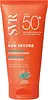
This chemical sunscreen covers the full UV range and blocks ~98% of UVB at SPF 50.
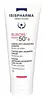
This hybrid sunscreen covers the full UV range and blocks ~98% of UVB at SPF 50.

What's inside
What's inside
 Key Ingredients
Benefits
Concerns
Ingredients Side-by-side
Water
Skin ConditioningSilica
Abrasive


Isododecane
EmollientDiethylamino Hydroxybenzoyl Hexyl Benzoate
UV Filter
Dicaprylyl Carbonate
EmollientIsopropyl Lauroyl Sarcosinate
Skin ConditioningEthylhexyl Triazone
UV Absorber
Beheneth-25
CleansingDiethylhexyl Butamido Triazone
UV Absorber
Bis-Ethylhexyloxyphenol Methoxyphenyl Triazine
Skin Conditioning
Coco-Caprylate/Caprate
Emollient
Dimethicone/Bis-Isobutyl PPG-20 Crosspolymer
Emollient
Pentylene Glycol
Skin Conditioning
Cetearyl Alcohol
Emollient





1,2-Hexanediol
Skin Conditioning
Niacinamide
Smoothing








CI 15850
Cosmetic ColorantGlycine Soja Oil
Emollient
Lecithin
Emollient
Lepidium Sativum Sprout Extract
Skin ConditioningGlycerin
Humectant
Tocopherol
Antioxidant

Caprylyl Glycol
Emollient
Ethylhexylglycerin
Skin ConditioningSodium Polyacrylate Starch
AbsorbentTriethoxycaprylylsilane
Coco-Glucoside
Cleansing
Parfum
Masking


CI 77492
Cosmetic ColorantWater, Silica, Isododecane, Diethylamino Hydroxybenzoyl Hexyl Benzoate, Dicaprylyl Carbonate, Isopropyl Lauroyl Sarcosinate, Ethylhexyl Triazone, Beheneth-25, Diethylhexyl Butamido Triazone, Bis-Ethylhexyloxyphenol Methoxyphenyl Triazine, Coco-Caprylate/Caprate, Dimethicone/Bis-Isobutyl PPG-20 Crosspolymer, Pentylene Glycol, Cetearyl Alcohol, 1,2-Hexanediol, Niacinamide, CI 15850, Glycine Soja Oil, Lecithin, Lepidium Sativum Sprout Extract, Glycerin, Tocopherol, Caprylyl Glycol, Ethylhexylglycerin, Sodium Polyacrylate Starch, Triethoxycaprylylsilane, Coco-Glucoside, Parfum, CI 77492
Water
Skin ConditioningEthylhexyl Methoxycinnamate
UV Absorber
Methylene Bis-Benzotriazolyl Tetramethylbutylphenol
UV Filter
Diisopropyl Sebacate
EmollientButyl Methoxydibenzoylmethane
UV Absorber
Cetyl Alcohol
Emollient
Dimethicone
Emollient
Ethylhexyl Salicylate
UV Absorber
Titanium Dioxide
Cosmetic Colorant
Glycerin
Humectant
Behenyl Alcohol
Emollient
Diethylamino Hydroxybenzoyl Hexyl Benzoate
UV Filter
Diisopropyl Adipate
EmollientEthylhexyl Triazone
UV Absorber
Ozokerite
Emulsion StabilisingButylene Glycol Cocoate
Emulsifying
Glyceryl Dibehenate
Emollient
Pentylene Glycol
Skin Conditioning
Potassium Cetyl Phosphate
EmulsifyingButylene Glycol
Humectant
Tribehenin
Emollient
Decyl Glucoside
Cleansing
Ceteth-20
CleansingSilica
Abrasive
Glyceryl Behenate
Emollient
Steareth-2
EmulsifyingCI 77492
Cosmetic ColorantXanthan Gum
EmulsifyingSclerotium Gum
Emulsion StabilisingSteareth-20
CleansingChlorphenesin
Antimicrobial
Ethylhexylglycerin
Skin ConditioningPanthenol
Skin Conditioning
CI 77491
Cosmetic ColorantO-Cymen-5-Ol
Antimicrobial
Escin
TonicPropylene Glycol
Humectant
Ruscus Aculeatus Root Extract
Astringent
Ammonium Glycyrrhizate
MaskingCI 77499
Cosmetic ColorantHydrogenated Lecithin
Emulsifying
Centella Asiatica Leaf Extract
Skin Conditioning
Hydrolyzed Yeast Protein
Skin ConditioningCalendula Officinalis Flower Extract
Masking
Sodium Citrate
BufferingWater, Ethylhexyl Methoxycinnamate, Methylene Bis-Benzotriazolyl Tetramethylbutylphenol, Diisopropyl Sebacate, Butyl Methoxydibenzoylmethane, Cetyl Alcohol, Dimethicone, Ethylhexyl Salicylate, Titanium Dioxide, Glycerin, Behenyl Alcohol, Diethylamino Hydroxybenzoyl Hexyl Benzoate, Diisopropyl Adipate, Ethylhexyl Triazone, Ozokerite, Butylene Glycol Cocoate, Glyceryl Dibehenate, Pentylene Glycol, Potassium Cetyl Phosphate, Butylene Glycol, Tribehenin, Decyl Glucoside, Ceteth-20, Silica, Glyceryl Behenate, Steareth-2, CI 77492, Xanthan Gum, Sclerotium Gum, Steareth-20, Chlorphenesin, Ethylhexylglycerin, Panthenol, CI 77491, O-Cymen-5-Ol, Escin, Propylene Glycol, Ruscus Aculeatus Root Extract, Ammonium Glycyrrhizate, CI 77499, Hydrogenated Lecithin, Centella Asiatica Leaf Extract, Hydrolyzed Yeast Protein, Calendula Officinalis Flower Extract, Sodium Citrate
Reviews
Ingredients Explained
These ingredients are found in both products.
Ingredients higher up in an ingredient list are typically present in a larger amount.
CI 77492 is also hydrated iron III oxide. It's sole purpose is to give a yellow hue to products.
Iron III oxides are classified as inorganic chemicals for coloring.
Synthetically created CI 77492 is considered safer than those naturally found. This is because the synthetically created version may contain less impurities. Iron oxides are generally non-toxic and non-allergenic.
Learn more about CI 77492Diethylamino Hydroxybenzoyl Hexyl Benzoate (DHHB) is a chemical UV-A absorber. It is formulated for high UVA protection (320-400 nm).
DHHB is well-liked for:
DHHB has been approved by the EU, Japan, Taiwan, and South America for use up to 10%. Unfortunately, it has not been approved for use in the US or Canada due to slow regulatory processes.
This ingredient is soluble in oils, fats, and lipids.
Learn more about Diethylamino Hydroxybenzoyl Hexyl BenzoateEthylhexyl Triazone (aka Octyl Triazone) is an oil-soluble organic UVB filter. It has peak absorption around 314 nm, right in the middle of the UVB range.
This ingredient is described as one of the most effective UVB filters available and small concentrations are enough to deliver a high SPF thanks to its strong UV absorbing power.
Formulators love it for its stability; its ability to filter UV stays practically unchanged even under intense radiation and it can also help boost the photostability of less stable filters like avobenzone.
It's also a great pick for water resistant products because it's insoluble in water and has a good affinity for keratin.
Because it's a big, heavy molecule, the European Scientific Committee has found to to have very low dermal penetration and negative results for allergenicity.
In vitro testing also showed a low absorption rate and clean results on irritation.
Typical use levels are 1-5% with 5% being the maximum in the EU, Japan, and other markets that allow it. However, this ingredient is not approved yet in the US or Canada.
Learn more about Ethylhexyl TriazoneEthylhexylglycerin is created from glycerin. It is a multitasker ingredient that:
The CIR Expert Panel found minimal skin absorption or sensitization of any kind in a safety assessment. Though this ingredient is considered well-tolerated, a small number of cases of allergic dermatitis have been published since 2002. Just be sure to patch test if you are unsure.
Industry-reported use ranges from 8% in rinse-off products and 2% in leave-on formulations.
Learn more about EthylhexylglycerinGlycerin (or glycerol) is a compound naturally found in your skin. It's a powerhouse humectant that pulls water into the stratum corneum.
Topically, glycerin does several things at once:
Your skin makes glycerin on its own (mostly from sebaceous oil breakdown) and shuttles it to your outermost layer of skin, or your epidermis, via aquaporin-3.
Aquaporin-3 is a transporter that is essential for normal skin hydration, elasticity, and repair. Interestingly, mice lacking in AQP3 have dry and less elastic skin that can be fully corrected with glycerin.
This ingredient is non-irritating, plays well with almost every ingredient, and works across all skin types. Typical use is anywhere between 3-10% but can go up to 79% in some leave-on products.
Just know very high concentrations (>40%) can feel tacky in low humidity.
Glycerin is the name for this ingredient in American English. British English uses Glycerol/Glycerine.
Learn more about GlycerinPentylene Glycol (1,2-pentanediol) is a multitasking little diol with three main roles in a formula:
Research on alkanediols (the family pentylene glycol belongs to) show they work by disrupting microbial cell membranes. This disruption helps the primary preservative system in a product work more effectively at lower doses.
On the safety side, the Cosmetic Ingredient Review Expert Panel has concluded this ingredient to be safe as used in current cosmetic practices + concentrations.
Typical use levels in a formula run about 1-5%.
Learn more about Pentylene GlycolSilica, also known as silicon dioxide, is a naturally occurring mineral. It is used as a fine, spherical, and porous powder in cosmetics.
Though it has exfoliant properties, the function of silica varies depending on the product.
The unique structure of silica enhances the spreadability and adds smoothness, making it a great texture enhancer.
It is also used as an active carrier, emulsifier, and mattifier due to its ability to absorb excess oil.
In some products, tiny microneedles called spicules are made from silica or hydrolyzed sponge. When you rub them in, they lightly polish away dead skin layers and enhance the penetration of active ingredients.
Learn more about SilicaWater. It's the most common cosmetic ingredient of all. You'll usually see it at the top of ingredient lists, meaning that it makes up the largest part of the product.
So why is it so popular? Water most often acts as a solvent - this means that it helps dissolve other ingredients into the formulation.
You'll also recognize water as that liquid we all need to stay alive. If you see this, drink a glass of water. Remember to stay hydrated!
Learn more about Water


