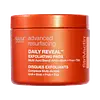
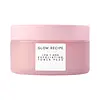
StriVectin Daily Reveal ™ Exfoliating Face Pads with AHA + BHA + PHA + TXA Versus Glow Recipe LHA + AHA Exfoliating Toner Pads
This smoothing exfoliating pad uses a pre-saturated pad with Glycolic Acid and Azelaic Acid to refine skin texture and fade the look of dark spots.
This smoothing toner pad uses a pre-saturated pad with Gluconolactone and Salicylic Acid to refine skin texture and refine the look of pores.

What's inside
What's inside
 Key Ingredients
Benefits
Concerns
Ingredients Side-by-side
Water
Skin ConditioningPentylene Glycol
Skin Conditioning
Glycolic Acid
Buffering











Azelaic Acid
Buffering


Glycereth-7 Triacetate
EmollientAlcohol Denat.
Antimicrobial


Sodium Hydroxide
BufferingPolysorbate 20
Emulsifying
Glycereth-18 Ethylhexanoate
Skin ConditioningDimethyl Isosorbide
SolventDipropylene Glycol
HumectantTranexamic Acid
Astringent
Capryloyl Salicylic Acid
Exfoliating
Gluconolactone
Chelating
Salix Alba Bark Extract
Astringent
Myristyl Nicotinate
Skin ConditioningCitrus Paradisi Fruit Extract
Skin ConditioningCitrus Grandis Peel Oil
Masking


Spiraea Ulmaria Extract
AstringentHydroxymethoxyphenyl Decanone
Skin ConditioningAsiatic Acid
Skin Conditioning
Madecassic Acid
Skin Conditioning
Adenosine
Skin Conditioning
Asiaticoside
Antioxidant
Ethoxydiglycol
HumectantLactobacillus Ferment
Skin Conditioning
Glycerin
Humectant
Butylene Glycol
Humectant
Propanediol
Solvent
Glycereth-18
HumectantEthylhexylglycerin
Skin ConditioningCalcium Gluconate
HumectantT-Butyl Alcohol
Perfuming
Citric Acid
Buffering
Limonene
Perfuming
Sodium Carbonate
BufferingDenatonium Benzoate
Masking
Sodium Chloride
MaskingPotassium Sorbate
Preservative
Sodium Benzoate
Masking
Water, Pentylene Glycol, Glycolic Acid, Azelaic Acid, Glycereth-7 Triacetate, Alcohol Denat., Sodium Hydroxide, Polysorbate 20, Glycereth-18 Ethylhexanoate, Dimethyl Isosorbide, Dipropylene Glycol, Tranexamic Acid, Capryloyl Salicylic Acid, Gluconolactone, Salix Alba Bark Extract, Myristyl Nicotinate, Citrus Paradisi Fruit Extract, Citrus Grandis Peel Oil, Spiraea Ulmaria Extract, Hydroxymethoxyphenyl Decanone, Asiatic Acid, Madecassic Acid, Adenosine, Asiaticoside, Ethoxydiglycol, Lactobacillus Ferment, Glycerin, Butylene Glycol, Propanediol, Glycereth-18, Ethylhexylglycerin, Calcium Gluconate, T-Butyl Alcohol, Citric Acid, Limonene, Sodium Carbonate, Denatonium Benzoate, Sodium Chloride, Potassium Sorbate, Sodium Benzoate
Water
Skin ConditioningGlycerin
Humectant
Butylene Glycol
Humectant
Dipropylene Glycol
HumectantGluconolactone
Chelating
Methylpropanediol
Solvent1,2-Hexanediol
Skin Conditioning
Lactic Acid
Buffering
Mandelic Acid
Antimicrobial
Salicylic Acid
Masking
Sodium Hydroxide
BufferingCaffeine
Skin Conditioning
Citrullus Lanatus Fruit Extract
Skin Conditioning
Centella Asiatica Extract
Cleansing
Aloe Barbadensis Leaf Juice
Skin Conditioning
Allantoin
Skin Conditioning
Hydroxyacetophenone
Antioxidant
Betaine
Humectant
Polyglyceryl-10 Laurate
Skin Conditioning
Propanediol
Solvent
Ethylhexylglycerin
Skin ConditioningAdenosine
Skin Conditioning
Hydroxyethyl Urea
Humectant
Sodium Citrate
BufferingSodium Phytate
ChelatingCitric Acid
Buffering
Arginine
Masking
Beta-Glucan
Skin Conditioning
Capryloyl Salicylic Acid
Exfoliating
Protease
Exfoliating
Tocopherol
Antioxidant
Water, Glycerin, Butylene Glycol, Dipropylene Glycol, Gluconolactone, Methylpropanediol, 1,2-Hexanediol, Lactic Acid, Mandelic Acid, Salicylic Acid, Sodium Hydroxide, Caffeine, Citrullus Lanatus Fruit Extract, Centella Asiatica Extract, Aloe Barbadensis Leaf Juice, Allantoin, Hydroxyacetophenone, Betaine, Polyglyceryl-10 Laurate, Propanediol, Ethylhexylglycerin, Adenosine, Hydroxyethyl Urea, Sodium Citrate, Sodium Phytate, Citric Acid, Arginine, Beta-Glucan, Capryloyl Salicylic Acid, Protease, Tocopherol
Ingredients Explained
These ingredients are found in both products.
Ingredients higher up in an ingredient list are typically present in a larger amount.
Adenosine is a purine nucleoside that your body already makes in every cell. In skincare, it acts mainly as a skin conditioning and anti-aging agent.
The way it works is fairly well mapped out:
Your skin has cells called fibroblasts that build collagen (the stuff that keeps skin firm and smooth). Adenosine basically flips a switch on these cells that tells them to get to work making more collagen and other proteins. These cells slow down on their own as skin ages, so Adenosine helps give them a little nudge to keep going.
The clinical backing is pretty solid too.
A blind, randomized, placebo-controlled trial of 126 women aged 45-65 tested a 0.1% cream twice daily and found real improvements in crow's feet and frown lines using a precise 3D skin-mapping technique; these changes showed up by week 3 and held at 2 months.
A later study using Adenosine-loaded dissolving microneedle patches reported gains in wrinkle depth, dermal density, elasticity, and hydration.
On concentrations, South Korea's Ministry of Food and Drug Safety has set 0.04% as the approved functional anti-wrinkle level. You'll typically see this ingredient used somewhere in the 0.04-0.1% range since it works at low doses.
This ingredient has been found safe for cosmetics with the data showing no irritation or sensitization.
Overall, this is a great ingredient for any anti-aging routine and has no photosensitizing effect, so it suits both AM and PM use.
Learn more about AdenosineButylene Glycol (or BG) is used within cosmetic products for a few different reasons:
Overall, Butylene Glycol is a safe and well-rounded ingredient that works well with other ingredients.
Though this ingredient works well with most skin types, some people with sensitive skin may experience a reaction such as allergic rashes, closed comedones, or itchiness.
Learn more about Butylene GlycolCapryloyl Salicylic Acid comes from salicylic acid, the famous acne-fighting BHA.
It usually goes by a more common name of LHA, or lipohydroxy acid.
Like salicylic acid, this ingredient is a chemical exfoliant that can help break down the oil in your pores and reduce inflammation.
Though studies for LHA do show it to be less effective than salicylic acid. To be fair, salicylic acid is the reigning monarch of acne treatments.
However, a study from 2009 found LHA to be comparable to BPO, making it a good alternative for people with sensitive skin. Another study of 14 patients found a significant decrease in comedones after using LHA.
Another pro of LHA? It is less irritating than salicylic acid due to its large molecule size.
Large molecules cannot penetrate skin as well, so they are gentler on the skin. LHA is much less penetrative than salicylic acid.
An in-vitro study (not done on a living organism) found only 6% of LHA penetrated past the statum corneum compared to 58% of salicylic acid. An in-vivo (done on a living organism) analysis revealed ~17% of LHA was still present in the top layer of skin after 4 days, versus ~9% of salicylic acid.
Interestingly, a study from 2008 found LHA comparable to another famous acid, glycolic acid.
This study found about 10% of LHA is as effective as 20-50% of glycolic acid in treating hyperpigmentation and fine-lines.
Hydroxy acids have been found to stimulate skin protein, lipids, and thermal thickening. This may have anti-aging benefits.
Learn more about Capryloyl Salicylic AcidCitric Acid is an alpha hydroxy acid (AHA) naturally found in citrus fruits like oranges, lemons, and limes.
Like other AHAs, citric acid can exfoliate skin by breaking down the bonds that hold dead skin cells together. This helps reveal smoother and brighter skin underneath.
However, this exfoliating effect only happens at high concentrations (20%) which can be hard to find in cosmetic products.
Due to this, citric acid is usually included in small amounts as a pH adjuster. This helps keep products slightly more acidic and compatible with skin's natural pH.
In skincare formulas, citric acid can:
While it can provide some skin benefits, research shows lactic acid and glycolic acid are generally more effective and less irritating exfoliants.
Most citric acid used in skincare today is made by fermenting sugars (usually from molasses). This synthetic version is identical to the natural citrus form but easier to stabilize and use in formulations.
Rosacea skin has a lower threshold for acids generally, with 62.5% of rosacea subjects in one study reacting to lactic acid in a sting test. This is why we mark citric acid as a potential rosacea trigger.
However, this ingredient shows up as a pH adjuster or chelator at roughly 0.1-1% in many products. These low levels are unlikely to be an issue for rosacea skin and becomes a potential trigger at exfoliating concentrations (20%). Because everybody's skin is unique, we recommend a patch test if you are unsure.
Learn more about Citric AcidDipropylene Glycol is a synthetically created humectant, stabilizer, and solvent.
This ingredient helps:
Dipropylene glycol is technically an alcohol, but it belongs to the glycol family (often considered part of the ‘good’ alcohols). This means it is hydrating and gentle on skin unlike drying solvent alcohols like denatured alcohol.
As a masking agent, Dipropylene Glycol can be used to cover the smell of other ingredients. However, it does not have a scent.
Studies show Dipropylene Glycol is considered safe to use in skincare.
Learn more about Dipropylene GlycolEthylhexylglycerin is created from glycerin. It is a multitasker ingredient that:
The CIR Expert Panel found minimal skin absorption or sensitization of any kind in a safety assessment. Though this ingredient is considered well-tolerated, a small number of cases of allergic dermatitis have been published since 2002. Just be sure to patch test if you are unsure.
Industry-reported use ranges from 8% in rinse-off products and 2% in leave-on formulations.
Learn more about EthylhexylglycerinGluconolactone is a PHA. PHAs are a great gentle alternative to traditional AHAs.
When applied, Gluconolactone has the same affect on skin as AHAs such as lactic acid. It helps dissolve the dead skin cells in the top layer of your skin. This improves texture and brightens the skin.
PHAs are more gentle than AHAs due to their larger structure. They do not penetrate as deeply as AHAs and take a longer time to dissolve dead cells. Studies show PHAs do not cause as much irritation.
Gluconolactone has some interesting properties:
In a 2004 study, Gluconolactone was found to prevent UV damage in mouse skin cells and has not been found to increase sun sensitivity. However, we still recommend wearing SPF daily.
This ingredient is is an created by reacting gluconic acid with an alcohol.
Learn more about GluconolactoneGlycerin (or glycerol) is a compound naturally found in your skin. It's a powerhouse humectant that pulls water into the stratum corneum.
Topically, glycerin does several things at once:
Your skin makes glycerin on its own (mostly from sebaceous oil breakdown) and shuttles it to your outermost layer of skin, or your epidermis, via aquaporin-3.
Aquaporin-3 is a transporter that is essential for normal skin hydration, elasticity, and repair. Interestingly, mice lacking in AQP3 have dry and less elastic skin that can be fully corrected with glycerin.
This ingredient is non-irritating, plays well with almost every ingredient, and works across all skin types. Typical use is anywhere between 3-10% but can go up to 79% in some leave-on products.
Just know very high concentrations (>40%) can feel tacky in low humidity.
Glycerin is the name for this ingredient in American English. British English uses Glycerol/Glycerine.
Learn more about GlycerinPropanediol is an all-star ingredient. It softens, hydrates, and smooths the skin.
It’s often used to:
Propanediol is not likely to cause sensitivity and considered safe to use. It is derived from corn or petroleum with a clear color and no scent.
Learn more about PropanediolSodium Hydroxide is also known as lye or caustic soda. It is used to adjust the pH of products; many ingredients require a specific pH to be effective.
In small amounts, sodium hydroxide is considered safe to use. However, large amounts may cause chemical burns due to its high alkaline.
Your skin has a natural pH and acid mantle. This acid mantle helps prevent harmful bacteria from breaking through. The acid mantle also helps keep your skin hydrated.
"Alkaline" refers to a high pH level. A low pH level would be considered acidic.
Learn more about Sodium HydroxideWater. It's the most common cosmetic ingredient of all. You'll usually see it at the top of ingredient lists, meaning that it makes up the largest part of the product.
So why is it so popular? Water most often acts as a solvent - this means that it helps dissolve other ingredients into the formulation.
You'll also recognize water as that liquid we all need to stay alive. If you see this, drink a glass of water. Remember to stay hydrated!
Learn more about Water

