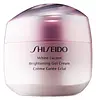
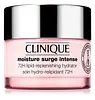
Shiseido White Lucent Brightening Gel Cream Versus Clinique Moisture Surge Intense 72H Lipid-Replenishing Hydrator Moisturizer
This brightening moisturizer is formulated around 2-O-Ethyl Ascorbic Acid to brighten dull-looking skin.
This barrier-repair moisturizer is formulated around Squalane and Sodium Hyaluronate to strengthen the skin barrier and hydrate skin.


What's inside
What's inside
 Key Ingredients
Benefits
Concerns
Ingredients Side-by-side
Water
Skin ConditioningButylene Glycol
Humectant

Glycerin
Humectant
Dimethicone
Emollient
Sd Alcohol 40-B
Astringent


Triethylhexanoin
MaskingPEG/PPG-14/7 Dimethyl Ether
Skin ConditioningHydrogenated Polydecene
EmollientBehenyl Alcohol
Emollient
Stearyl Alcohol
Emollient

Myristyl Myristate
Emollient

Glyceryl Stearate Se
Emulsifying
Trehalose
Humectant
Potassium Methoxysalicylate
BleachingPhytosteryl Macadamiate
Skin Conditioning
Methyl Methacrylate Crosspolymer

Polysorbate 60
Emulsifying
PEG-40 Stearate
Emulsifying
Phenoxyethanol
Preservative
Dimethylacrylamide/Sodium Acryloyldimethyltaurate Crosspolymer
Hydrogenated Palm Oil
Emollient
Elaeis Guineensis Kernel Oil
Emollient
Elaeis Guineensis Oil
Emollient
Sorbitan Tristearate
EmulsifyingTrisodium EDTA
Erythritol
Humectant
PEG/PPG-17/4 Dimethyl Ether
Skin ConditioningSodium Citrate
BufferingParfum
Masking


Dipotassium Glycyrrhizate
Humectant

2-O-Ethyl Ascorbic Acid
Skin Conditioning



Alcohol
Antimicrobial
Silica
Abrasive
Xanthan Gum
EmulsifyingCaffeine
Skin Conditioning
Linalool
Perfuming
Citric Acid
Buffering
Sodium Metaphosphate
BufferingPPG-3 Dipivalate
Skin ConditioningHdi/Trimethylol Hexyllactone Crosspolymer
Tocopherol
Antioxidant


Citronellol
Perfuming
Sodium Metabisulfite
Antioxidant
Geraniol
Perfuming
Angelica Keiskei Leaf/Stem Extract
Skin ConditioningLimonene
Perfuming
Paeonia Albiflora Root Extract
Skin ConditioningCrataegus Monogyna Flower Extract
Skin ConditioningAcrylates/C10-30 Alkyl Acrylate Crosspolymer
Emulsion StabilisingFructose
Humectant
Rehmannia Chinensis Root Extract
Skin ConditioningCI 77491
Cosmetic ColorantPrunus Yedoensis Leaf Extract
Skin ConditioningZiziphus Jujuba Fruit Extract
Skin ConditioningPyrola Incarnata Extract
Skin ConditioningPotentilla Erecta Root Extract
Skin ConditioningPolyquaternium-51
Skin Conditioning
Benzoic Acid
Masking
Water, Butylene Glycol, Glycerin, Dimethicone, Sd Alcohol 40-B, Triethylhexanoin, PEG/PPG-14/7 Dimethyl Ether, Hydrogenated Polydecene, Behenyl Alcohol, Stearyl Alcohol, Myristyl Myristate, Glyceryl Stearate Se, Trehalose, Potassium Methoxysalicylate, Phytosteryl Macadamiate, Methyl Methacrylate Crosspolymer, Polysorbate 60, PEG-40 Stearate, Phenoxyethanol, Dimethylacrylamide/Sodium Acryloyldimethyltaurate Crosspolymer, Hydrogenated Palm Oil, Elaeis Guineensis Kernel Oil, Elaeis Guineensis Oil, Sorbitan Tristearate, Trisodium EDTA, Erythritol, PEG/PPG-17/4 Dimethyl Ether, Sodium Citrate, Parfum, Dipotassium Glycyrrhizate, 2-O-Ethyl Ascorbic Acid, Alcohol, Silica, Xanthan Gum, Caffeine, Linalool, Citric Acid, Sodium Metaphosphate, PPG-3 Dipivalate, Hdi/Trimethylol Hexyllactone Crosspolymer, Tocopherol, Citronellol, Sodium Metabisulfite, Geraniol, Angelica Keiskei Leaf/Stem Extract, Limonene, Paeonia Albiflora Root Extract, Crataegus Monogyna Flower Extract, Acrylates/C10-30 Alkyl Acrylate Crosspolymer, Fructose, Rehmannia Chinensis Root Extract, CI 77491, Prunus Yedoensis Leaf Extract, Ziziphus Jujuba Fruit Extract, Pyrola Incarnata Extract, Potentilla Erecta Root Extract, Polyquaternium-51, Benzoic Acid
Water
Skin ConditioningGlycerin
Humectant
Dimethicone
Emollient
Isopropyl Isostearate
Emollient
Dipropylene Glycol
HumectantSqualane
Emollient
PEG/PPG-18/18 Dimethicone
Emulsifying
Silica
Abrasive
Tocopheryl Acetate
Antioxidant
Sodium Hyaluronate
Humectant
Olea Europaea Fruit Extract
BleachingCentella Asiatica Extract
Cleansing
Aloe Barbadensis Leaf Water
MaskingPalmitoyl Hexapeptide-12
Skin Conditioning
Triticum Vulgare Bran Extract
Skin ConditioningCaffeine
Skin Conditioning
Methyl Trimethicone
Skin Conditioning
Sorbitol
Humectant
Sodium Polyaspartate
HumectantPetrolatum
Emollient
Trehalose
Humectant
Whey Protein
Skin ConditioningLinoleic Acid
Cleansing
Pyridoxine Dipalmitate
Skin ConditioningButylene Glycol
Humectant
Cholesterol
Emollient
Sucrose
Humectant
Polysilicone-11
Glyceryl Polymethacrylate
PEG-150
HumectantPEG-8
HumectantHydroxyethyl Urea
Humectant
Hydroxyacetophenone
Antioxidant
BHT
Antioxidant
Disodium EDTA
Sodium Hexametaphosphate
MaskingSodium Benzoate
Masking
Potassium Sorbate
Preservative
Phenoxyethanol
Preservative
Water, Glycerin, Dimethicone, Isopropyl Isostearate, Dipropylene Glycol, Squalane, PEG/PPG-18/18 Dimethicone, Silica, Tocopheryl Acetate, Sodium Hyaluronate, Olea Europaea Fruit Extract, Centella Asiatica Extract, Aloe Barbadensis Leaf Water, Palmitoyl Hexapeptide-12, Triticum Vulgare Bran Extract, Caffeine, Methyl Trimethicone, Sorbitol, Sodium Polyaspartate, Petrolatum, Trehalose, Whey Protein, Linoleic Acid, Pyridoxine Dipalmitate, Butylene Glycol, Cholesterol, Sucrose, Polysilicone-11, Glyceryl Polymethacrylate, PEG-150, PEG-8, Hydroxyethyl Urea, Hydroxyacetophenone, BHT, Disodium EDTA, Sodium Hexametaphosphate, Sodium Benzoate, Potassium Sorbate, Phenoxyethanol
Reviews
Ingredients Explained
These ingredients are found in both products.
Ingredients higher up in an ingredient list are typically present in a larger amount.
Butylene Glycol (or BG) is used within cosmetic products for a few different reasons:
Overall, Butylene Glycol is a safe and well-rounded ingredient that works well with other ingredients.
Though this ingredient works well with most skin types, some people with sensitive skin may experience a reaction such as allergic rashes, closed comedones, or itchiness.
Learn more about Butylene GlycolCaffeine is a naturally occurring plant compound found in coffee beans, tea leaves, cocoa pods, and guarana.
As an antioxidant, caffeine protects your skin from free radical damage caused by UV exposure and envionrmnetal stressors.
Early research also shows that caffeine can help calm redness, soothe irritated skin, and support hair growth by stimulating microcirculation in the scalp.
You might have seen eye creams marketing caffeine as a depuffing ingredient. This is because it is a vasoconstrictor meaning it can temporarily constrict blood vessels, though clinical evidence for this specific use is still limited.
Most skincare products contain this ingredient at concentrations between 1-6%. It is able to penetrate skin easily regardless of skin type or thickness.
Just so you know, a very small number of case reports describe caffeine-induced allergy. This ingredient is generally well-tolerated, non-irritating, and non-sensitizing for the majority of people.
Learn more about CaffeineDimethicone is a type of synthetic silicone created from natural materials such as quartz. It is also known as polydimethylsiloxane.
What it does:
Dimethicone comes in different viscosities:
Depending on the viscosity, dimethicone has different properties.
Ingredients lists don't always show which type is used, so we recommend reaching out to the brand if you have questions about the viscosity.
This ingredient is unlikely to cause irritation because it does not get absorbed into skin. However, people with silicone allergies should be careful about using this ingredient.
Note: Dimethicone may contribute to pilling. This is because it is not oil or water soluble, so pilling may occur when layered with products. When mixed with heavy oils in a formula, the outcome is also quite greasy.
Learn more about DimethiconeGlycerin (or glycerol) is a compound naturally found in your skin. It's a powerhouse humectant that pulls water into the stratum corneum.
Topically, glycerin does several things at once:
Your skin makes glycerin on its own (mostly from sebaceous oil breakdown) and shuttles it to your outermost layer of skin, or your epidermis, via aquaporin-3.
Aquaporin-3 is a transporter that is essential for normal skin hydration, elasticity, and repair. Interestingly, mice lacking in AQP3 have dry and less elastic skin that can be fully corrected with glycerin.
This ingredient is non-irritating, plays well with almost every ingredient, and works across all skin types. Typical use is anywhere between 3-10% but can go up to 79% in some leave-on products.
Just know very high concentrations (>40%) can feel tacky in low humidity.
Glycerin is the name for this ingredient in American English. British English uses Glycerol/Glycerine.
Learn more about GlycerinPhenoxyethanol is one of the most widely used preservatives in skincare (and for good reason!).
It has a large spectrum of antimicrobial activity and especially effective bacteria, yeast, and mold while only having a weak effect on your skin's natural microbiome.
On a cellular level, it disrupts the cell membranes of microbes by poking holes that make the cell leak. This shuts down the chemical reactions the microbe needs to make energy so it can no longer survive.
Another perk of this ingredient is that it stays functional across a wide pH range (3-10).
You'll often see it paired with boosters like Ethylhexylglycerin; one study showed that a 1:9 ratio of Ethylhexylglycerin to Phenoxyethanol damages bacterial membranes as effectively as doubling the Phenoxyethanol concentration on its own.
Typical use concentrations range from 0.3-1% depending on the formula, and this ingredient is capped at 1% int the EU.
Safety-wise, the fear mongering does not hold up to the evidence. The EU's Scientific Committee on Consumer Safety and FDA consider it safe as a preservative at up to 1%, including for children of all ages.
Adverse systemic effects only showed up in animal studies at exposures roughly 200x higher than what people get from cosmetics. And despite its very widespread use, this ingredient is a rare sensitizer and allergic reactions are uncommon.
Learn more about PhenoxyethanolSilica, also known as silicon dioxide, is a naturally occurring mineral. It is used as a fine, spherical, and porous powder in cosmetics.
Though it has exfoliant properties, the function of silica varies depending on the product.
The unique structure of silica enhances the spreadability and adds smoothness, making it a great texture enhancer.
It is also used as an active carrier, emulsifier, and mattifier due to its ability to absorb excess oil.
In some products, tiny microneedles called spicules are made from silica or hydrolyzed sponge. When you rub them in, they lightly polish away dead skin layers and enhance the penetration of active ingredients.
Learn more about SilicaTrehalose is a disaccharide made of two glucose molecules (glucose is sugar!). Trehalose is used to help moisturize skin. It also has antioxidant properties.
As a humectant, trehalose helps draw moisture from the air to your skin. This helps keep your skin hydrated.
Due to its antioxidant properties, trehalose may help with signs of aging. Antioxidants help fight free-radical molecules, unstable molecules that may damage your skin.
In medicine, trehalose and hyaluronic acid are used to help treat dry eyes.
Some animals, plants, and bacteria create trehalose as a source of energy to survive freeze or lack of water.
Learn more about TrehaloseWater. It's the most common cosmetic ingredient of all. You'll usually see it at the top of ingredient lists, meaning that it makes up the largest part of the product.
So why is it so popular? Water most often acts as a solvent - this means that it helps dissolve other ingredients into the formulation.
You'll also recognize water as that liquid we all need to stay alive. If you see this, drink a glass of water. Remember to stay hydrated!
Learn more about Water

