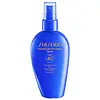
This chemical sunscreen covers most of the UV range, lighter on the deep UVA that drives aging.
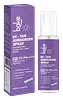
This hybrid sunscreen covers the full UV range and blocks ~99% of UVB at SPF 70.


What's inside
What's inside
 Key Ingredients
Benefits
Concerns
Ingredients Side-by-side
Butyl Methoxydibenzoylmethane 2.3%
UV Absorber
Homosalate 10%
Skin Conditioning
Ethylhexyl Salicylate 5%
UV Absorber
Octocrylene 5%
UV Absorber

Alcohol Denat.
Antimicrobial


Diisopropyl Sebacate
EmollientTriethylhexanoin
MaskingC12-15 Alkyl Benzoate
AntimicrobialDimethicone
Emollient

Caprylyl Methicone
Skin Conditioning
Silica Dimethyl Silylate
EmollientDipropylene Glycol
HumectantPPG-3 Dipivalate
Skin ConditioningVitis Vinifera Seed Oil
Emollient



PEG/PPG-14/7 Dimethyl Ether
Skin ConditioningLecithin
Emollient
Glycyrrhiza Glabra Root Extract
Bleaching


PPG-17
Skin ConditioningHydroxystearic Acid
Cleansing
Polyhydroxystearic Acid
Emulsifying
Polyamide-8
EmollientPalmitic Acid
Emollient

Lauryl PEG-9 Polydimethylsiloxyethyl Dimethicone
Skin Conditioning
BHT
Antioxidant
Tocopherol
Antioxidant

Pentaerythrityl Tetra-Di-T-Butyl Hydroxyhydrocinnamate
Antioxidant
Phenoxyethanol
Preservative
Parfum
Masking

Butyl Methoxydibenzoylmethane 2.3%, Homosalate 10%, Ethylhexyl Salicylate 5%, Octocrylene 5%, Alcohol Denat., Diisopropyl Sebacate, Triethylhexanoin, C12-15 Alkyl Benzoate, Dimethicone, Caprylyl Methicone, Silica Dimethyl Silylate, Dipropylene Glycol, PPG-3 Dipivalate, Vitis Vinifera Seed Oil, PEG/PPG-14/7 Dimethyl Ether, Lecithin, Glycyrrhiza Glabra Root Extract, PPG-17, Hydroxystearic Acid, Polyhydroxystearic Acid, Polyamide-8, Palmitic Acid, Lauryl PEG-9 Polydimethylsiloxyethyl Dimethicone, BHT, Tocopherol, Pentaerythrityl Tetra-Di-T-Butyl Hydroxyhydrocinnamate, Phenoxyethanol, Parfum
Water
Skin ConditioningEthylhexyl Methoxycinnamate
UV Absorber
Butyl Methoxydibenzoylmethane
UV Absorber
Benzophenone-3
UV Absorber
Phospholipids
Skin Conditioning
Butylene Glycol
Humectant
Glycerin
Humectant
Zinc Oxide
Cosmetic Colorant
Collagen
Moisturising
3-O-Ethyl Ascorbic Acid
Skin Conditioning


Carthamus Tinctorius Seed Oil
Masking
Algae Extract
Emollient
Niacinamide
Smoothing

Kojic Acid
Antioxidant
Alpha-Arbutin
Antioxidant
Panthenol
Skin Conditioning
Phenoxyethanol
Preservative
Ethylhexylglycerin
Skin ConditioningSodium PCA
Humectant
Acrylates/C10-30 Alkyl Acrylate Crosspolymer
Emulsion StabilisingTriethanolamine
BufferingSodium Starch Octenylsuccinate
AbsorbentMenthol
Masking
Butyrospermum Parkii Butter
Skin Conditioning
Euphorbia Cerifera Wax
Hydrated Silica
Abrasive
Water, Ethylhexyl Methoxycinnamate, Butyl Methoxydibenzoylmethane, Benzophenone-3, Phospholipids, Butylene Glycol, Glycerin, Zinc Oxide, Collagen, 3-O-Ethyl Ascorbic Acid, Carthamus Tinctorius Seed Oil, Algae Extract, Niacinamide, Kojic Acid, Alpha-Arbutin, Panthenol, Phenoxyethanol, Ethylhexylglycerin, Sodium PCA, Acrylates/C10-30 Alkyl Acrylate Crosspolymer, Triethanolamine, Sodium Starch Octenylsuccinate, Menthol, Butyrospermum Parkii Butter, Euphorbia Cerifera Wax, Hydrated Silica
Reviews
Ingredients Explained
These ingredients are found in both products.
Ingredients higher up in an ingredient list are typically present in a larger amount.
Also known as Avobenzone, this ingredient is an oil-soluble used to absorb the full spectrum of UVA rays (peak 357 nm).
It's one of the most effective UVA filters available but has a major caveat of photostability: avobenzone is susceptible to photodegradation.
This means it can lose efficacy when exposed to sunlight without the help of a stabilizing agent.
Studies show antioxidants (like vitamin E or vitamin C) and some UV filters (like octocrylene and Tinosorb S) can meaningfully improve its stability in a formulation.
The maximum allowable concentration according to regulation is 3% in the US + Canada, and 5% in the EU, Australia, China, Korea, and ASEAN countries.
It has a well-support safety profile: a comprehensive 2025 review found minimal toxicity with no evidence of carcinogenicity.
Overall, avobenzone is a safe and regulated ingredient used in sunscreen for over 40 years.
Learn more about Butyl MethoxydibenzoylmethanePhenoxyethanol is one of the most widely used preservatives in skincare (and for good reason!).
It has a large spectrum of antimicrobial activity and especially effective bacteria, yeast, and mold while only having a weak effect on your skin's natural microbiome.
On a cellular level, it disrupts the cell membranes of microbes by poking holes that make the cell leak. This shuts down the chemical reactions the microbe needs to make energy so it can no longer survive.
Another perk of this ingredient is that it stays functional across a wide pH range (3-10).
You'll often see it paired with boosters like Ethylhexylglycerin; one study showed that a 1:9 ratio of Ethylhexylglycerin to Phenoxyethanol damages bacterial membranes as effectively as doubling the Phenoxyethanol concentration on its own.
Typical use concentrations range from 0.3-1% depending on the formula, and this ingredient is capped at 1% int the EU.
Safety-wise, the fear mongering does not hold up to the evidence. The EU's Scientific Committee on Consumer Safety and FDA consider it safe as a preservative at up to 1%, including for children of all ages.
Adverse systemic effects only showed up in animal studies at exposures roughly 200x higher than what people get from cosmetics. And despite its very widespread use, this ingredient is a rare sensitizer and allergic reactions are uncommon.
Learn more about Phenoxyethanol

