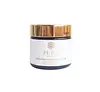
This hydrating overnight mask is formulated around Citrullus Lanatus Fruit Extract and Aloe Barbadensis Leaf Juice to hydrate skin.
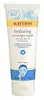
This hydrating overnight mask is formulated around Ricinus Communis Seed Oil and Cocos Nucifera Oil to hydrate skin.


What's inside
What's inside
 Key Ingredients
Benefits
Concerns
Ingredients Side-by-side
Water
Skin ConditioningCaprylic/Capric Triglyceride
Masking


Cetearyl Alcohol
Emollient





Glycerin
Humectant
Leuconostoc/Radish Root Ferment Filtrate
Antimicrobial
Citrullus Lanatus Fruit Extract
Skin Conditioning
Aloe Barbadensis Leaf Juice
Skin Conditioning
Butyrospermum Parkii Butter Extract
Skin Conditioning
Coco-Caprylate
Emollient
Cocos Nucifera Oil
Masking

Glyceryl Stearate
Emollient
Helianthus Annuus Seed Oil
Emollient
Persea Gratissima Oil
Skin Conditioning
Polyglyceryl-3 Stearate
Emulsifying
Squalane
Emollient
Stearic Acid
Cleansing
Cetyl Alcohol
Emollient
Tocopherol
Antioxidant



Xanthan Gum
EmulsifyingSimmondsia Chinensis Seed Oil
Emollient
Citrus Aurantium Amara Flower Oil
Masking
Citrus Aurantium Dulcis Fruit Extract
MaskingVanilla Planifolia Fruit Oil
Emollient
Hamamelis Virginiana Extract
Antiseborrhoeic

Anthemis Nobilis Flower Oil
Masking
Water, Caprylic/Capric Triglyceride, Cetearyl Alcohol, Glycerin, Leuconostoc/Radish Root Ferment Filtrate, Citrullus Lanatus Fruit Extract, Aloe Barbadensis Leaf Juice, Butyrospermum Parkii Butter Extract, Coco-Caprylate, Cocos Nucifera Oil, Glyceryl Stearate, Helianthus Annuus Seed Oil, Persea Gratissima Oil, Polyglyceryl-3 Stearate, Squalane, Stearic Acid, Cetyl Alcohol, Tocopherol, Xanthan Gum, Simmondsia Chinensis Seed Oil, Citrus Aurantium Amara Flower Oil, Citrus Aurantium Dulcis Fruit Extract, Vanilla Planifolia Fruit Oil, Hamamelis Virginiana Extract, Anthemis Nobilis Flower Oil
Water
Skin ConditioningRicinus Communis Seed Oil
Masking
Glycerin
Humectant
Cetyl Alcohol
Emollient
Stearyl Alcohol
Emollient
Cocos Nucifera Oil
Masking
Glyceryl Stearate
Emollient
Propanediol
Solvent
Beeswax
Emulsion Stabilising
Stearic Acid
Cleansing
Persea Gratissima Oil
Skin Conditioning
Lactobacillus
Skin ConditioningSalvia Sclarea Extract
AntiseborrhoeicPolymnia Sonchifolia Root Juice
Skin ConditioningAstrocaryum Tucuma Seed Butter
Emollient
Trichilia Emetica Seed Butter
Emollient
Helianthus Annuus Seed Wax
Skin Conditioning
Glycine Soja Oil
Emollient
Alpha-Glucan Oligosaccharide
Cleansing
Tocopherol
Antioxidant
Xanthan Gum
EmulsifyingLecithin
Emollient
Sodium PCA
Humectant
Zinc PCA
Humectant



Maltodextrin
Absorbent
Potassium Stearate
CleansingPotassium Sorbate
Preservative
Sodium Benzoate
Masking
Parfum
Masking
Phenoxyethanol
Preservative
Citral
Perfuming
Limonene
Perfuming
Linalool
Perfuming
Water, Ricinus Communis Seed Oil, Glycerin, Cetyl Alcohol, Stearyl Alcohol, Cocos Nucifera Oil, Glyceryl Stearate, Propanediol, Beeswax, Stearic Acid, Persea Gratissima Oil, Lactobacillus, Salvia Sclarea Extract, Polymnia Sonchifolia Root Juice, Astrocaryum Tucuma Seed Butter, Trichilia Emetica Seed Butter, Helianthus Annuus Seed Wax, Glycine Soja Oil, Alpha-Glucan Oligosaccharide, Tocopherol, Xanthan Gum, Lecithin, Sodium PCA, Zinc PCA, Maltodextrin, Potassium Stearate, Potassium Sorbate, Sodium Benzoate, Parfum, Phenoxyethanol, Citral, Limonene, Linalool
Ingredients Explained
These ingredients are found in both products.
Ingredients higher up in an ingredient list are typically present in a larger amount.
Cetyl Alcohol is a fatty alcohol. Fatty Alcohols are most often used as an emollient or to thicken a product.
Its main roles are:
Though it has "alcohol" in the name, it is not related to denatured alcohol or ethyl alcohol.
The FDA allows products labeled "alcohol-free" to have fatty alcohols.
This ingredient may not be fungal acne safe. It is a primary fatty alcohol with a chain length above 12 carbons. A study from 2019 show Malassezia can feed on fatty alcohols in this range, so it may trigger fungal acne in those prone to it.
Learn more about Cetyl AlcoholThis ingredient is also known as coconut oil. It is a plant-derived ingredient with skin conditioning properties.
The fatty acid profile of coconut oil is mostly lauric acid (~54%), followed by capric, caprylic, palmitic, and myristic acids. This profile allows it to penetrate easily into skin, moisturize, and improve dry skin.
A double-blind study confirmed that extra virgin coconut oil is as effective as mineral oil for treating very dry skin. Another study found it outperformed mineral oil for mild to moderate atopic dermatitis in children.
Another study from 2018 found that virgin coconut oil can soothe inflammation and boost key skin barrier proteins. Just know this evidence is still only from lab settings and not human trials.
It has also been shown to reduce Staphylococcus aureus, a bacteria that commonly overgrows in people with eczema.
Clinical testing shows very minimal skin irritation and no evidence of sensitization or phototoxicity.
Coconut oil gets flagged as a "fragrance" because it has a natural mild scent (not because it's a synthetic perfume). The European Cosmetic ingredient database also lists "perfuming" as a function of this ingredient.
Just so you know, the term "fragrance" is completely unregulated. Some brands still use botanical extracts or essential oils in their "fragrance-free" formulas, but regulatory databases technically classify these under "fragrance".
Coconut oil has a tiny and useless bit of natural SPF. Early lab studies clocked it around SPF 7-8 but a more recent study found the real number closer to SPF 1.2. It also offers no meaningful UVA protection (SPF only overs UVB rays).
The comedogenic rating of 4/5 means it has a high potential to clog pores; but it's worth noting that comedogenicity is highly individual and ratings cannot predict how an overall formula will behave on skin.
Since lauric acid is the dominant fatty acid, this ingredient may not be fungal acne safe. The Malassezia yeast feeds on fatty acids with carbon chain lengths between 11-24, and lauric acid falls within these lengths (C12).
Learn more about Cocos Nucifera OilGlycerin (or glycerol) is a compound naturally found in your skin. It's a powerhouse humectant that pulls water into the stratum corneum.
Topically, glycerin does several things at once:
Your skin makes glycerin on its own (mostly from sebaceous oil breakdown) and shuttles it to your outermost layer of skin, or your epidermis, via aquaporin-3.
Aquaporin-3 is a transporter that is essential for normal skin hydration, elasticity, and repair. Interestingly, mice lacking in AQP3 have dry and less elastic skin that can be fully corrected with glycerin.
This ingredient is non-irritating, plays well with almost every ingredient, and works across all skin types. Typical use is anywhere between 3-10% but can go up to 79% in some leave-on products.
Just know very high concentrations (>40%) can feel tacky in low humidity.
Glycerin is the name for this ingredient in American English. British English uses Glycerol/Glycerine.
Learn more about GlycerinGlyceryl Stearate is made by reacting glycerin with stearic acid (typically sourced from plant oils like palm or coconut). It's an emulsifier, emollient, and mild occlusive.
Emulsifiers help ingredients like oil and water stay mixed so your formula stays nicely blended and uniform in texture.
This ingredient is typically used in concentrations between 1-10%. Studies have found it to be non-sensitizing, non-phototoxic, and non-photoallergenic.
A close cousin of this ingredient is Glyceryl Stearate SE ("self-emulsifying"). This just has a small amount of sodium or potassium stearate added so it can emulsify without a co-emulsifier.
Since this ingredient is an ester of a C18 fatty acid, it may not be fungal acne safe. The Malassezia yeast can potentially metabolize within the C11-C24 range.
Fun fact: The human body also creates Glyceryl Stearate naturally.
Learn more about Glyceryl StearateThis ingredient is also known as Avocado oil. It's the cold-pressed oil from the flesh of the avocado fruit packed with fatty acids (mostly oleic acid).
The rich fatty acid profile allows it to function as a skin conditioning agent and emollient; it helps soften and smooth skin while reducing water loss.
Preclinical research has found that topical avocado oil increased collagen synthesis and reduced inflammation during wound healing, giving it some skin-repairing credibility.
The unsaponifiable fraction of the oil is also interesting: studies on avocado unsaponifiables showed that it helped skin produce more collagen and other structural compounds that support healing.
The CIR Expert Panel has found this ingredient to be non-irritating in formulations.
It's a great ingredient for dry or compromised skin. Just know it may not be fungal acne safe. This is because the oleic acid content falls within the range that Malassezia can use as a food source.
Learn more about Persea Gratissima OilStearic Acid is a fatty acid that is already found in your skin. It's one of the free fatty acids that works alongside ceramides and cholesterols to maintain your barrier.
In cosmetics, it is a multitasker:
Safety-wise, the CIR Expert Panel has concluded it to be safe in cosmetics when formulated to be non-irritating and non-sensitizing.
Free stearic acid is a C18 fatty acid that the Malassezia yeast can substrate, so this ingredient may not be fungal acne safe.
Learn more about Stearic AcidTocopherol is a fat-soluble antioxidant known as Vitamin E.
You'll find this ingredient in the vast majority of skincare (for good reason). It works to neutralize free radicals, or unstable molecules generated by UV exposure, pollution, and other environmental stressors, before they can cause oxidative damage to your skin cells.
Topically applied tocopherol has been shown to protect against UV damage by ramping up the skin's own natural defense enzymes.
It also acts as a skin conditioning agent; some studies show that regular topical use can improve the skin's water-binding capacity over 2-4 weeks.
This ingredient is especially loved for being a team player. When combined with Vitamin C, the photoprotective effect of both ingredients roughly doubles and the combo also helps reduce UV-induced DNA damage.
This ingredient has some brightening potential but it's more of a prevention ingredient than spot-fader. Cell studies show it can slow down melanin production but it's worth noting that it's not the most powerful brightener out there.
In formulations, it also serves as a stabilizer that helps protect other oxidation-prone ingredients from degrading.
Concentrations usually range from 0.1-1% in most leave-on products.
Learn more about TocopherolWater. It's the most common cosmetic ingredient of all. You'll usually see it at the top of ingredient lists, meaning that it makes up the largest part of the product.
So why is it so popular? Water most often acts as a solvent - this means that it helps dissolve other ingredients into the formulation.
You'll also recognize water as that liquid we all need to stay alive. If you see this, drink a glass of water. Remember to stay hydrated!
Learn more about WaterXanthan gum is used as a stabilizer and thickener within cosmetic products. It helps give products a sticky, thick feeling - preventing them from being too runny.
On the technical side of things, xanthan gum is a polysaccharide - a combination consisting of multiple sugar molecules bonded together.
Xanthan gum is a pretty common and great ingredient. It is a natural, non-toxic, non-irritating ingredient that is also commonly used in food products.
Learn more about Xanthan Gum

