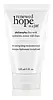
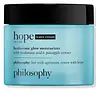
Philosophy renewed hope in a jar Versus Philosophy Hope In A Jar Water Cream Hyaluronic Glow Moisturizer
This wash off mask is made with Cellulose for a rinse-off oil-control boost.
This moisturizer is formulated around Hyaluronic Acid to hydrate skin.

What's inside
What's inside
 Key Ingredients
Benefits
Concerns
Ingredients Side-by-side
Water
Skin ConditioningPEG-8
HumectantCellulose
Absorbent
Butylene Glycol
Humectant

Glycerin
Humectant
PEG-7 Glyceryl Cocoate
Emulsifying




Hamamelis Virginiana Water
Astringent
Phenoxyethanol
Preservative
Carbomer
Emulsion StabilisingSaccharide Isomerate
Humectant
Benzophenone-3
UV Absorber

Panthenol
Skin Conditioning
Alcohol
Antimicrobial
Chlorphenesin
Antimicrobial
Sodium Hydroxide
BufferingParfum
Masking

Disodium EDTA
ChelatingAnanas Sativus Fruit Extract
Skin ConditioningPropylene Glycol
Humectant
Citric Acid
Buffering

Guar Hydroxypropyltrimonium Chloride
Skin ConditioningSodium Citrate
BufferingPanthenyl Triacetate
Taraxacum Officinale Rhizome/Root Extract
Skin ConditioningPantolactone
Humectant
Hydroxyethylcellulose
Emulsion StabilisingHydroxypropylcellulose
EmulsifyingCentaurea Cyanus Flower Extract
Astringent
BHT
Antioxidant
Ethylhexylglycerin
Skin ConditioningCI 77891
Cosmetic ColorantCI 42090
Cosmetic ColorantCI 17200
Cosmetic ColorantWater, PEG-8, Cellulose, Butylene Glycol, Glycerin, PEG-7 Glyceryl Cocoate, Hamamelis Virginiana Water, Phenoxyethanol, Carbomer, Saccharide Isomerate, Benzophenone-3, Panthenol, Alcohol, Chlorphenesin, Sodium Hydroxide, Parfum, Disodium EDTA, Ananas Sativus Fruit Extract, Propylene Glycol, Citric Acid, Guar Hydroxypropyltrimonium Chloride, Sodium Citrate, Panthenyl Triacetate, Taraxacum Officinale Rhizome/Root Extract, Pantolactone, Hydroxyethylcellulose, Hydroxypropylcellulose, Centaurea Cyanus Flower Extract, BHT, Ethylhexylglycerin, CI 77891, CI 42090, CI 17200
Water
Skin ConditioningGlycerin
Humectant
Pentylene Glycol
Skin Conditioning
Caprylic/Capric Triglyceride
Masking
Pentaerythrityl Tetraethylhexanoate
Emollient
Cetearyl Alcohol
Emollient


1,2-Hexanediol
Skin Conditioning
Caprylyl Glycol
Emollient
Dimethicone
Emollient
Ammonium Acryloyldimethyltaurate/Beheneth-25 Methacrylate Crosspolymer
Emulsion StabilisingButylene Glycol
Humectant
Cetearyl Glucoside
Emulsifying
Methylpropanediol
SolventSodium Polyacrylate Starch
AbsorbentParfum
Masking
Ananas Sativus Fruit Extract
Skin ConditioningLaureth-3
EmulsifyingCitric Acid
Buffering
Hydroxyethylcellulose
Emulsion StabilisingGlucosyl Hesperidin
HumectantGuar Hydroxypropyltrimonium Chloride
Skin ConditioningAcetyl Dipeptide-1 Cetyl Ester
Skin Conditioning

Limonene
Perfuming
Hyaluronic Acid
Humectant
Sodium Benzoate
Masking
Potassium Sorbate
Preservative
Silanetriol
Hydrolyzed Opuntia Ficus-Indica Flower Extract
Abrasive
Agave Americana Leaf Extract
Skin ConditioningCI 42090
Cosmetic ColorantCI 17200
Cosmetic ColorantWater, Glycerin, Pentylene Glycol, Caprylic/Capric Triglyceride, Pentaerythrityl Tetraethylhexanoate, Cetearyl Alcohol, 1,2-Hexanediol, Caprylyl Glycol, Dimethicone, Ammonium Acryloyldimethyltaurate/Beheneth-25 Methacrylate Crosspolymer, Butylene Glycol, Cetearyl Glucoside, Methylpropanediol, Sodium Polyacrylate Starch, Parfum, Ananas Sativus Fruit Extract, Laureth-3, Citric Acid, Hydroxyethylcellulose, Glucosyl Hesperidin, Guar Hydroxypropyltrimonium Chloride, Acetyl Dipeptide-1 Cetyl Ester, Limonene, Hyaluronic Acid, Sodium Benzoate, Potassium Sorbate, Silanetriol, Hydrolyzed Opuntia Ficus-Indica Flower Extract, Agave Americana Leaf Extract, CI 42090, CI 17200
Reviews
Ingredients Explained
These ingredients are found in both products.
Ingredients higher up in an ingredient list are typically present in a larger amount.
This extract comes from the pineapple fruit. Its main claim to fame is bromelain, a gentle exfoliator that helps remove dead skin cells from the outermost layer of skin.
Exfoliation from bromelain is considered a gentler alternative to physical or chemical exfoliants; this makes it suitable for sensitive skin types.
Beyond exfoliation, this extract also contains natural sugars with humectant properties and some vitamin C.
Overall, this is a well-tolerated and low-risk ingredient unless you have a pineapple allergy.
Learn more about Ananas Sativus Fruit ExtractButylene Glycol (or BG) is used within cosmetic products for a few different reasons:
Overall, Butylene Glycol is a safe and well-rounded ingredient that works well with other ingredients.
Though this ingredient works well with most skin types, some people with sensitive skin may experience a reaction such as allergic rashes, closed comedones, or itchiness.
Learn more about Butylene GlycolCI 17200 is a synthetic, water-soluble, reddish-pink dye. It is used purely as a cosmetic colorant.
In the US, the FDA permits this ingredient in cosmetics but it is not approved for use around the eyes while the EU allows this to be used in all cosmetic products.
The FDA requires batch-to-batch certification for this ingredient that is held to a pretty rigorous standard. That means the CI 17200 in your cosmetics has been tested and approved before it ever reaches you.
Contact allergy to cosmetic-grade dyes used at low concentrations are uncommon but has been documented before.
This ingredient also goes by the name D&C RED NO. 33.
CI 17200 has a comedogenic rating of 1 and an irritancy rating of 2 on a scale of 0-5. This is based on peer-reviewed research from the man who invented the comedogenic scale.
A 1 on the comedogenic scale is about as low as it gets without being a flat zero, and makes sense for CI 17200.
It's a water-soluble dye used at very small concentrations (typically 0.001-0.1%), so it dissolves into the water phase of a formula rather than sitting on your skin the way an oil or wax would.
The irritancy rating of 2 reflects that, like most synthetic dyes, there's a small possibility of mild irritation ( particularly for people with existing dye sensitivities).
For the vast majority of people, it's a non-issue at typical use levels.
It's also worth keeping in mind that comedogenic and irritancy ratings are tested on individual ingredients, not finished formulas. The final product's formulation, concentration, and other ingredients all play a role in how something actually behaves on your skin.
Just so you know, the FDA ban on Red Dye No. 3 refers to CI 45430, not this ingredient. CI 45430 and CI 17200 are different chemical compounds with distinct safety and regulatory histories.
It's also worth noting that Red No. 3 (CI 45430) was already banned from cosmetics back in 1990, so the 2025 action just extended the ban to food and oral drugs. CI 17200 was never part of any of this.
Learn more about CI 17200Ci 42090 is a synthetic dye created from petroleum. It is used to give a bright blue color to cosmetics, medicine, and food.
Citric Acid is an alpha hydroxy acid (AHA) naturally found in citrus fruits like oranges, lemons, and limes.
Like other AHAs, citric acid can exfoliate skin by breaking down the bonds that hold dead skin cells together. This helps reveal smoother and brighter skin underneath.
However, this exfoliating effect only happens at high concentrations (20%) which can be hard to find in cosmetic products.
Due to this, citric acid is usually included in small amounts as a pH adjuster. This helps keep products slightly more acidic and compatible with skin's natural pH.
In skincare formulas, citric acid can:
While it can provide some skin benefits, research shows lactic acid and glycolic acid are generally more effective and less irritating exfoliants.
Most citric acid used in skincare today is made by fermenting sugars (usually from molasses). This synthetic version is identical to the natural citrus form but easier to stabilize and use in formulations.
Rosacea skin has a lower threshold for acids generally, with 62.5% of rosacea subjects in one study reacting to lactic acid in a sting test. This is why we mark citric acid as a potential rosacea trigger.
However, this ingredient shows up as a pH adjuster or chelator at roughly 0.1-1% in many products. These low levels are unlikely to be an issue for rosacea skin and becomes a potential trigger at exfoliating concentrations (20%). Because everybody's skin is unique, we recommend a patch test if you are unsure.
Learn more about Citric AcidGlycerin (or glycerol) is a compound naturally found in your skin. It's a powerhouse humectant that pulls water into the stratum corneum.
Topically, glycerin does several things at once:
Your skin makes glycerin on its own (mostly from sebaceous oil breakdown) and shuttles it to your outermost layer of skin, or your epidermis, via aquaporin-3.
Aquaporin-3 is a transporter that is essential for normal skin hydration, elasticity, and repair. Interestingly, mice lacking in AQP3 have dry and less elastic skin that can be fully corrected with glycerin.
This ingredient is non-irritating, plays well with almost every ingredient, and works across all skin types. Typical use is anywhere between 3-10% but can go up to 79% in some leave-on products.
Just know very high concentrations (>40%) can feel tacky in low humidity.
Glycerin is the name for this ingredient in American English. British English uses Glycerol/Glycerine.
Learn more about GlycerinThis ingredient is derived from guar gum. It is a skin conditioning agent that creates a thin, breathable film to reduce water loss during cleansing.
This leaves the skin feeling soft rather than stripped and also contributes to a creamier lather.
Due to the large molecule size, this ingredient is unlikely to penetrate skin.
Learn more about Guar Hydroxypropyltrimonium ChlorideHydroxyethylcellulose is used to improve the texture of products. It is created from a chemical reaction involving ethylene oxide and alkali-cellulose. Cellulose is a sugar found in plant cell walls and help give plants structure.
This ingredient helps stabilize products by preventing ingredients from separating. It can also help thicken the texture of a product.
This ingredient can also be found in pill medicines to help our bodies digest other ingredients.
Learn more about HydroxyethylcelluloseParfum is a catch-all term for an ingredient or more that is used to give a scent to products.
Also called "fragrance", this ingredient can be a blend of hundreds of chemicals or plant oils. This means every product with "fragrance" or "parfum" in the ingredients list is a different mixture.
For instance, Habanolide is a proprietary trade name for a specific aroma chemical. When used as a fragrance ingredient in cosmetics, most aroma chemicals fall under the broad labeling category of “FRAGRANCE” or “PARFUM” according to EU and US regulations.
The term 'parfum' or 'fragrance' is not regulated in many countries. In many cases, it is up to the brand to define this term.
For instance, many brands choose to label themselves as "fragrance-free" because they are not using synthetic fragrances. However, their products may still contain ingredients such as essential oils that are considered a fragrance by INCI standards.
One example is Calendula flower extract. Calendula is an essential oil that still imparts a scent or 'fragrance'.
Depending on the blend, the ingredients in the mixture can cause allergies and sensitivities on the skin. Some ingredients that are known EU allergens include linalool and citronellol.
Parfum can also be used to mask or cover an unpleasant scent.
The bottom line is: not all fragrances/parfum/ingredients are created equally. If you are worried about fragrances, we recommend taking a closer look at an ingredient. And of course, we always recommend speaking with a professional.
Learn more about ParfumWater. It's the most common cosmetic ingredient of all. You'll usually see it at the top of ingredient lists, meaning that it makes up the largest part of the product.
So why is it so popular? Water most often acts as a solvent - this means that it helps dissolve other ingredients into the formulation.
You'll also recognize water as that liquid we all need to stay alive. If you see this, drink a glass of water. Remember to stay hydrated!
Learn more about Water

