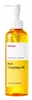
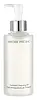
This oil-based makeup remover is made to dissolve makeup, sunscreen, and daily buildup.
This oil-based makeup remover is made to dissolve makeup, sunscreen, and daily buildup.

What's inside
What's inside
 Key Ingredients
Benefits
Concerns
Ingredients Side-by-side
Glycine Soja Oil
Emollient








Corylus Avellana Seed Oil
Emollient
Sorbeth-30 Tetraoleate
Emulsifying
Vitis Vinifera Seed Oil
Emollient
Olea Europaea Fruit Oil
Masking
Caprylic/Capric Triglyceride
Masking

Squalane
Emollient
Isoamyl Laurate
Emollient
Camellia Japonica Seed Oil
Emollient
Oenothera Biennis Oil
Emollient
Simmondsia Chinensis Seed Oil
Emollient
Helianthus Annuus Seed Oil
Emollient
Argania Spinosa Kernel Oil
Emollient
Orbignya Oleifera Seed Oil
Emollient
Saponaria Officinalis Leaf Extract
AntimicrobialCamellia Sinensis Leaf Extract
Antimicrobial


Oryza Sativa Bran Oil
Emollient
Rice Ferment Filtrate
Skin Conditioning
Decyl Glucoside
Cleansing
Ginkgo Biloba Leaf Extract
Skin Conditioning
Lavandula Angustifolia Oil
Masking


Aloe Barbadensis Leaf Extract
Emollient
Citrus Aurantium Dulcis Oil
Masking
Melaleuca Alternifolia Leaf Oil
Antioxidant
Tocopherol
Antioxidant
Glycine Soja Oil, Corylus Avellana Seed Oil, Sorbeth-30 Tetraoleate, Vitis Vinifera Seed Oil, Olea Europaea Fruit Oil, Caprylic/Capric Triglyceride, Squalane, Isoamyl Laurate, Camellia Japonica Seed Oil, Oenothera Biennis Oil, Simmondsia Chinensis Seed Oil, Helianthus Annuus Seed Oil, Argania Spinosa Kernel Oil, Orbignya Oleifera Seed Oil, Saponaria Officinalis Leaf Extract, Camellia Sinensis Leaf Extract, Oryza Sativa Bran Oil, Rice Ferment Filtrate, Decyl Glucoside, Ginkgo Biloba Leaf Extract, Lavandula Angustifolia Oil, Aloe Barbadensis Leaf Extract, Citrus Aurantium Dulcis Oil, Melaleuca Alternifolia Leaf Oil, Tocopherol
Cetyl Ethylhexanoate
EmollientDicaprylyl Carbonate
EmollientPolyglyceryl-10 Dioleate
Emulsifying
Pentaerythrityl Tetraethylhexanoate
Emollient
PEG-8 Glyceryl Isostearate
Emollient
Parfum
Masking
Camellia Sinensis Seed Oil
Humectant
Limonene
Perfuming
Butylphenyl Methylpropional
Perfuming
Citronellol
Perfuming
Water
Skin ConditioningTocopherol
Antioxidant
Linalool
Perfuming
Cocos Nucifera Oil
Masking
Betula Platyphylla Japonica Juice
Skin Conditioning
Butylene Glycol
Humectant
Vaccinium Myrtillus Fruit Extract
Skin ConditioningGlycine Soja Oil
Emollient
Zingiber Officinale Root Extract
Masking
Saccharum Officinarum Extract
MoisturisingCitrus Aurantium Dulcis Fruit Extract
MaskingCitrus Limon Fruit Extract
Masking
Acer Saccharum Extract
Skin ConditioningCamellia Sinensis Leaf Extract
Antimicrobial
Phenoxyethanol
Preservative
Caprylyl Glycol
Emollient
1,2-Hexanediol
Skin Conditioning
Disodium EDTA
ChelatingEthylhexylglycerin
Skin ConditioningCetyl Ethylhexanoate, Dicaprylyl Carbonate, Polyglyceryl-10 Dioleate, Pentaerythrityl Tetraethylhexanoate, PEG-8 Glyceryl Isostearate, Parfum, Camellia Sinensis Seed Oil, Limonene, Butylphenyl Methylpropional, Citronellol, Water, Tocopherol, Linalool, Cocos Nucifera Oil, Betula Platyphylla Japonica Juice, Butylene Glycol, Vaccinium Myrtillus Fruit Extract, Glycine Soja Oil, Zingiber Officinale Root Extract, Saccharum Officinarum Extract, Citrus Aurantium Dulcis Fruit Extract, Citrus Limon Fruit Extract, Acer Saccharum Extract, Camellia Sinensis Leaf Extract, Phenoxyethanol, Caprylyl Glycol, 1,2-Hexanediol, Disodium EDTA, Ethylhexylglycerin
Reviews
Ingredients Explained
These ingredients are found in both products.
Ingredients higher up in an ingredient list are typically present in a larger amount.
Camellia Sinensis Leaf Extract (tea extract) is one of the most well-researched plant extracts in skincare with an impressive resume.
Black tea, green tea, and oolong tea are all harvested from the Camellia Sinensis plant.
Studies show green tea extract and its catechins (like epigallocatechin gallate (EGCG)) help your skin cells product energy more efficiently and reducing the number of free-radicals that can damage your skin from the inside.
In lab-grown skin models, this translated to younger, healthier, and stronger skin.
There's also good sun protection data; researchers saw less DNA damage and redness on human skin when green tea was applied before UVB exposure. And the more they applied, the better the protection.
Needless to say, this ingredient shouldn't replace your sunscreen. But it is a great supportive ingredient that you can already find in many sunscreens and antioxidant serums.
A 2009 study found a 2% green tea lotion was effective for mild-to-moderate acne thanks to its anti-inflammatory and mild antimicrobial activity.
The quality of the extract matters a lot here:
Good extracts contain 50-90% catechins while lower quality ones are mostly there for marketing. We recommend reaching out to the brand if you have questions about the quality or source of their ingredients.
Human Repeated Insult Patch Testing showed no irritation or sensitization at use concentrations (0.86% in leave-on products and up to 30% as leaf water).
Learn more about Camellia Sinensis Leaf ExtractGlycine Soja Oil is a plant-derived oil from soybean seeds. Like other oils, it is rich in essential fatty acids (mostly linoleic and oleic) that support skin hydration and barrier function.
The fatty acids are able to integrate into the lipid matrix of the stratum corneum to help soften skin and reduce water loss.
On top of that, soybean oil is rich in vitamins like vitamin E, a potent antioxidant.
Research on soybean's active components also point to anti-inflammatory, collagen-stimulating, antioxidant activity, and protection against UV-induced oxidative damage.
Most of this research applies to the broader soybean plant and not just the oil fraction alone.
This ingredient does carry a comedogenic rating of 3 from the old rabbit-ear assay. Just remember testing finished products in humans showed that formulas built with "comedogenic" ingredients are not necessarily comedogenic themselves. It's worth patch testing if you're breakout prone, and always listen to your skin.
Because this ingredient is a saturated triglyceride, it may not be fungal acne safe. This is because Malassezia breaks down sebum triglycerides into fatty acids it can consume, making this ingredient a possible source for the yeast.
Learn more about Glycine Soja OilTocopherol is a fat-soluble antioxidant known as Vitamin E.
You'll find this ingredient in the vast majority of skincare (for good reason). It works to neutralize free radicals, or unstable molecules generated by UV exposure, pollution, and other environmental stressors, before they can cause oxidative damage to your skin cells.
Topically applied tocopherol has been shown to protect against UV damage by ramping up the skin's own natural defense enzymes.
It also acts as a skin conditioning agent; some studies show that regular topical use can improve the skin's water-binding capacity over 2-4 weeks.
This ingredient is especially loved for being a team player. When combined with Vitamin C, the photoprotective effect of both ingredients roughly doubles and the combo also helps reduce UV-induced DNA damage.
This ingredient has some brightening potential but it's more of a prevention ingredient than spot-fader. Cell studies show it can slow down melanin production but it's worth noting that it's not the most powerful brightener out there.
In formulations, it also serves as a stabilizer that helps protect other oxidation-prone ingredients from degrading.
Concentrations usually range from 0.1-1% in most leave-on products.
Learn more about Tocopherol

