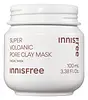
This wash off mask is made with Kaolin and Lactic Acid for a rinse-off oil-control boost.


What's inside
What's inside
 Key Ingredients
Benefits
Concerns
Ingredients Side-by-side
Water
Skin ConditioningButylene Glycol
Humectant

CI 77891
Cosmetic ColorantSilica
Abrasive


Glycerin
Humectant
Trehalose
Humectant
Volcanic Ash
Abrasive
Caprylic/Capric Triglyceride
Masking
Polyvinyl Alcohol
Bentonite
Absorbent
Kaolin
Abrasive
Glyceryl Stearate
Emollient

Cetearyl Alcohol
Emollient



Pvp
Emulsion Stabilising1,2-Hexanediol
Skin Conditioning
PEG-100 Stearate
Surfactant
Polysorbate 60
Emulsifying
Palmitic Acid
Emollient
Stearic Acid
Cleansing
CI 77499
Cosmetic ColorantHydrogenated Vegetable Oil
Emollient
Xanthan Gum
EmulsifyingJuglans Regia Shell Powder
Abrasive
Sorbitan Stearate
Emulsifying
Zea Mays Starch
Absorbent
Polyacrylate-13
Polysorbate 20
Emulsifying
CI 77492
Cosmetic ColorantMannitol
Humectant
Microcrystalline Cellulose
AbsorbentSodium Metaphosphate
BufferingLactic Acid
Buffering



Lactic Acid/Glycolic Acid Copolymer
Skin ConditioningPolyisobutene
CI 77491
Cosmetic ColorantMenthoxypropanediol
Masking
Tetrasodium Pyrophosphate
BufferingEthylhexylglycerin
Skin ConditioningSorbitan Isostearate
Emulsifying
Polyquaternium-10
Lecithin
Emollient
Tocopherol
Antioxidant


Water, Butylene Glycol, CI 77891, Silica, Glycerin, Trehalose, Volcanic Ash, Caprylic/Capric Triglyceride, Polyvinyl Alcohol, Bentonite, Kaolin, Glyceryl Stearate, Cetearyl Alcohol, Pvp, 1,2-Hexanediol, PEG-100 Stearate, Polysorbate 60, Palmitic Acid, Stearic Acid, CI 77499, Hydrogenated Vegetable Oil, Xanthan Gum, Juglans Regia Shell Powder, Sorbitan Stearate, Zea Mays Starch, Polyacrylate-13, Polysorbate 20, CI 77492, Mannitol, Microcrystalline Cellulose, Sodium Metaphosphate, Lactic Acid, Lactic Acid/Glycolic Acid Copolymer, Polyisobutene, CI 77491, Menthoxypropanediol, Tetrasodium Pyrophosphate, Ethylhexylglycerin, Sorbitan Isostearate, Polyquaternium-10, Lecithin, Tocopherol
Water
Skin ConditioningKaolin
Abrasive
Glycerin
Humectant
C15-19 Alkane
SolventBehenyl Alcohol
Emollient
Paraffinum Liquidum
Emollient
Xylitylglucoside
Humectant
Anhydroxylitol
Humectant
Xylitol
Humectant
PEG-8
HumectantPEG-40 Hydrogenated Castor Oil
Emulsifying
Polyacrylate-13
Polyisobutene
Polysorbate 20
Emulsifying
Betaine
Humectant
Silica
Abrasive
Cetearyl Alcohol
Emollient
Cetearyl Glucoside
Emulsifying
Titanium Dioxide
Cosmetic Colorant

Dimethicone
Emollient
Phenoxyethanol
Preservative
Allantoin
Skin Conditioning
C20-22 Alkyl Phosphate
EmulsifyingC20-22 Alcohols
Emulsion Stabilising
Acacia Senegal Gum
MaskingXanthan Gum
EmulsifyingEthylhexylglycerin
Skin ConditioningOctenidine Hcl
AntimicrobialCitric Acid
Buffering
Sodium Benzoate
Masking
Disodium EDTA
ChelatingMenthone Glycerin Acetal
Refreshing
Menthol
Masking

Lactic Acid
Buffering
Parfum
Masking

CI 12490
Cosmetic ColorantCI 74160
Cosmetic ColorantWater, Kaolin, Glycerin, C15-19 Alkane, Behenyl Alcohol, Paraffinum Liquidum, Xylitylglucoside, Anhydroxylitol, Xylitol, PEG-8, PEG-40 Hydrogenated Castor Oil, Polyacrylate-13, Polyisobutene, Polysorbate 20, Betaine, Silica, Cetearyl Alcohol, Cetearyl Glucoside, Titanium Dioxide, Dimethicone, Phenoxyethanol, Allantoin, C20-22 Alkyl Phosphate, C20-22 Alcohols, Acacia Senegal Gum, Xanthan Gum, Ethylhexylglycerin, Octenidine Hcl, Citric Acid, Sodium Benzoate, Disodium EDTA, Menthone Glycerin Acetal, Menthol, Lactic Acid, Parfum, CI 12490, CI 74160
Reviews
Ingredients Explained
These ingredients are found in both products.
Ingredients higher up in an ingredient list are typically present in a larger amount.
Cetearyl alcohol is a waxy mixture of two fatty alcohols: cetyl alcohol and stearyl alcohol. It is an emollient and emulsifier.
Despite having "alcohol" in its name, it has nothing to do with drying solvent alcohols; the FDA also allows "alcohol-free" products to contain fatty alcohols like this ingredient.
It plays several roles in a formula:
Typical use levels for this ingredient sit around 1-10% and the Cosmetic Ingredient Review Expert Panel has affirmed safety at concentrations up to 25% in leave-on products.
Multiple assessments have found it to be non-irritating and non-sensitizing to most people.
However, there have been some cases of allergic contact dermatitis in patients with chronically compromised skin barriers.
Cetearyl alcohol has a comedogenic rating of 2 and irritancy rating of 1. Both of these numbers come from the 1989 study that used rabbit ears; a "2" means mildly comedogenic and a "1" means low irritancy.
Here's the catch: rabbit skin is more sensitive than human skin and throws a lot of false positives. A 1996 reappraisal found that ingredients rated 1-2 in the rabbit ear tests are generally safe for humans.
Remember comedogenic ratings are unable to assess the entire formula of a product or how it will react on your skin. Just be sure to patch test if you are unsure about certain ingredients.
This ingredient is not fungal acne safe. Cetearyl alcohol is a fatty alcohol with chain lengths that fall within the range that Malassezia can metabolize.
A 2019 study has also observed Malassezia growth in the presence of this ingredient, confirming it to be not-fungal acne safe.
Learn more about Cetearyl AlcoholEthylhexylglycerin is created from glycerin. It is a multitasker ingredient that:
The CIR Expert Panel found minimal skin absorption or sensitization of any kind in a safety assessment. Though this ingredient is considered well-tolerated, a small number of cases of allergic dermatitis have been published since 2002. Just be sure to patch test if you are unsure.
Industry-reported use ranges from 8% in rinse-off products and 2% in leave-on formulations.
Learn more about EthylhexylglycerinGlycerin (or glycerol) is a compound naturally found in your skin. It's a powerhouse humectant that pulls water into the stratum corneum.
Topically, glycerin does several things at once:
Your skin makes glycerin on its own (mostly from sebaceous oil breakdown) and shuttles it to your outermost layer of skin, or your epidermis, via aquaporin-3.
Aquaporin-3 is a transporter that is essential for normal skin hydration, elasticity, and repair. Interestingly, mice lacking in AQP3 have dry and less elastic skin that can be fully corrected with glycerin.
This ingredient is non-irritating, plays well with almost every ingredient, and works across all skin types. Typical use is anywhere between 3-10% but can go up to 79% in some leave-on products.
Just know very high concentrations (>40%) can feel tacky in low humidity.
Glycerin is the name for this ingredient in American English. British English uses Glycerol/Glycerine.
Learn more about GlycerinKaolin is a clay. It is used for oil control and to help minimize pores. Like other clays, kaolin has the ability to absorb excess sebum or oil. This can help clean out pores and mattify the skin.
Some types of kaolin may have exfoliating properties. When water is added to kaolin, it becomes a paste with small abrasive particles.
Most kaolin is a white color, but may be pink/orange/red depending on where it comes from.
The name 'kaolin' comes from a Chinese village named 'Gaoling'. Kaolin clay comes from rocks rich in kaolinite. Kaolinite, the mineral, has a silicate layered structure. Kaolinite is formed from chemical weathering of aluminum siilicate minerals.
Besides skincare, kaolin is commonly used to make glossy paper, in ceramics, toothpaste, and as medicine to soothe stomach issues.
Learn more about KaolinLactic Acid is another well-loved alpha hydroxy acid (AHA). It is gentler than glycolic acid but still highly effective.
Its main role is to exfoliate the surface of the skin by loosening the “glue” that holds dead skin cells together. Shedding those old cells leads to smoother, softer, and more even-toned skin.
Because lactic acid molecules are larger than glycolic acid, they don’t penetrate as deeply. This means they’re less likely to sting or irritate, making it a great choice for beginners or those with sensitive skin.
Like glycolic acid, it can:
Lactic acid also acts as a humectant (like hyaluronic acid). It can draw water into the skin to improve hydration and also plays a role in the skin's natural moisturizing factor (NMF) in the form of sodium lactate.
Studies show it can boost ceramide production to strengthen the skin barrier and even help balance the skin’s microbiome.
To get results, choose products with a pH between 3-4.
Lower strengths (5-12%) focus on surface exfoliation; higher strengths (12% and up) can reach deeper in the dermis (deeper, supportive layer) to improve skin texture and firmness over time.
Though it was originally derived from milk, most modern lactic acid used in skincare is vegan. It is made through non-dairy fermentation to create a bio-identical and stable form suitable for all formulations.
When lactic acid shows up near the end of an ingredient list, it usually means the brand added just a tiny amount to adjust the product’s pH.
Legend has it that Cleopatra used to bathe in sour milk to help reduce wrinkles.
Lactic acid is truly a gentle multitasker: it exfoliates, hydrates, strengthens, and brightens. It's a great ingredient for giving your skin a smooth, glowing, and healthy look without the harshness of stronger acids.
Read more about some other popular AHA's here:
Learn more about Lactic AcidPolyacrylate-13 is a type of acrylate polymer. Acrylate polymers are commonly used as adhesives in cosmetics.
Polyacrylate-13 creates a film to protect the skin. It is also used to thicken and stabilize a product. It works by making water a gel-like consistency. This gel consistency helps suspend particles.
Polyacrylate-13 is a copolymer of acrylic acid, acrylamide, sodium acrylate, sodium acryloyldimethyltaurate monomers
Learn more about Polyacrylate-13Polyisobutene is a synthetic polymer made from isobutene.
It is a film-forming agent and helps bind ingredients together.
Polyisobutene is not absorbed by the skin.
Learn more about PolyisobutenePolysorbate 20 is a gentle, water-soluble emulsifier and mild surfactant. It stops oil and water from separating to keep your formulas blended and stable.
It also acts as a mild penetration enhancer by helping active ingredients absorb slightly better.
The common safety discussion around this ingredient involves a manufacturing byproduct called 1,4-dioxane.
Trace amounts can form during production but the EU's Scientific Committee on Consumer Safety has concluded that levels at/below 10 ppm in finished products are safe (commercial products consistently fall within acceptable margins).
True allergic reactions are uncommon and the CIR Expert Panel has confirmed this ingredient to be safe as used in cosmetics.
Because it is derived from lauric acid, it may not be fungal acne safe.
Learn more about Polysorbate 20Silica, also known as silicon dioxide, is a naturally occurring mineral. It is used as a fine, spherical, and porous powder in cosmetics.
Though it has exfoliant properties, the function of silica varies depending on the product.
The unique structure of silica enhances the spreadability and adds smoothness, making it a great texture enhancer.
It is also used as an active carrier, emulsifier, and mattifier due to its ability to absorb excess oil.
In some products, tiny microneedles called spicules are made from silica or hydrolyzed sponge. When you rub them in, they lightly polish away dead skin layers and enhance the penetration of active ingredients.
Learn more about SilicaWater. It's the most common cosmetic ingredient of all. You'll usually see it at the top of ingredient lists, meaning that it makes up the largest part of the product.
So why is it so popular? Water most often acts as a solvent - this means that it helps dissolve other ingredients into the formulation.
You'll also recognize water as that liquid we all need to stay alive. If you see this, drink a glass of water. Remember to stay hydrated!
Learn more about WaterXanthan gum is used as a stabilizer and thickener within cosmetic products. It helps give products a sticky, thick feeling - preventing them from being too runny.
On the technical side of things, xanthan gum is a polysaccharide - a combination consisting of multiple sugar molecules bonded together.
Xanthan gum is a pretty common and great ingredient. It is a natural, non-toxic, non-irritating ingredient that is also commonly used in food products.
Learn more about Xanthan Gum

