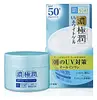
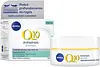
Hada Labo Gokujyun All in One UV White Day Gel (SPF50 + PA ++++) Versus Nivea Creme Facial Antissinais Q10 Power Dia SPF30
This hybrid sunscreen covers the full UV range and blocks ~98% of UVB at SPF 50.
This anti-aging day moisturizer is formulated around Ubiquinone and Fucus Vesiculosus Extract to soften the look of wrinkles and hydrate skin.


What's inside
What's inside
 Key Ingredients
Benefits
Concerns
Ingredients Side-by-side
Water
Skin ConditioningEthylhexyl Methoxycinnamate
UV Absorber


Isononyl Isononanoate
EmollientDimethicone
Emollient

Alcohol
Antimicrobial



Butylene Glycol
Humectant

PEG-12 Dimethicone
Skin Conditioning
Pentylene Glycol
Skin Conditioning
Polysilicone-15
UV Filter
Glycol Dimethacrylate Crosspolymer
Bis-Ethylhexyloxyphenol Methoxyphenyl Triazine
UV Absorber
Hydrolyzed Hyaluronic Acid
Humectant

Sodium Hyaluronate
Humectant
Diethylamino Hydroxybenzoyl Hexyl Benzoate
UV Filter
Polysilicone-13
Phenoxyethanol
Preservative
Carbomer
Emulsion StabilisingTriethanolamine
BufferingPolystyrene
Polyvinyl Alcohol
Hydroxyethylcellulose
Emulsion StabilisingDisodium EDTA
ChelatingIodopropynyl Butylcarbamate
Preservative
Acrylates/C10-30 Alkyl Acrylate Crosspolymer
Emulsion StabilisingTitanium Dioxide
Cosmetic Colorant
Ammonium Acrylates Copolymer
Silica
Abrasive


Aluminum Hydroxide
EmollientHydrogen Dimethicone
Methylparaben
Preservative
Water, Ethylhexyl Methoxycinnamate, Isononyl Isononanoate, Dimethicone, Alcohol, Butylene Glycol, PEG-12 Dimethicone, Pentylene Glycol, Polysilicone-15, Glycol Dimethacrylate Crosspolymer, Bis-Ethylhexyloxyphenol Methoxyphenyl Triazine, Hydrolyzed Hyaluronic Acid, Sodium Hyaluronate, Diethylamino Hydroxybenzoyl Hexyl Benzoate, Polysilicone-13, Phenoxyethanol, Carbomer, Triethanolamine, Polystyrene, Polyvinyl Alcohol, Hydroxyethylcellulose, Disodium EDTA, Iodopropynyl Butylcarbamate, Acrylates/C10-30 Alkyl Acrylate Crosspolymer, Titanium Dioxide, Ammonium Acrylates Copolymer, Silica, Aluminum Hydroxide, Hydrogen Dimethicone, Methylparaben
Water
Skin ConditioningGlycerin
Humectant
Butyl Methoxydibenzoylmethane
UV Absorber
Octocrylene
UV Absorber
C12-15 Alkyl Benzoate
AntimicrobialEthylhexyl Salicylate
UV Absorber
Phenylbenzimidazole Sulfonic Acid
UV Absorber
Methylpropanediol
SolventAlcohol
Antimicrobial
Tapioca Starch
Dimethicone
Emollient
Behenyl Alcohol
Emollient
Cetearyl Alcohol
Emollient



Ubiquinone
Antioxidant
Creatine
Skin Conditioning1-Methylhydantoin-2-Imide
Skin ConditioningTocopheryl Acetate
Antioxidant

Fucus Vesiculosus Extract
Emollient
Sodium Stearoyl Glutamate
CleansingDimethicone Crosspolymer
Emulsion Stabilising
Acrylates Copolymer
Xanthan Gum
EmulsifyingCaprylic Acid
CleansingTrisodium EDTA
ChelatingSodium Chloride
MaskingSodium Hydroxide
BufferingEthylhexylglycerin
Skin ConditioningPhenoxyethanol
Preservative
Benzyl Alcohol
Perfuming


Limonene
Perfuming
Methyl Benzoate
Perfuming
BHT
Antioxidant
Benzoic Acid
Masking
Parfum
Masking
Water, Glycerin, Butyl Methoxydibenzoylmethane, Octocrylene, C12-15 Alkyl Benzoate, Ethylhexyl Salicylate, Phenylbenzimidazole Sulfonic Acid, Methylpropanediol, Alcohol, Tapioca Starch, Dimethicone, Behenyl Alcohol, Cetearyl Alcohol, Ubiquinone, Creatine, 1-Methylhydantoin-2-Imide, Tocopheryl Acetate, Fucus Vesiculosus Extract, Sodium Stearoyl Glutamate, Dimethicone Crosspolymer, Acrylates Copolymer, Xanthan Gum, Caprylic Acid, Trisodium EDTA, Sodium Chloride, Sodium Hydroxide, Ethylhexylglycerin, Phenoxyethanol, Benzyl Alcohol, Limonene, Methyl Benzoate, BHT, Benzoic Acid, Parfum
Reviews
Ingredients Explained
These ingredients are found in both products.
Ingredients higher up in an ingredient list are typically present in a larger amount.
This ingredient is also called ethanol or ethyl alcohol. It is denatured, meaning made undrinkable for cosmetic use.
In formulas, it:
Is it bad for your skin?
The answer comes down to concentration. Patch and wash studies have found highly concentrated alcohol-based hand rubs (60-100%) cause less barrier disruption than washing with a basic detergent like SLS. The only measurable effect in these studies was a temporary dip in skin hydration.
Concentrations below 12-15% in leave-on cosmetics is generally well-tolerated. Concentrations above start to see increased transepidermal water loss (TEWL) and reduced hydration.
In concentrations about 58%, it creates temporary channels in your skin's lipid layers to become more permeable and allow other ingredients to slip through easily.
This ingredient can be up to 80% of the formula in alcohol-based perfumes.
Overall, this ingredient is probably harmless if found lower down an ingredients list but worth side-eyeing if it's high up (especially if your barrier is already struggling).
Alcohol can worsen dry skin, eczema, and oily skin, especially at higher concentrations. This is because it can increase transepidermal water loss and decrease hydration to disrupt the skin barrier.
According to the National Rosacea Society based in the US, you should be mindful of products with these alcohols in the top half of ingredients.
True allergic contact dermatitis to ethanol is uncommon, but be sure to patch test if you have dry or sensitive skin.
Learn more about AlcoholDimethicone is a type of synthetic silicone created from natural materials such as quartz. It is also known as polydimethylsiloxane.
What it does:
Dimethicone comes in different viscosities:
Depending on the viscosity, dimethicone has different properties.
Ingredients lists don't always show which type is used, so we recommend reaching out to the brand if you have questions about the viscosity.
This ingredient is unlikely to cause irritation because it does not get absorbed into skin. However, people with silicone allergies should be careful about using this ingredient.
Note: Dimethicone may contribute to pilling. This is because it is not oil or water soluble, so pilling may occur when layered with products. When mixed with heavy oils in a formula, the outcome is also quite greasy.
Learn more about DimethiconePhenoxyethanol is one of the most widely used preservatives in skincare (and for good reason!).
It has a large spectrum of antimicrobial activity and especially effective bacteria, yeast, and mold while only having a weak effect on your skin's natural microbiome.
On a cellular level, it disrupts the cell membranes of microbes by poking holes that make the cell leak. This shuts down the chemical reactions the microbe needs to make energy so it can no longer survive.
Another perk of this ingredient is that it stays functional across a wide pH range (3-10).
You'll often see it paired with boosters like Ethylhexylglycerin; one study showed that a 1:9 ratio of Ethylhexylglycerin to Phenoxyethanol damages bacterial membranes as effectively as doubling the Phenoxyethanol concentration on its own.
Typical use concentrations range from 0.3-1% depending on the formula, and this ingredient is capped at 1% int the EU.
Safety-wise, the fear mongering does not hold up to the evidence. The EU's Scientific Committee on Consumer Safety and FDA consider it safe as a preservative at up to 1%, including for children of all ages.
Adverse systemic effects only showed up in animal studies at exposures roughly 200x higher than what people get from cosmetics. And despite its very widespread use, this ingredient is a rare sensitizer and allergic reactions are uncommon.
Learn more about PhenoxyethanolWater. It's the most common cosmetic ingredient of all. You'll usually see it at the top of ingredient lists, meaning that it makes up the largest part of the product.
So why is it so popular? Water most often acts as a solvent - this means that it helps dissolve other ingredients into the formulation.
You'll also recognize water as that liquid we all need to stay alive. If you see this, drink a glass of water. Remember to stay hydrated!
Learn more about Water

