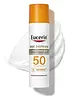
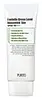
Eucerin Age Defense SPF 50 Face Sunscreen Lotion with Hyaluronic Acid Versus PURITO Centella Green Level Unscented Sun
This chemical sunscreen covers most of the UV range, lighter on the deep UVA that drives aging.
This chemical sunscreen covers most of the UV range, lighter on the deep UVA that drives aging, though its SPF isn't confirmed on file yet.


What's inside
What's inside
 Key Ingredients
Benefits
Concerns
Ingredients Side-by-side
Butyl Methoxydibenzoylmethane 3%
UV Absorber
Homosalate 10%
Skin Conditioning
Ethylhexyl Salicylate 5%
UV Absorber
Octocrylene 10%
UV Absorber

Water
Skin ConditioningAlcohol Denat.
Antimicrobial


Butyloctyl Salicylate
Skin Conditioning
Silica
Abrasive


C12-15 Alkyl Benzoate
AntimicrobialPolyglyceryl-6 Stearate
Emollient
Sodium Stearoyl Glutamate
CleansingDiisostearoyl Polyglyceryl-3 Dimer Dilinoleate
Emollient
Behenyl Alcohol
Emollient
Butylene Glycol Dicaprylate/Dicaprate
EmollientCetearyl Alcohol
Emollient


Copernicia Cerifera Wax
Dibutyl Adipate
EmollientSodium Hyaluronate
Humectant




Glycyrrhiza Inflata Root Extract
Skin Conditioning
Glycyrrhetinic Acid
Skin Conditioning
Tocopherol
Antioxidant



Dimethicone
Emollient

Silica Dimethyl Silylate
EmollientDiethylhexyl Syringylidenemalonate
Skin Protecting
Ethylcellulose
Glyceryl Behenate
Emollient
Carnitine
Cleansing
Polyglyceryl-6 Octastearate
EmulsifyingPhenoxyethanol
Preservative
Glycerin
Humectant
Xanthan Gum
EmulsifyingEthylhexylglycerin
Skin ConditioningDisodium EDTA
Hydroxyacetophenone
Antioxidant
Polyglyceryl-6 Behenate
Emulsion Stabilising
Cetyl Alcohol
Emollient
Sodium Ascorbyl Phosphate
Antioxidant

Butyl Methoxydibenzoylmethane 3%, Homosalate 10%, Ethylhexyl Salicylate 5%, Octocrylene 10%, Water, Alcohol Denat., Butyloctyl Salicylate, Silica, C12-15 Alkyl Benzoate, Polyglyceryl-6 Stearate, Sodium Stearoyl Glutamate, Diisostearoyl Polyglyceryl-3 Dimer Dilinoleate, Behenyl Alcohol, Butylene Glycol Dicaprylate/Dicaprate, Cetearyl Alcohol, Copernicia Cerifera Wax, Dibutyl Adipate, Sodium Hyaluronate, Glycyrrhiza Inflata Root Extract, Glycyrrhetinic Acid, Tocopherol, Dimethicone, Silica Dimethyl Silylate, Diethylhexyl Syringylidenemalonate, Ethylcellulose, Glyceryl Behenate, Carnitine, Polyglyceryl-6 Octastearate, Phenoxyethanol, Glycerin, Xanthan Gum, Ethylhexylglycerin, Disodium EDTA, Hydroxyacetophenone, Polyglyceryl-6 Behenate, Cetyl Alcohol, Sodium Ascorbyl Phosphate
Water
Skin ConditioningButylene Glycol
Humectant
Glycerin
Humectant
Dicaprylyl Carbonate
EmollientDibutyl Adipate
EmollientDiethylamino Hydroxybenzoyl Hexyl Benzoate
UV Filter
Hydrogenated Polyisobutene
Emollient1,2-Hexanediol
Skin Conditioning
Niacinamide
Smoothing


Ethylhexyl Triazone
UV Absorber
Polyglyceryl-3 Methylglucose Distearate
Emulsifying
Silica
Abrasive
Cetearyl Olivate
Cetearyl Alcohol
Emollient
Centella Asiatica Extract
Cleansing
Hyaluronic Acid
Humectant
Tocopherol
Antioxidant
Sorbitan Olivate
Emulsifying
Glyceryl Stearate Se
Emulsifying
Methyl Glucose Sesquistearate
Emollient
Sorbitan Stearate
Emulsifying
Lavandula Angustifolia Oil
Masking



Disodium EDTA
Adenosine
Skin Conditioning
Anthemis Nobilis Flower Oil
Masking
Caprylyl Glycol
Emollient
Ethylhexylglycerin
Skin ConditioningWater, Butylene Glycol, Glycerin, Dicaprylyl Carbonate, Dibutyl Adipate, Diethylamino Hydroxybenzoyl Hexyl Benzoate, Hydrogenated Polyisobutene, 1,2-Hexanediol, Niacinamide, Ethylhexyl Triazone, Polyglyceryl-3 Methylglucose Distearate, Silica, Cetearyl Olivate, Cetearyl Alcohol, Centella Asiatica Extract, Hyaluronic Acid, Tocopherol, Sorbitan Olivate, Glyceryl Stearate Se, Methyl Glucose Sesquistearate, Sorbitan Stearate, Lavandula Angustifolia Oil, Disodium EDTA, Adenosine, Anthemis Nobilis Flower Oil, Caprylyl Glycol, Ethylhexylglycerin
Reviews
Ingredients Explained
These ingredients are found in both products.
Ingredients higher up in an ingredient list are typically present in a larger amount.
Cetearyl alcohol is a waxy mixture of two fatty alcohols: cetyl alcohol and stearyl alcohol. It is an emollient and emulsifier.
Despite having "alcohol" in its name, it has nothing to do with drying solvent alcohols; the FDA also allows "alcohol-free" products to contain fatty alcohols like this ingredient.
It plays several roles in a formula:
Typical use levels for this ingredient sit around 1-10% and the Cosmetic Ingredient Review Expert Panel has affirmed safety at concentrations up to 25% in leave-on products.
Multiple assessments have found it to be non-irritating and non-sensitizing to most people.
However, there have been some cases of allergic contact dermatitis in patients with chronically compromised skin barriers.
Cetearyl alcohol has a comedogenic rating of 2 and irritancy rating of 1. Both of these numbers come from the 1989 study that used rabbit ears; a "2" means mildly comedogenic and a "1" means low irritancy.
Here's the catch: rabbit skin is more sensitive than human skin and throws a lot of false positives. A 1996 reappraisal found that ingredients rated 1-2 in the rabbit ear tests are generally safe for humans.
Remember comedogenic ratings are unable to assess the entire formula of a product or how it will react on your skin. Just be sure to patch test if you are unsure about certain ingredients.
This ingredient is not fungal acne safe. Cetearyl alcohol is a fatty alcohol with chain lengths that fall within the range that Malassezia can metabolize.
A 2019 study has also observed Malassezia growth in the presence of this ingredient, confirming it to be not-fungal acne safe.
Learn more about Cetearyl AlcoholDibutyl Adipate is a lightweight, oil-soluble ester that acts as an emollient and solvent. It helps products spread more easily and leaves a soft, silky, dry-touch finish without being greasy.
You'll likely see this ingredient in sunscreens because it does a nice job dissolving UV filters and keeping them evenly distributed.
This ingredient has been found to be safe as used in cosmetics, wasn't a skin or eye irritant in clinical patch testing, and wasn't phototoxic.
In a clinical comedogenicity test, this ingredient tested negative so it isn't likely to clog pores.
Typical use levels are about 5-8% for sunscreens + nail products, but can range from 0.005%-8% depending on the product.
Learn more about Dibutyl AdipateDisodium EDTA is a chelating agent. It grabs onto and deactivates metal ions that sneak into your products from water, packaging, or air.
This ingredient mainly works behind the scenes and helps with:
On top of that, this ingredient can counteract the effects of hard water by binding to the minerals in it.
One thing worth knowing is that Disodium EDTA has been shown to be a mild penetration enhancer. It can help other ingredients absorb into skin more effectively which can be a double-edged sword (great for actives, but can also make the active too strong if you have sensitive skin).
Clinical patch testing showed no significant skin irritation at typical use concentrations and minimal dermal absorption.
You'll most likely see this ingredient near the end of an ingredient list. It's typically found in concentrations less than 1%.
Learn more about Disodium EDTAEthylhexylglycerin is created from glycerin. It is a multitasker ingredient that:
The CIR Expert Panel found minimal skin absorption or sensitization of any kind in a safety assessment. Though this ingredient is considered well-tolerated, a small number of cases of allergic dermatitis have been published since 2002. Just be sure to patch test if you are unsure.
Industry-reported use ranges from 8% in rinse-off products and 2% in leave-on formulations.
Learn more about EthylhexylglycerinGlycerin (or glycerol) is a compound naturally found in your skin. It's a powerhouse humectant that pulls water into the stratum corneum.
Topically, glycerin does several things at once:
Your skin makes glycerin on its own (mostly from sebaceous oil breakdown) and shuttles it to your outermost layer of skin, or your epidermis, via aquaporin-3.
Aquaporin-3 is a transporter that is essential for normal skin hydration, elasticity, and repair. Interestingly, mice lacking in AQP3 have dry and less elastic skin that can be fully corrected with glycerin.
This ingredient is non-irritating, plays well with almost every ingredient, and works across all skin types. Typical use is anywhere between 3-10% but can go up to 79% in some leave-on products.
Just know very high concentrations (>40%) can feel tacky in low humidity.
Glycerin is the name for this ingredient in American English. British English uses Glycerol/Glycerine.
Learn more about GlycerinSilica, also known as silicon dioxide, is a naturally occurring mineral. It is used as a fine, spherical, and porous powder in cosmetics.
Though it has exfoliant properties, the function of silica varies depending on the product.
The unique structure of silica enhances the spreadability and adds smoothness, making it a great texture enhancer.
It is also used as an active carrier, emulsifier, and mattifier due to its ability to absorb excess oil.
In some products, tiny microneedles called spicules are made from silica or hydrolyzed sponge. When you rub them in, they lightly polish away dead skin layers and enhance the penetration of active ingredients.
Learn more about SilicaTocopherol is a fat-soluble antioxidant known as Vitamin E.
You'll find this ingredient in the vast majority of skincare (for good reason). It works to neutralize free radicals, or unstable molecules generated by UV exposure, pollution, and other environmental stressors, before they can cause oxidative damage to your skin cells.
Topically applied tocopherol has been shown to protect against UV damage by ramping up the skin's own natural defense enzymes.
It also acts as a skin conditioning agent; some studies show that regular topical use can improve the skin's water-binding capacity over 2-4 weeks.
This ingredient is especially loved for being a team player. When combined with Vitamin C, the photoprotective effect of both ingredients roughly doubles and the combo also helps reduce UV-induced DNA damage.
This ingredient has some brightening potential but it's more of a prevention ingredient than spot-fader. Cell studies show it can slow down melanin production but it's worth noting that it's not the most powerful brightener out there.
In formulations, it also serves as a stabilizer that helps protect other oxidation-prone ingredients from degrading.
Concentrations usually range from 0.1-1% in most leave-on products.
Learn more about TocopherolWater. It's the most common cosmetic ingredient of all. You'll usually see it at the top of ingredient lists, meaning that it makes up the largest part of the product.
So why is it so popular? Water most often acts as a solvent - this means that it helps dissolve other ingredients into the formulation.
You'll also recognize water as that liquid we all need to stay alive. If you see this, drink a glass of water. Remember to stay hydrated!
Learn more about Water

