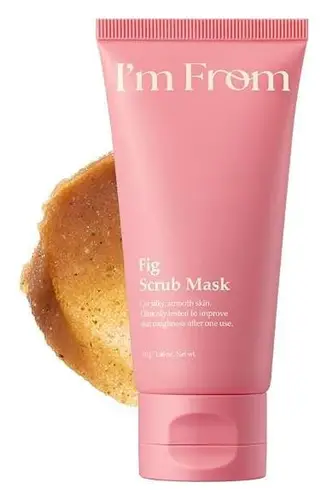
This wash off mask is made with Sucrose and Butyrospermum Parkii Butter for a rinse-off hydration boost.

What's inside
What's inside
 Key Ingredients
Benefits
Concerns
Ingredients Side-by-side
Glycerin
Humectant


Sucrose
Humectant
Cetyl Ethylhexanoate
EmollientButyrospermum Parkii Butter
Skin Conditioning




Caprylic/Capric Triglyceride
Masking
Cetyl Alcohol
Emollient
Glucose
Humectant
Citrus Paradisi Fruit Extract
Skin ConditioningMicrocrystalline Wax
Emulsion StabilisingGlyceryl Stearate
Emollient
Sorbitan Stearate
Emulsifying
Olea Europaea Fruit Oil
Masking

Sorbitan Sesquioleate
Emulsifying
PEG-100 Stearate
Surfactant
Simmondsia Chinensis Seed Oil
Emollient
Cellulose
Absorbent
Calamine
AbsorbentTocopheryl Acetate
Antioxidant


Rubus Idaeus Seed Oil
Emollient
Kaolin
Abrasive


Quartz
Abrasive
1,2-Hexanediol
Skin Conditioning
Bisabolol
Antioxidant

Citrus Grandis Peel Oil
Masking


Butylene Glycol
Humectant
Limonene
Perfuming
Glycerin, Sucrose, Cetyl Ethylhexanoate, Butyrospermum Parkii Butter, Caprylic/Capric Triglyceride, Cetyl Alcohol, Glucose, Citrus Paradisi Fruit Extract, Microcrystalline Wax, Glyceryl Stearate, Sorbitan Stearate, Olea Europaea Fruit Oil, Sorbitan Sesquioleate, PEG-100 Stearate, Simmondsia Chinensis Seed Oil, Cellulose, Calamine, Tocopheryl Acetate, Rubus Idaeus Seed Oil, Kaolin, Quartz, 1,2-Hexanediol, Bisabolol, Citrus Grandis Peel Oil, Butylene Glycol, Limonene
Water
Skin ConditioningKaolin
Abrasive
Glycerin
Humectant
Bentonite
Absorbent
Artemisia Princeps Extract
Skin Conditioning
Stearic Acid
Cleansing
Panthenol
Skin Conditioning
1,2-Hexanediol
Skin Conditioning
Illite
Abrasive
Artemisia Montana Leaf Powder
Exfoliating
Camellia Sinensis Leaf Water
Masking
Castanea Crenata Shell Extract
Skin ConditioningOriganum Vulgare Leaf Extract
Skin ConditioningChamaecyparis Obtusa Leaf Extract
Skin ConditioningSalix Alba Bark Extract
Astringent
Avena Sativa Kernel Extract
Abrasive
Cynara Scolymus Leaf Extract
Skin ConditioningPortulaca Oleracea Extract
Skin Conditioning
Cinnamomum Cassia Bark Extract
Masking
Scutellaria Baicalensis Root Extract
Astringent
Montmorillonite
AbsorbentCalcite
Skin ConditioningPhaseolus Angularis Seed Powder
Canadian Colloidal Clay
Skin ConditioningHydrogenated Lecithin
Emulsifying
Beta-Glucan
Skin Conditioning
Methylpropanediol
SolventAlgin
MaskingMagnesium Aluminum Silicate
Absorbent
Cetyl Alcohol
Emollient
Butylene Glycol
Humectant
Xanthan Gum
EmulsifyingAllantoin
Skin Conditioning
Tromethamine
BufferingPolyquaternium-51
Skin Conditioning
Ethylhexylglycerin
Skin ConditioningWater, Kaolin, Glycerin, Bentonite, Artemisia Princeps Extract, Stearic Acid, Panthenol, 1,2-Hexanediol, Illite, Artemisia Montana Leaf Powder, Camellia Sinensis Leaf Water, Castanea Crenata Shell Extract, Origanum Vulgare Leaf Extract, Chamaecyparis Obtusa Leaf Extract, Salix Alba Bark Extract, Avena Sativa Kernel Extract, Cynara Scolymus Leaf Extract, Portulaca Oleracea Extract, Cinnamomum Cassia Bark Extract, Scutellaria Baicalensis Root Extract, Montmorillonite, Calcite, Phaseolus Angularis Seed Powder, Canadian Colloidal Clay, Hydrogenated Lecithin, Beta-Glucan, Methylpropanediol, Algin, Magnesium Aluminum Silicate, Cetyl Alcohol, Butylene Glycol, Xanthan Gum, Allantoin, Tromethamine, Polyquaternium-51, Ethylhexylglycerin
Reviews
Ingredients Explained
These ingredients are found in both products.
Ingredients higher up in an ingredient list are typically present in a larger amount.
1,2-Hexanediol is a synthetic liquid and another multi-functional powerhouse.
It is a:
- Humectant, drawing moisture into the skin
- Emollient, helping to soften skin
- Solvent, dispersing and stabilizing formulas
- Preservative booster, enhancing the antimicrobial activity of other preservatives
Butylene Glycol (or BG) is used within cosmetic products for a few different reasons:
Overall, Butylene Glycol is a safe and well-rounded ingredient that works well with other ingredients.
Though this ingredient works well with most skin types, some people with sensitive skin may experience a reaction such as allergic rashes, closed comedones, or itchiness.
Learn more about Butylene GlycolCetyl Alcohol is a fatty alcohol. Fatty Alcohols are most often used as an emollient or to thicken a product.
Its main roles are:
Though it has "alcohol" in the name, it is not related to denatured alcohol or ethyl alcohol.
The FDA allows products labeled "alcohol-free" to have fatty alcohols.
This ingredient may not be fungal acne safe. It is a primary fatty alcohol with a chain length above 12 carbons. A study from 2019 show Malassezia can feed on fatty alcohols in this range, so it may trigger fungal acne in those prone to it.
Learn more about Cetyl AlcoholGlycerin (or glycerol) is a compound naturally found in your skin. It's a powerhouse humectant that pulls water into the stratum corneum.
Topically, glycerin does several things at once:
Your skin makes glycerin on its own (mostly from sebaceous oil breakdown) and shuttles it to your outermost layer of skin, or your epidermis, via aquaporin-3.
Aquaporin-3 is a transporter that is essential for normal skin hydration, elasticity, and repair. Interestingly, mice lacking in AQP3 have dry and less elastic skin that can be fully corrected with glycerin.
This ingredient is non-irritating, plays well with almost every ingredient, and works across all skin types. Typical use is anywhere between 3-10% but can go up to 79% in some leave-on products.
Just know very high concentrations (>40%) can feel tacky in low humidity.
Glycerin is the name for this ingredient in American English. British English uses Glycerol/Glycerine.
Learn more about GlycerinKaolin is a clay. It is used for oil control and to help minimize pores. Like other clays, kaolin has the ability to absorb excess sebum or oil. This can help clean out pores and mattify the skin.
Some types of kaolin may have exfoliating properties. When water is added to kaolin, it becomes a paste with small abrasive particles.
Most kaolin is a white color, but may be pink/orange/red depending on where it comes from.
The name 'kaolin' comes from a Chinese village named 'Gaoling'. Kaolin clay comes from rocks rich in kaolinite. Kaolinite, the mineral, has a silicate layered structure. Kaolinite is formed from chemical weathering of aluminum siilicate minerals.
Besides skincare, kaolin is commonly used to make glossy paper, in ceramics, toothpaste, and as medicine to soothe stomach issues.
Learn more about Kaolin