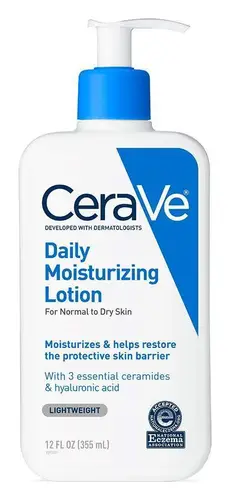
This barrier-repair moisturizer is formulated around Niacinamide and Ceramide NP to strengthen the skin barrier and hydrate skin.

What's inside
What's inside
 Key Ingredients
Benefits
Concerns
Ingredients Side-by-side
Water
Skin ConditioningSorbitol
Humectant

Helianthus Annuus Seed Oil
Emollient


Isopropyl Palmitate
Emollient


Octyldodecanol
Emollient
Polyglyceryl-3 Diisostearate
Emulsifying
Glycerin
Humectant
Panthenol
Skin Conditioning

Hexyldecanol
Emollient
Hexyldecyl Laurate
EmollientPrunus Amygdalus Dulcis Oil
Skin Conditioning
Caprylyl Glycol
Emollient
Carbomer
Emulsion StabilisingParfum
Masking


Disodium Cocoyl Glutamate
Cleansing
Sodium Hydroxide
BufferingDipropylene Glycol
HumectantCalendula Officinalis Flower Extract
Masking
Squalane
Emollient
Propylene Glycol
Humectant
Glyceryl Caprylate
EmollientHeliotropine
Masking
Tocopherol
Antioxidant



Glycine Soja Oil
Emollient
Water, Sorbitol, Helianthus Annuus Seed Oil, Isopropyl Palmitate, Octyldodecanol, Polyglyceryl-3 Diisostearate, Glycerin, Panthenol, Hexyldecanol, Hexyldecyl Laurate, Prunus Amygdalus Dulcis Oil, Caprylyl Glycol, Carbomer, Parfum, Disodium Cocoyl Glutamate, Sodium Hydroxide, Dipropylene Glycol, Calendula Officinalis Flower Extract, Squalane, Propylene Glycol, Glyceryl Caprylate, Heliotropine, Tocopherol, Glycine Soja Oil
Water
Skin ConditioningCetearyl Alcohol
Emollient
Caprylic/Capric Triglyceride
Masking
Cetyl Alcohol
Emollient
Phenoxyethanol
Preservative
Niacinamide
Smoothing




Dimethicone
Emollient
Allantoin
Skin Conditioning
Potassium Phosphate
BufferingCeramide NP
Skin Conditioning
Ceramide AP
Skin Conditioning
Ceramide EOP
Skin Conditioning
Carbomer
Emulsion StabilisingZinc Citrate
Behentrimonium Methosulfate
SurfactantSodium Lauroyl Lactylate
EmulsifyingSodium PCA
Humectant
Arginine PCA
HumectantSodium Hyaluronate
Humectant
Cholesterol
Emollient
Dipotassium Phosphate
BufferingDisodium EDTA
ChelatingTocopheryl Acetate
Antioxidant
Tocopherol
Antioxidant
Lauric Acid
Cleansing
Phytosphingosine
Skin Conditioning
Xanthan Gum
EmulsifyingPolyglyceryl-3 Diisostearate
Emulsifying
Polysorbate 60
Emulsifying
Ethylhexylglycerin
Skin ConditioningWater, Cetearyl Alcohol, Caprylic/Capric Triglyceride, Cetyl Alcohol, Phenoxyethanol, Niacinamide, Dimethicone, Allantoin, Potassium Phosphate, Ceramide NP, Ceramide AP, Ceramide EOP, Carbomer, Zinc Citrate, Behentrimonium Methosulfate, Sodium Lauroyl Lactylate, Sodium PCA, Arginine PCA, Sodium Hyaluronate, Cholesterol, Dipotassium Phosphate, Disodium EDTA, Tocopheryl Acetate, Tocopherol, Lauric Acid, Phytosphingosine, Xanthan Gum, Polyglyceryl-3 Diisostearate, Polysorbate 60, Ethylhexylglycerin
Reviews
Ingredients Explained
These ingredients are found in both products.
Ingredients higher up in an ingredient list are typically present in a larger amount.
Carbomer is a synthetic thickening and gelling agent. It's basically the ingredient that gives a lot of serums, gels, creams, and sunscreens their smooth, non-sticky texture.
Although legally permitted at very high levels, carbomers are normally used at concentrations below 1%.
It also needs to be neutralized to actually thicken, and because it is a large molecule, it doesn't really penetrate the skin barrier.
Allergy-wise, the risk is very low. Clinical studies show carbomers have low potential for skin irritation/sensitization even at concentrations up to 100%.
A 2024 UK study patch-tested 1,302 patients and found true allergy to the parent group of carbomer to be rare with no confirmed relevant reactions.
Learn more about CarbomerPolyglyceryl-3 Diisostearate is a plant-derived, oil-soluble emulsifier. It keeps water-in-oil emulsions stable to prevent the ingredients from separating.
On the safety front, it's considered non-irritating and well-tolerated (it can even be found in formulations for baby skin).
This ingredient may not be fungal acne safe because research has shown that the Malassezia species can grow in the presence of fatty acid esters with chain lengths above C12 (and this one is C18).
While it does have a comedogenic rating of 4, the comedogenic rating scale was developed from rabbit ear models which has limited clinical relevance to human skin. Studies also show that comedogenic ingredients cannot predict how the overall formula will behave on human skin.
Learn more about Polyglyceryl-3 DiisostearateTocopherol is a fat-soluble antioxidant known as Vitamin E.
You'll find this ingredient in the vast majority of skincare (for good reason). It works to neutralize free radicals, or unstable molecules generated by UV exposure, pollution, and other environmental stressors, before they can cause oxidative damage to your skin cells.
Topically applied tocopherol has been shown to protect against UV damage by ramping up the skin's own natural defense enzymes.
It also acts as a skin conditioning agent; some studies show that regular topical use can improve the skin's water-binding capacity over 2-4 weeks.
This ingredient is especially loved for being a team player. When combined with Vitamin C, the photoprotective effect of both ingredients roughly doubles and the combo also helps reduce UV-induced DNA damage.
This ingredient has some brightening potential but it's more of a prevention ingredient than spot-fader. Cell studies show it can slow down melanin production but it's worth noting that it's not the most powerful brightener out there.
In formulations, it also serves as a stabilizer that helps protect other oxidation-prone ingredients from degrading.
Concentrations usually range from 0.1-1% in most leave-on products.
Learn more about TocopherolWater. It's the most common cosmetic ingredient of all. You'll usually see it at the top of ingredient lists, meaning that it makes up the largest part of the product.
So why is it so popular? Water most often acts as a solvent - this means that it helps dissolve other ingredients into the formulation.
You'll also recognize water as that liquid we all need to stay alive. If you see this, drink a glass of water. Remember to stay hydrated!
Learn more about Water