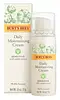
This barrier-repair moisturizer is formulated around Helianthus Annuus Seed Oil and Butyrospermum Parkii Butter to strengthen the skin barrier and hydrate skin.
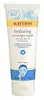
This hydrating overnight mask is formulated around Ricinus Communis Seed Oil and Cocos Nucifera Oil to hydrate skin.

What's inside
What's inside
 Key Ingredients
Benefits
Concerns
Ingredients Side-by-side
Water
Skin ConditioningHelianthus Annuus Seed Oil
Emollient



Glycerin
Humectant

Cetyl Alcohol
Emollient

CI 77947
Zea Mays Starch
Absorbent
Gossypium Herbaceum Flower Extract
HumectantBeta Vulgaris Root Extract
Skin ConditioningArtemisia Umbelliformis Extract
Skin ConditioningEuphrasia Officinalis Extract
AntimicrobialButyrospermum Parkii Butter
Skin Conditioning


Saccharum Officinarum Juice Extract
Skin ConditioningJojoba Esters
Emollient
Hydrolyzed Jojoba Esters
Skin Conditioning
Kaolin
Abrasive


Lecithin
Emollient
Sucrose
Humectant
Fructose
Humectant
Glucose
Humectant
Inositol
Humectant
Citric Acid
Buffering

Benzoic Acid
Masking
Trehalose
Humectant
Glyceryl Laurate
Emollient
Potassium Sorbate
Preservative
Sucrose Stearate
EmollientSucrose Polystearate
EmollientSodium Benzoate
Masking
Sodium Stearoyl Lactylate
EmulsifyingSodium PCA
Humectant
Alcohol Denat.
Antimicrobial


Phenoxyethanol
Preservative
Water, Helianthus Annuus Seed Oil, Glycerin, Cetyl Alcohol, CI 77947, Zea Mays Starch, Gossypium Herbaceum Flower Extract, Beta Vulgaris Root Extract, Artemisia Umbelliformis Extract, Euphrasia Officinalis Extract, Butyrospermum Parkii Butter, Saccharum Officinarum Juice Extract, Jojoba Esters, Hydrolyzed Jojoba Esters, Kaolin, Lecithin, Sucrose, Fructose, Glucose, Inositol, Citric Acid, Benzoic Acid, Trehalose, Glyceryl Laurate, Potassium Sorbate, Sucrose Stearate, Sucrose Polystearate, Sodium Benzoate, Sodium Stearoyl Lactylate, Sodium PCA, Alcohol Denat., Phenoxyethanol
Water
Skin ConditioningRicinus Communis Seed Oil
Masking
Glycerin
Humectant
Cetyl Alcohol
Emollient
Stearyl Alcohol
Emollient
Cocos Nucifera Oil
Masking
Glyceryl Stearate
Emollient
Propanediol
Solvent
Beeswax
Emulsion Stabilising
Stearic Acid
Cleansing
Persea Gratissima Oil
Skin Conditioning
Lactobacillus
Skin ConditioningSalvia Sclarea Extract
AntiseborrhoeicPolymnia Sonchifolia Root Juice
Skin ConditioningAstrocaryum Tucuma Seed Butter
Emollient
Trichilia Emetica Seed Butter
Emollient
Helianthus Annuus Seed Wax
Skin Conditioning
Glycine Soja Oil
Emollient
Alpha-Glucan Oligosaccharide
Cleansing
Tocopherol
Antioxidant


Xanthan Gum
EmulsifyingLecithin
Emollient
Sodium PCA
Humectant
Zinc PCA
Humectant
Maltodextrin
Absorbent
Potassium Stearate
CleansingPotassium Sorbate
Preservative
Sodium Benzoate
Masking
Parfum
Masking
Phenoxyethanol
Preservative
Citral
Perfuming
Limonene
Perfuming
Linalool
Perfuming
Water, Ricinus Communis Seed Oil, Glycerin, Cetyl Alcohol, Stearyl Alcohol, Cocos Nucifera Oil, Glyceryl Stearate, Propanediol, Beeswax, Stearic Acid, Persea Gratissima Oil, Lactobacillus, Salvia Sclarea Extract, Polymnia Sonchifolia Root Juice, Astrocaryum Tucuma Seed Butter, Trichilia Emetica Seed Butter, Helianthus Annuus Seed Wax, Glycine Soja Oil, Alpha-Glucan Oligosaccharide, Tocopherol, Xanthan Gum, Lecithin, Sodium PCA, Zinc PCA, Maltodextrin, Potassium Stearate, Potassium Sorbate, Sodium Benzoate, Parfum, Phenoxyethanol, Citral, Limonene, Linalool
Ingredients Explained
These ingredients are found in both products.
Ingredients higher up in an ingredient list are typically present in a larger amount.
Cetyl Alcohol is a fatty alcohol. Fatty Alcohols are most often used as an emollient or to thicken a product.
Its main roles are:
Though it has "alcohol" in the name, it is not related to denatured alcohol or ethyl alcohol.
The FDA allows products labeled "alcohol-free" to have fatty alcohols.
This ingredient may not be fungal acne safe. It is a primary fatty alcohol with a chain length above 12 carbons. A study from 2019 show Malassezia can feed on fatty alcohols in this range, so it may trigger fungal acne in those prone to it.
Learn more about Cetyl AlcoholGlycerin (or glycerol) is a compound naturally found in your skin. It's a powerhouse humectant that pulls water into the stratum corneum.
Topically, glycerin does several things at once:
Your skin makes glycerin on its own (mostly from sebaceous oil breakdown) and shuttles it to your outermost layer of skin, or your epidermis, via aquaporin-3.
Aquaporin-3 is a transporter that is essential for normal skin hydration, elasticity, and repair. Interestingly, mice lacking in AQP3 have dry and less elastic skin that can be fully corrected with glycerin.
This ingredient is non-irritating, plays well with almost every ingredient, and works across all skin types. Typical use is anywhere between 3-10% but can go up to 79% in some leave-on products.
Just know very high concentrations (>40%) can feel tacky in low humidity.
Glycerin is the name for this ingredient in American English. British English uses Glycerol/Glycerine.
Learn more about GlycerinLecithin is a term for a group of substances found in the cell membranes of plants, animals, and humans. They are made up of phospholipids.
Thanks to its amphiphilic structure (water-loving head and oil-loving tail), it is a true multitasker:
It plays well with most ingredients and is typically used at 0.1-1%. However, concentrations up to 50% have been reported in moisturizers.
Learn more about LecithinPhenoxyethanol is one of the most widely used preservatives in skincare (and for good reason!).
It has a large spectrum of antimicrobial activity and especially effective bacteria, yeast, and mold while only having a weak effect on your skin's natural microbiome.
On a cellular level, it disrupts the cell membranes of microbes by poking holes that make the cell leak. This shuts down the chemical reactions the microbe needs to make energy so it can no longer survive.
Another perk of this ingredient is that it stays functional across a wide pH range (3-10).
You'll often see it paired with boosters like Ethylhexylglycerin; one study showed that a 1:9 ratio of Ethylhexylglycerin to Phenoxyethanol damages bacterial membranes as effectively as doubling the Phenoxyethanol concentration on its own.
Typical use concentrations range from 0.3-1% depending on the formula, and this ingredient is capped at 1% int the EU.
Safety-wise, the fear mongering does not hold up to the evidence. The EU's Scientific Committee on Consumer Safety and FDA consider it safe as a preservative at up to 1%, including for children of all ages.
Adverse systemic effects only showed up in animal studies at exposures roughly 200x higher than what people get from cosmetics. And despite its very widespread use, this ingredient is a rare sensitizer and allergic reactions are uncommon.
Learn more about PhenoxyethanolPotassium Sorbate is a preservative used to prevent yeast and mold in products. It is commonly found in both cosmetic and food products.
This ingredient comes from potassium salt derived from sorbic acid. Sorbic acid is a natural antibiotic and effective against fungus.
Both potassium sorbate and sorbic acid can be found in baked goods, cheeses, dried meats, dried fruit, ice cream, pickles, wine, yogurt, and more.
You'll often find this ingredient used with other preservatives.
Learn more about Potassium SorbateSodium Benzoate is a preservative. It's used in both cosmetic and food products to inhibit the growth of mold and bacteria. It is typically produced synthetically.
Both the US FDA and EU Health Committee have approved the use of sodium benzoate. In the US, levels of 0.1% (of the total product) are allowed.
Sodium benzoate works as a preservative by inhibiting the growth of bacteria inside of cells. It prevents the cell from fermenting a type of sugar using an enzyme called phosphofructokinase.
It is the salt of benzoic acid. Foods containing sodium benzoate include soda, salad dressings, condiments, fruit juices, wines, and snack foods.
Studies for using ascorbic acid and sodium benzoate in cosmetics are lacking, especially in skincare routines with multiple steps.
We always recommend speaking with a professional, such as a dermatologist, if you have any concerns.
Learn more about Sodium BenzoateSodium PCA (the salt of PCA) is one of the most well-established humectants in skincare.
Why is it so special? Your skin already makes it naturally; it's a natural component of your skin's Natural Moisturizing Factor (NMF), or the mix of water-binding compounds inside your skin cells that keeps things soft and hydrated.
As a cosmetic ingredient, it grabs water and holds it in the upper layers of skin to smooth roughness and ease dehydration.
There's some clinical support for the NMF approach with a study showing that a cream built to mimic the skin's NMF significantly boosted hydration.
Safety-wise, this ingredient non-irritating, non-comedogenic, and non-phototoxic in testing, with minimal skin absorption.
It also works really well with other hydrators like glycerin or hyaluronic acid, and typical usage is somewhere between 0.2-4%.
Learn more about Sodium PCAWater. It's the most common cosmetic ingredient of all. You'll usually see it at the top of ingredient lists, meaning that it makes up the largest part of the product.
So why is it so popular? Water most often acts as a solvent - this means that it helps dissolve other ingredients into the formulation.
You'll also recognize water as that liquid we all need to stay alive. If you see this, drink a glass of water. Remember to stay hydrated!
Learn more about Water

