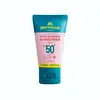
This hybrid sunscreen covers the full UV range and blocks ~98% of UVB at SPF 50.
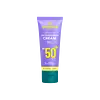
This chemical sunscreen covers most of the UV range, lighter on the deep UVA that drives aging, though its SPF isn't confirmed on file yet.

What's inside
What's inside
 Key Ingredients
Benefits
Concerns
Ingredients Side-by-side
Water
Skin ConditioningZinc Oxide
Cosmetic Colorant


Propanediol
Solvent

Butyloctyl Salicylate
Skin Conditioning
Cyclohexasiloxane
Emollient
Caprylyl Methicone
Skin Conditioning
Coco-Caprylate/Caprate
Emollient
Propylheptyl Caprylate
EmollientPolyglyceryl-3 Polydimethylsiloxyethyl Dimethicone
Skin Conditioning
Methyl Trimethicone
Skin Conditioning
Methyl Methacrylate Crosspolymer
Isododecane
Emollient1,2-Hexanediol
Skin Conditioning
Polymethylsilsesquioxane
Acetyl Tetrapeptide-2
Skin Conditioning
Copper Tripeptide-1
Skin Conditioning

Acetyl Hexapeptide-8
Humectant
Hyaluronic Acid
Humectant
Sodium Hyaluronate
Humectant
Hydrolyzed Hyaluronic Acid
Humectant
Helianthus Annuus Seed Oil
Emollient


Ferulic Acid
Antimicrobial

Solanum Lycopersicum Fruit Extract
Antioxidant
Rosmarinus Officinalis Leaf Extract
AntimicrobialDipotassium Glycyrrhizate
Humectant
Panthenol
Skin Conditioning
Allantoin
Skin Conditioning
Glycerin
Humectant
Tocopherol
Antioxidant

Ethyl Ferulate
Antioxidant
Disteardimonium Hectorite
StabilisingMagnesium Sulfate
Lauryl Polyglyceryl-3 Polydimethylsiloxyethyl Dimethicone
Skin Conditioning
Triethylhexanoin
MaskingPolyglyceryl-2 Dipolyhydroxystearate
Skin Conditioning
Triethoxycaprylylsilane
Glyceryl Caprylate
EmollientDimethicone
Emollient
Lauryl Dimethicone/Polyglycerin-3 Crosspolymer
Cleansing
Caprylyl Glycol
Emollient
Hydroxyacetophenone
Antioxidant
Butylene Glycol
Humectant
Dipropylene Glycol
HumectantSilica
Abrasive

Ethyl Hexanediol
SolventEthylhexylglycerin
Skin ConditioningSodium Citrate
BufferingPhenoxyethanol
Preservative
Water, Zinc Oxide, Propanediol, Butyloctyl Salicylate, Cyclohexasiloxane, Caprylyl Methicone, Coco-Caprylate/Caprate, Propylheptyl Caprylate, Polyglyceryl-3 Polydimethylsiloxyethyl Dimethicone, Methyl Trimethicone, Methyl Methacrylate Crosspolymer, Isododecane, 1,2-Hexanediol, Polymethylsilsesquioxane, Acetyl Tetrapeptide-2, Copper Tripeptide-1, Acetyl Hexapeptide-8, Hyaluronic Acid, Sodium Hyaluronate, Hydrolyzed Hyaluronic Acid, Helianthus Annuus Seed Oil, Ferulic Acid, Solanum Lycopersicum Fruit Extract, Rosmarinus Officinalis Leaf Extract, Dipotassium Glycyrrhizate, Panthenol, Allantoin, Glycerin, Tocopherol, Ethyl Ferulate, Disteardimonium Hectorite, Magnesium Sulfate, Lauryl Polyglyceryl-3 Polydimethylsiloxyethyl Dimethicone, Triethylhexanoin, Polyglyceryl-2 Dipolyhydroxystearate, Triethoxycaprylylsilane, Glyceryl Caprylate, Dimethicone, Lauryl Dimethicone/Polyglycerin-3 Crosspolymer, Caprylyl Glycol, Hydroxyacetophenone, Butylene Glycol, Dipropylene Glycol, Silica, Ethyl Hexanediol, Ethylhexylglycerin, Sodium Citrate, Phenoxyethanol
Water
Skin ConditioningButyl Methoxydibenzoylmethane
UV Absorber
Ethylhexyl Salicylate
UV Absorber
Ethylhexyl Triazone
UV Absorber
Ethylhexyl Methoxycinnamate
UV Absorber
Methyl Methacrylate Crosspolymer
Polyglyceryl-4 Caprate
EmulsifyingPhenoxyethanol
Preservative
Polyacrylic Acid
Emulsion StabilisingTriethanolamine
BufferingGlycerin
Humectant
Citric Acid
Buffering
Ethylhexylglycerin
Skin ConditioningParfum
Masking


Helianthus Annuus Seed Oil
Emollient
Hedychium Coronarium Root Extract
MaskingSodium Polyglutamate
HumectantEthyl Ferulate
Antioxidant
Rosmarinus Officinalis Leaf Extract
AntimicrobialTocopherol
Antioxidant
Hydrolyzed Hyaluronic Acid
Humectant
Water, Butyl Methoxydibenzoylmethane, Ethylhexyl Salicylate, Ethylhexyl Triazone, Ethylhexyl Methoxycinnamate, Methyl Methacrylate Crosspolymer, Polyglyceryl-4 Caprate, Phenoxyethanol, Polyacrylic Acid, Triethanolamine, Glycerin, Citric Acid, Ethylhexylglycerin, Parfum, Helianthus Annuus Seed Oil, Hedychium Coronarium Root Extract, Sodium Polyglutamate, Ethyl Ferulate, Rosmarinus Officinalis Leaf Extract, Tocopherol, Hydrolyzed Hyaluronic Acid
Ingredients Explained
These ingredients are found in both products.
Ingredients higher up in an ingredient list are typically present in a larger amount.
Ethyl ferulate is an antioxidant derived from ferulic acid and ethyl alcohol. You'll most likely see this ingredient in sunscreens.
One study from 2014 found a concentration of 10% showed a similar SPF to Benzimidazole. Though this is considered a chemical UV filter, this ingredient is not listed as so. This is due to regulatory loopholes. You'll likely find this ingredient in "100% mineral" sunscreens.
This ingredient is typically found in concentrations between 0.5-1%. It is usually created synthetically or from rice bran oil.
Learn more about Ethyl FerulateEthylhexylglycerin is created from glycerin. It is a multitasker ingredient that:
The CIR Expert Panel found minimal skin absorption or sensitization of any kind in a safety assessment. Though this ingredient is considered well-tolerated, a small number of cases of allergic dermatitis have been published since 2002. Just be sure to patch test if you are unsure.
Industry-reported use ranges from 8% in rinse-off products and 2% in leave-on formulations.
Learn more about EthylhexylglycerinGlycerin (or glycerol) is a compound naturally found in your skin. It's a powerhouse humectant that pulls water into the stratum corneum.
Topically, glycerin does several things at once:
Your skin makes glycerin on its own (mostly from sebaceous oil breakdown) and shuttles it to your outermost layer of skin, or your epidermis, via aquaporin-3.
Aquaporin-3 is a transporter that is essential for normal skin hydration, elasticity, and repair. Interestingly, mice lacking in AQP3 have dry and less elastic skin that can be fully corrected with glycerin.
This ingredient is non-irritating, plays well with almost every ingredient, and works across all skin types. Typical use is anywhere between 3-10% but can go up to 79% in some leave-on products.
Just know very high concentrations (>40%) can feel tacky in low humidity.
Glycerin is the name for this ingredient in American English. British English uses Glycerol/Glycerine.
Learn more about GlycerinHelianthus Annuus Seed Oil is a plant oil derived from the seeds of a sunflower.
It is rich in fatty acids, primarily linoleic acid and oleic acid. This gives it emollient and skin conditioning properties.
The reason this ingredient is so effective is because it forms a thin film on the skin that reduces transepidermal water loss (TEWL) while supplying linoleic acid to the stratum corneum to improve barrier strength.
The high linoleic acid content is particularly noteworthy for acne-prone skin.
Research suggests that acne-prone skin tends to be deficient in linoleic acid in sebum. Topical application may help replenish this to support a healthier follicular environment and less comedone-promoting sebum.
One randomized study found sunflower seed oil preserved skin barrier integrity in adult volunteers with and without atopic dermatitis (outperforming olive oil).
This ingredient is well-studied, gentle, and an effective emollient suitable for most skin types.
On fungal acne: This ingredient may not be Fungal acne (Malassezia folliculitis) safe. This is because it contains fatty acids with carbon chain lengths in the C11-C24 range.
Learn more about Helianthus Annuus Seed OilHydrolyzed Hyaluronic Acid is hyaluronic acid (HA) that is broken down into lower molecular weight fragments.
It's a humectant that pulls and holds water in the skin to help with hydration, plumpness, and reduce transepidermal water loss.
Because hydrolyzed hyaluronic acid is smaller in size, it can slip past your outermost layer of skin more easily than full-sized HA.
Most formulations will combine all sizes to get the best of both worlds.
Typical usage levels range from 0.01-1%. Any percentage higher than 2% might become goopy and tacky.
Learn more about Hydrolyzed Hyaluronic AcidThis ingredient comes as a powder made up of small, porous, microbeads. It is used to add a silky feel to products and also helps absorb oil.
Phenoxyethanol is one of the most widely used preservatives in skincare (and for good reason!).
It has a large spectrum of antimicrobial activity and especially effective bacteria, yeast, and mold while only having a weak effect on your skin's natural microbiome.
On a cellular level, it disrupts the cell membranes of microbes by poking holes that make the cell leak. This shuts down the chemical reactions the microbe needs to make energy so it can no longer survive.
Another perk of this ingredient is that it stays functional across a wide pH range (3-10).
You'll often see it paired with boosters like Ethylhexylglycerin; one study showed that a 1:9 ratio of Ethylhexylglycerin to Phenoxyethanol damages bacterial membranes as effectively as doubling the Phenoxyethanol concentration on its own.
Typical use concentrations range from 0.3-1% depending on the formula, and this ingredient is capped at 1% int the EU.
Safety-wise, the fear mongering does not hold up to the evidence. The EU's Scientific Committee on Consumer Safety and FDA consider it safe as a preservative at up to 1%, including for children of all ages.
Adverse systemic effects only showed up in animal studies at exposures roughly 200x higher than what people get from cosmetics. And despite its very widespread use, this ingredient is a rare sensitizer and allergic reactions are uncommon.
Learn more about PhenoxyethanolThis is a botanical extract from the rosemary plant (the same one you cook with). In skincare, it mostly works as a skin conditioning agent.
Its activity comes from a handful of polyphenols, carnosic acid, carnosol, and rosmarinic acid. Almost 90% of the antioxidant activity of this ingredient can be attributed to canosol and carnosic acid.
These compounds protect your skin two ways:
1) They fight off free radicals, or the unstable molecules from things like sun and pollution that age and damage skin.
2) They help calm inflammation by switching off the chemical signals that tell skin to get red and irritated.
Lab studies also suggest that rosmarinic acid may help protect collagen and slow sugar-related damage to it.
The Cosmetic Ingredient Review has concluded rosemary-derived ingredients to be safe when formulated to be non-sensitizing.
Rosemary can occasionally cause allergic contact dermatitis (due to carnosol), so be sure to patch test if you have reactive or fragrance-sensitive skin.
Learn more about Rosmarinus Officinalis Leaf ExtractTocopherol is a fat-soluble antioxidant known as Vitamin E.
You'll find this ingredient in the vast majority of skincare (for good reason). It works to neutralize free radicals, or unstable molecules generated by UV exposure, pollution, and other environmental stressors, before they can cause oxidative damage to your skin cells.
Topically applied tocopherol has been shown to protect against UV damage by ramping up the skin's own natural defense enzymes.
It also acts as a skin conditioning agent; some studies show that regular topical use can improve the skin's water-binding capacity over 2-4 weeks.
This ingredient is especially loved for being a team player. When combined with Vitamin C, the photoprotective effect of both ingredients roughly doubles and the combo also helps reduce UV-induced DNA damage.
This ingredient has some brightening potential but it's more of a prevention ingredient than spot-fader. Cell studies show it can slow down melanin production but it's worth noting that it's not the most powerful brightener out there.
In formulations, it also serves as a stabilizer that helps protect other oxidation-prone ingredients from degrading.
Concentrations usually range from 0.1-1% in most leave-on products.
Learn more about TocopherolWater. It's the most common cosmetic ingredient of all. You'll usually see it at the top of ingredient lists, meaning that it makes up the largest part of the product.
So why is it so popular? Water most often acts as a solvent - this means that it helps dissolve other ingredients into the formulation.
You'll also recognize water as that liquid we all need to stay alive. If you see this, drink a glass of water. Remember to stay hydrated!
Learn more about Water

