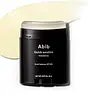
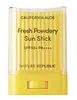
Abib Quick Sunstick Protection Bar SPF 50+ Versus Nature Republic California Aloe Fresh Powdery Sun Stick SPF 50+
This chemical sunscreen covers most of the UV range, lighter on the deep UVA that drives aging.
This chemical sunscreen covers the full UV range and blocks ~98% of UVB at SPF 50.

What's inside
What's inside
 Key Ingredients
Benefits
Concerns
Ingredients Side-by-side
Homosalate 9.5%
Skin Conditioning

Octocrylene 5%
UV Absorber

Ethylhexyl Salicylate 4.5%
UV Absorber
Butyl Methoxydibenzoylmethane 3%
UV Absorber
Octyldodecanol
Emollient
Butylene Glycol Dicaprylate/Dicaprate
EmollientDibutyl Lauroyl Glutamide
Skin ConditioningDiisostearyl Malate
EmollientDibutyl Ethylhexanoyl Glutamide
Skin ConditioningButyloctyl Salicylate
Skin Conditioning
C12-15 Alkyl Benzoate
AntimicrobialDextrin Palmitate
Emulsifying

Water
Skin ConditioningSodium Hyaluronate
Humectant




Squalane
Emollient
Calophyllum Inophyllum Seed Oil
Antimicrobial


Argania Spinosa Kernel Oil
Emollient

Olea Europaea Fruit Oil
Masking

Glycerin
Humectant
Aloe Barbadensis Leaf Extract
Emollient
Hydrolyzed Vegetable Protein
Skin ConditioningMaltodextrin
Absorbent
Butylene Glycol
Humectant
Propanediol
Solvent
Caprylic/Capric Triglyceride
Masking
1,2-Hexanediol
Skin Conditioning
Camellia Sinensis Leaf Extract
Antimicrobial

Hydrogenated Lecithin
Emulsifying
Centella Asiatica Extract
Cleansing
Candida Bombicola/Glucose/Methyl Rapeseedate Ferment
AntimicrobialCeramide NP
Skin Conditioning
Caprylyl Glycol
Emollient
Tocopherol
Antioxidant
Acetyl Hexapeptide-8
Humectant
Copper Tripeptide-1
Skin Conditioning
Homosalate 9.5%, Octocrylene 5%, Ethylhexyl Salicylate 4.5%, Butyl Methoxydibenzoylmethane 3%, Octyldodecanol, Butylene Glycol Dicaprylate/Dicaprate, Dibutyl Lauroyl Glutamide, Diisostearyl Malate, Dibutyl Ethylhexanoyl Glutamide, Butyloctyl Salicylate, C12-15 Alkyl Benzoate, Dextrin Palmitate, Water, Sodium Hyaluronate, Squalane, Calophyllum Inophyllum Seed Oil, Argania Spinosa Kernel Oil, Olea Europaea Fruit Oil, Glycerin, Aloe Barbadensis Leaf Extract, Hydrolyzed Vegetable Protein, Maltodextrin, Butylene Glycol, Propanediol, Caprylic/Capric Triglyceride, 1,2-Hexanediol, Camellia Sinensis Leaf Extract, Hydrogenated Lecithin, Centella Asiatica Extract, Candida Bombicola/Glucose/Methyl Rapeseedate Ferment, Ceramide NP, Caprylyl Glycol, Tocopherol, Acetyl Hexapeptide-8, Copper Tripeptide-1
Butylene Glycol Dicaprylate/Dicaprate
EmollientPolyethylene
Abrasive
Dimethicone
Emollient
Octocrylene
UV Absorber
Vinyl Dimethicone/Methicone Silsesquioxane Crosspolymer
Methyl Methacrylate Crosspolymer
Silica
Abrasive
Ethylhexyl Methoxycinnamate
UV Absorber
Cetyl Ethylhexanoate
EmollientDicaprylyl Carbonate
EmollientEthylhexyl Salicylate
UV Absorber
Diethylamino Hydroxybenzoyl Hexyl Benzoate
UV Filter
Bis-Ethylhexyloxyphenol Methoxyphenyl Triazine
UV Absorber
Tocopheryl Acetate
Antioxidant
Ozokerite
Emulsion StabilisingAloe Barbadensis Leaf Extract
Emollient
Morinda Citrifolia Extract
AstringentSea Water
HumectantHibiscus Rosa-Sinensis Flower/Leaf Extract
Skin ConditioningBisabolol
Antioxidant
Lauryl PEG-9 Polydimethylsiloxyethyl Dimethicone
Skin Conditioning
Dehydroacetic Acid
Preservative
Water
Skin ConditioningButylene Glycol
Humectant
Parfum
Masking
Phenoxyethanol
Preservative
Butylphenyl Methylpropional
Perfuming
Linalool
Perfuming
Limonene
Perfuming
Hexyl Cinnamal
Perfuming
Benzyl Salicylate
Perfuming
Butylene Glycol Dicaprylate/Dicaprate, Polyethylene, Dimethicone, Octocrylene, Vinyl Dimethicone/Methicone Silsesquioxane Crosspolymer, Methyl Methacrylate Crosspolymer, Silica, Ethylhexyl Methoxycinnamate, Cetyl Ethylhexanoate, Dicaprylyl Carbonate, Ethylhexyl Salicylate, Diethylamino Hydroxybenzoyl Hexyl Benzoate, Bis-Ethylhexyloxyphenol Methoxyphenyl Triazine, Tocopheryl Acetate, Ozokerite, Aloe Barbadensis Leaf Extract, Morinda Citrifolia Extract, Sea Water, Hibiscus Rosa-Sinensis Flower/Leaf Extract, Bisabolol, Lauryl PEG-9 Polydimethylsiloxyethyl Dimethicone, Dehydroacetic Acid, Water, Butylene Glycol, Parfum, Phenoxyethanol, Butylphenyl Methylpropional, Linalool, Limonene, Hexyl Cinnamal, Benzyl Salicylate
Reviews
Ingredients Explained
These ingredients are found in both products.
Ingredients higher up in an ingredient list are typically present in a larger amount.
Aloe Barbadensis Leaf Extract is a botanical extract pulled from the leaves of aloe vera and one of the most studied plant ingredients in cosmetics.
The inner leaf gel it comes from is mostly water (~99-99.5%) and the remaining fraction is made up of pretty good stuff: polysaccharides, vitamins, phenolics, and enzymes.
Its headline job is hydration.
The star polysaccharide in aloe, acemannan, is a humectant that retains moisture and helps reduce trans-epidermal water loss.
Aloe also has real soothing credentials; it contains anti-inflammatory compounds like bradykinase and C-glucosyl chromone that help calm irritation and redness.
On the repair side, lab work shows that acemannan wakes up your skin's repair cells (fibroblasts), prompting them to multiply and speed up healing.
There's some human data for cosmetic benefit too: a cream containing 10% Aloe Barbadensis leaf extract improved skin hydration and elasticity in a real-use study.
Safety-wise, this ingredient is well-regarded with just one rare downside; there have been some case reports of acute eczema, contact urticaria, and dermatitis in people who applied aloe-derived ingredients topically. Those with a known aloe or Liliaceae sensitivity should patch test.
Typical use levels range widely, from under 1% up to 90%+ depending on the format and the effect you are after.
Learn more about Aloe Barbadensis Leaf ExtractButylene Glycol (or BG) is used within cosmetic products for a few different reasons:
Overall, Butylene Glycol is a safe and well-rounded ingredient that works well with other ingredients.
Though this ingredient works well with most skin types, some people with sensitive skin may experience a reaction such as allergic rashes, closed comedones, or itchiness.
Learn more about Butylene GlycolThis is a lightweight diester (caprylic/capric acid + butylene glycol) with emollient and skin conditioning properties.
According to a manufacturer, this ingredient can help add a "cushiony" oil phase without making it heavy.
Ethylhexyl Salicylate (also called Octisalate or Octyl Salicylate) is an oil-soluble organic UV filter that's been used in sunscreen since the 1950's.
It absorbs UVB light in the 280-320 nm range with a peak absorbance around 306 nm.
You'll often see it paired with other UV filters to boost overall SPF because octisalate is a fairly week filter on its own.
The reason you'll see it so often is because it can help solubilize and stabilize the trickier filters like oxybenzone and avobenzone.
Unlike these filters, octisalate has pretty good photostability and doesn't create skin-damaging free radicals when exposed to sunlight.
The fatty-alcohol part of the molecule also gives it a light, emollient feel so it doubles as a nice texture enhancer.
Usage levels vary around the world:
Safety-wise, this ingredient has a pretty reassuring track record. The EU's Scientific Committee on Consumer Products (SCCP) found very low skin penetration in human skin tests and negative results for irritation, phototoxicity, and photoallergy.
The real-world allergy risk is pretty low too; a 2012 European study of 1,031 people recorded only 2 reactions to it (a rate of 0.19%).
You might have seen scary headlines about sunscreen getting into your blood.
In 2019, the FDA found that several chemical filters can absorb through the skin and show up in the bloodstream at small but measurable levels.
Here's the important part: these tiny levels are just a cutoff the FDA uses to decide which ingredients need more testing and doesn't mean anything harmful was found.
The researchers were clear that the results are no reason to stop wearing sunscreen.
Learn more about Ethylhexyl SalicylateOctocrylene is an oil-soluble organic UV filter that mainly absorbs UVB and short wave UVA II light.
Its real superpower is teamwork: octocrylene is remarkably photostable and is most famous for stabilizing avobenzone (the workhorse UVA filter).
This ingredient is commonly used to enhance both UVB and UVA protection due to its unique property in stabilizing avobenzone. It also pulls double duty by boosting water resistance and giving formulas a smooth, spreadable feel.
The EU's Scientific Committee on Consumer Safety (SCCS) has deemed octocrylene to be safe as a UV-filter at concentrations up to 10% (capped at 9% in propellant sprays). The US also permits it up to 10%.
Two things worth knowing:
You'll usually see this ingredient used in concentrations between 2-10% (higher amounts when used as a stabilizer for avobenzone).
Learn more about OctocryleneWater. It's the most common cosmetic ingredient of all. You'll usually see it at the top of ingredient lists, meaning that it makes up the largest part of the product.
So why is it so popular? Water most often acts as a solvent - this means that it helps dissolve other ingredients into the formulation.
You'll also recognize water as that liquid we all need to stay alive. If you see this, drink a glass of water. Remember to stay hydrated!
Learn more about Water

