Mantecorp Epidrat Hyalu SPF 30
Lip oil with 40 ingredients that contains exfoliants, hyaluronic acid, peptides, SPF and Vitamin E
We independently verify ingredients, backed by peer-reviewed research. Suggest an update.
What's inside
Ingredients List
Dimer Dilinoleyl Dimer Dilinoleate
EmollientButylene Glycol Cocoate
Emulsifying




Caprylic/Capric Triglyceride
Masking

Diglyceryl Adipate/Caprate/Caprylate/Hydroxystearate/Isostearate/Stearate
EmollientDiethylhexyl Butamido Triazone
UV Absorber
Bis-Ethylhexyloxyphenol Methoxyphenyl Triazine
UV Absorber
Diethylamino Hydroxybenzoyl Hexyl Benzoate
UV Filter
C10-18 Triglycerides
Emollient
Aroma


Silica
Abrasive


Ethylhexyl Triazone
UV Absorber
Tocopheryl Acetate
Antioxidant


Stearalkonium Hectorite
Gel FormingRosa Moschata Seed Oil
Emollient
Ethylhexyl Palmitate
Emollient

Oryza Sativa Bran Wax
Skin Conditioning
Ricinus Communis Seed Oil
Masking
1,2-Hexanediol
Skin Conditioning
Caprylyl Glycol
Emollient
Hydrogenated Coconut Oil
Emollient
Hydrogenated Castor Oil
Emollient
Propylene Carbonate
SolventCI 15985
Cosmetic ColorantHyaluronic Acid
Humectant


Pentaerythrityl Tetra-Di-T-Butyl Hydroxyhydrocinnamate
Antioxidant
Tribehenin
Emollient
Octyldodecanol
Emollient
Hydroxystearic Acid
Cleansing
Sucralose
Skin ConditioningMica
Cosmetic ColorantCI 77499
Cosmetic ColorantSorbitan Isostearate
Emulsifying
CI 77491
Cosmetic ColorantAluminum Hydroxide
EmollientMagnesium Phosphate
StabilisingSorbitan Oleate
Emulsifying
Stearic Acid
Cleansing
Tropolone
Skin ConditioningCI 77891
Cosmetic ColorantPalmitoyl Tripeptide-1
Skin Conditioning

Dimer Dilinoleyl Dimer Dilinoleate, Butylene Glycol Cocoate, Caprylic/Capric Triglyceride, Diglyceryl Adipate/Caprate/Caprylate/Hydroxystearate/Isostearate/Stearate, Diethylhexyl Butamido Triazone, Bis-Ethylhexyloxyphenol Methoxyphenyl Triazine, Diethylamino Hydroxybenzoyl Hexyl Benzoate, C10-18 Triglycerides, Aroma, Silica, Ethylhexyl Triazone, Tocopheryl Acetate, Stearalkonium Hectorite, Rosa Moschata Seed Oil, Ethylhexyl Palmitate, Oryza Sativa Bran Wax, Ricinus Communis Seed Oil, 1,2-Hexanediol, Caprylyl Glycol, Hydrogenated Coconut Oil, Hydrogenated Castor Oil, Propylene Carbonate, CI 15985, Hyaluronic Acid, Pentaerythrityl Tetra-Di-T-Butyl Hydroxyhydrocinnamate, Tribehenin, Octyldodecanol, Hydroxystearic Acid, Sucralose, Mica, CI 77499, Sorbitan Isostearate, CI 77491, Aluminum Hydroxide, Magnesium Phosphate, Sorbitan Oleate, Stearic Acid, Tropolone, CI 77891, Palmitoyl Tripeptide-1
Key Ingredients
Benefits
Concerns
Ingredients Explained
We don't have a description for Dimer Dilinoleyl Dimer Dilinoleate yet.
Butylene Glycol Cocoate isn't fungal acne safe. It can be bad for dry skin.
Caprylic/Capric Triglyceride (aka MCT Oil) is a lightweight emollient, solvent, and texture enhancer. It is considered a skin-softener by helping to prevent moisture loss.
Though it behaves like an oil, it is not technically one due to its chemical composition. One perk of this ingredient is that it is very stable, resistant to oxidation, and unlikely to go rancid.
In practice, that translates to a long shelf life and a consistently elegant skin feel.
While there is an assumption Caprylic Triglyceride can clog pores due to it being derived from coconut oil, there is no research supporting this. Just patch test if you have concerns.
Fractionated coconut oil and MCT Oil are both listed as Caprylic/Capric Triglyceride according to INCI. This is because INCI names are based on the ingredient’s final chemical composition and not its marketing name or source.
This ingredient is treated as the gold standard fungal acne safe oil. Even though it is coconut derived, the problematic lauric acid is stripped out.
This leaves just caprylic (C8) and capric (C10) acid. These chain lengths actually trend antifungal; a 2020 study found caprylic acid was enough to disrupt Malassezia furfur cell membrane, with a caprylic acid derivative damaging membrane structures at concentrations as low as 0.2%.
Learn more about Caprylic/Capric TriglycerideWe don't have a description for Diglyceryl Adipate/Caprate/Caprylate/Hydroxystearate/Isostearate/Stearate yet.
Diethylhexyl Butamido Triazone (aka Iscotrizinol) is an oil-soluble organic UV filter that mainly absorbs UVB and a bit of UVA II light.
This ingredient is great at preventing sunburn but doesn't cover the deep UVA I range. This is why it's often paired with a UVA filter like Avobenzone or Bemotrizinol.
Two of its biggest selling points are efficiency and stability:
Most of the other chemical filters are considered "photostable" if they can last for two hours.
Because this ingredient is oil-loving, it can sit neatly into the oil phase of emulsions and shines in water-repellent/water-resistant formulations.
The EU and Canada allow it to be used up to 10% and Japan allows it up to 5%.
Unfortunately, it's not yet an FDA approved sunscreen agent so you won't be able to find it in sunscreens in the US.
Safety-wise, it has a pretty solid record: the EU's Scientific Committee on Consumer Safety (SCCS) has reviewed it and found low skin absorption, no capacity to produce skin irritation or photo-irritation.
In vitro testing has found less than 0.1% of the applied dose is absorbed by the skin over 24 hours (mostly due to its large molecule size).
Fun fact: This ingredient even has anti-inflammatory properties similar to those of ketoprofe, an anti-inflammatory medication.
Learn more about Diethylhexyl Butamido TriazoneThis ingredient is better known as bemotrizinol or Tinosorb S and is one of the best broad-spectrum UV filters in modern sunscreen.
It works by absorbing UV light across a whole range (280-400 nm) with peaks around 310 nm (UVB) and 340-345 nm (UVA). This means it covers UVB plus the deeper UVA wavelengths that drive photoaging and pigmentation.
Another pro?
It's exceptionally photostable, barely degrades in sunlight, and acts as a "bodyguard" for less stable filters.
That's why you'll see it paired with avobenzone or octinoxate; this team up ensures they keep working through sun exposure.
Safety reviews have been reassuring across the board. This ingredient shows low absorption through the skin, rarely irritates, and lab studies found it doesn't act like a hormone in the body (a concern that's been raised about some older sunscreen filters).
On maximum concentrations:
In 2026, the US F.D.A finally added it as an OTC sunscreen ingredient at concentrations up to 6% for adults / children 6 months and older
Learn more about Bis-Ethylhexyloxyphenol Methoxyphenyl TriazineDiethylamino Hydroxybenzoyl Hexyl Benzoate (DHHB) is a chemical UV-A absorber. It is formulated for high UVA protection (320-400 nm).
DHHB is well-liked for:
DHHB has been approved by the EU, Japan, Taiwan, and South America for use up to 10%. Unfortunately, it has not been approved for use in the US or Canada due to slow regulatory processes.
This ingredient is soluble in oils, fats, and lipids.
Learn more about Diethylamino Hydroxybenzoyl Hexyl BenzoateC10-18 Triglycerides is a skin conditioning and texture-enhancer.
It is created from glycerin and a mixture of C10-18 fatty acids.
This ingredient improves spreadability and helps thicken a product.
According to manufacturers, it usually comes from vegetable-based saturated fatty acids. Common bases for this ingredient are coconut oil, palm kernel oil, or both.
Due to the melting point being close to skin temperature, it is usually used in lip products.
Triglycerides are a main component of fat in the human body.
Learn more about C10-18 TriglyceridesAroma refers to an ingredient, or mixture of ingredients, that impart or mask a flavor.
The name is slightly confusing. This is because INCI associates aroma with flavor instead of smell.
Here is the official definition from the The International Cosmetic Ingredient Dictionary and Handbook:
“Aroma is a term for ingredient labeling used to identify that a product contains a material or combination of materials normally added to a cosmetic to produce or to mask a particular flavor.”
INCI shows the only purpose of aroma to be "flavouring".
However, due to regulation differences, some companies may use aroma in place of parfum.
In Canada, this ingredient only has to be listed in concentrations above 1%.
Learn more about AromaSilica, also known as silicon dioxide, is a naturally occurring mineral. It is used as a fine, spherical, and porous powder in cosmetics.
Though it has exfoliant properties, the function of silica varies depending on the product.
The unique structure of silica enhances the spreadability and adds smoothness, making it a great texture enhancer.
It is also used as an active carrier, emulsifier, and mattifier due to its ability to absorb excess oil.
In some products, tiny microneedles called spicules are made from silica or hydrolyzed sponge. When you rub them in, they lightly polish away dead skin layers and enhance the penetration of active ingredients.
Learn more about SilicaEthylhexyl Triazone (aka Octyl Triazone) is an oil-soluble organic UVB filter. It has peak absorption around 314 nm, right in the middle of the UVB range.
This ingredient is described as one of the most effective UVB filters available and small concentrations are enough to deliver a high SPF thanks to its strong UV absorbing power.
Formulators love it for its stability; its ability to filter UV stays practically unchanged even under intense radiation and it can also help boost the photostability of less stable filters like avobenzone.
It's also a great pick for water resistant products because it's insoluble in water and has a good affinity for keratin.
Because it's a big, heavy molecule, the European Scientific Committee has found to to have very low dermal penetration and negative results for allergenicity.
In vitro testing also showed a low absorption rate and clean results on irritation.
Typical use levels are 1-5% with 5% being the maximum in the EU, Japan, and other markets that allow it. However, this ingredient is not approved yet in the US or Canada.
Learn more about Ethylhexyl TriazoneTocopheryl Acetate is a stable, shelf-friendly form of vitamin E.
Formulators love it because plain vitamin E oxidizes quickly once it hits air. This acetate version stays stable and resists going off, helping to extend a product's shelf life.
It's actually inactive on its own and works like a slow-release "storage" form; the enzymes in your skin called esterases gradually convert it into active vitamin E over time.
One in vivo study showed 5% of the acetate in the living layer of the epidermis converted to vitamin E after 5 days of application. This study also found the skin gained protection against UV damage even though the conversion was slow and small.
Once converted, vitamin E acts as a skin's main fat-soluble antioxidant that fights free radicals to protect skin from damage.
Topical vitamin E generally boosts the skin's photoprotection, and it reduced UV-damage in animal models.
This ingredient has some brightening potential but it's more of a prevention ingredient than spot-fader. Cell studies show it can slow down melanin production but it's worth noting that it's not the most powerful brightener out there.
Overall, it has a pretty solid safety profile and has been found to be non-irritating and non-comedogenic. Allergic reactions may happen but stay rare due to how widely the ingredient gets used.
The concentration will vary depending on the formula; industry data shows 0.1% in baby lotions, 3% in lipsticks, and 5% in foot powders. You can also find this ingredient at 100% in a pure vitamin E oil.
Most leave-on skincare keeps it at the lower end, often between 0.5-1%.
Learn more about Tocopheryl AcetateStearalkonium Hectorite is a clay-derived ingredient used to thicken a product and help create a gel-like texture.
Rosa Moschata Seed Oil is an oil and isn't fungal acne safe.
Ethylhexyl Palmitate, also known as octyl palmitate, is created from 2-ethylhexyl alcohol and palmitic acid.
In cosmetics, it plays many roles:
One thing worth noting: a controlled study found this ingredient applied under occlusion to acne-prone subjects increased microcomedones. Just keep in mind this was under occlusive conditions and don't reflect how most products are used day-to-day.
For most people, this is a well-tolerated and lightweight ingredient.
This ingredient may not be fungal acne safe because it is an ester of palmitic acid, a C16 fatty acid that falls within the C11-24 range that Malassezia can metabolize.
You'll see this one rated 4 comedogenic all over the internet. That number isn't from a single study, and the actual research is more interesting.
The original rating comes from 1980s rabbit ear tests (which are a shaky basis for anything). But Ethylhexyl Palmitate is one of the few ingredients with real human data behind it. A 2021 controlled trial found this ingredient increased microcomedones by an average of 365% over four weeks.
Just know that test used the pure ingredient under an occlusive pad on back skin; most products use it at much lower levels alongside other ingredients and plenty of people use those with no issue.
Learn more about Ethylhexyl PalmitateOryza Sativa Bran Wax is wax from the outer layer of a rice kernel. It has moisturizing properties due to its polysaccharides and omega-3 fatty acids content.
This ingredient is a byproduct of milling rice, or the operation to produce a whole grain rice product.
This ingredient is also known as castor oil. It is a skin conditioning ingredient.
The star component of castor oil is ricinoleic acid, an unusual fatty acid that makes up ~80-92% of its composition.
In skincare, it is an emollient that dries down to a solid film with water-binding properties. This helps keep skin hydrated and helps reduce transepidermal water loss (TEWL).
A 2026 dermatology review pulls together its broader uses:
Human clinical testing found this ingredient to be non-irritating and non-sensitizing.
Because castor oil contains fatty acids in the C11-24 range, this ingredient may not be fungal acne safe.
At this time, the literature does not support castor oil in regrowing hair. A 2022 systematic review found no strong evidence that it supports hair growth and only weak evidence that it improves hair shine.
Castor oil itself carries "perfuming" and "masking" function tags according to the official CosIng database. This is because of its mild odor and odor-dampening properties.
Learn more about Ricinus Communis Seed Oil1,2-Hexanediol is a synthetic liquid and another multi-functional powerhouse.
It is a:
- Humectant, drawing moisture into the skin
- Emollient, helping to soften skin
- Solvent, dispersing and stabilizing formulas
- Preservative booster, enhancing the antimicrobial activity of other preservatives
Caprylyl Glycol is a humectant, skin conditioner, emollient, and preservative booster derived from either caprylic acid or synthetically created.
Typical use levels vary from 0.3-1% as a preservative booster and go up to 2% to condition skin.
Because it is not a free-fatty acid, this ingredient is fungal acne safe (there's nothing for Malassezia to feed on).
Learn more about Caprylyl GlycolHydrogenated Coconut Oil is regular coconut oil that's been run through a process that "fills in" the last few reactive spots on its fat molecules with hydrogen.
This results in a firmer, waxier, and more shelf-stable fat that melts around body temperature. This is why formulators use it as an emollient and a structuring agent for balms, sticks, and thick creams.
It doesn't do anything active and just sits on skin to soften it and slow water loss.
The CIR reviews of this ingredient reported concentration usage across a wide range (0.0001% - 70%) depending on the product type. You'll most likely see double digits (~1-5%) in emulsions and double digits in sticks + balms.
This ingredient may not be fungal acne safe; the Malassezia yeast feeds on chains longer than 12 carbons which is exactly what this ingredient is built from (C12, C14, C16, and C18).
It's worth being honest that the lab picture isn't one-directional: medium-chain triglycerides and medium-chain free fatty acids were actually toxic to Malassezia in vitro, suppressing M. furfur and M. sympodialis. However, there's no human skin data showing that protective effect holds in a real formula.
The risk of allergies is low; Hydrogenated Coconut Oil caused no irritation after a single patch application and no sign of sensitization on retest 14 days late. This is also a refined triglyceride with no coconut protein left, so it's not likely to trigger coconut food allergies. But if you have reacted to coconut in cosmetics before, it's best to avoid this ingredient.
This ingredient shows up on a lot of ""pore-clogging"" lists but there's no real evidence behind that. It doesn't even have a comedogenic rating from an actual study; the numbers you'll find online come from blogs citing other blogs.
Ratings for other ingredients mostly come from a 1980s rabbit ear test. This test doesn't translate well to human skin or to real products because the ingredient sits at a much lower percentage. Some people still find it breaks them out. So if that's you, definitely trust your skin.
Learn more about Hydrogenated Coconut OilHydrogenated Castor Oil (aka "castor wax") is what you get when castor oil is turned into a wax.
Its dominant fatty acid is ricinoleic acid, giving it both emollient and mild humectant properties.
According to EU CosIng, this ingredient helps soften skin, keep oil and water stay mixed, and thickens products.
Hydrogenated castor oil at 30% did not trigger a positive patch-test reaction and is well-tolerated.
Since this ingredient is based on an 18-carbon fatty acid, it falls into the chain-length range that Malassezia can feed on and may not be fungal acne safe.
Learn more about Hydrogenated Castor OilThis ingredient is a solvent. It helps dissolve active ingredients and alter the texture of products.
Propylene Carbonate is commonly used in makeup and with clay, such as montmorillonite or bentonite.
Studies show this ingredient to be safe for cosmetics. When it is undiluted, it can cause skin irritation. (It is always diluted in skincare and makeup). This ingredient is water-soluble.
Propylene Carbonate is created from propylene glycol and carbonic acid.
Learn more about Propylene CarbonateCi 15985 is a dye made from petroleum. It is synthetically created and approved by the FDA for use in foods and cosmetics.
The color of this dye is orange/yellow.
This ingredient can be found in makeup, sun care, and skincare.
Learn more about CI 15985Hyaluronic acid (HA) is a glycosaminoglycan (basically a long sugar chain) that your skin already makes on its own. In your skin, HA lives in the extracellular matrix and acts as the body's moisture reservoir.
Topically, HA is a humectant that binds water and helps skin look more plump, smooth, and hydrated.
The only catch is that HA isn't a single thing; it actually comes in a wide range of molecular weights (~50 - 2,000+ kDA) and size matters.
Some clinical evidence links low molecular weight versions to improved wrinkle depth, elasticity, anti-inflammatory effects, and barrier repair.
This is why the best HA serums blend the two sizes together so you get the best of both worlds.
The majority of cosmetic HA is produced by bacterial fermentation, typically using Streptococcus or Bacillus strains. Typical use levels in skincare sit around 0.1-2%.
A clinical study using a 0.2% low-molecular weight HA gel showed improvement in facial seborrheic dermatitis with excellent tolerance.
These are some other common types of Hyaluronic Acid:
Learn more about Hyaluronic AcidPentaerythrityl Tetra-Di-T-Butyl Hydroxyhydrocinnamate (long name, huh?) is a synthetic antioxidant.
It is used to help stabilize other antioxidants or prevent the color from changing in a product.
As an antioxidant, it helps fight free-radical molecules. Free-radical molecules are capable of damaging our cells and other genetic material. Thus, antioxidants may reduce the signs of aging.
This ingredient is oil-soluble.
Learn more about Pentaerythrityl Tetra-Di-T-Butyl HydroxyhydrocinnamateTribehenin is the triglyceride of glycerin and behenic acid. It is an emollient that helps soften and condition skin.
Safety-wise, this is a well-vetted ingredient. Repeated-insult patch tests of 0.38% tribehenin did not trigger sensitization.
This ingredient may not be fungal acne safe because behenic acid falls into the chain-length range that Malassezia yeasts can feed on.
Learn more about TribeheninOctyldodecanol is a fatty alcohol sourced from plant oils like coconut or palm (or made synthetically).
It is:
You'll likely see this in many BHA products because this is the go-to solvent for salicylic acid.
This ingredient is typically used at levels between 2-20%.
Regarding fungal acne:
In 2019, this ingredient was tested against multiple Malassezia species (the yeast that causes fungal acne) and showed no growth.
Hydroxystearic Acid is a C18 fatty acid derived from castor oil.
In cosmetics, it pulls triple duty:
Reported use concentrations for this ingredient go up to about 13.2% in makeup but tends to be lower in skincare.
Fungal acne: Since hydroxystearic acid is a C18 fatty acid, it falls into the C11-24 range that the Malassezia yeast can metabolize. This ingredient may not be fungal acne safe.
Learn more about Hydroxystearic AcidWe don't have a description for Sucralose yet.
Mica is a naturally occurring mineral used to add shimmer and color in cosmetics. It can also help improve the texture of a product or give it an opaque, white/silver color.
Serecite is the name for very fine but ragged grains of mica.
This ingredient is often coated with metal oxides like titanium dioxide. Trace amounts of heavy metals may be found in mica, but these metals are not harmful in our personal products.
Mica has been used since prehistoric times throughout the world. Ancient Egyptian, Indian, Greek, Roman, Aztec, and Chinese civilizations have used mica.
Learn more about MicaCi 77499 is also hydrated iron III oxide. It is created from mixing red and black iron oxides. This helps give shades of darkness to a product.
Iron III oxides are classified as inorganic chemicals for coloring.
Sorbitan Isostearate is an emulsifer. It is created from isostearic acid and sorbitol.
As an emulsifier, it keeps the water and oil ingredients from separating. This keeps formulas stable and smooth.
In a 24 hour occlusive patch test on 56 subjects, 10% sorbitan isostearate was completely non-irritating. Most formulas use less than 10%.
Because it's a fatty acid ester, it may not be fungal acne safe since the Malassezia yeast can utilize it as a nutrient source.
Learn more about Sorbitan IsostearateCi 77491 is also hydrated iron III oxide. It's sole purpose is to give a red/pink hue to products.
Iron III oxides are classified as inorganic chemicals for coloring.
Synthetically created Ci 77491 is considered safer than those naturally found. This is because the synthetically created version may contain less impurities. Iron oxides are generally non-toxic and non-allergenic.
Learn more about CI 77491Aluminum Hydroxide is a form of aluminum. It can be naturally found in nature as the mineral gibbsite. In cosmetics, Aluminum Hydroxide is used as a colorant, pH adjuster, and absorbent.
As a colorant, Aluminum Hydroxide may add opacity, or reduce the transparency. Aluminum hydroxide is contains both basic and acidic properties.
According to manufacturers, this ingredient is an emollient and humectant. This means it helps hydrate the skin.
In medicine, this ingredient is used to help relieve heartburn and help heal ulcers.
There is currently no credible scientific evidence linking aluminum hydroxide in cosmetics to increased cancer risk.
Major health organizations allow the use of aluminum hydroxide in personal care products and have not flagged it as a carcinogenic risk at typical usage levels.
Learn more about Aluminum HydroxideWe don't have a description for Magnesium Phosphate yet.
Sorbitan Oleate is a PEG-free emulsifier made by esterifying sorbitol with oleic acid.
You'll likely see it paired with Polysorbate 80 to create the right emulsification balance.
Typical use levels in formulas range from 2-10%.
The CIR Expert Panel has concluded this ingredient to be safe as a cosmetic ingredient.
Since this ingredient is an ester of oleic acid, it may not be fungal acne safe. Oleic acid is a fatty acid that falls into the C11-24 range that Malassezia can metabolize.
Learn more about Sorbitan OleateStearic Acid is a fatty acid that is already found in your skin. It's one of the free fatty acids that works alongside ceramides and cholesterols to maintain your barrier.
In cosmetics, it is a multitasker:
Safety-wise, the CIR Expert Panel has concluded it to be safe in cosmetics when formulated to be non-irritating and non-sensitizing.
Free stearic acid is a C18 fatty acid that the Malassezia yeast can substrate, so this ingredient may not be fungal acne safe.
Learn more about Stearic AcidWe don't have a description for Tropolone yet.
Ci 77891 is a white pigment from Titanium dioxide. It is naturally found in minerals such as rutile and ilmenite.
It's main function is to add a white color to cosmetics. It can also be mixed with other colors to create different shades.
Ci 77891 is commonly found in sunscreens due to its ability to block UV rays.
Learn more about CI 77891Palmitoyl Tripeptide-1 (aka Pal-GHK) is a synthetic signal peptide made of three amino acids attached to palmitic acid.
That fatty acid attachment is the key: it boosts the peptide's ability to penetrate the skin barrier. This puts it closer to the dermal cells where it can actually make a difference.
Once there, it acts as a matrikine, a signaling peptide that prompts fibroblasts to produce more collagen, fibronectin, and hyaluronic acid.
In vitro studies show it can boost collagen production in skin cells even when UV-damaged skin samples were treated with it at a tiny concentration (it almost fully restored dermal collagen at 5ppm). It achieved this at 100x lower concentration than retinoic acid, which needed 500 ppm to do the same thing.
Human clinical data is promising, but modest:
A study of 23 female volunteers found a small but statistically significant increase (~4%) in skin thickness after treatment at 4 ppm.
A separate small trial of 15 women showed statistically significant reductions in wrinkle length, depth, and skin roughness after applying it twice daily for four weeks.
You'll likely see Pal-GHK paired with Palmitoyl Tetrapeptide-7 as part of the Matrixyl 3000 complex.
Fungal acne note:
Usually a palmitic acid component can feed Malassezia in unbound form, but here is is covalently bonded to the peptide. This means it is very difficult for Malassezia to access, and therefore very unlikely to cause fungal acne.
Reviews
No written reviews yet. Be the first to review this product.
Recent searches
Search reviews by skin type, ingredient, or keyword.
Where it's from
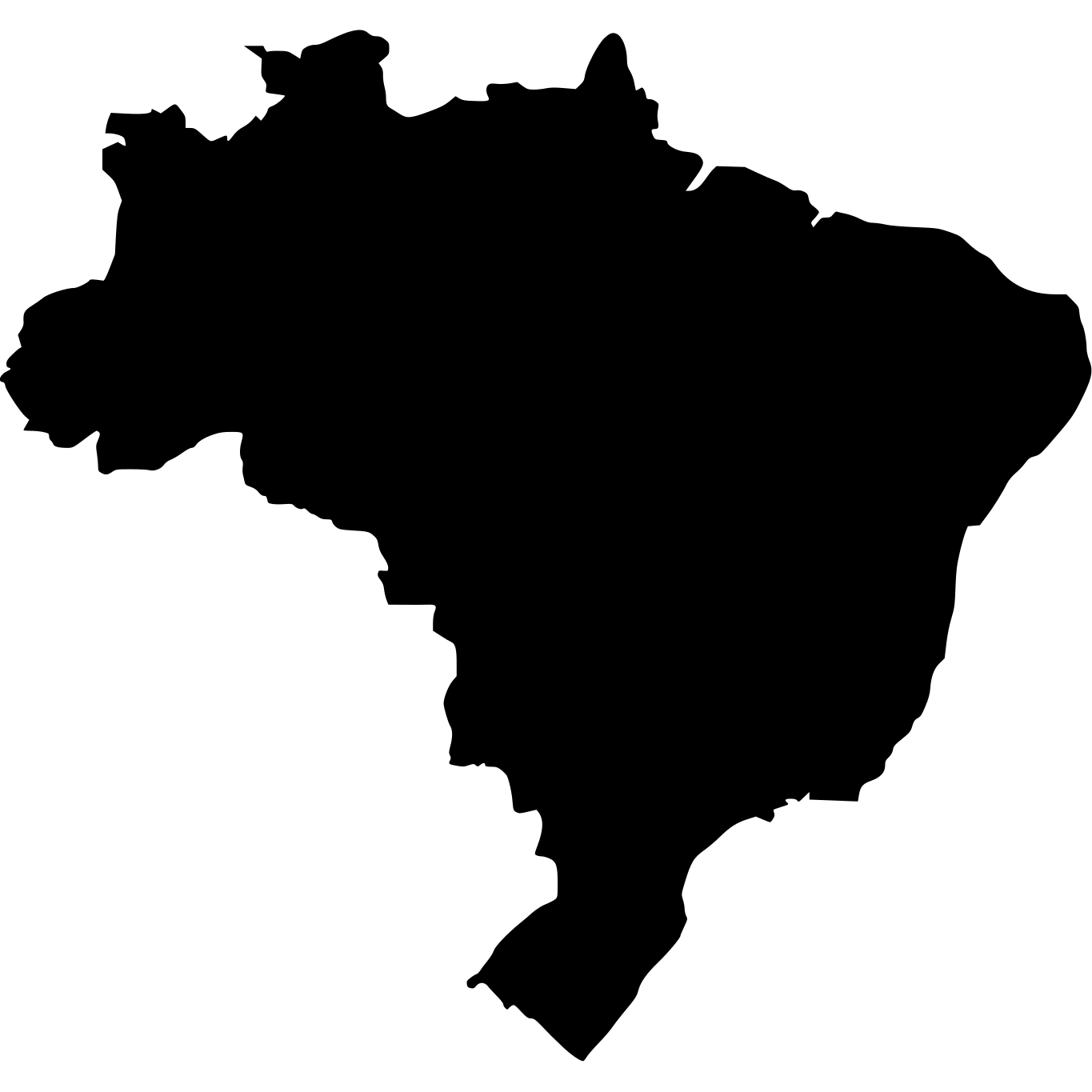
Mantecorp is a Brazilian brand
30 SPF Rating
With an SPF rating of 30, this product protects against 96.7% of UVB rays

We're dedicated to providing you with the most up-to-date and science-backed ingredient info out there.
The data we've presented on this page has been verified by a member of the SkinSort Team.
Read more about us· Updated December 1, 2025 • Added by mariaiorio


