ELFORMULA Cerahydro Barrier Lip Treatment
A lip moisturizer with 36 ingredients, including vitamin C, spf, and vitamin E.
This barrier-repair lip moisturizer is formulated around Ceramide NP and Panthenol to strengthen the lip barrier and hydrate lips.
We independently verify ingredients, backed by peer-reviewed research. Suggest an update.
What's inside
Ingredients List
Petrolatum
Emollient



Cetyl Ethylhexanoate
EmollientDiisostearyl Malate
EmollientEthylhexyl Methoxycinnamate
UV Absorber

Ethylhexyl Salicylate
UV Absorber
Beeswax
Emulsion Stabilising



Microcrystalline Wax
Emulsion StabilisingPolyglyceryl-6 Polyhydroxystearate
Emulsifying
Polyglyceryl-6 Polyricinoleate
Emulsifying
Butyrospermum Parkii Butter
Skin Conditioning
Butyl Methoxydibenzoylmethane
UV Absorber
Octocrylene
UV Absorber
Tocopheryl Acetate
Antioxidant


Polyglyceryl-3 Diisostearate
Emulsifying
Dimethicone
Emollient

Polyglycerin-6
HumectantTrimethylsiloxysilicate
Emollient
BHT
Antioxidant
Panthenol
Skin Conditioning

Citrus Paradisi Seed Oil
Perfuming
Cocos Nucifera Oil
Masking
Sodium Hyaluronate
Humectant

Hyaluronic Acid
Humectant
Theobroma Cacao Seed Butter
Emollient
Vanilla Planifolia Fruit Extract
Skin Conditioning
Ceramide NP
Skin Conditioning
Potassium Hyaluronate
Skin ConditioningTocopherol
Antioxidant
Ascorbyl Palmitate
Antioxidant
Chrysanthellum Indicum Extract
Skin Conditioning
Acetyl Hexapeptide-8
Humectant
Ceramide EOP
Skin Conditioning
Ceramide As
Skin Conditioning
Ceramide AP
Skin Conditioning
Ceramide Ng
Skin Conditioning
Arginine/Lysine Polypeptide
Skin Conditioning
Petrolatum, Cetyl Ethylhexanoate, Diisostearyl Malate, Ethylhexyl Methoxycinnamate, Ethylhexyl Salicylate, Beeswax, Microcrystalline Wax, Polyglyceryl-6 Polyhydroxystearate, Polyglyceryl-6 Polyricinoleate, Butyrospermum Parkii Butter, Butyl Methoxydibenzoylmethane, Octocrylene, Tocopheryl Acetate, Polyglyceryl-3 Diisostearate, Dimethicone, Polyglycerin-6, Trimethylsiloxysilicate, BHT, Panthenol, Citrus Paradisi Seed Oil, Cocos Nucifera Oil, Sodium Hyaluronate, Hyaluronic Acid, Theobroma Cacao Seed Butter, Vanilla Planifolia Fruit Extract, Ceramide NP, Potassium Hyaluronate, Tocopherol, Ascorbyl Palmitate, Chrysanthellum Indicum Extract, Acetyl Hexapeptide-8, Ceramide EOP, Ceramide As, Ceramide AP, Ceramide Ng, Arginine/Lysine Polypeptide
Key Ingredients
Benefits
Concerns
Ingredients Explained
Petrolatum is more commonly known as petroleum jelly. It is created by mixing waxes and mineral oils.
This ingredient is effective at reducing water loss by 99%. This is because it is an occlusive. Occlusives create a hydrophobic barrier on the skin to prevent evaporation. This property makes it great for hydrating dry skin.
Pro tip: Use occlusives, such as this ingredient, on damp skin for the best results.
The quality or origin of petrolatum is only known when disclosed by the brand. Most cosmetic petrolatum has gone through several purification stages.
Another benefit of occlusives is it protects your skin against infection or allergies.
Petrolatum is fungal acne safe. It is a hydrocarbon with no fatty acid structure, so Malassezia cannot metabolize it. In-vitro studies support negligible growth stimulation as well.
It's also worth noting that petrolatum has a comedogenic rating of 0. In updated rabbit ear testing (and in human testing), petrolatum was found to be not comedogenic. This means it didn’t promote comedone formation in standard models.
Learn more about PetrolatumCetyl Ethylhexanoate is an emollient ester. It comes from cetearyl alcohol and 2-ethylhexanoic acid.
Cetyl Ethylhexanoate is an emollient that adds a velvety feel to skin without being greasy or oily. Emollients help trap moisture into your skin, keeping your skin soft and hydrated.
Diisostearyl Malate is an emollient and most often used in lip products. It comes from isostearyl alcohol, a fatty acid, and malic acid, an AHA.
As an emollient, Diisostearyl Malate helps create a thin film on your skin to trap moisture in. This helps keep your skin soft and smooth.
This ingredient is also known as Octinoxate and is one of the oldest and most widely used chemical UV filters in skincare.
It has a simple job: soap up UVB radiation (290-320 nm), the wavelengths responsible for sunburn and a big chunk of long-term sun damage.
In formulas, it's always paired with a separate UVA filter because octinoxate solely protects skin from UVB.
Because it's an oil-soluble liquid, it's easy to blend into the oil phase of lotions/creams and gives a cosmetically elegant feel.
The one quirk about formulating this ingredient is photostability; the molecule slowly changes shape into a less effective version when sunlight hits it. So the longer you're in the sun, the weaker its protection gets. The drop can be more than 30% in some formulas.
It also doesn't play nice with Avobenzone (the common UVA filter) since avobenzone destabilizes octinoxate and the two degrade each other. But don't worry: brands have solved this issue by adding photostabilizers like Tinosorb S to prevent degradation and keep SPF stable under heavy UV exposure.
The maximum allowed level is 10% in the EU and Australia, 7.5% in the US and Canada, and 20% in Japan.
The Cosmetic Ingredient Review Panel has concluded this ingredient to be safe in cosmetics up to 10%.
One last thing worth knowing for context:
Octinoxate has been the subject of ongoing review in Europe where the Scientific Committee on Consumer Safety's (SCCS) 2025 final opinion is that this ingredient is an endocrine-active substance.
Lab and animal studies suggest it can act a bit like a hormone in the body (mildly mimicking estrogen and slightly blocking male hormones). It's important to know this hasn't really been shown to happen in everyday human use.
This ingredient is also banned in Hawaii over coral reef concerns.
Learn more about Ethylhexyl MethoxycinnamateEthylhexyl Salicylate (also called Octisalate or Octyl Salicylate) is an oil-soluble organic UV filter that's been used in sunscreen since the 1950's.
It absorbs UVB light in the 280-320 nm range with a peak absorbance around 306 nm.
You'll often see it paired with other UV filters to boost overall SPF because octisalate is a fairly week filter on its own.
The reason you'll see it so often is because it can help solubilize and stabilize the trickier filters like oxybenzone and avobenzone.
Unlike these filters, octisalate has pretty good photostability and doesn't create skin-damaging free radicals when exposed to sunlight.
The fatty-alcohol part of the molecule also gives it a light, emollient feel so it doubles as a nice texture enhancer.
Usage levels vary around the world:
Safety-wise, this ingredient has a pretty reassuring track record. The EU's Scientific Committee on Consumer Products (SCCP) found very low skin penetration in human skin tests and negative results for irritation, phototoxicity, and photoallergy.
The real-world allergy risk is pretty low too; a 2012 European study of 1,031 people recorded only 2 reactions to it (a rate of 0.19%).
You might have seen scary headlines about sunscreen getting into your blood.
In 2019, the FDA found that several chemical filters can absorb through the skin and show up in the bloodstream at small but measurable levels.
Here's the important part: these tiny levels are just a cutoff the FDA uses to decide which ingredients need more testing and doesn't mean anything harmful was found.
The researchers were clear that the results are no reason to stop wearing sunscreen.
Learn more about Ethylhexyl SalicylateBeeswax is natural wax produced by honey bees to build their honeycomb.
Because it forms a protective layer on your skin, it can help lock in moisture and reduce water loss. It is also widely used as a thickener and emulsifier in lip balms and lotions. Research suggests beeswax containing moisturizers can support skin barrier integrity.
In comedogenic testing, Beeswax scored a 0-2, which is on the low end. Whether or not a product clogs your pores really comes down to the formula as a whole (not any single ingredient on its own) and your skin.
Cera Alba is the white, bleached form of this ingredient.
Just so you know, beeswax is not vegan since it is animal-derived. It cannot be removed with water, but can be taken off with an oil cleanser.
People with a known Propolis allergy also report to have reactions from beeswax.
Beeswax's wax esters are derived primarily from palmitic and oleic acid (C16 and C18:1). Both of these fall within the C11-C24 feeding window.
The Malassezia yeast can potentially cleave these esters and release usable fatty acids, so this ingredient may not be fungal acne safe. However, not everyone will react to this ingredient.
Learn more about BeeswaxMicrocrystalline Wax is derived from petroleum through a de-oiling process, then highly refined and purified before use in cosmetics.
In skincare formulations, it is used to improve texture and create a smooth, even consistency. It also helps stabilize products by preventing ingredients from separating.
Polyglyceryl-6 Polyhydroxystearate isn't fungal acne safe.
Polyglyceryl-6 Polyricinoleate isn't fungal acne safe.
This ingredient is also known as shea butter. It is a plant-derived extract from the nuts of the Africa shea tree and one of the most well-studied emollients.
Because it has a high concentration of fatty acids (primarily oleic, stearic, and linoleic) it is able to form a protective barrier on the skin's surface. This helps seal in moisture and prevents transepidermal water loss (TEWL).
In vitro research found an increase in skin hydration by 58% and a decrease in TEWL by 37.8% after 24 hours of applying this ingredient (pretty impressive for a single ingredient!).
Besides hydration, shea butter also contains triterpenes that have anti-inflammatory potential. In particule, lupeol cinnamate has shown the highest anti-inflammatory activity in vivo.
Shea butter also contains vitamins A and E which may contribute to antioxidant activity.
While Shea Butter has an SPF rating of about 3-4, it is not a sunscreen replacement.
This ingredient may not be fungal acne safe because its fatty acids fall within the C11-C24 range that the Malassezia yeast can metabolize.
This ingredient shows up on a lot of "pore-clogging" lists but there's no real evidence behind that. It doesn't even have a comedogenic rating from an actual study; the numbers you'll find online come from blogs citing other blogs.
Ratings for other ingredients mostly come from a 1980s rabbit ear test. This test doesn't translate well to human skin or to real products because the ingredient sits at a much lower percentage.
Some people still find it breaks them out. So if that's you, definitely trust your skin. Just know this one's based on experience and not evidence.
Learn more about Butyrospermum Parkii ButterAlso known as Avobenzone, this ingredient is an oil-soluble used to absorb the full spectrum of UVA rays (peak 357 nm).
It's one of the most effective UVA filters available but has a major caveat of photostability: avobenzone is susceptible to photodegradation.
This means it can lose efficacy when exposed to sunlight without the help of a stabilizing agent.
Studies show antioxidants (like vitamin E or vitamin C) and some UV filters (like octocrylene and Tinosorb S) can meaningfully improve its stability in a formulation.
The maximum allowable concentration according to regulation is 3% in the US + Canada, and 5% in the EU, Australia, China, Korea, and ASEAN countries.
It has a well-support safety profile: a comprehensive 2025 review found minimal toxicity with no evidence of carcinogenicity.
Overall, avobenzone is a safe and regulated ingredient used in sunscreen for over 40 years.
Learn more about Butyl MethoxydibenzoylmethaneOctocrylene is an oil-soluble organic UV filter that mainly absorbs UVB and short wave UVA II light.
Its real superpower is teamwork: octocrylene is remarkably photostable and is most famous for stabilizing avobenzone (the workhorse UVA filter).
This ingredient is commonly used to enhance both UVB and UVA protection due to its unique property in stabilizing avobenzone. It also pulls double duty by boosting water resistance and giving formulas a smooth, spreadable feel.
The EU's Scientific Committee on Consumer Safety (SCCS) has deemed octocrylene to be safe as a UV-filter at concentrations up to 10% (capped at 9% in propellant sprays). The US also permits it up to 10%.
Two things worth knowing:
You'll usually see this ingredient used in concentrations between 2-10% (higher amounts when used as a stabilizer for avobenzone).
Learn more about OctocryleneTocopheryl Acetate is a stable, shelf-friendly form of vitamin E.
Formulators love it because plain vitamin E oxidizes quickly once it hits air. This acetate version stays stable and resists going off, helping to extend a product's shelf life.
It's actually inactive on its own and works like a slow-release "storage" form; the enzymes in your skin called esterases gradually convert it into active vitamin E over time.
One in vivo study showed 5% of the acetate in the living layer of the epidermis converted to vitamin E after 5 days of application. This study also found the skin gained protection against UV damage even though the conversion was slow and small.
Once converted, vitamin E acts as a skin's main fat-soluble antioxidant that fights free radicals to protect skin from damage.
Topical vitamin E generally boosts the skin's photoprotection, and it reduced UV-damage in animal models.
This ingredient has some brightening potential but it's more of a prevention ingredient than spot-fader. Cell studies show it can slow down melanin production but it's worth noting that it's not the most powerful brightener out there.
Overall, it has a pretty solid safety profile and has been found to be non-irritating and non-comedogenic. Allergic reactions may happen but stay rare due to how widely the ingredient gets used.
The concentration will vary depending on the formula; industry data shows 0.1% in baby lotions, 3% in lipsticks, and 5% in foot powders. You can also find this ingredient at 100% in a pure vitamin E oil.
Most leave-on skincare keeps it at the lower end, often between 0.5-1%.
Learn more about Tocopheryl AcetatePolyglyceryl-3 Diisostearate is a plant-derived, oil-soluble emulsifier. It keeps water-in-oil emulsions stable to prevent the ingredients from separating.
On the safety front, it's considered non-irritating and well-tolerated (it can even be found in formulations for baby skin).
This ingredient may not be fungal acne safe because research has shown that the Malassezia species can grow in the presence of fatty acid esters with chain lengths above C12 (and this one is C18).
While it does have a comedogenic rating of 4, the comedogenic rating scale was developed from rabbit ear models which has limited clinical relevance to human skin. Studies also show that comedogenic ingredients cannot predict how the overall formula will behave on human skin.
Learn more about Polyglyceryl-3 DiisostearateDimethicone is a type of synthetic silicone created from natural materials such as quartz. It is also known as polydimethylsiloxane.
What it does:
Dimethicone comes in different viscosities:
Depending on the viscosity, dimethicone has different properties.
Ingredients lists don't always show which type is used, so we recommend reaching out to the brand if you have questions about the viscosity.
This ingredient is unlikely to cause irritation because it does not get absorbed into skin. However, people with silicone allergies should be careful about using this ingredient.
Note: Dimethicone may contribute to pilling. This is because it is not oil or water soluble, so pilling may occur when layered with products. When mixed with heavy oils in a formula, the outcome is also quite greasy.
Learn more about DimethiconeWe don't have a description for Polyglycerin-6 yet.
This silicone is an emollient. Emollients create a thin film on the skin to prevent moisture from escaping.
It is not soluble in water and helps increase water-resistance in products.
According to a manufacturer, it can blend seamlessly with silicone oils, such as Cyclopentasiloxane.
Learn more about TrimethylsiloxysilicateBHT is a synthetic antioxidant and preservative.
As an antioxidant, it helps your body fight off free-radicals. Free-radicals are molecules that may damage your skin cells.
As a preservative, it is used to stabilize products and prevent them from degrading. Specifically, BHT prevents degradation from oxidation.
The concerns related to BHT come from oral studies; this ingredient is currently allowed for use by both the FDA and EU.
However, it was recently restricted for use in the UK as of April 2024.
Learn more about BHTPanthenol is a common ingredient that helps hydrate and soothe the skin. It is found naturally in our skin and hair.
There are two forms of panthenol: D and L.
D-panthenol is also known as dexpanthenol. Most cosmetics use dexpanthenol or a mixture of D and L-panthenol.
Panthenol is famous due to its ability to go deeper into the skin's layers. Using this ingredient has numerous pros (and no cons):
Like hyaluronic acid, panthenol is a humectant. Humectants are able to bind and hold large amounts of water to keep skin hydrated.
This ingredient works well for wound healing. It works by increasing tissue in the wound and helps close open wounds.
Once oxidized, panthenol converts to pantothenic acid. Panthothenic acid is found in all living cells.
This ingredient is also referred to as pro-vitamin B5.
Learn more about PanthenolCitrus Paradisi Seed Oil is a fragrance, is an oil, and isn't fungal acne safe.
This ingredient is also known as coconut oil. It is a plant-derived ingredient with skin conditioning properties.
The fatty acid profile of coconut oil is mostly lauric acid (~54%), followed by capric, caprylic, palmitic, and myristic acids. This profile allows it to penetrate easily into skin, moisturize, and improve dry skin.
A double-blind study confirmed that extra virgin coconut oil is as effective as mineral oil for treating very dry skin. Another study found it outperformed mineral oil for mild to moderate atopic dermatitis in children.
Another study from 2018 found that virgin coconut oil can soothe inflammation and boost key skin barrier proteins. Just know this evidence is still only from lab settings and not human trials.
It has also been shown to reduce Staphylococcus aureus, a bacteria that commonly overgrows in people with eczema.
Clinical testing shows very minimal skin irritation and no evidence of sensitization or phototoxicity.
Coconut oil gets flagged as a "fragrance" because it has a natural mild scent (not because it's a synthetic perfume). The European Cosmetic ingredient database also lists "perfuming" as a function of this ingredient.
Just so you know, the term "fragrance" is completely unregulated. Some brands still use botanical extracts or essential oils in their "fragrance-free" formulas, but regulatory databases technically classify these under "fragrance".
Coconut oil has a tiny and useless bit of natural SPF. Early lab studies clocked it around SPF 7-8 but a more recent study found the real number closer to SPF 1.2. It also offers no meaningful UVA protection (SPF only overs UVB rays).
The comedogenic rating of 4/5 means it has a high potential to clog pores; but it's worth noting that comedogenicity is highly individual and ratings cannot predict how an overall formula will behave on skin.
Since lauric acid is the dominant fatty acid, this ingredient may not be fungal acne safe. The Malassezia yeast feeds on fatty acids with carbon chain lengths between 11-24, and lauric acid falls within these lengths (C12).
Learn more about Cocos Nucifera OilSodium Hyaluronate is the salt form of hyaluronic acid. It is a long sugar chain that is naturally found in your skin, joints, and connective tissue that maintains hydration and elasticity.
In skincare, it works as a humectant. It pulls water from the environment and deeper layers of skin and binds it to the surface.
Interestingly, the size of the molecule affects its behavior:
Some clinical evidence links low molecular weight versions to improved wrinkle depth, elasticity, anti-inflammatory effects, and barrier repair.
Many serums use a blend of both weights so you can get surface hydration plus longer-lasting and deeper effects.
You'll typically see concentrations between 0.1-2% for this ingredient.
Learn more about Sodium HyaluronateHyaluronic acid (HA) is a glycosaminoglycan (basically a long sugar chain) that your skin already makes on its own. In your skin, HA lives in the extracellular matrix and acts as the body's moisture reservoir.
Topically, HA is a humectant that binds water and helps skin look more plump, smooth, and hydrated.
The only catch is that HA isn't a single thing; it actually comes in a wide range of molecular weights (~50 - 2,000+ kDA) and size matters.
Some clinical evidence links low molecular weight versions to improved wrinkle depth, elasticity, anti-inflammatory effects, and barrier repair.
This is why the best HA serums blend the two sizes together so you get the best of both worlds.
The majority of cosmetic HA is produced by bacterial fermentation, typically using Streptococcus or Bacillus strains. Typical use levels in skincare sit around 0.1-2%.
A clinical study using a 0.2% low-molecular weight HA gel showed improvement in facial seborrheic dermatitis with excellent tolerance.
These are some other common types of Hyaluronic Acid:
Learn more about Hyaluronic AcidThis ingredient is also known as Cocoa butter; it's the fat pressed out of roasted cocoa beans.
Cocoa butter is solid at room temperature and melts right around body temperature, which is why it feels waxy in the jar and slippery on skin.
It has a very saturated profile (stearic acid ~34 to 36%, oleic acid ~30 to 40%, and palmitic acid ~24 to 29%) that makes it a strong occlusive: it sits on top and slows water escaping from skin.
Concentration data shows that it can show up anywhere from a few percent in lotions up to 100% in balms, and the FDA lists cocoa butter as an OTC skin protectant active at 50-100%.
The CIR has reviewed it and concluded it to be safe as used in cosmetics.
This is one of the ingredients with a comedogenic score of 4/5 from the rabbit ear test. Just know that a later human study did find that finished products containing high-comedogenic ingredients like cocoa butter did not increase microcomedone formation.
The fair call here is that this ingredient is most likely fine on body or low-percentage formulas, but can potentially be riskier as a heavy leave-on facial product if you break out easily.
Cocoa butter may not be fungal acne safe; it is a triglyceride of C16-18 fatty acids that the Malassezia yeast can metabolize.
Allergies to cocoa butter are rare and uncommon, but a few cases have been documented (mostly in cases where the person ate chocolate). So if you have a tree nut allergy, be sure to patch test or avoid.
Learn more about Theobroma Cacao Seed ButterVanilla Planifolia Fruit Extract comes from the vanilla orchid native to central America. It is a skin-soothing ingredient.
This ingredient is skin-soothing and contains polyphenols that give it antioxidant properties.
This ingredient is not known to sensitize or irritate skin (unlike Vanilla Tahitensis). Vanilla tahitensis has shown to irritate skin in low amounts.
Learn more about Vanilla Planifolia Fruit ExtractCeramide NP (formerly known as Ceramide 3) is one of the skin's naturally occurring lipids.
Since ceramides are the major lipid components of the skin, they are crucial for maintaining skin barrier and hydration. Ceramide NP most closely mirrors the dominant kind in human skin amongst ceramide subtypes.
This ceramide works by slotting into gaps within the stratum corneum's lipid matrix to limit trans-epidermal water loss (TEWL) and shield the skin against external irritants.
A study with 312 patients found that using a ceramide-containing routine for 4 weeks reduced the severity of atopic dermatitis by over 61%.
Another clinical study in subjects aged 60 and older found that a ceramide body wash and moisturizer improved skin dryness and itchy skin in 15 days.
Overall, ceramides are considered non-irritating and safety tests have found little to no observable adverse effects from using this ingredient.
Ceramide NP is usually sourced from plants (like soybean or rice bran), or produced synthetically.
Learn more about Ceramide NPPotassium hyaluronate (PH) is a salt form of hyaluronic acid and has similar skin hydrating benefits.
Similar to hyaluronic acid, PH is able to draw and hold moisture to your skin. This helps keep skin soft and hydrated.
Fun fact: PH is used in eye drops and injectable treatments for joint disorders. It has lubricating and tissue-repair properties.
Learn more about Potassium HyaluronateTocopherol is a fat-soluble antioxidant known as Vitamin E.
You'll find this ingredient in the vast majority of skincare (for good reason). It works to neutralize free radicals, or unstable molecules generated by UV exposure, pollution, and other environmental stressors, before they can cause oxidative damage to your skin cells.
Topically applied tocopherol has been shown to protect against UV damage by ramping up the skin's own natural defense enzymes.
It also acts as a skin conditioning agent; some studies show that regular topical use can improve the skin's water-binding capacity over 2-4 weeks.
This ingredient is especially loved for being a team player. When combined with Vitamin C, the photoprotective effect of both ingredients roughly doubles and the combo also helps reduce UV-induced DNA damage.
This ingredient has some brightening potential but it's more of a prevention ingredient than spot-fader. Cell studies show it can slow down melanin production but it's worth noting that it's not the most powerful brightener out there.
In formulations, it also serves as a stabilizer that helps protect other oxidation-prone ingredients from degrading.
Concentrations usually range from 0.1-1% in most leave-on products.
Learn more about TocopherolAscorbyl Palmitate is a fat-soluble form of vitamin C (Ascorbic Acid) made by combining it with palmitic acid.
It is able to blend easily into creams and oil-based formulas because it dissolves in oils rather than water.
As you may know, regular vitamin C is notorious for breaking down when exposed to sunlight and air. Ascorbyl Palmitate is more stable and degrades at a slower rate.
Research on whether it converts efficiently into active vitamin C once it's applied on your skin is still limited.
Some in-vitro studies suggest it may support collagen production, but it is not considered one of the stronger vitamin C derivatives, like:
Due to the palmitic acid base, this ingredient may not be fungal acne safe. Comedogenic studies have also shown this ingredient to have a rating of 2.
It's also worth keeping in mind that comedogenic and irritancy ratings are tested on individual ingredients, not finished formulas. The final product's formulation, concentration, and other ingredients all play a role in how something actually behaves on your skin.
Learn more about Ascorbyl PalmitateThis ingredient is also known as golden chamomile extract. It is rich in antioxidants and has skin conditioning properties.
It has an interesting effect on capillary health and has been shown to strengthen capillaries/improve blood flow in the skin. A 2005 study using a cream with this ingredient significantly reduced redness and rosacea severity over 12 weeks with minimal side effects.
French patent research also backs up the anti-inflammatory and circulation supporting properties at concentrations of 0.01-2%.
Learn more about Chrysanthellum Indicum ExtractAcetyl Hexapeptide-8 (also known as Argireline) is a synthetic hexapeptide that is often called a "topical Botox alternative".
It works by mimicking how Botox relaxes muscles; it interferes with the signaling process that tells your facial muscles to contract. This can help soften expression lines like forehead wrinkles or crow's feet over time.
The comparison to Botox does have limits because the molecule is water-loving and relatively large.
Acetyl Hexapeptide-8 has a hard time absorbing deeply enough through the skin's outer barrier to actually reach the muscles.
So whether it truly works the way Botox does at a biological level is still up for debate, but early clinical outcomes are fairly encouraging.
A 12 week human study of a multi-ingredient regimen containing this ingredient saw:
While some studies have observed improvements in wrinkle appearance, it is important to note that more consistent results are seen in multi-ingredient formulations (vs just Acetyl Hexapeptide-8 alone).
Some research studies also used higher concentrations (up to 10%) while this ingredient is usually found in concentrations up to 0.005% in leave-on formulations.
Learn more about Acetyl Hexapeptide-8Ceramide EOP is formally known as Ceramide 1.
It is naturally found in skin and part of the intercellular "mortar" holding everything together in your outermost layer.
EOP stands for a linked Ester fatty acid, a linked Omega hydroxy fatty acid, and the Phytosphingosine base.
What makes Ceramide EOP special is its ultra-long fatty acid chain; this unique structure allows it to bridge the lipid layers in your skin barrier to prevent water loss (something no other ceramide can do).
Low levels of Ceramide EOP have been found in people with eczema and psoriasis.
Using it together with other ceramides, cholesterol, and linoleic acid have been shown to meaningfully improve hydration and reduce water loss.
In one clinical study, a regimen using Ceramide EOP, NP, and AP led to significant symptom improvements in patients with eczema, psoriasis, and dry skin in just 4 weeks.
You'll usually see concentrations between 0.1-0.5% in formulations. Overall, this is a well-tolerated and safe ingredient for cosmetic use.
Learn more about Ceramide EOPCeramide AS is formally known as Ceramides 4 and 5.
Ceramides are intercellular lipids naturally found in our skin that bonds dead skin cells together to create a barrier. They are known for their ability to hold water and thus are a great ingredient for dry skin.
Ceramide AP is is a skin-identical lipid that mimics what your skin already makes naturally. Ceramides help maintain epidermal integrity and barrier function.
You'll often see this ingredient paired with other ceramides (like ceramide NP), cholesterol, or fatty acids because this combination best mimics the natural lipid mix your skin already has.
The skin's ability to produce ceramides gets disrupted in skin conditions like eczema. This in turn weakens the skin barrier and applying ceramides topically has been shown to replenish what's been lost to restore barrier function.
Most of the studies with Ceramide AP test it as part of a multi-ceramide complex; studies reinforce ceramide AP's role in rebalancing ceramides in skin and improving skin hydration.
Learn more about Ceramide APCeramide NG is a type of Ceramide. The NG stands for a sphinganine base.
Ceramides are intercellular lipids naturally found in our skin that bonds dead skin cells together to create a barrier. They are known for their ability to hold water and thus are a great ingredient for dry skin.
Ceramides are an important building block for our skin barrier. A stronger barrier helps the skin look more firm and hydrated. By bolstering the skin ceramides act as a barrier against irritating ingredients. This can help with inflammation as well.
If you would like to eat ceramides, sweet potatoes contain a small amount.
Read more about other common types of ceramides here:
Ceramide AP
Ceramide EOP
Ceramide NP
Arginine/Lysine Polypeptide is a peptide.
Reviews
No written reviews yet. Be the first to review this product.
Recent searches
Search reviews by skin type, ingredient, or keyword.
Where it's from
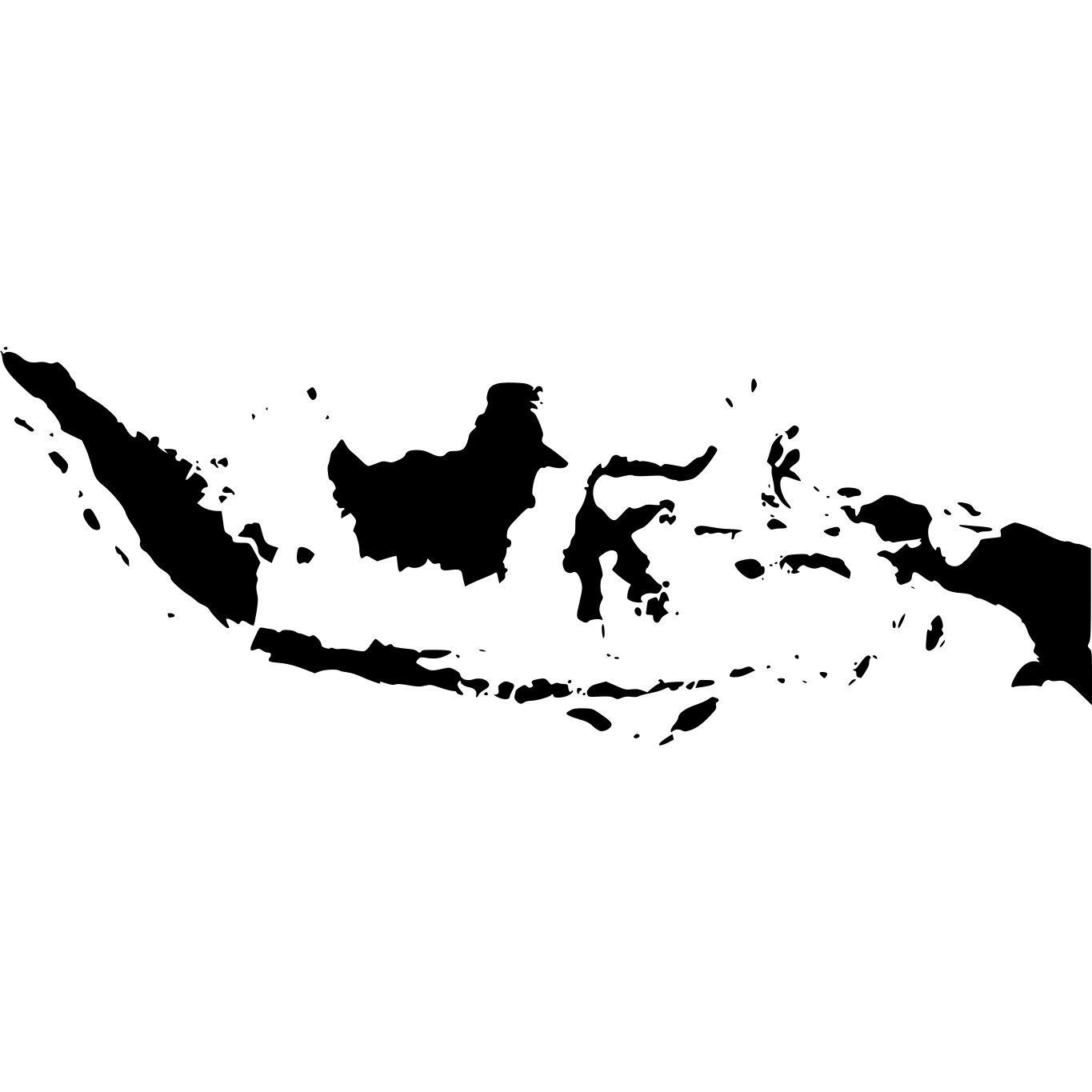
ELFORMULA is a Indonesian brand
Often compared with

We're dedicated to providing you with the most up-to-date and science-backed ingredient info out there.
The data we've presented on this page has been verified by a member of the SkinSort Team.
Read more about us· Updated January 19, 2026 • Added by dickynugrahaprasetya


