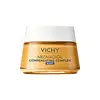
This anti-aging night moisturizer is formulated around Niacinamide and Capryloyl Salicylic Acid to soften the look of wrinkles and balance excess oil.
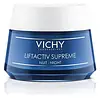
This anti-aging night moisturizer is formulated around Adenosine and Magnesium Ascorbyl Phosphate to soften the look of wrinkles.

What's inside
What's inside
 Key Ingredients
Benefits
Concerns
Ingredients Side-by-side
Water
Skin ConditioningAlcohol Denat.
Antimicrobial




Glycerin
Humectant


Prunus Armeniaca Kernel Oil
Masking


Niacinamide
Smoothing









Dimethicone
Emollient
Hydroxypropyl Tetrahydropyrantriol
Skin ConditioningPropanediol
Solvent
Propylene Glycol
Humectant
Isononyl Isononanoate
EmollientZea Mays Starch
Absorbent
Silica Silylate
Emollient
Poloxamer 338
EmulsifyingHydroxyethylpiperazine Ethane Sulfonic Acid
BufferingOctyldodecanol
Emollient
Dimethiconol
Emollient
Caffeine
Skin Conditioning
Sodium Acrylates Crosspolymer-2
AbsorbentSodium Hyaluronate
Humectant
Silica
Abrasive
Perlite
Absorbent
Adenosine
Skin Conditioning
Ammonium Polyacryloyldimethyl Taurate
Emulsion StabilisingAmmonium Acryloyldimethyltaurate/Steareth-25 Methacrylate Crosspolymer
Emulsion StabilisingCaprylyl Glycol
Emollient
Capryloyl Salicylic Acid
Exfoliating
Laureth-7
EmulsifyingCitric Acid
Buffering
Cassia Angustifolia Seed Polysaccharide
Skin ConditioningTrisodium Ethylenediamine Disuccinate
ChelatingMenthoxypropanediol
Masking
Pentaerythrityl Tetra-Di-T-Butyl Hydroxyhydrocinnamate
Antioxidant
Polyacrylamide
C13-14 Isoparaffin
Emollient
Parfum
Masking

Water, Alcohol Denat., Glycerin, Prunus Armeniaca Kernel Oil, Niacinamide, Dimethicone, Hydroxypropyl Tetrahydropyrantriol, Propanediol, Propylene Glycol, Isononyl Isononanoate, Zea Mays Starch, Silica Silylate, Poloxamer 338, Hydroxyethylpiperazine Ethane Sulfonic Acid, Octyldodecanol, Dimethiconol, Caffeine, Sodium Acrylates Crosspolymer-2, Sodium Hyaluronate, Silica, Perlite, Adenosine, Ammonium Polyacryloyldimethyl Taurate, Ammonium Acryloyldimethyltaurate/Steareth-25 Methacrylate Crosspolymer, Caprylyl Glycol, Capryloyl Salicylic Acid, Laureth-7, Citric Acid, Cassia Angustifolia Seed Polysaccharide, Trisodium Ethylenediamine Disuccinate, Menthoxypropanediol, Pentaerythrityl Tetra-Di-T-Butyl Hydroxyhydrocinnamate, Polyacrylamide, C13-14 Isoparaffin, Parfum
Water
Skin ConditioningGlycerin
Humectant
Rhamnose
HumectantPrunus Armeniaca Kernel Oil
Masking
Caprylic/Capric Triglyceride
Masking
Pentaerythrityl Tetraethylhexanoate
Emollient
Cetyl Alcohol
Emollient
Zea Mays Starch
Absorbent
Butyrospermum Parkii Butter
Skin Conditioning
Petrolatum
Emollient
Glyceryl Stearate
Emollient
Pentylene Glycol
Skin Conditioning
Dimethicone
Emollient
PEG-40 Stearate
Emulsifying
Beeswax
Emulsion Stabilising
Hydroxyethylpiperazine Ethane Sulfonic Acid
BufferingStearyl Alcohol
Emollient
Sorbitan Tristearate
EmulsifyingDimethiconol
Emollient
Triethanolamine
BufferingMyristyl Alcohol
Emollient
Phenoxyethanol
Preservative
Adenosine
Skin Conditioning
Magnesium Ascorbyl Phosphate
Antioxidant
Ascorbyl Glucoside
Antioxidant
Poloxamer 338
EmulsifyingCaprylyl Glycol
Emollient
Xanthan Gum
EmulsifyingPentaerythrityl Tetra-Di-T-Butyl Hydroxyhydrocinnamate
Antioxidant
Parfum
Masking
Water, Glycerin, Rhamnose, Prunus Armeniaca Kernel Oil, Caprylic/Capric Triglyceride, Pentaerythrityl Tetraethylhexanoate, Cetyl Alcohol, Zea Mays Starch, Butyrospermum Parkii Butter, Petrolatum, Glyceryl Stearate, Pentylene Glycol, Dimethicone, PEG-40 Stearate, Beeswax, Hydroxyethylpiperazine Ethane Sulfonic Acid, Stearyl Alcohol, Sorbitan Tristearate, Dimethiconol, Triethanolamine, Myristyl Alcohol, Phenoxyethanol, Adenosine, Magnesium Ascorbyl Phosphate, Ascorbyl Glucoside, Poloxamer 338, Caprylyl Glycol, Xanthan Gum, Pentaerythrityl Tetra-Di-T-Butyl Hydroxyhydrocinnamate, Parfum
Ingredients Explained
These ingredients are found in both products.
Ingredients higher up in an ingredient list are typically present in a larger amount.
Adenosine is a purine nucleoside that your body already makes in every cell. In skincare, it acts mainly as a skin conditioning and anti-aging agent.
The way it works is fairly well mapped out:
Your skin has cells called fibroblasts that build collagen (the stuff that keeps skin firm and smooth). Adenosine basically flips a switch on these cells that tells them to get to work making more collagen and other proteins. These cells slow down on their own as skin ages, so Adenosine helps give them a little nudge to keep going.
The clinical backing is pretty solid too.
A blind, randomized, placebo-controlled trial of 126 women aged 45-65 tested a 0.1% cream twice daily and found real improvements in crow's feet and frown lines using a precise 3D skin-mapping technique; these changes showed up by week 3 and held at 2 months.
A later study using Adenosine-loaded dissolving microneedle patches reported gains in wrinkle depth, dermal density, elasticity, and hydration.
On concentrations, South Korea's Ministry of Food and Drug Safety has set 0.04% as the approved functional anti-wrinkle level. You'll typically see this ingredient used somewhere in the 0.04-0.1% range since it works at low doses.
This ingredient has been found safe for cosmetics with the data showing no irritation or sensitization.
Overall, this is a great ingredient for any anti-aging routine and has no photosensitizing effect, so it suits both AM and PM use.
Learn more about AdenosineCaprylyl Glycol is a humectant, skin conditioner, emollient, and preservative booster derived from either caprylic acid or synthetically created.
Typical use levels vary from 0.3-1% as a preservative booster and go up to 2% to condition skin.
Because it is not a free-fatty acid, this ingredient is fungal acne safe (there's nothing for Malassezia to feed on).
Learn more about Caprylyl GlycolDimethicone is a type of synthetic silicone created from natural materials such as quartz. It is also known as polydimethylsiloxane.
What it does:
Dimethicone comes in different viscosities:
Depending on the viscosity, dimethicone has different properties.
Ingredients lists don't always show which type is used, so we recommend reaching out to the brand if you have questions about the viscosity.
This ingredient is unlikely to cause irritation because it does not get absorbed into skin. However, people with silicone allergies should be careful about using this ingredient.
Note: Dimethicone may contribute to pilling. This is because it is not oil or water soluble, so pilling may occur when layered with products. When mixed with heavy oils in a formula, the outcome is also quite greasy.
Learn more about DimethiconeDimethiconol is a silicone that resembles the popular dimethicone. Like other silicones, it is an emollient. Emollients create a thin film on skin to prevent moisture from escaping.
This ingredient helps to create a silky texture and improve spreadability. Due to its high molecular weight and thickness, it is often combined with cyclopentasiloxane.
Glycerin (or glycerol) is a compound naturally found in your skin. It's a powerhouse humectant that pulls water into the stratum corneum.
Topically, glycerin does several things at once:
Your skin makes glycerin on its own (mostly from sebaceous oil breakdown) and shuttles it to your outermost layer of skin, or your epidermis, via aquaporin-3.
Aquaporin-3 is a transporter that is essential for normal skin hydration, elasticity, and repair. Interestingly, mice lacking in AQP3 have dry and less elastic skin that can be fully corrected with glycerin.
This ingredient is non-irritating, plays well with almost every ingredient, and works across all skin types. Typical use is anywhere between 3-10% but can go up to 79% in some leave-on products.
Just know very high concentrations (>40%) can feel tacky in low humidity.
Glycerin is the name for this ingredient in American English. British English uses Glycerol/Glycerine.
Learn more about GlycerinWe don't have a description for Hydroxyethylpiperazine Ethane Sulfonic Acid yet.
Parfum is a catch-all term for an ingredient or more that is used to give a scent to products.
Also called "fragrance", this ingredient can be a blend of hundreds of chemicals or plant oils. This means every product with "fragrance" or "parfum" in the ingredients list is a different mixture.
For instance, Habanolide is a proprietary trade name for a specific aroma chemical. When used as a fragrance ingredient in cosmetics, most aroma chemicals fall under the broad labeling category of “FRAGRANCE” or “PARFUM” according to EU and US regulations.
The term 'parfum' or 'fragrance' is not regulated in many countries. In many cases, it is up to the brand to define this term.
For instance, many brands choose to label themselves as "fragrance-free" because they are not using synthetic fragrances. However, their products may still contain ingredients such as essential oils that are considered a fragrance by INCI standards.
One example is Calendula flower extract. Calendula is an essential oil that still imparts a scent or 'fragrance'.
Depending on the blend, the ingredients in the mixture can cause allergies and sensitivities on the skin. Some ingredients that are known EU allergens include linalool and citronellol.
Parfum can also be used to mask or cover an unpleasant scent.
The bottom line is: not all fragrances/parfum/ingredients are created equally. If you are worried about fragrances, we recommend taking a closer look at an ingredient. And of course, we always recommend speaking with a professional.
Learn more about ParfumPentaerythrityl Tetra-Di-T-Butyl Hydroxyhydrocinnamate (long name, huh?) is a synthetic antioxidant.
It is used to help stabilize other antioxidants or prevent the color from changing in a product.
As an antioxidant, it helps fight free-radical molecules. Free-radical molecules are capable of damaging our cells and other genetic material. Thus, antioxidants may reduce the signs of aging.
This ingredient is oil-soluble.
Learn more about Pentaerythrityl Tetra-Di-T-Butyl HydroxyhydrocinnamateWe don't have a description for Poloxamer 338 yet.
This ingredient is also known as Apricot kernel oil, and it comes form the seed kernels of apricot (a member of the Rosaceae family like almond, peach, cherry, and plum).
It's mostly made up of triglycerides: oleic acid (43.9-78.5%), linoleic acid (9.7-37%), and palmitic acid (4.9-7.3%). These numbers vary depending on the variety of Prunus and the ripeness of the fruit; oleic tends to go up at late harvest while linoleic goes down.
Vitamin E is also prevalent in this ingredient and the most dominant form is gamma-tocopherol.
These compounds give the ingredient emollient and skin conditioning properties that keep the skin soft and hydrated.
There's no regulatory maximum cap for this ingredient so you'll see it across a huge concentration range (100% as a single ingredient facial oil).
On allergies: refined cosmetic-grade oils carry almost no protein. The CIR notes that people allergic to a food generally do not react to the refined oil because the allergenic protein does not partition into it (though cold-pressed grades retain more).
However, it's worth patch testing if you have a stone fruit or tree nut allergy because manufacturer processes for removing the protein can vary.
Malassezia lacks the cytosolic fatty acid synthase gene so the yeast cannot make palmitate on its own and instead uses lipases and phospholipases to release fatty acids from host lipids. Since apricot kernel oil is entirely C16-18 (right in the usable range of C11-24), this ingredient may not be fungal acne safe.
Old rabbit-ear testing did assign this ingredient a comedogenic rating of 1-2. The original author has stated that testing on rabbit ears is not an ideal model for human comedogenicity.
Human testing has proved that any finished product with a comedogenic ingredient won't automatically make you break out; it really comes down to concentration, formula, and your skin.
Just know high-oleic oils tend to feel heavier on oily skin so it's worth patch testing.
Learn more about Prunus Armeniaca Kernel OilWater. It's the most common cosmetic ingredient of all. You'll usually see it at the top of ingredient lists, meaning that it makes up the largest part of the product.
So why is it so popular? Water most often acts as a solvent - this means that it helps dissolve other ingredients into the formulation.
You'll also recognize water as that liquid we all need to stay alive. If you see this, drink a glass of water. Remember to stay hydrated!
Learn more about WaterZea Mays Starch is starch made from corn. You might know this as cornstarch . It is used to thicken a product. It can replace talc as an absorbent.
The pH of cornstarch is 5.92.
Cornstarch is a common food ingredient used to thicken soups or to make corn syrup.
Learn more about Zea Mays Starch

