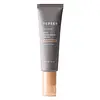
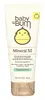
Versed Good Defense Daily Sunscreen SPF 50 Versus Sun Bum Baby Bum Mineral SPF 50 Sunscreen Lotion-Fragrance Free
This chemical sunscreen covers most of the UV range, lighter on the deep UVA that drives aging.
This hybrid sunscreen covers the full UV range and blocks ~98% of UVB at SPF 50.

What's inside
What's inside
 Key Ingredients
Benefits
Concerns
Ingredients Side-by-side
Butyl Methoxydibenzoylmethane 3%
UV Absorber
Homosalate 7.3%
Skin Conditioning
Ethylhexyl Salicylate 5%
UV Absorber
Water
Skin ConditioningCaprylic/Capric Triglyceride
Masking


Butyloctyl Salicylate
Skin Conditioning
Ethylhexyl Methoxycrylene
Skin Conditioning
Dipropylene Glycol
HumectantBetaine
Humectant
Shorea Stenoptera Seed Butter
Emollient

Vp/Hexadecene Copolymer
Ceramide NP
Skin Conditioning


Arginine
Masking
Serine
Masking
Alanine
Masking
Glycine
Buffering
Threonine
Proline
Skin Conditioning
Valine
MaskingHistidine
Humectant
Isoleucine
Skin ConditioningPhenylalanine
Masking
Aspartic Acid
Masking
Spirodela Polyrhiza Extract
Skin ConditioningPCA
Humectant
Sodium PCA
Humectant
Bisabolol
Antioxidant
Hydroxyacetophenone
Antioxidant
Dibutyl Lauroyl Glutamide
Skin ConditioningDibutyl Ethylhexanoyl Glutamide
Skin ConditioningGlycolipids
Skin ConditioningDipotassium Glycyrrhizate
Humectant
Sodium Lactate
Buffering
Ammonium Acryloyldimethyltaurate/Vp Copolymer
Carbomer
Emulsion StabilisingPentylene Glycol
Skin Conditioning
Tromethamine
BufferingPhenoxyethanol
Preservative
Butyl Methoxydibenzoylmethane 3%, Homosalate 7.3%, Ethylhexyl Salicylate 5%, Water, Caprylic/Capric Triglyceride, Butyloctyl Salicylate, Ethylhexyl Methoxycrylene, Dipropylene Glycol, Betaine, Shorea Stenoptera Seed Butter, Vp/Hexadecene Copolymer, Ceramide NP, Arginine, Serine, Alanine, Glycine, Threonine, Proline, Valine, Histidine, Isoleucine, Phenylalanine, Aspartic Acid, Spirodela Polyrhiza Extract, PCA, Sodium PCA, Bisabolol, Hydroxyacetophenone, Dibutyl Lauroyl Glutamide, Dibutyl Ethylhexanoyl Glutamide, Glycolipids, Dipotassium Glycyrrhizate, Sodium Lactate, Ammonium Acryloyldimethyltaurate/Vp Copolymer, Carbomer, Pentylene Glycol, Tromethamine, Phenoxyethanol
Zinc Oxide 20%
Cosmetic Colorant
Water
Skin ConditioningCocos Nucifera Oil
Masking




Butyloctyl Salicylate
Skin Conditioning
Diheptyl Succinate
EmollientMethyl Dihydroabietate
Butyrospermum Parkii Butter
Skin Conditioning
Capryloyl Glycerin/Sebacic Acid Copolymer
Skin ConditioningSodium Stearoyl Glutamate
CleansingCetearyl Alcohol
Emollient
Theobroma Cacao Seed Butter
Emollient
Sodium Hyaluronate
Humectant
Bisabolol
Antioxidant
Tocopherol
Antioxidant


Coco-Glucoside
Cleansing
Microcrystalline Cellulose
AbsorbentCellulose Gum
Emulsion StabilisingCetyl Alcohol
Emollient
Arachidyl Alcohol
Emollient
Behenyl Alcohol
Emollient
Arachidyl Glucoside
EmulsifyingPolyhydroxystearic Acid
Emulsifying
Sodium Gluconate
ChelatingPhenoxyethanol
Preservative
Ethylhexylglycerin
Skin ConditioningCitric Acid
Buffering
Zinc Oxide 20%, Water, Cocos Nucifera Oil, Butyloctyl Salicylate, Diheptyl Succinate, Methyl Dihydroabietate, Butyrospermum Parkii Butter, Capryloyl Glycerin/Sebacic Acid Copolymer, Sodium Stearoyl Glutamate, Cetearyl Alcohol, Theobroma Cacao Seed Butter, Sodium Hyaluronate, Bisabolol, Tocopherol, Coco-Glucoside, Microcrystalline Cellulose, Cellulose Gum, Cetyl Alcohol, Arachidyl Alcohol, Behenyl Alcohol, Arachidyl Glucoside, Polyhydroxystearic Acid, Sodium Gluconate, Phenoxyethanol, Ethylhexylglycerin, Citric Acid
Reviews
Ingredients Explained
These ingredients are found in both products.
Ingredients higher up in an ingredient list are typically present in a larger amount.
Bisabolol is a gentle skin conditioner, antioxidant, and soothing ingredient.
It's primary claim to fame is soothing and research shows topically applied bisabolol can quiet the chemical messengers that cause your skin to become inflamed, helping to sooth any irritation.
A clinical study found that applying 0.5% bisabolol daily for 8 weeks produced an average 9% decrease in skin pigmentation. Researchers found it can also suppress the process that leads to excess melanin production in skin.
In vitro studies found that bisabolol combined with propylene glycol significantly increased skin permeability by increasing lipid fluidity in the stratum corneum.
You'll likely see use concentrations quite low, usually 0.1-0.2%.
Overall, this is a well-tolerated ingredient that works well in formulas designed for sensitive, reactive, or post-procedure skin.
Learn more about BisabololButyloctyl Salicylate is a chemical UV filter structurally similar to octisalate. It is a photostabilizer, SPF booster, emollient and solvent. This ingredient helps evenly spread out ingredients.
According to a manufacturer, it is suitable for pairing with micro Titanium Dioxide, Zinc Oxide, and pigments.
Photostabilizers help stabilize UV-filters and prevents them from degrading quickly.
Learn more about Butyloctyl SalicylatePhenoxyethanol is one of the most widely used preservatives in skincare (and for good reason!).
It has a large spectrum of antimicrobial activity and especially effective bacteria, yeast, and mold while only having a weak effect on your skin's natural microbiome.
On a cellular level, it disrupts the cell membranes of microbes by poking holes that make the cell leak. This shuts down the chemical reactions the microbe needs to make energy so it can no longer survive.
Another perk of this ingredient is that it stays functional across a wide pH range (3-10).
You'll often see it paired with boosters like Ethylhexylglycerin; one study showed that a 1:9 ratio of Ethylhexylglycerin to Phenoxyethanol damages bacterial membranes as effectively as doubling the Phenoxyethanol concentration on its own.
Typical use concentrations range from 0.3-1% depending on the formula, and this ingredient is capped at 1% int the EU.
Safety-wise, the fear mongering does not hold up to the evidence. The EU's Scientific Committee on Consumer Safety and FDA consider it safe as a preservative at up to 1%, including for children of all ages.
Adverse systemic effects only showed up in animal studies at exposures roughly 200x higher than what people get from cosmetics. And despite its very widespread use, this ingredient is a rare sensitizer and allergic reactions are uncommon.
Learn more about PhenoxyethanolWater. It's the most common cosmetic ingredient of all. You'll usually see it at the top of ingredient lists, meaning that it makes up the largest part of the product.
So why is it so popular? Water most often acts as a solvent - this means that it helps dissolve other ingredients into the formulation.
You'll also recognize water as that liquid we all need to stay alive. If you see this, drink a glass of water. Remember to stay hydrated!
Learn more about Water

