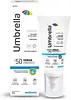
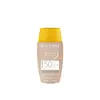
Umbrella Urban Protect Ultra Light Emulsion SPF 50 Versus Bioderma Photoderm Nude Touch Mineral SPF 50+
This hybrid sunscreen covers the full UV range and blocks ~98% of UVB at SPF 50.
This mineral sunscreen covers the full UV range and blocks ~98% of UVB at SPF 50.


What's inside
What's inside
 Key Ingredients
Benefits
Concerns
Ingredients Side-by-side
Water
Skin ConditioningButyl Methoxydibenzoylmethane
UV Absorber
Ethylhexyl Methoxycinnamate
UV Absorber

Octocrylene
UV Absorber
Butylene Glycol
Humectant

Phospholipids
Skin Conditioning
Phenoxyethanol
Preservative
Cyclotetrasiloxane
Emollient
Cyclopentasiloxane
Emollient
Tris-Biphenyl Triazine
UV Absorber
Decyl Glucoside
Cleansing
Disodium Phosphate
BufferingXanthan Gum
EmulsifyingHydrogenated Polyisobutene
EmollientDimethicone Crosspolymer-3
Skin Conditioning
Laureth-4
Emulsifying
Laureth-23
Cleansing
Bis-PEG-18 Methyl Ether Dimethyl Silane
EmollientIsopentyldiol
Humectant
Polymethyl Methacrylate

PEG-12 Dimethicone
Skin Conditioning
C12-15 Alkyl Benzoate
AntimicrobialDibutyl Adipate
EmollientSodium Polyacrylate
Absorbent
Dimethicone
Emollient
Trideceth-6
EmulsifyingPEG/PPG-18/18 Dimethicone
Emulsifying
Caprylyl Methicone
Skin Conditioning
Polymethylsilsesquioxane
Methylene Bis-Benzotriazolyl Tetramethylbutylphenol
UV Filter
Propylene Glycol
Humectant
Bis-Ethylhexyloxyphenol Methoxyphenyl Triazine
UV Absorber
Sodium Laureth Sulfate
Cleansing

Aminomethyl Propanol
BufferingDimethicone Crosspolymer
Emulsion Stabilising
Dimethicone/Vinyl Dimethicone Crosspolymer
Skin Conditioning
Dimethiconol
Emollient
Gossypium Hirsutum Extract
Skin ConditioningSodium Stearoyl Glutamate
CleansingHydroxyacetophenone
Antioxidant
1,2-Hexanediol
Skin Conditioning
Caprylyl Glycol
Emollient
Diisopropyl Adipate
EmollientOxothiazolidine
Skin ProtectingAmmonium Acryloyldimethyltaurate/Carboxyethyl Acrylate Crosspolymer
Benzylidene Dimethoxydimethylindanone
Skin ProtectingTitanium Dioxide
Cosmetic Colorant
Mica
Cosmetic ColorantTin Oxide
Abrasive
Potassium Cetyl Phosphate
EmulsifyingHydrogenated Palm Glycerides
Emollient
Disodium EDTA
Water, Butyl Methoxydibenzoylmethane, Ethylhexyl Methoxycinnamate, Octocrylene, Butylene Glycol, Phospholipids, Phenoxyethanol, Cyclotetrasiloxane, Cyclopentasiloxane, Tris-Biphenyl Triazine, Decyl Glucoside, Disodium Phosphate, Xanthan Gum, Hydrogenated Polyisobutene, Dimethicone Crosspolymer-3, Laureth-4, Laureth-23, Bis-PEG-18 Methyl Ether Dimethyl Silane, Isopentyldiol, Polymethyl Methacrylate, PEG-12 Dimethicone, C12-15 Alkyl Benzoate, Dibutyl Adipate, Sodium Polyacrylate, Dimethicone, Trideceth-6, PEG/PPG-18/18 Dimethicone, Caprylyl Methicone, Polymethylsilsesquioxane, Methylene Bis-Benzotriazolyl Tetramethylbutylphenol, Propylene Glycol, Bis-Ethylhexyloxyphenol Methoxyphenyl Triazine, Sodium Laureth Sulfate, Aminomethyl Propanol, Dimethicone Crosspolymer, Dimethicone/Vinyl Dimethicone Crosspolymer, Dimethiconol, Gossypium Hirsutum Extract, Sodium Stearoyl Glutamate, Hydroxyacetophenone, 1,2-Hexanediol, Caprylyl Glycol, Diisopropyl Adipate, Oxothiazolidine, Ammonium Acryloyldimethyltaurate/Carboxyethyl Acrylate Crosspolymer, Benzylidene Dimethoxydimethylindanone, Titanium Dioxide, Mica, Tin Oxide, Potassium Cetyl Phosphate, Hydrogenated Palm Glycerides, Disodium EDTA
Zinc Oxide
Cosmetic Colorant
Dimethicone
Emollient
Isododecane
EmollientIsostearyl Isostearate
Emollient
Butyrospermum Parkii Oil
Emollient
Titanium Dioxide
Cosmetic Colorant
Propylheptyl Caprylate
EmollientDipropylene Glycol
HumectantMethyl Methacrylate Crosspolymer
Silica
Abrasive
Polymethylsilsesquioxane
Water
Skin ConditioningPolyhydroxystearic Acid
Emulsifying
Hdi/Trimethylol Hexyllactone Crosspolymer
CI 77492
Cosmetic ColorantPEG-10 Dimethicone
Skin Conditioning
Polysilicone-11
Triethoxycaprylylsilane
Salicylic Acid
Masking



Butylene Glycol
Humectant
CI 77491
Cosmetic ColorantCapryloyl Glycine
CleansingPropyl Gallate
Antioxidant

CI 77499
Cosmetic ColorantHydrogenated Lecithin
Emulsifying
Caprylyl Glycol
Emollient
Decyl Glucoside
Cleansing
Tocopherol
Antioxidant



Ectoin
Skin Conditioning

Mannitol
Humectant
Xylitol
Humectant
Alumina
Abrasive
Magnesium Oxide
AbsorbentZinc Oxide, Dimethicone, Isododecane, Isostearyl Isostearate, Butyrospermum Parkii Oil, Titanium Dioxide, Propylheptyl Caprylate, Dipropylene Glycol, Methyl Methacrylate Crosspolymer, Silica, Polymethylsilsesquioxane, Water, Polyhydroxystearic Acid, Hdi/Trimethylol Hexyllactone Crosspolymer, CI 77492, PEG-10 Dimethicone, Polysilicone-11, Triethoxycaprylylsilane, Salicylic Acid, Butylene Glycol, CI 77491, Capryloyl Glycine, Propyl Gallate, CI 77499, Hydrogenated Lecithin, Caprylyl Glycol, Decyl Glucoside, Tocopherol, Ectoin, Mannitol, Xylitol, Alumina, Magnesium Oxide
Reviews
Ingredients Explained
These ingredients are found in both products.
Ingredients higher up in an ingredient list are typically present in a larger amount.
Butylene Glycol (or BG) is used within cosmetic products for a few different reasons:
Overall, Butylene Glycol is a safe and well-rounded ingredient that works well with other ingredients.
Though this ingredient works well with most skin types, some people with sensitive skin may experience a reaction such as allergic rashes, closed comedones, or itchiness.
Learn more about Butylene GlycolCaprylyl Glycol is a humectant, skin conditioner, emollient, and preservative booster derived from either caprylic acid or synthetically created.
Typical use levels vary from 0.3-1% as a preservative booster and go up to 2% to condition skin.
Because it is not a free-fatty acid, this ingredient is fungal acne safe (there's nothing for Malassezia to feed on).
Learn more about Caprylyl GlycolDecyl Glucoside is a plant-derived surfactant and emulsion stabilizer. It is created by reacting glucose with the fatty acids from plants.
Like all surfactants, it works by lowering the surface tension between water and oil. This makes it so that dirt, sebum, and makeup can be lifted off your skin and rinsed away. It also produces a dense and creamy foam.
Because it has a neutral charge, it is compatible with a wide range of ingredients and stays stable across a broad pH range/water hardiness conditions.
Patch testing has shown it to have the lowest irritation potential among common cleansing surfactants (like SLS).
Typical use levels range from 5-20% in rinse-off cleansers.
One thing worth knowing: The American Contact Dermatitis Society named the parent family, alkyl glucosides, "Allergen of the Year" in 2017. The prevalence of allergy is pretty low but be sure to patch test if you've reacted to "gentle" or sulfate-free cleansers before.
This ingredient is fungal acne safe because the fatty alcohol portion of this ingredient is not within the C11-24 chain length that Malassezia can metabolize.
Learn more about Decyl GlucosideDimethicone is a type of synthetic silicone created from natural materials such as quartz. It is also known as polydimethylsiloxane.
What it does:
Dimethicone comes in different viscosities:
Depending on the viscosity, dimethicone has different properties.
Ingredients lists don't always show which type is used, so we recommend reaching out to the brand if you have questions about the viscosity.
This ingredient is unlikely to cause irritation because it does not get absorbed into skin. However, people with silicone allergies should be careful about using this ingredient.
Note: Dimethicone may contribute to pilling. This is because it is not oil or water soluble, so pilling may occur when layered with products. When mixed with heavy oils in a formula, the outcome is also quite greasy.
Learn more about DimethiconePolymethylsilsesquioxane is a silicone used as a film forming agent.
When applied to the skin, this ingredient creates an invisible film on the surface. This film still allows oxygen to pass through, but prevents moisture from escaping. This can help condition and hydrate the skin. It also leaves a silky feel when applied.
Polymethylsilsesquioxane has not been shown to clog pores. It has been deemed safe to use up to 55%, but most cosmetics use much less.
If you have concerns about using this ingredient, we recommend speaking with a professional.
Learn more about PolymethylsilsesquioxaneTitanium Dioxide (TD) is a mineral UV filter widely used in sunscreens and cosmetics.
It's one of only two UV filters officially classified as "mineral" by regulatory agencies (the other being Zinc Oxide).
A really common myth is that mineral filters work by reflecting UV light off your skin like tiny mirrors.
They don't only do that; modern research shows TD protects mostly by absorbing UV radiation, the same way chemical filters do.
When researchers measured this, reflection accounted for only about 4-5% of the protection (and less than SPF 2 on its own). The other ~95% comes from absorption: the UV photons hit the particle and their energy gets soaked up by its semiconductor band gap rather than bouncing off.
So "reflects vs. absorbs" was never really the right way to split mineral from chemical filters.
TD gives broad-spectrum protection that's strongest in the UVB and UVA-2 range and weaker in the UVA-1 range. Its UVA protection isn't quite as strong as Zinc Oxide's which is why you'll often see the two paired together.
Together, they make a solid broad-spectrum system.
TD is a great pick for sensitive, acne-prone, or redness-prone skin because it's non-irritating and chemically inert. Regulatory reviews classify it as a non-sensitizer and mild-to-non-irritant.
It's also unlikely to cause the "eye sting" some chemical filters are known for.
The main trade-off is cosmetic; TD can leave a white cast and has a thicker texture. This is why mineral sunscreens are often less cosmetically elegant than chemical or hybrid formulas (and harder to shade-match on deeper skin tones).
Formulators often use micronized or nano-sized TD to cut down on white case and improve spreadability. Smaller particles scatter less visible light so the formula looks less chalky while still filtering UV.
TD is almost always bundled with coatings like Alumina, Silica, Stearic Acid, or Dimethicone. These coatings do two important jobs:
TD can be used at up to 25% in a finished sunscreen; this is the regulatory ceiling in both the US and the EU.
In practice, the amount in any given product varies a lot depending on the target SPF and whether it's paired with other UV filters.
TD is one of the most heavily vetted sunscreen ingredients out there. It is approved as a UV filter in all major markets worldwide, including the US, EU, UK, Japan, Korea, China, Australia, and Canada.
The safety evidence is solid. There was an old worry that nano particles might absorb through skin into the body but multiple studies (including on damaged, sunburned, and UV-irradiated skin) have shown that TD stays on the surface and the layer of dead skin cells on top of everything else.
There's also no evidence of carcinogenicity, mutagenicity, or reproductive toxicity from dermal exposure of this ingredient.
For those who have seen the headline about a 2022 EU ban on TD, that was on TD as a food additive (a complete separate use from topical sunscreen).
There are ongoing questions about how nano-TD might affect marine ecosystems. As of now, there has been no conclusive evidence that any form of TD (or any other sunscreen filter) harms coral reefs or marine life.
The science is still developing and it's a space worth watching rather than packing over.
However, several destinations have reef-safety sunscreen rules that restrict certain chemical filters and steer visitors toward mineral, non-nano options. If you're traveling somewhere with these rules, a non-nano mineral sunscreen is the safe bet.
Learn more about Titanium DioxideWater. It's the most common cosmetic ingredient of all. You'll usually see it at the top of ingredient lists, meaning that it makes up the largest part of the product.
So why is it so popular? Water most often acts as a solvent - this means that it helps dissolve other ingredients into the formulation.
You'll also recognize water as that liquid we all need to stay alive. If you see this, drink a glass of water. Remember to stay hydrated!
Learn more about Water

