Too Faced Natural Chocolate Bronzer Versus Too Faced Chocolate Soleil Melting Bronzing & Sculpting Stick

What's inside
What's inside
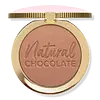 Key Ingredients
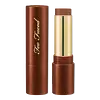
Benefits
Concerns
Ingredients Side-by-side
Mica
Cosmetic ColorantOctyldodecyl Stearoyl Stearate
Emollient

Silica
Abrasive


Zinc Stearate
Cosmetic ColorantZea Mays Starch
Absorbent
Glyceryl Caprylate
EmollientP-Anisic Acid
MaskingTheobroma Cacao Fruit Powder
Skin ConditioningRhododendron Ferrugineum Extract
MaskingSodium Hyaluronate
Humectant




Glycerin
Humectant
Glycine Soja Oil
Emollient





Water
Skin ConditioningParfum
Masking


Benzyl Benzoate
Antimicrobial
Benzyl Alcohol
Perfuming

Tocopherol
Antioxidant


CI 77891
Cosmetic ColorantCI 77491
Cosmetic ColorantCI 77492
Cosmetic ColorantCI 77499
Cosmetic ColorantCI 15850
Cosmetic ColorantCI 77007
Cosmetic ColorantCI 19140
Cosmetic ColorantMica, Octyldodecyl Stearoyl Stearate, Silica, Zinc Stearate, Zea Mays Starch, Glyceryl Caprylate, P-Anisic Acid, Theobroma Cacao Fruit Powder, Rhododendron Ferrugineum Extract, Sodium Hyaluronate, Glycerin, Glycine Soja Oil, Water, Parfum, Benzyl Benzoate, Benzyl Alcohol, Tocopherol, CI 77891, CI 77491, CI 77492, CI 77499, CI 15850, CI 77007, CI 19140
Water
Skin ConditioningC12-15 Alkyl Benzoate
AntimicrobialPhenyl Trimethicone
Skin Conditioning
Synthetic Wax
Abrasive
Mica
Cosmetic ColorantSilica
Abrasive
Dimethicone
Emollient
Octyldodecanol
Emollient
Hydrogenated Polyisobutene
EmollientSorbitan Olivate
Emulsifying
Boron Nitride
Absorbent
Dipentaerythrityl Hexa C5-9 Acid Esters
Skin ConditioningDiisostearyl Malate
EmollientCaprylyl Glycol
Emollient
Methicone
Emollient
Squalane
Emollient
Theobroma Cacao Fruit Powder
Skin ConditioningButylene Glycol
Humectant
Citrus Aurantium Dulcis Fruit Extract
MaskingPropylene Carbonate
Solvent1,2-Hexanediol
Skin Conditioning
Palmitic Acid
Emollient
Stearic Acid
Cleansing
Oleic Acid
Emollient
Arachidic Acid
Cleansing
Cetyl Alcohol
Emollient
Sodium Chloride
MaskingEthylene/Propylene Copolymer
Abrasive
Triethoxycaprylylsilane
Myristic Acid
Cleansing
Disteardimonium Hectorite
StabilisingParfum
Masking
Limonene
Perfuming
Benzyl Benzoate
Antimicrobial
Tocopheryl Acetate
Antioxidant
CI 77891
Cosmetic ColorantCI 77491
Cosmetic ColorantCI 77492
Cosmetic ColorantCI 77499
Cosmetic ColorantWater, C12-15 Alkyl Benzoate, Phenyl Trimethicone, Synthetic Wax, Mica, Silica, Dimethicone, Octyldodecanol, Hydrogenated Polyisobutene, Sorbitan Olivate, Boron Nitride, Dipentaerythrityl Hexa C5-9 Acid Esters, Diisostearyl Malate, Caprylyl Glycol, Methicone, Squalane, Theobroma Cacao Fruit Powder, Butylene Glycol, Citrus Aurantium Dulcis Fruit Extract, Propylene Carbonate, 1,2-Hexanediol, Palmitic Acid, Stearic Acid, Oleic Acid, Arachidic Acid, Cetyl Alcohol, Sodium Chloride, Ethylene/Propylene Copolymer, Triethoxycaprylylsilane, Myristic Acid, Disteardimonium Hectorite, Parfum, Limonene, Benzyl Benzoate, Tocopheryl Acetate, CI 77891, CI 77491, CI 77492, CI 77499
Ingredients Explained
These ingredients are found in both products.
Ingredients higher up in an ingredient list are typically present in a larger amount.
Benzyl Benzoate is usually created from the condensation of benzoic acid and benzyl alcohol. It is used as a preservative, solvent, and has a floral/balsamic scent in large amounts.
As a preservative, Benzyl Benzoate works against bacteria and fungus. It is often used to treat scabies and lice in medicine.
Solvents are used to keep ingredients together in a product. They can help dissolve ingredients to stable bases or help evenly distribute ingredients throughout the product.
Due to its fragrance, Benzyl Benzoate can be sensitizing and may cause contact dermatitis. It is a known EU allergen. We recommend speaking with a professional if you have any concerns.
Benzyl Benzoate can be naturally found in cranberries and peaches.
Learn more about Benzyl BenzoateCi 77491 is also hydrated iron III oxide. It's sole purpose is to give a red/pink hue to products.
Iron III oxides are classified as inorganic chemicals for coloring.
Synthetically created Ci 77491 is considered safer than those naturally found. This is because the synthetically created version may contain less impurities. Iron oxides are generally non-toxic and non-allergenic.
Learn more about CI 77491CI 77492 is also hydrated iron III oxide. It's sole purpose is to give a yellow hue to products.
Iron III oxides are classified as inorganic chemicals for coloring.
Synthetically created CI 77492 is considered safer than those naturally found. This is because the synthetically created version may contain less impurities. Iron oxides are generally non-toxic and non-allergenic.
Learn more about CI 77492Ci 77499 is also hydrated iron III oxide. It is created from mixing red and black iron oxides. This helps give shades of darkness to a product.
Iron III oxides are classified as inorganic chemicals for coloring.
Ci 77891 is a white pigment from Titanium dioxide. It is naturally found in minerals such as rutile and ilmenite.
It's main function is to add a white color to cosmetics. It can also be mixed with other colors to create different shades.
Ci 77891 is commonly found in sunscreens due to its ability to block UV rays.
Learn more about CI 77891Mica is a naturally occurring mineral used to add shimmer and color in cosmetics. It can also help improve the texture of a product or give it an opaque, white/silver color.
Serecite is the name for very fine but ragged grains of mica.
This ingredient is often coated with metal oxides like titanium dioxide. Trace amounts of heavy metals may be found in mica, but these metals are not harmful in our personal products.
Mica has been used since prehistoric times throughout the world. Ancient Egyptian, Indian, Greek, Roman, Aztec, and Chinese civilizations have used mica.
Learn more about MicaParfum is a catch-all term for an ingredient or more that is used to give a scent to products.
Also called "fragrance", this ingredient can be a blend of hundreds of chemicals or plant oils. This means every product with "fragrance" or "parfum" in the ingredients list is a different mixture.
For instance, Habanolide is a proprietary trade name for a specific aroma chemical. When used as a fragrance ingredient in cosmetics, most aroma chemicals fall under the broad labeling category of “FRAGRANCE” or “PARFUM” according to EU and US regulations.
The term 'parfum' or 'fragrance' is not regulated in many countries. In many cases, it is up to the brand to define this term.
For instance, many brands choose to label themselves as "fragrance-free" because they are not using synthetic fragrances. However, their products may still contain ingredients such as essential oils that are considered a fragrance by INCI standards.
One example is Calendula flower extract. Calendula is an essential oil that still imparts a scent or 'fragrance'.
Depending on the blend, the ingredients in the mixture can cause allergies and sensitivities on the skin. Some ingredients that are known EU allergens include linalool and citronellol.
Parfum can also be used to mask or cover an unpleasant scent.
The bottom line is: not all fragrances/parfum/ingredients are created equally. If you are worried about fragrances, we recommend taking a closer look at an ingredient. And of course, we always recommend speaking with a professional.
Learn more about ParfumSilica, also known as silicon dioxide, is a naturally occurring mineral. It is used as a fine, spherical, and porous powder in cosmetics.
Though it has exfoliant properties, the function of silica varies depending on the product.
The unique structure of silica enhances the spreadability and adds smoothness, making it a great texture enhancer.
It is also used as an active carrier, emulsifier, and mattifier due to its ability to absorb excess oil.
In some products, tiny microneedles called spicules are made from silica or hydrolyzed sponge. When you rub them in, they lightly polish away dead skin layers and enhance the penetration of active ingredients.
Learn more about SilicaThis ingredient is extracted from the fruit of the cocoa tree.
Each fruit contains about 20-60 seeds. Cacao seeds contain antioxidants known as polyphenols. These include flavonoids, procyanidins, and epicatechins.
The more famous ingredient from cocoa tree is cocoa butter.
Learn more about Theobroma Cacao Fruit PowderWater. It's the most common cosmetic ingredient of all. You'll usually see it at the top of ingredient lists, meaning that it makes up the largest part of the product.
So why is it so popular? Water most often acts as a solvent - this means that it helps dissolve other ingredients into the formulation.
You'll also recognize water as that liquid we all need to stay alive. If you see this, drink a glass of water. Remember to stay hydrated!
Learn more about Water

