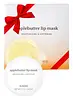
This hydrating lip mask is formulated around Sodium Hyaluronate and Squalane to hydrate lips and refine skin texture.
This hydrating lip mask is formulated around Butyrospermum Parkii Butter and Pyrus Malus Fruit Extract to hydrate lips and strengthen the lip barrier.


What's inside
What's inside
 Key Ingredients
Benefits
Concerns
Ingredients Side-by-side
Diisostearyl Malate
EmollientTriethylhexanoin
MaskingPolyglyceryl-2 Isostearate/Dimer Dilinoleate Copolymer
EmollientDipentaerythrityl Hexahydroxystearate/Hexastearate/Hexarosinate
Skin ConditioningSynthetic Wax
Abrasive

Cucumis Melo Fruit Extract
Skin ConditioningSodium Hyaluronate
Humectant




Persea Gratissima Oil
Skin Conditioning




Squalane
Emollient
Lactic Acid
Buffering







Tocopheryl Acetate
Antioxidant

Olea Europaea Fruit Oil
Masking
Ethylhexylglycerin
Skin ConditioningWater
Skin ConditioningSodium Ascorbyl Phosphate
Antioxidant
Butylene Glycol
Humectant
1,2-Hexanediol
Skin Conditioning
Honey Extract
Humectant
Aroma

Diisostearyl Malate, Triethylhexanoin, Polyglyceryl-2 Isostearate/Dimer Dilinoleate Copolymer, Dipentaerythrityl Hexahydroxystearate/Hexastearate/Hexarosinate, Synthetic Wax, Cucumis Melo Fruit Extract, Sodium Hyaluronate, Persea Gratissima Oil, Squalane, Lactic Acid, Tocopheryl Acetate, Olea Europaea Fruit Oil, Ethylhexylglycerin, Water, Sodium Ascorbyl Phosphate, Butylene Glycol, 1,2-Hexanediol, Honey Extract, Aroma
Diisostearyl Malate
EmollientHydrogenated Polyisobutene
EmollientPhytosteryl/Isostearyl/Cetyl/Stearyl/Behenyl Dimer Dilinoleate
Skin Conditioning
Polyglyceryl-2 Triisostearate
Emulsifying
Hydrogenated Poly(C6-14 Olefin)
EmollientButyrospermum Parkii Butter
Skin Conditioning
Polyisobutene
Polyethylene
Abrasive
Euphorbia Cerifera Wax
Ozokerite
Emulsion StabilisingTocopheryl Acetate
Antioxidant
Copernicia Cerifera Wax
Hydrogenated Castor Oil Dimer Dilinoleate
Skin Conditioning
Glyceryl Behenate/Eicosadioate
Emollient
Ethylene/Propylene/Styrene Copolymer
Pyrus Malus Seed Oil
Emollient
Pyrus Malus Fruit Extract
Skin Conditioning
Citrus Paradisi Peel Oil
Masking

Caprylic/Capric Triglyceride
Masking
Hippophae Rhamnoides Fruit Oil
Skin Protecting
Butylene/Ethylene/Styrene Copolymer
Dehydroacetic Acid
Preservative
Pentaerythrityl Tetra-Di-T-Butyl Hydroxyhydrocinnamate
Antioxidant
Camellia Sinensis Seed Oil
Humectant
Camellia Japonica Seed Oil
Emollient
Argania Spinosa Kernel Oil
Emollient
Olea Europaea Fruit Oil
Masking
Macadamia Integrifolia Seed Oil
Skin Conditioning
Helianthus Annuus Seed Oil
Emollient
Simmondsia Chinensis Seed Oil
Emollient
Water
Skin ConditioningButylene Glycol
Humectant
Monascus Extract
Skin ConditioningLimonene
Perfuming
Diisostearyl Malate, Hydrogenated Polyisobutene, Phytosteryl/Isostearyl/Cetyl/Stearyl/Behenyl Dimer Dilinoleate, Polyglyceryl-2 Triisostearate, Hydrogenated Poly(C6-14 Olefin), Butyrospermum Parkii Butter, Polyisobutene, Polyethylene, Euphorbia Cerifera Wax, Ozokerite, Tocopheryl Acetate, Copernicia Cerifera Wax, Hydrogenated Castor Oil Dimer Dilinoleate, Glyceryl Behenate/Eicosadioate, Ethylene/Propylene/Styrene Copolymer, Pyrus Malus Seed Oil, Pyrus Malus Fruit Extract, Citrus Paradisi Peel Oil, Caprylic/Capric Triglyceride, Hippophae Rhamnoides Fruit Oil, Butylene/Ethylene/Styrene Copolymer, Dehydroacetic Acid, Pentaerythrityl Tetra-Di-T-Butyl Hydroxyhydrocinnamate, Camellia Sinensis Seed Oil, Camellia Japonica Seed Oil, Argania Spinosa Kernel Oil, Olea Europaea Fruit Oil, Macadamia Integrifolia Seed Oil, Helianthus Annuus Seed Oil, Simmondsia Chinensis Seed Oil, Water, Butylene Glycol, Monascus Extract, Limonene
Reviews
Ingredients Explained
These ingredients are found in both products.
Ingredients higher up in an ingredient list are typically present in a larger amount.
Butylene Glycol (or BG) is used within cosmetic products for a few different reasons:
Overall, Butylene Glycol is a safe and well-rounded ingredient that works well with other ingredients.
Though this ingredient works well with most skin types, some people with sensitive skin may experience a reaction such as allergic rashes, closed comedones, or itchiness.
Learn more about Butylene GlycolDiisostearyl Malate is an emollient and most often used in lip products. It comes from isostearyl alcohol, a fatty acid, and malic acid, an AHA.
As an emollient, Diisostearyl Malate helps create a thin film on your skin to trap moisture in. This helps keep your skin soft and smooth.
This ingredient is also known as olive oil. It has been used in skincare for centuries and science largely backs up its reputation as a nourishing emollient.
The main components of olive oil are oleic acid (55-83%), linoleic acid (3.5-20%), and palmitic acid (7-20%). Oleic acid promotes skin regeneration and helps regulate inflammatory responses.
Squalene is also naturally present in olive oil and exhibits moisturizing and antioxidant properties.
The polyphenols in olive oil also show anti-aging promise; one clinical study found a measurable improvement in skin appearance after 30 days of topical serum use.
Just be aware that applying olive oil directly to skin can weaken the barrier and cause redness. One study with volunteers found even people without sensitive skin experienced a significant reduction in stratum corneum integrity and induced mild erythema.
It's best to use this ingredient as part of a carefully crafted formula (instead of putting it on skin directly from the bottle).
Because it has a 0-2 on the comedogenic scale, it is low risk for acne-prone skin. Just remember the overall formulation of a product matters more than a few ingredients with comedogenic ratings.
This ingredient may not be fungal acne safe because of the oleic and palmitic acid content. These fall within the C11-24 fatty acid range that the Malassezia yeast can metabolize to grow.
Overall, olive oil is a well-studied and nourishing skincare ingredient.
Learn more about Olea Europaea Fruit OilTocopheryl Acetate is a stable, shelf-friendly form of vitamin E.
Formulators love it because plain vitamin E oxidizes quickly once it hits air. This acetate version stays stable and resists going off, helping to extend a product's shelf life.
It's actually inactive on its own and works like a slow-release "storage" form; the enzymes in your skin called esterases gradually convert it into active vitamin E over time.
One in vivo study showed 5% of the acetate in the living layer of the epidermis converted to vitamin E after 5 days of application. This study also found the skin gained protection against UV damage even though the conversion was slow and small.
Once converted, vitamin E acts as a skin's main fat-soluble antioxidant that fights free radicals to protect skin from damage.
Topical vitamin E generally boosts the skin's photoprotection, and it reduced UV-damage in animal models.
This ingredient has some brightening potential but it's more of a prevention ingredient than spot-fader. Cell studies show it can slow down melanin production but it's worth noting that it's not the most powerful brightener out there.
Overall, it has a pretty solid safety profile and has been found to be non-irritating and non-comedogenic. Allergic reactions may happen but stay rare due to how widely the ingredient gets used.
The concentration will vary depending on the formula; industry data shows 0.1% in baby lotions, 3% in lipsticks, and 5% in foot powders. You can also find this ingredient at 100% in a pure vitamin E oil.
Most leave-on skincare keeps it at the lower end, often between 0.5-1%.
Learn more about Tocopheryl AcetateWater. It's the most common cosmetic ingredient of all. You'll usually see it at the top of ingredient lists, meaning that it makes up the largest part of the product.
So why is it so popular? Water most often acts as a solvent - this means that it helps dissolve other ingredients into the formulation.
You'll also recognize water as that liquid we all need to stay alive. If you see this, drink a glass of water. Remember to stay hydrated!
Learn more about Water

