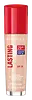
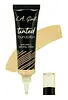
Rimmel London Lasting Finish 25Hr Foundation SPF 20 Versus L.A. Girl Tinted Foundation Natural Finish


What's inside
What's inside
 Key Ingredients
Benefits
Concerns
Ingredients Side-by-side
Water
Skin ConditioningDicaprylyl Carbonate
EmollientDicaprylyl Ether
Emollient
Isododecane
EmollientAluminum Starch Octenylsuccinate
Absorbent
Zinc Oxide
Cosmetic Colorant

Silica
Abrasive

Glycerin
Humectant

Cetyl PEG/PPG-10/1 Dimethicone
Emulsifying
Tri (Polyglyceryl-3/Lauryl) Hydrogenated Trilinoleate
EmulsifyingTrimethylsiloxysilicate
Emollient
Niacinamide
Smoothing







2,3-Butanediol
HumectantStearalkonium Bentonite
Gel FormingPropylene Carbonate
SolventTocopheryl Acetate
Antioxidant

Caprylic/Capric Triglyceride
Masking
Triethoxycaprylylsilane
Alpha-Glucan Oligosaccharide
Cleansing
Silica Dimethyl Silylate
EmollientSodium Benzoate
Masking
Chlorphenesin
Antimicrobial
Parfum
Masking




Sodium Chloride
MaskingSodium Hyaluronate
Humectant
Hexyl Cinnamal
Perfuming
Hexamethylindanopyran
Masking
Limonene
Perfuming
Citrus Aurantium Peel Oil

Dimethylmethoxy Chromanol
Antioxidant
Rosa Damascena Flower Extract
Masking
Tocopherol
Antioxidant
Benzyl Salicylate
Perfuming
Linalool
Perfuming
Tetramethyl Acetyloctahydronaphthalenes
Masking
Geraniol
Perfuming
Citrus Aurantium Bergamia Fruit Oil
Masking
Citronellol
Perfuming
Alpha-Isomethyl Ionone
Perfuming
Linalyl Acetate
Masking
Pentaerythrityl Tetra-Di-T-Butyl Hydroxyhydrocinnamate
Antioxidant
CI 77491
Cosmetic ColorantCI 77492
Cosmetic ColorantCI 77499
Cosmetic ColorantCI 77891
Cosmetic ColorantWater, Dicaprylyl Carbonate, Dicaprylyl Ether, Isododecane, Aluminum Starch Octenylsuccinate, Zinc Oxide, Silica, Glycerin, Cetyl PEG/PPG-10/1 Dimethicone, Tri (Polyglyceryl-3/Lauryl) Hydrogenated Trilinoleate, Trimethylsiloxysilicate, Niacinamide, 2,3-Butanediol, Stearalkonium Bentonite, Propylene Carbonate, Tocopheryl Acetate, Caprylic/Capric Triglyceride, Triethoxycaprylylsilane, Alpha-Glucan Oligosaccharide, Silica Dimethyl Silylate, Sodium Benzoate, Chlorphenesin, Parfum, Sodium Chloride, Sodium Hyaluronate, Hexyl Cinnamal, Hexamethylindanopyran, Limonene, Citrus Aurantium Peel Oil, Dimethylmethoxy Chromanol, Rosa Damascena Flower Extract, Tocopherol, Benzyl Salicylate, Linalool, Tetramethyl Acetyloctahydronaphthalenes, Geraniol, Citrus Aurantium Bergamia Fruit Oil, Citronellol, Alpha-Isomethyl Ionone, Linalyl Acetate, Pentaerythrityl Tetra-Di-T-Butyl Hydroxyhydrocinnamate, CI 77491, CI 77492, CI 77499, CI 77891
Water
Skin ConditioningCyclopentasiloxane
Emollient
Ethylhexyl Stearate
Emollient


Isododecane
EmollientDiisostearyl Malate
EmollientTrimethylsiloxysilicate
Emollient
Silica
Abrasive
Glycerin
Humectant
Ethylhexyl Palmitate
Emollient
Lauryl PEG-10 Tris(Trimethylsiloxy)Silylethyl Dimethicone
Emulsifying
Quaternium-90 Bentonite
Bis-Isobutyl PEG/PPG-10/7/Dimethicone Copolymer
Emulsifying
Sodium Chloride
MaskingPolysilicone-11
Phenoxyethanol
Preservative
Propylene Carbonate
SolventTocopheryl Acetate
Antioxidant
Ethylhexylglycerin
Skin ConditioningPanthenol
Skin Conditioning
Carthamus Tinctorius Seed Oil
Masking
Methicone
Emollient
Lecithin
Emollient
Polyhydroxystearic Acid
Emulsifying
Panax Ginseng Root Extract
Emollient
Pentaerythrityl Tetra-Di-T-Butyl Hydroxyhydrocinnamate
Antioxidant
Isopropyl Myristate
Emollient
Isostearic Acid
Cleansing
Polyglyceryl-3 Polyricinoleate
Emulsifying
Laureth-12
EmulsifyingCI 77891
Cosmetic ColorantIron Oxides
Water, Cyclopentasiloxane, Ethylhexyl Stearate, Isododecane, Diisostearyl Malate, Trimethylsiloxysilicate, Silica, Glycerin, Ethylhexyl Palmitate, Lauryl PEG-10 Tris(Trimethylsiloxy)Silylethyl Dimethicone, Quaternium-90 Bentonite, Bis-Isobutyl PEG/PPG-10/7/Dimethicone Copolymer, Sodium Chloride, Polysilicone-11, Phenoxyethanol, Propylene Carbonate, Tocopheryl Acetate, Ethylhexylglycerin, Panthenol, Carthamus Tinctorius Seed Oil, Methicone, Lecithin, Polyhydroxystearic Acid, Panax Ginseng Root Extract, Pentaerythrityl Tetra-Di-T-Butyl Hydroxyhydrocinnamate, Isopropyl Myristate, Isostearic Acid, Polyglyceryl-3 Polyricinoleate, Laureth-12, CI 77891, Iron Oxides
Ingredients Explained
These ingredients are found in both products.
Ingredients higher up in an ingredient list are typically present in a larger amount.
Ci 77891 is a white pigment from Titanium dioxide. It is naturally found in minerals such as rutile and ilmenite.
It's main function is to add a white color to cosmetics. It can also be mixed with other colors to create different shades.
Ci 77891 is commonly found in sunscreens due to its ability to block UV rays.
Learn more about CI 77891Glycerin (or glycerol) is a compound naturally found in your skin. It's a powerhouse humectant that pulls water into the stratum corneum.
Topically, glycerin does several things at once:
Your skin makes glycerin on its own (mostly from sebaceous oil breakdown) and shuttles it to your outermost layer of skin, or your epidermis, via aquaporin-3.
Aquaporin-3 is a transporter that is essential for normal skin hydration, elasticity, and repair. Interestingly, mice lacking in AQP3 have dry and less elastic skin that can be fully corrected with glycerin.
This ingredient is non-irritating, plays well with almost every ingredient, and works across all skin types. Typical use is anywhere between 3-10% but can go up to 79% in some leave-on products.
Just know very high concentrations (>40%) can feel tacky in low humidity.
Glycerin is the name for this ingredient in American English. British English uses Glycerol/Glycerine.
Learn more about GlycerinIsododecane is a fragrance, emollient, and solvent.
As an emollient, it helps your skin stay soft and hydrated. Emollients help trap moisture into your skin.
Isododecane's role as a solvent makes it a great texture enhancer. It spreads smoothly on skin and does not leave a sticky feeling behind. Isododecane also helps prevent color transfer in makeup products.
Isododecane is not absorbed into skin.
The chemical name for this ingredient is 2,2,4,6,6-PENTAMETHYLHEPTANE.
Learn more about IsododecanePentaerythrityl Tetra-Di-T-Butyl Hydroxyhydrocinnamate (long name, huh?) is a synthetic antioxidant.
It is used to help stabilize other antioxidants or prevent the color from changing in a product.
As an antioxidant, it helps fight free-radical molecules. Free-radical molecules are capable of damaging our cells and other genetic material. Thus, antioxidants may reduce the signs of aging.
This ingredient is oil-soluble.
Learn more about Pentaerythrityl Tetra-Di-T-Butyl HydroxyhydrocinnamateThis ingredient is a solvent. It helps dissolve active ingredients and alter the texture of products.
Propylene Carbonate is commonly used in makeup and with clay, such as montmorillonite or bentonite.
Studies show this ingredient to be safe for cosmetics. When it is undiluted, it can cause skin irritation. (It is always diluted in skincare and makeup). This ingredient is water-soluble.
Propylene Carbonate is created from propylene glycol and carbonic acid.
Learn more about Propylene CarbonateSilica, also known as silicon dioxide, is a naturally occurring mineral. It is used as a fine, spherical, and porous powder in cosmetics.
Though it has exfoliant properties, the function of silica varies depending on the product.
The unique structure of silica enhances the spreadability and adds smoothness, making it a great texture enhancer.
It is also used as an active carrier, emulsifier, and mattifier due to its ability to absorb excess oil.
In some products, tiny microneedles called spicules are made from silica or hydrolyzed sponge. When you rub them in, they lightly polish away dead skin layers and enhance the penetration of active ingredients.
Learn more about SilicaChances are, you eat sodium chloride every day. Sodium Chloride is also known as table salt. This ingredient has many purposes in skincare: thickener, emulsifier, and exfoliator.
You'll most likely find this ingredient in cleansers where it is used to create a gel-like texture. As an emulsifier, it also prevents ingredients from separating.
You might see people debate whether Sodium Chloride is comedogenic, but there actually haven't been any comedogenic tests done on it. Either way, the overall formulation of a product matters a lot more than any single ingredient.
You might see this ingredient used in scrubs as a primary exfoliating ingredient.
Learn more about Sodium ChlorideTocopheryl Acetate is a stable, shelf-friendly form of vitamin E.
Formulators love it because plain vitamin E oxidizes quickly once it hits air. This acetate version stays stable and resists going off, helping to extend a product's shelf life.
It's actually inactive on its own and works like a slow-release "storage" form; the enzymes in your skin called esterases gradually convert it into active vitamin E over time.
One in vivo study showed 5% of the acetate in the living layer of the epidermis converted to vitamin E after 5 days of application. This study also found the skin gained protection against UV damage even though the conversion was slow and small.
Once converted, vitamin E acts as a skin's main fat-soluble antioxidant that fights free radicals to protect skin from damage.
Topical vitamin E generally boosts the skin's photoprotection, and it reduced UV-damage in animal models.
This ingredient has some brightening potential but it's more of a prevention ingredient than spot-fader. Cell studies show it can slow down melanin production but it's worth noting that it's not the most powerful brightener out there.
Overall, it has a pretty solid safety profile and has been found to be non-irritating and non-comedogenic. Allergic reactions may happen but stay rare due to how widely the ingredient gets used.
The concentration will vary depending on the formula; industry data shows 0.1% in baby lotions, 3% in lipsticks, and 5% in foot powders. You can also find this ingredient at 100% in a pure vitamin E oil.
Most leave-on skincare keeps it at the lower end, often between 0.5-1%.
Learn more about Tocopheryl AcetateThis silicone is an emollient. Emollients create a thin film on the skin to prevent moisture from escaping.
It is not soluble in water and helps increase water-resistance in products.
According to a manufacturer, it can blend seamlessly with silicone oils, such as Cyclopentasiloxane.
Learn more about TrimethylsiloxysilicateWater. It's the most common cosmetic ingredient of all. You'll usually see it at the top of ingredient lists, meaning that it makes up the largest part of the product.
So why is it so popular? Water most often acts as a solvent - this means that it helps dissolve other ingredients into the formulation.
You'll also recognize water as that liquid we all need to stay alive. If you see this, drink a glass of water. Remember to stay hydrated!
Learn more about Water

