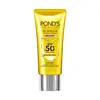
This chemical sunscreen covers most of the UV range, lighter on the deep UVA that drives aging.
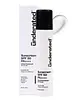
This chemical sunscreen leans toward UVA, with lighter cover of burning UVB.


What's inside
What's inside
 Key Ingredients
Benefits
Concerns
Ingredients Side-by-side
Water
Skin ConditioningOctocrylene
UV Absorber



Dimethicone
Emollient

Ethylhexyl Salicylate
UV Absorber
Cetearyl Alcohol
Emollient





Butyl Methoxydibenzoylmethane
UV Absorber
Phenylbenzimidazole Sulfonic Acid
UV Absorber
Dicaprylyl Carbonate
EmollientButylene Glycol
Humectant

Glycerin
Humectant
Silica
Abrasive


Ethylhexyl Methoxycinnamate
UV Absorber
Niacinamide
Smoothing







Cetearyl Glucoside
Emulsifying
4-Ethylresorcinol
AntimicrobialGlutathione
Tocopherol
Antioxidant

Phenoxyethanol
Preservative
Potassium Cetyl Phosphate
EmulsifyingSodium Hydroxide
BufferingParfum
Masking

Glyceryl Stearate
Emollient
Cetyl Alcohol
Emollient
PEG-75 Stearate
Surfactant
Polyacrylate Crosspolymer-6
Emulsion StabilisingDisodium EDTA
ChelatingXanthan Gum
EmulsifyingSteareth-20
CleansingCeteth-20
CleansingPEG-4 Laurate
Emulsifying
Sodium Carbonate
BufferingIodopropynyl Butylcarbamate
Preservative
T-Butyl Alcohol
Perfuming

BHT
Antioxidant
Sodium Chloride
MaskingWater, Octocrylene, Dimethicone, Ethylhexyl Salicylate, Cetearyl Alcohol, Butyl Methoxydibenzoylmethane, Phenylbenzimidazole Sulfonic Acid, Dicaprylyl Carbonate, Butylene Glycol, Glycerin, Silica, Ethylhexyl Methoxycinnamate, Niacinamide, Cetearyl Glucoside, 4-Ethylresorcinol, Glutathione, Tocopherol, Phenoxyethanol, Potassium Cetyl Phosphate, Sodium Hydroxide, Parfum, Glyceryl Stearate, Cetyl Alcohol, PEG-75 Stearate, Polyacrylate Crosspolymer-6, Disodium EDTA, Xanthan Gum, Steareth-20, Ceteth-20, PEG-4 Laurate, Sodium Carbonate, Iodopropynyl Butylcarbamate, T-Butyl Alcohol, BHT, Sodium Chloride
Ethylhexyl Methoxydibenzoylmethane
UV AbsorberButyl Methoxydibenzoylmethane
UV Absorber
Propylene Glycol
Humectant
Caprylic/Capric Triglyceride
Masking
Methyl Methacrylate Crosspolymer
Acrylates/C10-30 Alkyl Acrylate Crosspolymer
Emulsion StabilisingPhenoxyethanol
Preservative
Sodium Gluconate
ChelatingXanthophylls
Skin ConditioningHelianthus Annuus Seed Oil
Emollient
Rosmarinus Officinalis Leaf Extract
AntimicrobialBeta-Carotene
Skin ConditioningTocopherol
Antioxidant
Crambe Abyssinica Seed Oil
Skin Conditioning
Porphyridium Cruentum Extract
Skin Conditioning3-O-Ethyl Ascorbic Acid
Skin Conditioning
Sodium Hydroxide
BufferingParfum
Masking
Ethylhexyl Methoxydibenzoylmethane, Butyl Methoxydibenzoylmethane, Propylene Glycol, Caprylic/Capric Triglyceride, Methyl Methacrylate Crosspolymer, Acrylates/C10-30 Alkyl Acrylate Crosspolymer, Phenoxyethanol, Sodium Gluconate, Xanthophylls, Helianthus Annuus Seed Oil, Rosmarinus Officinalis Leaf Extract, Beta-Carotene, Tocopherol, Crambe Abyssinica Seed Oil, Porphyridium Cruentum Extract, 3-O-Ethyl Ascorbic Acid, Sodium Hydroxide, Parfum
Ingredients Explained
These ingredients are found in both products.
Ingredients higher up in an ingredient list are typically present in a larger amount.
Also known as Avobenzone, this ingredient is an oil-soluble used to absorb the full spectrum of UVA rays (peak 357 nm).
It's one of the most effective UVA filters available but has a major caveat of photostability: avobenzone is susceptible to photodegradation.
This means it can lose efficacy when exposed to sunlight without the help of a stabilizing agent.
Studies show antioxidants (like vitamin E or vitamin C) and some UV filters (like octocrylene and Tinosorb S) can meaningfully improve its stability in a formulation.
The maximum allowable concentration according to regulation is 3% in the US + Canada, and 5% in the EU, Australia, China, Korea, and ASEAN countries.
It has a well-support safety profile: a comprehensive 2025 review found minimal toxicity with no evidence of carcinogenicity.
Overall, avobenzone is a safe and regulated ingredient used in sunscreen for over 40 years.
Learn more about Butyl MethoxydibenzoylmethaneParfum is a catch-all term for an ingredient or more that is used to give a scent to products.
Also called "fragrance", this ingredient can be a blend of hundreds of chemicals or plant oils. This means every product with "fragrance" or "parfum" in the ingredients list is a different mixture.
For instance, Habanolide is a proprietary trade name for a specific aroma chemical. When used as a fragrance ingredient in cosmetics, most aroma chemicals fall under the broad labeling category of “FRAGRANCE” or “PARFUM” according to EU and US regulations.
The term 'parfum' or 'fragrance' is not regulated in many countries. In many cases, it is up to the brand to define this term.
For instance, many brands choose to label themselves as "fragrance-free" because they are not using synthetic fragrances. However, their products may still contain ingredients such as essential oils that are considered a fragrance by INCI standards.
One example is Calendula flower extract. Calendula is an essential oil that still imparts a scent or 'fragrance'.
Depending on the blend, the ingredients in the mixture can cause allergies and sensitivities on the skin. Some ingredients that are known EU allergens include linalool and citronellol.
Parfum can also be used to mask or cover an unpleasant scent.
The bottom line is: not all fragrances/parfum/ingredients are created equally. If you are worried about fragrances, we recommend taking a closer look at an ingredient. And of course, we always recommend speaking with a professional.
Learn more about ParfumPhenoxyethanol is one of the most widely used preservatives in skincare (and for good reason!).
It has a large spectrum of antimicrobial activity and especially effective bacteria, yeast, and mold while only having a weak effect on your skin's natural microbiome.
On a cellular level, it disrupts the cell membranes of microbes by poking holes that make the cell leak. This shuts down the chemical reactions the microbe needs to make energy so it can no longer survive.
Another perk of this ingredient is that it stays functional across a wide pH range (3-10).
You'll often see it paired with boosters like Ethylhexylglycerin; one study showed that a 1:9 ratio of Ethylhexylglycerin to Phenoxyethanol damages bacterial membranes as effectively as doubling the Phenoxyethanol concentration on its own.
Typical use concentrations range from 0.3-1% depending on the formula, and this ingredient is capped at 1% int the EU.
Safety-wise, the fear mongering does not hold up to the evidence. The EU's Scientific Committee on Consumer Safety and FDA consider it safe as a preservative at up to 1%, including for children of all ages.
Adverse systemic effects only showed up in animal studies at exposures roughly 200x higher than what people get from cosmetics. And despite its very widespread use, this ingredient is a rare sensitizer and allergic reactions are uncommon.
Learn more about PhenoxyethanolSodium Hydroxide is also known as lye or caustic soda. It is used to adjust the pH of products; many ingredients require a specific pH to be effective.
In small amounts, sodium hydroxide is considered safe to use. However, large amounts may cause chemical burns due to its high alkaline.
Your skin has a natural pH and acid mantle. This acid mantle helps prevent harmful bacteria from breaking through. The acid mantle also helps keep your skin hydrated.
"Alkaline" refers to a high pH level. A low pH level would be considered acidic.
Learn more about Sodium HydroxideTocopherol is a fat-soluble antioxidant known as Vitamin E.
You'll find this ingredient in the vast majority of skincare (for good reason). It works to neutralize free radicals, or unstable molecules generated by UV exposure, pollution, and other environmental stressors, before they can cause oxidative damage to your skin cells.
Topically applied tocopherol has been shown to protect against UV damage by ramping up the skin's own natural defense enzymes.
It also acts as a skin conditioning agent; some studies show that regular topical use can improve the skin's water-binding capacity over 2-4 weeks.
This ingredient is especially loved for being a team player. When combined with Vitamin C, the photoprotective effect of both ingredients roughly doubles and the combo also helps reduce UV-induced DNA damage.
This ingredient has some brightening potential but it's more of a prevention ingredient than spot-fader. Cell studies show it can slow down melanin production but it's worth noting that it's not the most powerful brightener out there.
In formulations, it also serves as a stabilizer that helps protect other oxidation-prone ingredients from degrading.
Concentrations usually range from 0.1-1% in most leave-on products.
Learn more about Tocopherol

